
When the usual holiday roast comes with a butter baste, a flour-thickened gravy, or a jar of glaze with soy or wheat in it, a roast duck is a welcome change. Duck brings its own fat, so it bastes itself; all it needs is salt, time, and a hot oven at the end. The result is the Christmas dinner centerpiece people remember: skin that crackles when you tap it, rich dark meat, and a bright orange sauce to cut through it.
This method uses a simple dry brine, a long, low roast that renders the thick layer of fat under the skin, and a final blast of heat to crisp it. The sauce is fresh orange juice and zest reduced with brown sugar, cider vinegar, and broth, thickened with a little cornstarch and finished with a spoonful of the duck’s own fat. No butter, no flour, no wine. As a bonus, you’ll end up with a jar of duck fat for roasting potatoes. The recipe is made without the top nine allergens.
Made without: peanuts, tree nuts, milk, eggs, wheat, soy, fish, shellfish, sesame.
Why You’ll Love This Roast Duck
- Crisp skin and juicy meat from a two-temperature roast.
- No butter or flour: the duck renders its own fat, and the sauce is thickened with cornstarch.
- Bright orange sauce balances the richness.
- Mostly hands-off: drain the fat a few times and let the oven work.
- Bonus duck fat for the crispiest roasted potatoes.
How to Get Crispy Duck Skin Without Butter
Duck skin sits on a thick layer of fat. If that fat doesn’t melt away, the skin stays rubbery no matter how hot the oven is. Three steps solve it. First, prick the skin all over with the tip of a sharp knife held at a shallow angle, going through skin and fat but not into the meat, so the fat has somewhere to escape. Second, salt the duck and leave it uncovered in the refrigerator overnight; the salt seasons the meat while the cold air dries the skin. Third, roast low at 300°F for two hours to render the fat slowly, pouring it off as it collects, then raise the heat to 400°F to brown and crisp the now-thin skin.
Cook to a safe internal temperature. The USDA safe minimum internal temperature chart lists 165°F (74°C) for all poultry, including duck; check the thickest part of the thigh, away from the bone.
Ingredients and Swap Ideas
- Whole duck, 5 to 6 lb (2.3 to 2.7 kg): most are sold frozen; thaw in the refrigerator for 1 to 2 days. Pre-brined or seasoned ducks can contain soy, wheat, or flavorings, so check the label.
- Kosher salt and black pepper: for the dry brine and seasoning.
- Orange, garlic, and thyme: tucked into the cavity for aroma. Rosemary or sage work too.
- Fresh orange juice and zest: the base of the sauce. Bottled juice works but tastes flatter.
- Brown sugar and apple cider vinegar: the sweet-sour balance of a classic orange sauce. Honey can replace the brown sugar.
- Chicken broth: read the label for wheat, soy, yeast extract, and added seed oils, or use homemade.
- Cornstarch: thickens the sauce in place of a flour roux.
- Duck fat: the only fat in the recipe, rendered right in the pan. No oil, butter, or cooking spray needed.
Kitchen Equipment
- Roasting pan with a rack (to lift the duck out of its fat)
- Instant-read thermometer
- Heatproof jar for the rendered fat
- Small saucepan and a whisk
- Sharp paring knife and a carving knife
Step-by-Step Tips
- Dry the duck well. Pat it dry inside and out with paper towels; moisture is the enemy of crisp skin.
- Prick, don’t stab. Shallow, angled pricks every inch or so over the breast and thighs let the fat drain without drying the meat.
- Brine uncovered. A night in the refrigerator on a rack makes the skin look slightly translucent and tight, which is what you want.
- Drain the fat as you go. Every 40 minutes, carefully pour off the fat so the pan doesn’t smoke and the bottom of the duck doesn’t fry.
- Finish hot. The skin is done when it’s deep mahogany and sounds crisp when tapped, and the thigh reads 165°F.
- Rest before carving. Fifteen minutes keeps the juices in the meat; make the sauce meanwhile.
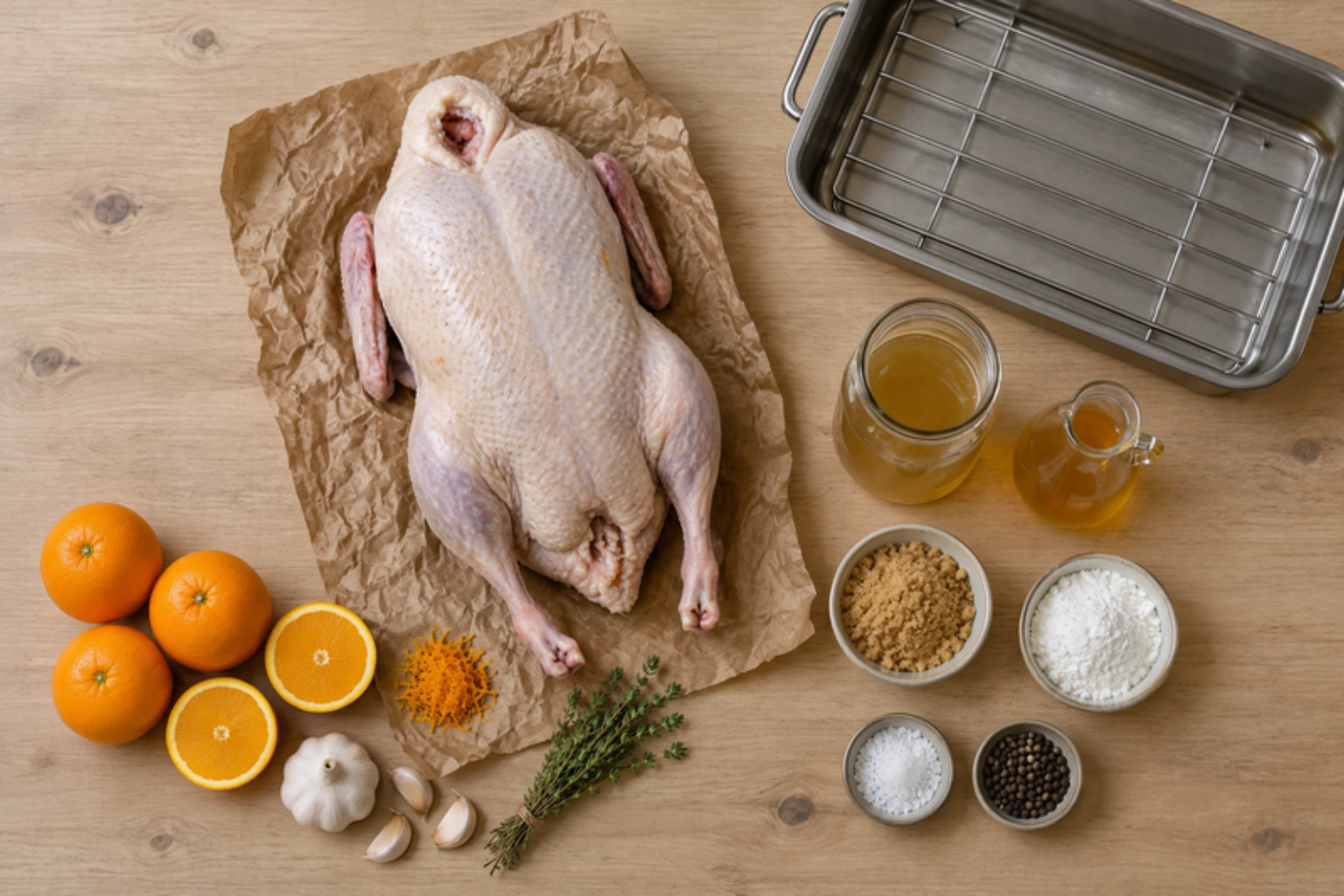
Roast Duck with Orange Sauce
Ingredients
Equipment
Method
- Optional dry brine (best skin): pat the duck dry, trim the loose flap of neck skin, and prick the skin all over the breast and thighs with the tip of a sharp knife, held at a shallow angle so it pierces the skin and fat but not the meat. Rub with the kosher salt inside and out. Refrigerate uncovered on a rack for 12 to 24 hours.
- Heat the oven to 300°F (150°C). If you skipped the dry brine, pat dry, prick the skin as above, and salt now. Season with pepper and tuck the orange, garlic, and thyme into the cavity. Set the duck breast side up on a rack in a roasting pan.
- Roast 2 hours. Every 40 minutes, prick any thick fatty spots again and carefully pour the rendered fat from the pan into a heatproof jar. The skin will slowly turn golden and tighten as the fat renders out.
- Raise the oven to 400°F (200°C) and roast 20 to 30 minutes more, until the skin is deep mahogany, crisp, and crackly when tapped, and an instant-read thermometer in the thickest part of the thigh (not touching bone) reads 165°F (74°C).
- Move the duck to a cutting board and rest 15 minutes.
- While the duck finishes, make the sauce: in a small saucepan, simmer the orange juice, zest, brown sugar, vinegar, and broth over medium heat for 10 to 12 minutes, until reduced by about one third and the bubbles look larger and syrupy.
- Stir the cornstarch slurry, whisk it into the sauce, and simmer 1 minute until glossy and thick enough to coat a spoon. Whisk in 1 tablespoon duck fat and season with salt.
- Carve off the legs at the joint, then slice the breast meat off the bone. Serve with the warm orange sauce. Strain and refrigerate the remaining duck fat for roasting potatoes.
Notes
Troubleshooting
- Skin still flabby: the fat didn’t fully render. Prick the thick spots again and give it 10 more minutes at 400°F, watching closely.
- Skin browning before the meat is done: tent loosely with foil and keep roasting until the thigh reaches 165°F.
- Smoking oven: too much fat in the pan. Drain it more often, and add a splash of water to the pan for the high-heat finish.
- Sauce too thin or too sweet: simmer a few minutes longer, or add a teaspoon more cider vinegar to brighten it.
Make-Ahead, Storage and Leftovers
Make ahead: salt the duck up to 24 hours ahead. The orange sauce can be made 3 days ahead and rewarmed; whisk in the duck fat after roasting.
Storage: refrigerate carved duck up to 3 days and sauce up to 5 days. Reheat duck pieces skin side up in a 375°F oven until hot (165°F) and the skin crisps again. Freeze carved meat up to 2 months.
Duck fat: strain the rendered fat into a clean jar. It keeps 3 months in the refrigerator or 6 months frozen, and it’s excellent in garlic herb roasted potatoes.
What to Serve with Roast Duck
Pair it with piped duchess potatoes made without eggs or dairy and a spoonful of cranberry sauce with orange and maple. For more mains and sides, browse the Dinner & Sides aisle on our Christmas recipes page.
FAQ
What temperature should roast duck be cooked to?
The USDA lists 165°F (74°C) for all poultry, including duck. Check the thickest part of the thigh without touching the bone.
How do you get crispy skin on a duck?
Prick the skin, salt and air-dry it overnight, roast low to render the fat, drain the fat as it collects, and finish at high heat.
How many people does one duck feed?
A 5 to 6 lb duck serves about 4. Duck has more bone and fat than a chicken of the same weight, so roast two for a group of 6 to 8.
Can I make orange sauce without the drippings?
Yes. The sauce is built on orange juice, broth, brown sugar, and vinegar; the spoonful of duck fat adds richness but can be left out, or replaced with extra-virgin olive oil.
A note before you cook: These recipes are ideas and suggestions, not medical or dietary advice. As with any recipe or ingredient, it is each reader’s responsibility to confirm what they can and cannot eat, read every ingredient label, and source quality ingredients that fit their own needs. Ingredient formulations change, so always check the package you’re using.
Leave a Reply