
Most braised short ribs recipes start the same way: dredge the meat in flour, deglaze with a bottle of red wine, and add a splash of Worcestershire. If you cook without wheat, or Worcestershire is off the table because of the anchovies, or you just don’t keep wine in the house, it can feel like the dish isn’t meant for you. It is. Short ribs get their richness from the beef itself: the marbling and connective tissue melt during a long, gentle braise into tender meat and a naturally silky sauce.
This version builds deep flavor with a hard sear in beef tallow, browned onion, carrot and celery, tomato paste cooked until brick red, and a spoonful of balsamic vinegar to bring the acidity wine usually adds. Three hours in a low oven turns tough, bony ribs into fork-tender, fall-off-the-bone beef with a glossy pan sauce made for spooning over mashed potatoes. It’s a hands-off Sunday dinner that’s even better made a day ahead.
Made without: peanuts, tree nuts, milk, eggs, wheat, soy, fish, shellfish, sesame.
Why You’ll Love These Short Ribs
- Fall-off-the-bone tender after a low, slow braise in one Dutch oven.
- No wine, no flour, no Worcestershire: balsamic, tomato paste and a good sear carry the flavor.
- Mostly hands-off: about 25 minutes of work, then the oven does the rest.
- Make-ahead friendly: chilling overnight makes the fat easy to lift off and the flavor deeper.
- Company-worthy comfort food for cold November nights or a holiday dinner.
How Short Ribs Braise Without Wine or Flour
In a classic braise, wine adds acidity and fruitiness, and the flour on the meat thickens the sauce. Both jobs are easy to cover. Two tablespoons of balsamic vinegar, plus a little brown sugar, bring the same tangy-sweet depth and help brighten the rich beef. Tomato paste cooked in the hot fat until it darkens adds savory, almost meaty flavor.
For body, short ribs do most of the work on their own: the collagen in the connective tissue breaks down into gelatin, which gives the reduced braising liquid a lip-smacking, glossy texture. Simmering the skimmed liquid for ten minutes concentrates it into a real sauce. If you like it thicker, a small cornstarch slurry finishes it in a minute, with no wheat flour needed.
Ingredients & Swap Ideas
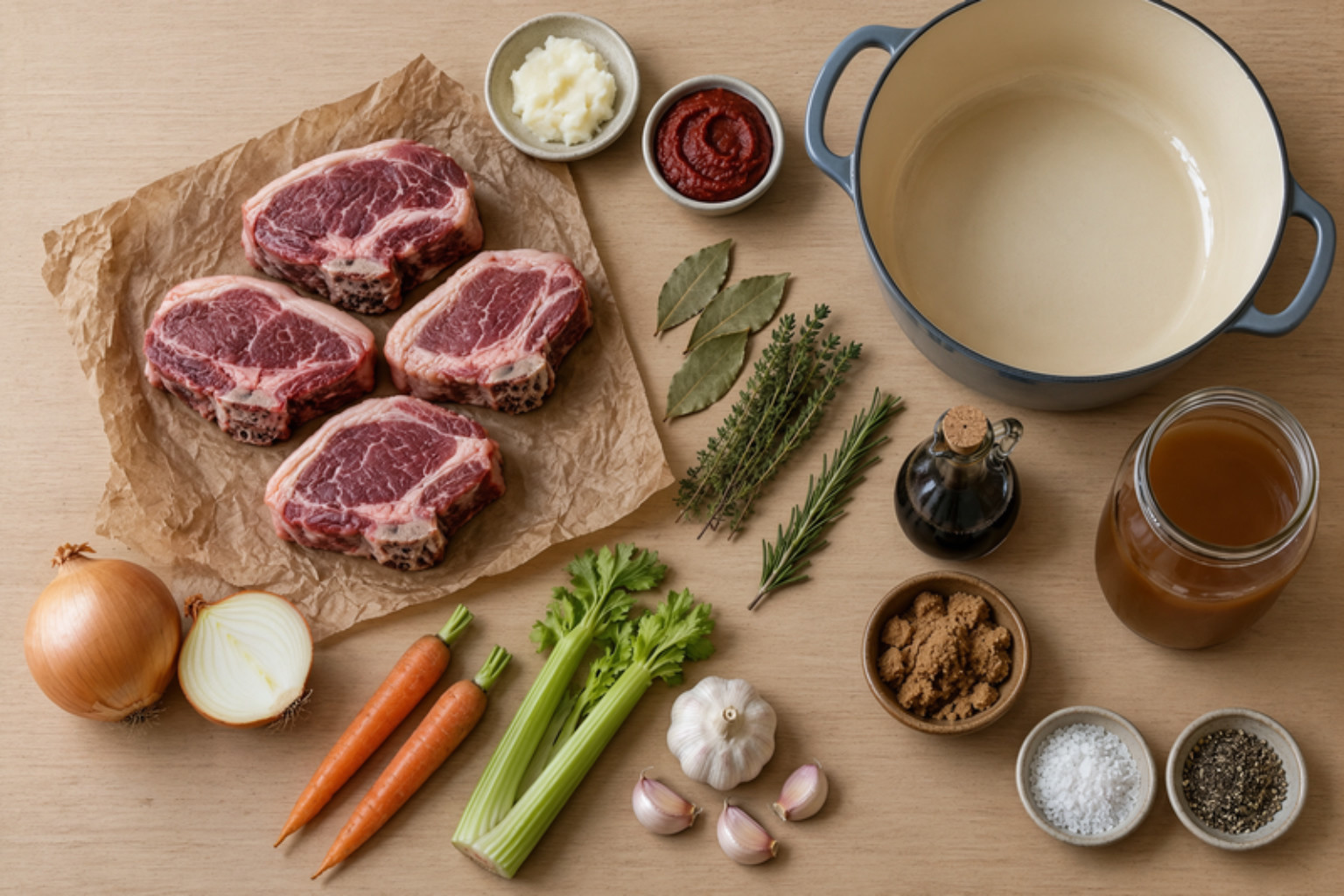
- Bone-in beef short ribs, 4 lb (1.8 kg): look for English-cut ribs (thick, single-bone pieces 2 to 3 inches long) with a good layer of meat on top. Flanken-cut (thin, cross-cut) ribs are better for grilling.
- Beef tallow, 2 tablespoons: handles high searing heat and adds beefy flavor. Extra-virgin olive oil or bacon fat work too.
- Onion, carrots, celery and garlic: the classic base. Parsnip can stand in for one carrot.
- Tomato paste and balsamic vinegar: the wine replacement. Red wine vinegar works in a pinch; add an extra teaspoon of brown sugar. Label check the balsamic for added thickeners or colorings.
- Beef broth, 3 cups (720 ml): label check: many broths and bouillons contain wheat, soy, yeast extract or added seed oils. Homemade or a single-ingredient-style broth is best.
- Herbs: bay leaves, thyme and rosemary, fresh or dried.
- Cornstarch (optional): to thicken the finished sauce. Potato starch works the same way.
Skip Worcestershire sauce (it usually contains anchovies) and soy-based seasonings. Store-bought seasoning blends need a label check for wheat, soy and added oils.
Kitchen Equipment
- 6- to 7-quart enameled Dutch oven with a tight lid (or a deep oven-safe pot covered tightly with foil)
- Tongs for searing
- Fat separator or a wide, shallow spoon for skimming
- Instant-read thermometer
- Immersion blender or fine-mesh strainer (optional, for a smooth sauce)
Step-by-Step Tips
- Salt early if you can. Seasoning the ribs the night before and leaving them uncovered in the fridge dries the surface for a better sear and seasons the meat more deeply.
- Sear in batches. Crowding steams the meat. You want a deep mahogany crust on every meaty side; those browned bits flavor the whole sauce.
- Brown the tomato paste. Stir it in the fat until it turns from bright red to brick red and smells sweet. That step adds savory depth.
- Don’t drown the ribs. The liquid should come about three-quarters of the way up so the tops roast while the bottoms braise.
- Cook to tender, not to time. Short ribs are safe once beef reaches 145°F (see the USDA safe temperature chart), but they only turn tender once the connective tissue melts, usually around 200 to 205°F. A fork should slide in with no resistance.
- Skim, then reduce. Short ribs release a lot of fat. Skim it off before reducing so the sauce turns glossy rather than greasy.
Braised Short Ribs in the Oven (Dutch Oven, No Wine)
Ingredients
Equipment
Method
- Heat the oven to 325°F (163°C) with a rack in the lower third. Pat the short ribs dry and season all sides with the salt and pepper. If you have time, salt them up to 24 hours ahead and refrigerate uncovered.
- Heat the tallow in the Dutch oven over medium-high heat until it shimmers. Sear the ribs in 2 batches without crowding, 3 to 4 minutes per side, until deeply browned on all meaty sides. Move them to a plate.
- Pour off all but about 2 tablespoons of fat. Lower the heat to medium, add the onion, carrot and celery, and cook 6 to 8 minutes, scraping up the browned bits, until softened and golden at the edges. Add the garlic and cook 1 minute until fragrant.
- Stir in the tomato paste and cook 1 to 2 minutes until it darkens to brick red. Add the balsamic vinegar and brown sugar and scrape the bottom of the pot clean.
- Pour in the broth, add the bay leaves, thyme and rosemary, and bring to a simmer. Nestle the ribs back in, bone side up, with any juices from the plate. The liquid should come about three-quarters of the way up the meat; add a splash of water if needed.
- Cover and braise in the oven 2 1/2 to 3 hours, until a fork slides into the meat with no resistance and the bones pull away easily. The meat will be well past the USDA minimum of 145°F for beef; fork-tender short ribs usually read around 200 to 205°F (93 to 96°C).
- Move the ribs to a platter and tent with foil. Remove the herb stems and bay leaves. Skim the fat from the surface with a wide spoon or pour the liquid through a fat separator.
- Simmer the sauce on the stovetop 8 to 10 minutes until reduced by about a third and glossy. For a smooth sauce, blend with an immersion blender or strain out the vegetables. For a thicker sauce, whisk in the cornstarch slurry and simmer 1 minute until clear and thickened. Taste for salt.
- Return the ribs to the sauce to rewarm, spoon sauce over the top, and sprinkle with parsley. Serve over mashed potatoes, egg-free gluten-free noodles or rice.
Notes
Troubleshooting
- The meat is still tough: it needs more time, not less. Cover and return it to the oven, checking every 20 to 30 minutes.
- The sauce is greasy: skim more thoroughly, or chill the whole pot overnight and lift off the hardened fat.
- The sauce is thin: simmer it longer, uncovered, or add the cornstarch slurry and simmer 1 minute until clear.
- The sauce tastes flat: add a pinch of salt and a splash more balsamic at the end to wake it up.
Storage, Freezing & Reheating
Braised short ribs keep up to 4 days in the fridge, stored in their sauce. They’re at their best made a day ahead: cool, refrigerate in the pot, and lift off the solid fat cap the next day before reducing the sauce. Rewarm covered in a 325°F oven for 30 to 40 minutes, or gently on the stovetop. To freeze, pack ribs and sauce together in freezer containers for up to 3 months. Thaw overnight in the fridge and reheat until the ribs reach 165°F.
What to Serve With Short Ribs
The sauce wants something soft to soak into. Our mashed potatoes without milk or butter are the classic pairing. If you love long-braised beef, try the slow cooker pot roast or Midwestern beef and noodles, and browse more dinner recipes.
FAQ
Can you braise short ribs without wine?
Yes. Wine mainly adds acidity and depth. Beef broth plus a couple of tablespoons of balsamic vinegar and well-browned tomato paste cover both, and the long braise does the rest.
How long do short ribs take to braise?
Plan on 2 1/2 to 3 hours at 325°F for bone-in English-cut ribs. Thicker, meatier ribs may need up to 3 1/2 hours. They’re done when a fork slides in easily and the bones start to slip free.
Do you need to flour short ribs before searing?
No. Flour mostly helps thicken the sauce later. Patting the ribs dry and searing them in hot tallow gives a better crust, and a little cornstarch at the end thickens the sauce without wheat.
Can I make braised short ribs in a slow cooker?
Yes. Sear the ribs and build the sauce on the stove as written, then transfer everything to a slow cooker and cook on low for 7 to 8 hours, until fork-tender. Reduce the skimmed liquid on the stove at the end so the sauce isn’t watery.
A note before you cook: These recipes are ideas and suggestions, not medical or dietary advice. As with any recipe or ingredient, it is each reader’s responsibility to confirm what they can and cannot eat, read every ingredient label, and source quality ingredients that fit their own needs. Ingredient formulations change, so always check the package you’re using.
Leave a Reply