
Across Indiana and Ohio, beef and noodles is the dish at every church supper, county fair, and Thanksgiving table: tender shredded beef and thick homemade egg noodles in a rich broth, usually spooned right over mashed potatoes. The trouble for allergy families is in the name. Those noodles are made from flour and plenty of eggs, and even the dried “egg noodles” in the gluten-free aisle usually contain egg. If you’ve been missing beef and noodles because of the noodles, this version keeps everything else the same and swaps in an egg-free, gluten-free pasta.
The beef is a chuck roast, seared for flavor and simmered for a couple of hours until it falls apart. The broth is thickened with a little cornstarch at the end, so it turns glossy and gravy-like without flour or butter. It’s a simple, hearty November dinner that reheats well.
Made without: peanuts, tree nuts, milk, eggs, wheat, soy, fish, shellfish, sesame.
Why You’ll Love This Recipe
- Fork-tender beef in a rich, savory broth.
- No eggs and no wheat, with noodles that hold their shape.
- Mostly hands-off: about 20 minutes of work, then the pot does the rest.
- Freezer-friendly beef base for future dinners.
How It Works Without Egg Noodles or Flour
Classic beef and noodles gets its body from two places: the starch that cooks out of the flour noodles, and sometimes a flour roux. Gluten-free pasta made from rice or corn releases less starch, and it turns soft and broken if it simmers in the broth for long. So the noodles are cooked separately until still quite firm, then finished in the pot for just a few minutes, where they soak up flavor without falling apart.
A cornstarch slurry replaces the flour. Stirred into the simmering broth, it thickens in about a minute and gives the glossy, coat-the-spoon gravy that makes this dish what it is. Searing the beef well at the start adds the deep, roasted flavor you’d otherwise get from butter.
Ingredients and Swap Ideas
- Beef chuck roast (2 1/2 lb / 1.1 kg): its marbling turns tender during the long simmer. Bottom round is leaner and can turn dry. Pre-cut “stew meat” works if it’s all chuck.
- Noodles (12 oz / 340 g): look for wide gluten-free noodles or fettuccine made from rice, corn, or a rice-corn blend with no egg in the ingredient list. Many gluten-free “egg noodles” do contain egg, so read the label every time.
- Beef broth (6 cups / 1.4 L): some boxed broths contain added oils, soy, wheat, or yeast extract. Check the label, or use homemade.
- Fat: beef tallow gives the richest sear; extra-virgin olive oil works too. Skip vegetable oil and canola.
- Thickener: cornstarch, or the same amount of potato starch.
- Optional add-ins: a diced carrot and celery rib with the onion, or a handful of sliced mushrooms.
Kitchen Equipment
A 6- to 7-quart Dutch oven with a lid, a separate large pot for the noodles, a colander, tongs, and a wooden spoon. A slow cooker works for the beef too (see the FAQ).
Step-by-Step Tips
- Dry the beef and don’t crowd the pan. Wet or crowded meat steams instead of browning. Work in batches until each side has a deep brown crust.
- Scrape up the browned bits. The onion’s moisture loosens the fond from the bottom of the pot; that’s where much of the flavor lives.
- Keep it at a gentle simmer. Small, lazy bubbles. A hard boil tightens the meat.
- Test by pulling, not by time. The beef is ready when a chunk falls apart with a fork. Chuck is well past the USDA safe temperature long before it’s tender.
- Undercook the noodles. Pull them 2 minutes early; they finish in the gravy.
- Thicken, then add noodles. Stir the slurry in first so the gravy is the right consistency before the noodles go in.
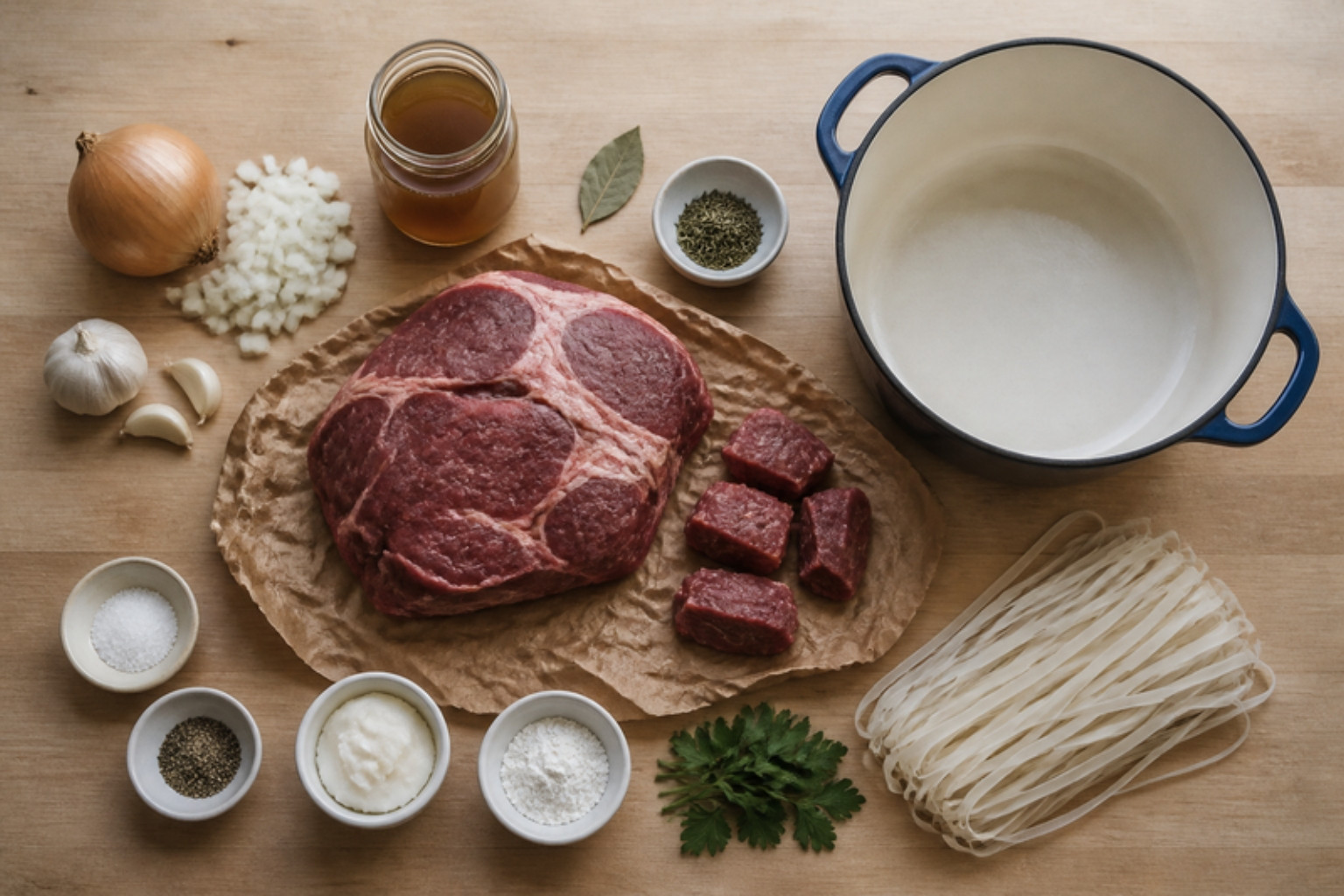
Beef and Noodles, Midwestern Style, No Eggs or Wheat
Ingredients
Equipment
Method
- Pat the beef dry and season with 1 teaspoon of the salt and the pepper.
- Heat the tallow in the Dutch oven over medium-high heat until it shimmers. Sear the beef in 2 or 3 batches without crowding, 3 to 4 minutes per side, until a deep brown crust forms. Move each batch to a plate.
- Lower the heat to medium. Add the onion and cook 5 to 6 minutes, scraping up the browned bits, until soft and golden at the edges. Stir in the garlic for 30 seconds, until fragrant.
- Return the beef and any juices. Add the broth, bay leaf, thyme, and remaining 1/2 teaspoon salt. Bring to a boil, then cover, lower the heat, and simmer gently for 2 to 2 1/2 hours, until a chunk of beef pulls apart easily with a fork. (Or cover and braise in a 325°F oven for the same time.)
- Remove the bay leaf. Use two forks to break the beef into bite-size shreds right in the pot.
- About 20 minutes before serving, bring a large pot of salted water to a boil. Cook the noodles 2 minutes less than the package says; they should still be quite firm. Drain and rinse briefly to stop the cooking.
- Bring the beef and broth back to a simmer. Stir the cornstarch and cold water together and stir it into the pot. Simmer 1 to 2 minutes, until the broth turns glossy and coats a spoon.
- Add the noodles and simmer 2 to 3 minutes, stirring gently, until tender and coated. Taste for salt. Serve on its own or over mashed potatoes, sprinkled with parsley.
Notes
Troubleshooting
- Tough beef: it needs more time. Cover and keep simmering in 20-minute stretches until it pulls apart.
- Mushy noodles: they cooked too long in the water or the pot. Next time pull them earlier and serve right away.
- Thin gravy: stir another tablespoon of cornstarch into a tablespoon of cold water and simmer 1 minute.
- Bland broth: season at the end. Boxed broths vary widely in salt.
Storage, Freezing, and Reheating
Refrigerate leftovers in a covered container for up to 4 days. The noodles keep absorbing broth, so add a splash of broth or water when you reheat on the stovetop over medium-low heat, and bring leftovers to 165°F. For freezing, freeze the beef and gravy without noodles for up to 3 months, then thaw overnight, reheat, and cook a fresh batch of noodles. That also makes it a good make-ahead dish for a crowd.
What to Serve With Beef and Noodles
The Indiana way is a big scoop of creamy dairy-free mashed potatoes underneath. Add old-fashioned green beans with bacon on the side. If you like slow-simmered beef dinners, try the old-fashioned beef stew too. See all of our dinner recipes.
Frequently Asked Questions
Why serve beef and noodles over mashed potatoes?
It’s a long-standing Indiana and Ohio tradition, especially at holiday dinners and potlucks. The potatoes catch the extra gravy. It’s optional, but worth trying once.
Can I make beef and noodles in a slow cooker?
Yes. Sear the beef and onions on the stove, then move everything except the noodles and slurry to a slow cooker and cook on low for 7 to 8 hours. Thicken on high, then stir in noodles cooked separately. That method hasn’t been worked out in detail, so check the beef for tenderness.
Are gluten-free egg noodles egg-free?
Often not. Many gluten-free noodles labeled “egg noodles” contain whole eggs or egg whites. Choose a rice or corn pasta whose ingredient list has no egg.
Can I use leftover pot roast?
Yes. Shred about 4 cups of cooked roast, simmer it in the broth with the onion and herbs for 20 minutes, then thicken and add the noodles.
A note before you cook: These recipes are ideas and suggestions, not medical or dietary advice. As with any recipe or ingredient, it is each reader’s responsibility to confirm what they can and cannot eat, read every ingredient label, and source quality ingredients that fit their own needs. Ingredient formulations change, so always check the package you’re using.
Leave a Reply