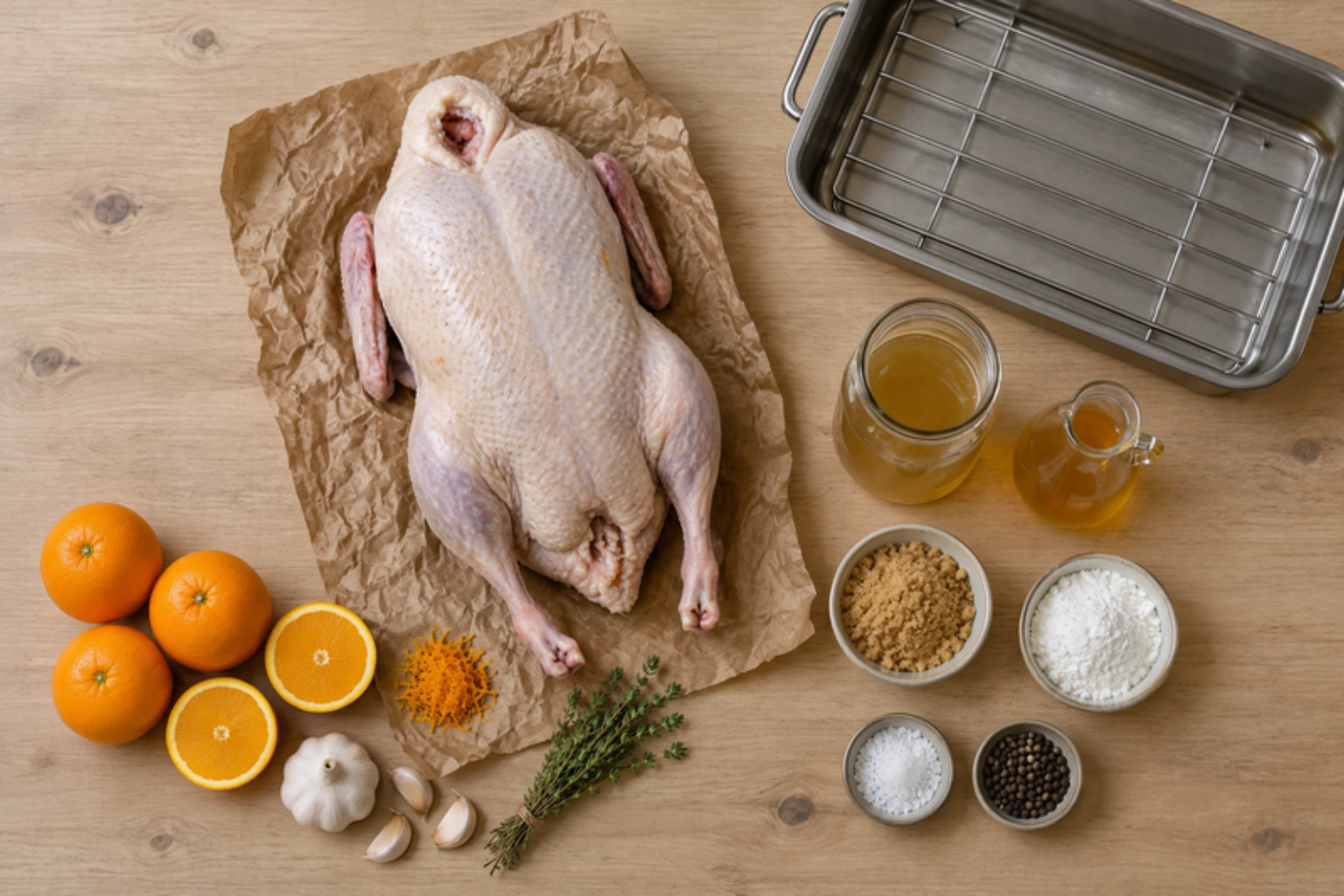
Ingredients
Equipment
Method
- Optional dry brine (best skin): pat the duck dry, trim the loose flap of neck skin, and prick the skin all over the breast and thighs with the tip of a sharp knife, held at a shallow angle so it pierces the skin and fat but not the meat. Rub with the kosher salt inside and out. Refrigerate uncovered on a rack for 12 to 24 hours.
- Heat the oven to 300°F (150°C). If you skipped the dry brine, pat dry, prick the skin as above, and salt now. Season with pepper and tuck the orange, garlic, and thyme into the cavity. Set the duck breast side up on a rack in a roasting pan.
- Roast 2 hours. Every 40 minutes, prick any thick fatty spots again and carefully pour the rendered fat from the pan into a heatproof jar. The skin will slowly turn golden and tighten as the fat renders out.
- Raise the oven to 400°F (200°C) and roast 20 to 30 minutes more, until the skin is deep mahogany, crisp, and crackly when tapped, and an instant-read thermometer in the thickest part of the thigh (not touching bone) reads 165°F (74°C).
- Move the duck to a cutting board and rest 15 minutes.
- While the duck finishes, make the sauce: in a small saucepan, simmer the orange juice, zest, brown sugar, vinegar, and broth over medium heat for 10 to 12 minutes, until reduced by about one third and the bubbles look larger and syrupy.
- Stir the cornstarch slurry, whisk it into the sauce, and simmer 1 minute until glossy and thick enough to coat a spoon. Whisk in 1 tablespoon duck fat and season with salt.
- Carve off the legs at the joint, then slice the breast meat off the bone. Serve with the warm orange sauce. Strain and refrigerate the remaining duck fat for roasting potatoes.
Notes
Made without: peanuts, tree nuts, milk, eggs, wheat, soy, fish, shellfish, sesame.
Label check: chicken broth (wheat, soy, yeast extract, added seed oils), pre-seasoned or brined ducks (soy, wheat, flavorings).
Doneness: USDA lists 165°F (74°C) for all poultry; check the thickest part of the thigh.
Storage: refrigerate carved duck up to 3 days and sauce up to 5 days. Reheat duck pieces skin side up at 375°F until hot (165°F) and the skin re-crisps. Freeze carved meat up to 2 months. Rendered duck fat keeps 3 months refrigerated or 6 months frozen.
Nutrition is an automated estimate.
