
Pesto is one of the first sauces to go when you cook for someone who avoids nuts or dairy. The classic jar is built on pine nuts and Parmesan, the “nut-free” versions often swap in walnuts or cashews, and store-bought tubs can hide seed oils too. If you’ve been skipping pesto altogether, this one brings it back: a bright, garlicky basil sauce made the simple way, with nothing in it that needs a second look.
Can you make pesto without pine nuts or cheese? Yes. Blend 3 cups fresh basil and 1 cup parsley with 2 garlic cloves, lemon zest, salt and 1/2 cup extra-virgin olive oil, then finish with lemon juice. The parsley adds body and keeps the color bright, and salt and lemon do the job cheese usually does. It takes about 10 minutes.
Pine nuts and cheese mostly add richness and salt to pesto. Good olive oil covers the richness, a little extra salt and lemon zest bring the savory punch, and a handful of parsley gives the sauce enough body to cling to pasta instead of sliding off. The flavor is fresh, herby and peppery, with a clean garlic finish. It’s made without peanuts, tree nuts, milk, eggs, wheat, soy, fish, shellfish and sesame, and it works on pasta, chicken, potatoes, roasted vegetables and even a leftover turkey sandwich.
Made without: peanuts, tree nuts, milk, eggs, wheat, soy, fish, shellfish, sesame.
Why You’ll Love This Pesto Without Nuts
- No pine nuts, walnuts, cashews, Parmesan or dairy-free cheese.
- Seven everyday ingredients and about 10 minutes in a food processor or blender.
- Stays bright green in the fridge for days, thanks to the parsley and a thin layer of olive oil.
- Freezes in ice cube trays, so a weeknight pasta is always a few minutes away.
- Made only with extra-virgin olive oil, never seed oils.
How Pesto Works Without Pine Nuts or Parmesan
In a traditional pesto, the pine nuts thicken the sauce and add a buttery taste, and the Parmesan brings salt and a savory, aged flavor. Take both out and most recipes turn thin and grassy. This version fixes that three ways. First, parsley (or baby spinach) adds leafy bulk, so the sauce has body without nuts. Second, salt goes in with the herbs instead of at the end, which seasons the leaves as they chop and gives the pesto the rounded, savory taste people expect from cheese. Third, lemon zest and a little juice wake everything up. A spoonful of nutritional yeast is optional; it adds a mild savory note but isn’t trying to be cheese.
Ingredients and Swap Ideas
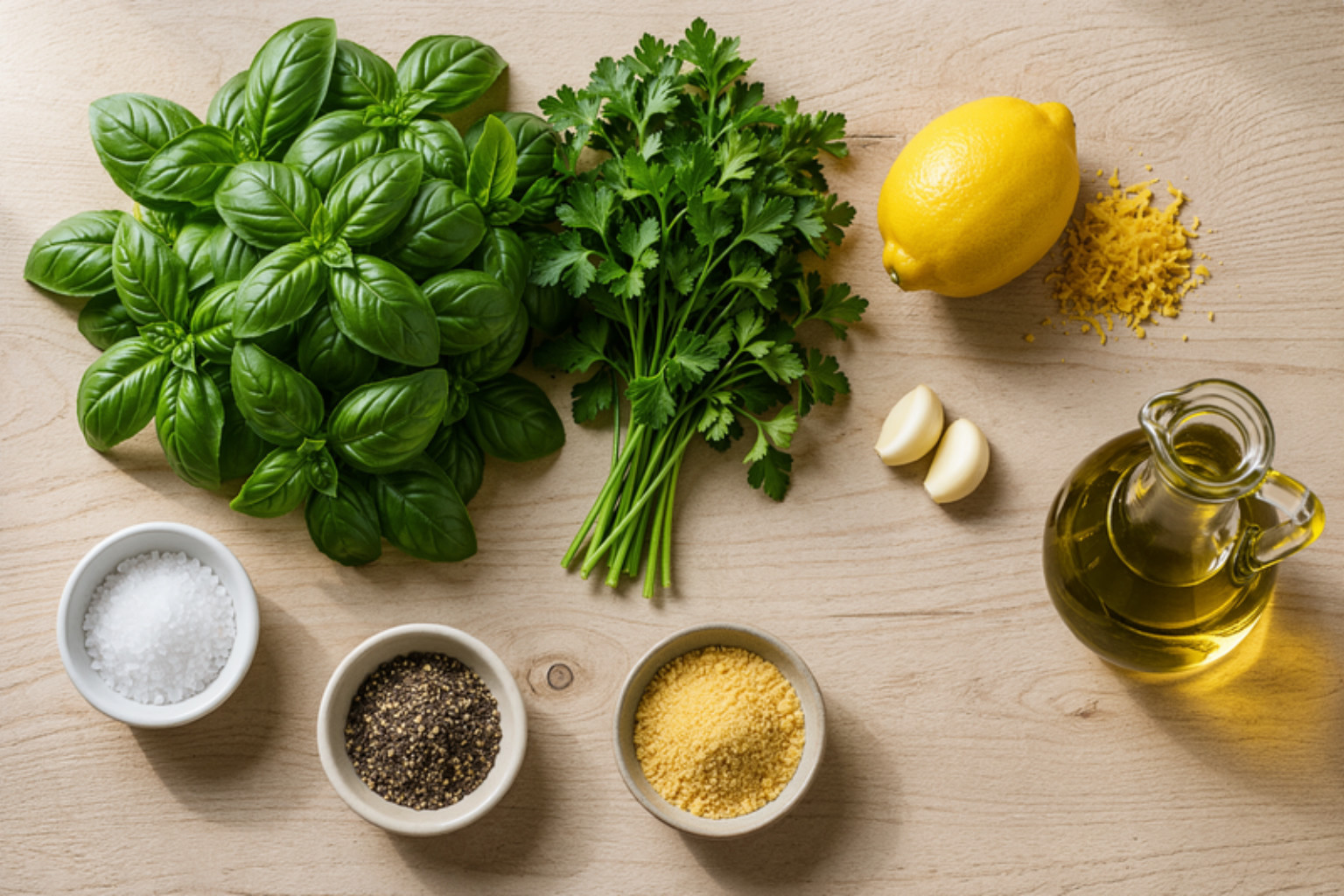
- Fresh basil (3 cups / 60 g, lightly packed): the main flavor. Winter basil from the store is often milder, so taste and add a few extra leaves if it seems weak.
- Flat-leaf parsley (1 cup / 20 g): keeps the color bright and thickens the sauce. Baby spinach works the same way with a milder taste. For a winter herb pesto, use half basil and half parsley.
- Garlic (2 cloves): raw garlic is strong; use 1 clove if you’re serving kids or want it milder.
- Lemon zest and juice: zest adds aroma without making the sauce sour; juice goes in last so you can taste as you go.
- Extra-virgin olive oil (1/2 cup / 120 ml): the only fat here. A fruity, mild olive oil tastes best; a very peppery one can turn bitter in the processor.
- Kosher salt and black pepper: salt carries the flavor once the cheese is gone, so don’t skimp.
- Nutritional yeast (1 tablespoon, optional): a savory note. Label check: some brands are processed alongside wheat or soy.
- Seeds (optional): some cooks add 2 tablespoons of toasted pumpkin seeds for a nuttier texture. They’re seeds, so skip them if you avoid seeds; the recipe doesn’t need them.
Kitchen Equipment
A small food processor (3 to 7 cups) or a blender, a rubber spatula, a Microplane for the zest, and a small jar with a lid for storage. A mortar and pestle works too if you like the old-world method; pound the garlic and salt first, then the herbs a handful at a time, then stir in the oil.
Step-by-Step Tips
- Dry the herbs well. Wet leaves dilute the oil and make the pesto look dull and watery. A salad spinner is the easiest route.
- Mince the garlic first. Dropping it into a running processor chops it finely, so you don’t bite into a raw chunk later.
- Pulse, don’t purée. Pulse the herbs with the salt and zest until they look like damp green confetti, then stream in the oil. Stop while you can still see tiny flecks of herb.
- Taste on something. Pesto tastes saltier on a spoon than on pasta. Try it on a cooked noodle or a bite of bread before adjusting the lemon and salt.
- Loosen with pasta water. When tossing with pasta, add a few tablespoons of the starchy cooking water so the sauce coats every piece.
Pesto Without Nuts or Cheese (Top 9 Free)
Ingredients
Equipment
Method
- Wash the basil and parsley and dry them very well in a salad spinner or between towels. Wet leaves make a watery, dull pesto.
- Drop the garlic into the food processor with the motor running and let it chop for 5 seconds, until finely minced and stuck to the sides. Scrape it down.
- Add the basil, parsley, lemon zest, salt, pepper and nutritional yeast (if using). Pulse 10 to 12 times, scraping down once or twice, until the leaves are finely chopped and look like damp green confetti.
- With the motor running, pour in the olive oil in a slow, steady stream over about 20 seconds. Stop as soon as the pesto looks glossy and loosely blended with tiny flecks of herb still visible. Over-processing warms the basil and turns it darker and bitter.
- Add 1 tablespoon lemon juice and pulse twice. Taste on a piece of bread or a cooked noodle: add more lemon for brightness or a pinch of salt if it tastes flat. For a pourable sauce, pulse in 1 to 2 tablespoons cold water.
- Use right away, or spoon into a small jar, press it flat and pour a thin layer of olive oil over the top to keep it green. Refrigerate up to 5 days or freeze up to 3 months.
Notes
Troubleshooting
- Pesto turned dark or brown: basil bruises and oxidizes. Process quickly, keep the herbs cool, and cover the surface with olive oil before storing. For the greenest pesto, blanch the basil in boiling water for 10 seconds, plunge it into ice water and squeeze it dry before blending.
- It tastes bitter: over-processing a strong extra-virgin olive oil can make it bitter. Pulse the herbs first, add the oil in a quick stream, and stop as soon as it comes together. A mild olive oil helps.
- It tastes flat: add salt a pinch at a time, then a little more lemon. Without cheese, those two make the biggest difference.
- Too thin or oily: pulse in another handful of parsley or spinach.
Storage, Freezing and Reheating
Spoon the pesto into a small jar, press it flat and pour a thin layer of olive oil over the top. It keeps in the fridge for up to 5 days. To freeze, fill an ice cube tray (about 2 tablespoons per cube), freeze until solid, then move the cubes to a freezer bag for up to 3 months. Thaw cubes in the fridge, or drop them straight into hot pasta, soup or a pan of roasted vegetables. Don’t heat pesto on its own; toss it with hot food off the heat so the basil stays fresh tasting.
Ways to use it
- Tossed with egg-free, gluten-free pasta (label check: many gluten-free pastas contain egg).
- Spooned over roasted chicken thighs, pork chops or grilled steak.
- Stirred into roasted or smashed potatoes, or drizzled on roasted vegetables.
- Spread on a leftover turkey sandwich or swirled into soup.
Try it spooned over our sheet pan chicken thighs with potatoes and green beans, tossed with roasted spaghetti squash, or as a dip for crispy smashed potatoes. Find more ideas in our Top 9 Free recipes.
Pesto Without Nuts FAQ
What can I use instead of pine nuts in pesto?
You don’t need a replacement. Extra parsley or spinach gives the sauce body, and olive oil supplies the richness. If you want a nutty crunch and seeds are fine for you, toasted pumpkin seeds are the usual swap; this recipe leaves them optional.
Is pesto good without Parmesan?
Yes. Parmesan mostly adds salt and savory flavor, so a little more salt, lemon zest and good olive oil cover it well. Nutritional yeast is an optional extra for a savory note. The result tastes fresher and more herb-forward than a cheesy pesto.
How do you keep homemade pesto green?
Add parsley or spinach, process quickly, and cover the surface with a thin layer of olive oil before refrigerating. Blanching the basil for 10 seconds and shocking it in ice water keeps it greenest of all, especially if you’re freezing it.
Can you freeze pesto without cheese?
Yes, and it freezes better than pesto with cheese. Freeze it in ice cube trays, then store the cubes in a freezer bag for up to 3 months.
A note before you cook: These recipes are ideas and suggestions, not medical or dietary advice. As with any recipe or ingredient, it is each reader’s responsibility to confirm what they can and cannot eat, read every ingredient label, and source quality ingredients that fit their own needs. Ingredient formulations change, so always check the package you’re using.
Leave a Reply