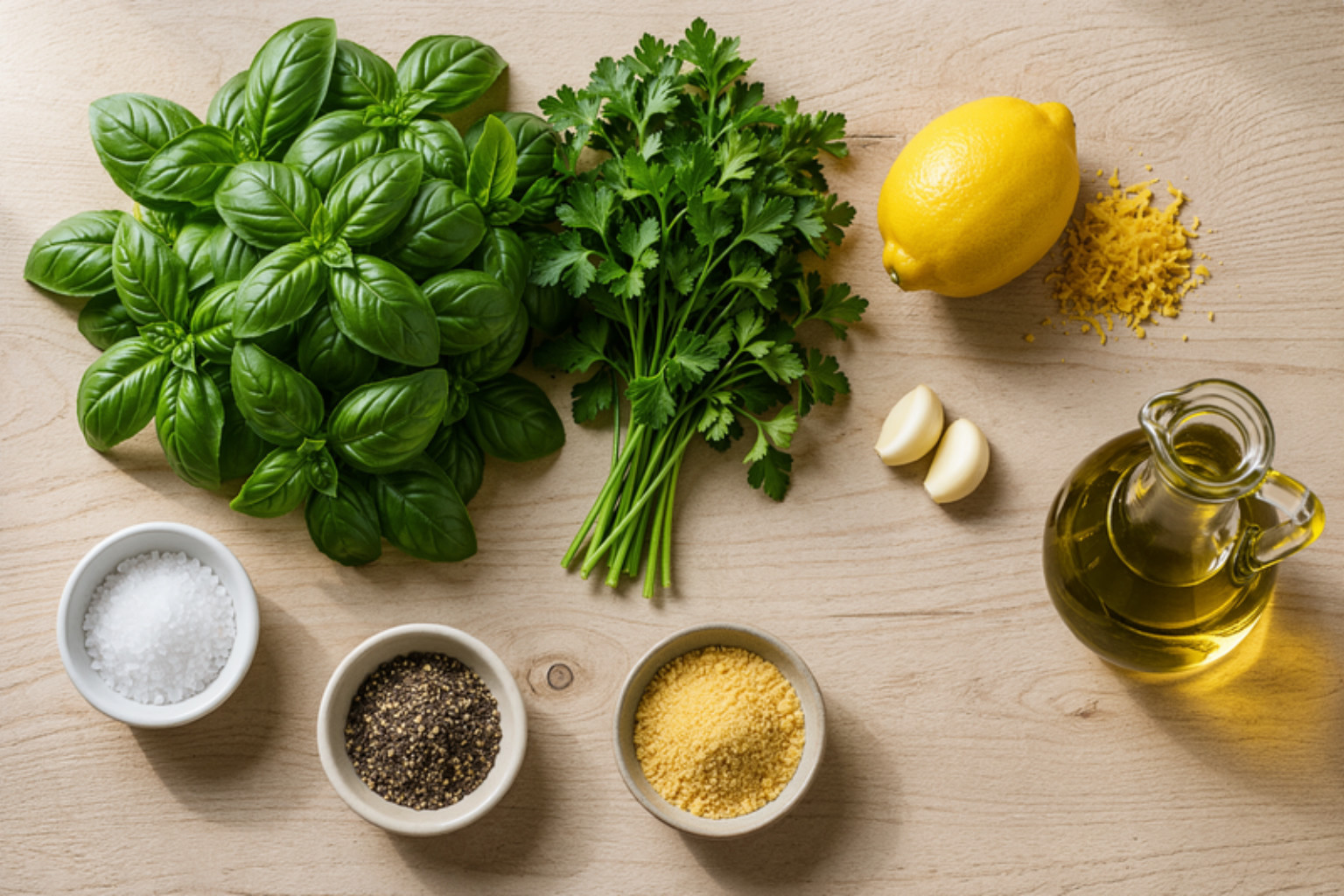
Ingredients
Equipment
Method
- Wash the basil and parsley and dry them very well in a salad spinner or between towels. Wet leaves make a watery, dull pesto.
- Drop the garlic into the food processor with the motor running and let it chop for 5 seconds, until finely minced and stuck to the sides. Scrape it down.
- Add the basil, parsley, lemon zest, salt, pepper and nutritional yeast (if using). Pulse 10 to 12 times, scraping down once or twice, until the leaves are finely chopped and look like damp green confetti.
- With the motor running, pour in the olive oil in a slow, steady stream over about 20 seconds. Stop as soon as the pesto looks glossy and loosely blended with tiny flecks of herb still visible. Over-processing warms the basil and turns it darker and bitter.
- Add 1 tablespoon lemon juice and pulse twice. Taste on a piece of bread or a cooked noodle: add more lemon for brightness or a pinch of salt if it tastes flat. For a pourable sauce, pulse in 1 to 2 tablespoons cold water.
- Use right away, or spoon into a small jar, press it flat and pour a thin layer of olive oil over the top to keep it green. Refrigerate up to 5 days or freeze up to 3 months.
Notes
Made without: peanuts, tree nuts, milk, eggs, wheat, soy, fish, shellfish, sesame. No pine nuts, walnuts, Parmesan or dairy-free cheese.
Fat: extra-virgin olive oil only.
Label check: nutritional yeast (if using). If you add the optional pumpkin seeds mentioned in the post, note that they are seeds; skip them if you avoid seeds.
For pasta: toss 1/2 cup pesto with 8 oz (227 g) cooked egg-free, gluten-free pasta and 2 to 4 tbsp of the pasta cooking water. Label check the pasta: many gluten-free pastas contain egg.
Storage: refrigerate in a jar under a thin layer of olive oil up to 5 days. Freeze in ice cube trays (about 2 tbsp per cube), then transfer to a freezer bag for up to 3 months. Thaw in the fridge or stir frozen cubes straight into hot pasta or soup.
Nutrition is an automated estimate.
