
If you need mashed potatoes without milk, most recipes point you to a stick of vegan butter, a scoop of mayonnaise, or a carton of plant milk, and many of those contain seed oils, soy, or nuts. These dairy-free mashed potatoes skip all of it: no milk, no butter, no mayo, and no plant butter. They’re the classic side for Sunday pot roast or the Thanksgiving table, made with nothing more than potatoes, olive oil, garlic, and warm broth.
Instead, the creaminess comes from the potatoes themselves. Yukon Golds are naturally buttery and smooth, olive oil adds richness, and warm broth (or the starchy cooking water) loosens everything into a soft, spoonable mash. Garlic simmered right along with the potatoes mashes in seamlessly for gentle flavor. The result tastes like a classic side, and it happens to be made without all nine major allergens.
Made without: milk, eggs, wheat, soy, peanuts, tree nuts, fish, shellfish, sesame.
Why You’ll Love These Mashed Potatoes
- No dairy and no plant milk. Just potatoes, olive oil, garlic, and broth.
- Creamy, not gluey. The right potato and the right mashing tool make all the difference.
- Make-ahead friendly. Reheat beautifully for holidays and busy weeknights.
- Feeds a crowd. Eight generous servings from 3 pounds of potatoes.
How to Make Mashed Potatoes Creamy Without Dairy
In traditional mashed potatoes, butter brings fat and flavor, and milk brings moisture. You can replace both functions without a dairy substitute:
- Fat: Extra-virgin olive oil coats the starch granules for a rich, silky texture. A mild olive oil keeps the flavor classic; a robust one adds a peppery note.
- Moisture: Warm chicken broth adds savory depth, while the reserved starchy cooking water adds creaminess without extra flavor.
- Texture: Yukon Gold potatoes have a medium starch content and a naturally creamy, golden flesh, so they need less added fat to taste rich.
Ingredients and Swap Ideas
- Yukon Gold potatoes: The best choice for creamy texture. Russets work too and make a fluffier, lighter mash, but they absorb more liquid, so have extra broth ready.
- Olive oil: Extra-virgin olive oil gives the mash its richness without butter. For a milder flavor, use light-tasting olive oil. Skip vegan butters and buttery spreads, which are usually built on seed oils and often contain soy.
- Chicken broth: Read the label, since some broths contain wheat, soy, or yeast extracts. For a vegetarian version, use the reserved potato water instead.
- Garlic: Simmering the cloves with the potatoes mellows them. Use more or less to taste.
Equipment
- A large pot
- A potato masher or ricer (a ricer gives the smoothest result)
- A small saucepan or microwave-safe cup for warming the broth
Step-by-Step Tips
- Start in cold, salted water. Starting cold lets the potatoes cook evenly from the outside in, so the edges don’t fall apart before the centers are done.
- Cook until fully tender. A knife should slide into the largest chunk with zero resistance, usually 15 to 20 minutes at a steady simmer.
- Dry them out. After draining, return the potatoes to the hot pot for a minute or two. Steaming off excess water helps them absorb the olive oil and broth.
- Add fat first, then liquid. Stirring in the oil before the broth coats the starch and keeps the mash creamy instead of gummy.
- Add liquid gradually. Stop when the potatoes are soft and hold a gentle peak on the spoon.
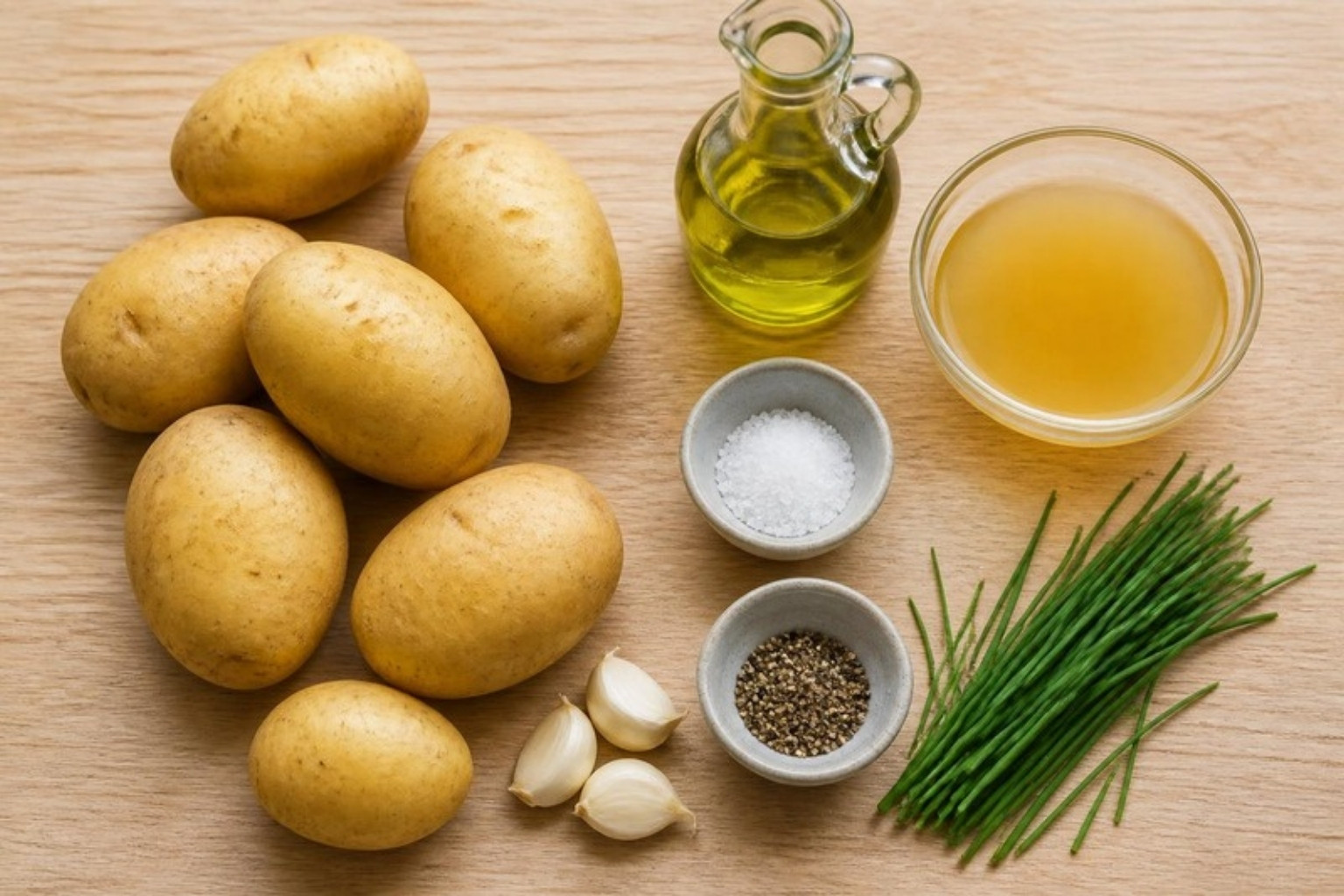
Dairy-Free Mashed Potatoes (Top 9 Free)
Ingredients
Equipment
Method
- Place the potatoes and garlic in a large pot and cover with cold water by 1 inch. Add the kosher salt.
- Bring to a boil, then reduce to a steady simmer. Cook 15 to 20 minutes, until a knife slides into the largest piece with no resistance.
- Reserve 1 cup of the cooking water, then drain well. Return the potatoes and garlic to the hot pot over low heat for 1 to 2 minutes, shaking the pot, to steam off excess moisture.
- Mash with a masher or press through a ricer. Avoid a blender or food processor, which makes potatoes gluey.
- Stir in the olive oil, then add the warm broth a splash at a time until the potatoes are as creamy as you like. Use reserved potato water if you need more liquid.
- Season with salt and pepper, top with chives and a drizzle of olive oil, and serve hot.
Notes
Troubleshooting
- Gluey or paste-like: The potatoes were overworked. Blenders, food processors, and hand mixers rupture starch cells. Use a masher or ricer and stop as soon as they’re smooth.
- Lumpy: The potatoes weren’t cooked long enough, or the chunks were uneven. Cut everything to about 2 inches and test the largest piece.
- Bland: Potatoes need more salt than you’d expect. Salting the cooking water seasons them from the inside, then adjust at the end.
- Too stiff after sitting: Stir in a few tablespoons of warm broth just before serving.
Storage, Freezing, and Reheating
- Refrigerator: Store in an airtight container up to 3 days.
- Freezer: Mashed potatoes can be frozen up to 1 month, though the texture becomes slightly grainier. Thaw overnight in the refrigerator.
- Reheating: Warm covered over low heat with a splash of broth, stirring often, or microwave in 1-minute bursts, stirring between each.
These potatoes are made to go with our Top 9 Free slow cooker pot roast and its cornstarch gravy. For a holiday plate, add a sweet potato casserole without pecans, candied yams without butter and a brown sugar glazed Christmas ham. For a second potato dish, try scalloped potatoes without cheese or milk or a bowl of mashed rutabaga with olive oil, or browse the sides on our Thanksgiving recipes page. Find more ideas in our side dishes and Top 9 Free recipes.
Frequently Asked Questions
How do you make mashed potatoes without milk?
Replace the milk with warm broth or the starchy water the potatoes cooked in, and replace the butter with olive oil. Adding the oil first, then the liquid a little at a time, keeps them creamy.
Can you make mashed potatoes without butter or vegan butter?
Yes. Extra-virgin olive oil does the job butter usually does, coating the starch so the mash tastes rich and stays silky. Many vegan butters and spreads are built on seed oils, and some contain soy or nuts, so this recipe uses olive oil only, with no plant butter and no mayonnaise.
What can I use instead of milk in mashed potatoes?
Warm broth or the starchy water the potatoes cooked in. Broth adds savory flavor, and the cooking water adds body without changing the taste. Add it a splash at a time until the potatoes hold a soft peak, and read the broth label, since some contain wheat, soy or yeast extracts.
What are the best potatoes for dairy-free mashed potatoes?
Yukon Golds. Their naturally creamy, buttery-tasting flesh means you need less added fat for a rich result.
Can I make these ahead for Thanksgiving?
Yes. Make them up to 2 days ahead, refrigerate, and reheat covered over low heat or in a slow cooker on LOW for 2 to 3 hours, stirring in warm broth as needed.
Can I leave the skins on?
Yes. Yukon Golds have thin skins, so scrub them well and leave them on for a rustic, smashed-style texture.
A note before you cook: These recipes are ideas and suggestions, not medical or dietary advice. As with any recipe or ingredient, it is each reader’s responsibility to confirm what they can and cannot eat, read every ingredient label, and source quality ingredients that fit their own needs. Ingredient formulations change, so always check the package you’re using.