
If you’ve been searching for an egg-free, dairy-free ham for Christmas dinner, the ham itself is rarely the hard part; the glaze is. Many glaze recipes start with butter and a big spoonful of mustard, the little glaze packet tucked into the bag can carry flavorings and thickeners you didn’t plan on, and some hams are brined with soy protein or hydrolyzed wheat. This brown sugar glazed Christmas ham keeps the ingredient list short and readable, and it’s made without eggs, milk and the rest of the top 9 allergens.
A fully cooked bone-in ham, spiral-sliced or whole, is wrapped and warmed gently in a low oven so it stays juicy. Then it gets brushed with a homemade brown sugar glaze made from brown sugar, pineapple or apple juice, cider vinegar, and warm ground cloves, and finished in a hot oven until the glaze bubbles into a sticky, glossy amber coat. There’s no mustard in it at all; the cider vinegar brings the tang that mustard usually adds.
Made without: peanuts, tree nuts, milk, eggs, wheat, soy, fish, shellfish, sesame. No mustard.
Why You’ll Love This Glazed Ham
- A five-ingredient glaze made from pantry staples, with no glaze packet and no mustard.
- Low, covered heating keeps a fully cooked ham juicy instead of dry.
- Feeds a crowd, and the glaze can be made days ahead.
- Leftovers freeze well for sandwiches, breakfast hash, and soup.
How the Glaze Works Without Mustard
Most ham glazes balance sweet brown sugar or honey with sharp mustard. Mustard is a seed, and some families avoid it. Here, cider vinegar provides the acidity that cuts the sweetness, and pineapple or apple juice adds fruitiness and helps the glaze turn glossy. Simmering the glaze before brushing thickens it so it clings to the ham instead of sliding into the pan. Brushing in layers during a short, hot finish caramelizes the sugar into a lacquered crust.
Ingredients and Swap Ideas
- Fully cooked bone-in ham (8–10 lb): A spiral-sliced ham is the easiest to serve, while a whole or half unsliced ham can be scored and studded with cloves. Read the ingredient list, because some brines include soy protein, hydrolyzed wheat protein, or flavorings, and discard any included glaze packet. This method is for hams labeled fully cooked; a “cook before eating” ham needs a different method.
- Brown sugar: Light brown sugar gives a classic glaze; dark brown sugar adds more molasses flavor. Pure maple syrup can replace up to half of it.
- Pineapple or apple juice: Use 100% juice. Pineapple is the classic choice; apple juice or sweet apple cider is milder.
- Apple cider vinegar: Provides the tang. Avoid malt vinegar, which is made from barley.
- Cloves and cinnamon: Ground cloves give the classic Christmas-ham flavor. Check spice labels for single-ingredient spices.
- No added fat needed: The ham’s own fat bastes it, so there’s no oil or butter in this recipe.
Kitchen Equipment
- Large roasting pan with a rack
- Heavy-duty aluminum foil
- Small saucepan and pastry brush
- Instant-read or probe thermometer (the most important tool here)
Step-by-Step Tips
- Take the chill off. An hour on the counter helps the ham heat more evenly.
- Cut side down and covered. Placing a spiral ham cut-side down and sealing it with foil keeps the slices from drying out.
- Heat gently. At 325°F, plan on 10 to 14 minutes per pound. Check the thickest part, away from the bone, and uncover at about 125–130°F.
- Simmer the glaze until syrupy. It’s ready when it coats the back of a spoon. A thin glaze runs off; a thick one clings.
- Glaze in layers. Brush every 5 to 7 minutes at 400°F until the surface is bubbling and deep amber. Sugar can go from caramelized to burnt quickly, so stay close.
- Finish at 140°F. USDA recommends reheating fully cooked hams from a USDA-inspected plant to 140°F; check the USDA safe temperature chart for details, including the 165°F guideline for leftovers and repackaged ham.
- Rest, then slice. Fifteen minutes lets the juices settle.
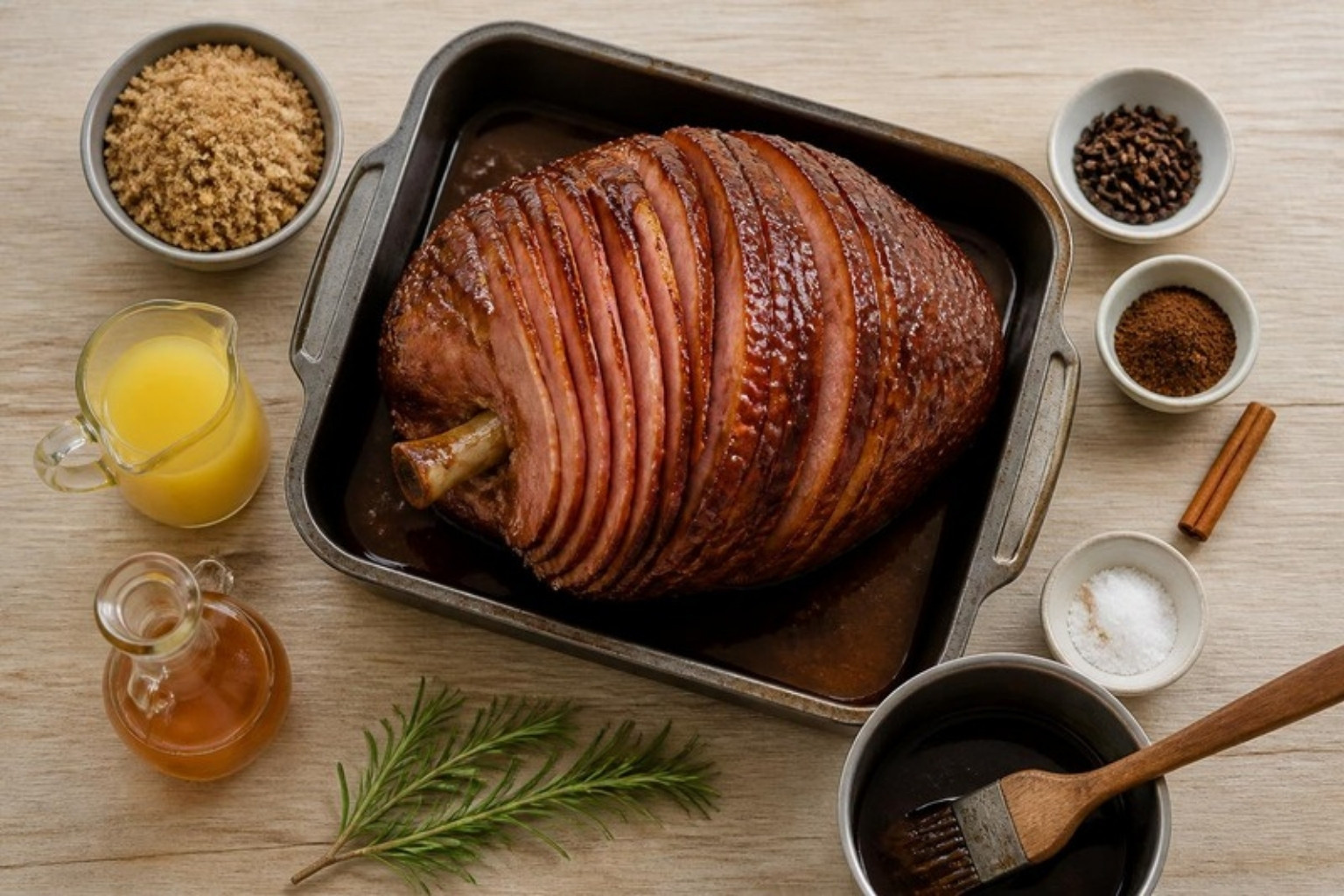
Brown Sugar Glazed Christmas Ham (Top 9 Free)
Ingredients
Equipment
Method
- Take the ham out of the fridge 1 hour before heating. Heat the oven to 325°F (165°C) with a rack in the lower third. Remove all packaging and discard any glaze packet.
- If the ham is unsliced, score the fat in a 1-inch (2.5 cm) diamond pattern about 1/4 inch (6 mm) deep and press a whole clove into the center of each diamond if you like.
- Set the ham cut-side down in the roasting pan (on a rack if you have one) and pour the water into the pan. Cover the ham and pan tightly with foil so it doesn’t dry out.
- Heat 10 to 14 minutes per pound (about 1 1/2 to 2 1/4 hours for an 8–10 lb ham), until a thermometer in the thickest part, not touching bone, reads about 125–130°F (52–54°C).
- Meanwhile, make the glaze: simmer the brown sugar, juice, vinegar, ground cloves, cinnamon, and salt in a small saucepan over medium heat, stirring, for 5 to 8 minutes, until syrupy and thick enough to coat a spoon. It thickens more as it cools; rewarm if it stiffens.
- Remove the foil and raise the oven to 400°F (205°C). Brush the ham generously with glaze, letting it run between spiral slices.
- Return the ham to the oven uncovered for 15 to 20 minutes, brushing with more glaze every 5 to 7 minutes, until the glaze is bubbling, lacquered, and deep amber at the edges and the ham reaches 140°F (60°C) in the thickest part. Watch closely in the last few minutes so the sugar doesn’t burn.
- Rest the ham 15 minutes, then slice or pull apart the spiral slices. Spoon pan juices and any remaining glaze over the slices.
Notes
Troubleshooting
- Dry ham: It was likely heated uncovered too long or at too high a temperature. Keep it wrapped until the final glazing step, and pull it at 140°F.
- Glaze runs off: Simmer it a few minutes longer, and pat the ham’s surface dry before the first coat.
- Glaze burns: Tent the darkest spots with foil, or move the pan to a lower rack for the last few minutes.
- Ham is still cold in the center: Re-cover with foil and return to the oven at 325°F, checking every 15 minutes.
Make-Ahead, Storage, and Freezing
- Glaze: Make it up to 5 days ahead and refrigerate. Rewarm it gently before brushing.
- Leftovers: Refrigerate within 2 hours and use within 3 to 4 days. Reheat slices covered with a splash of water to 165°F.
- Freezing: Freeze sliced ham in portions for up to 2 months; it’s handy for breakfast potatoes or soup.
- The bone: Freeze it for a later batch of soup or a pot of greens.
Build the rest of the holiday plate with mashed potatoes without milk or butter, scalloped potatoes without cheese or milk and a sweet potato casserole without pecans, or browse the dinner and sides aisle on the Christmas recipes page. Have leftover ham? Turn it into Iowa ham balls with brown sugar glaze, made without eggs or breadcrumbs.
Glazed Ham FAQ
How do you make a ham glaze without mustard?
Use an acid in its place. Cider vinegar gives the glaze the same tangy balance mustard usually provides, and fruit juice adds body and shine.
What temperature should a fully cooked ham reach?
USDA recommends reheating a fully cooked ham packaged in a USDA-inspected plant to 140°F. Leftover or repackaged cooked ham should be reheated to 165°F.
How long does it take to heat a spiral ham?
Plan on 10 to 14 minutes per pound at 325°F, covered, plus about 20 minutes uncovered for glazing. An 8- to 10-pound ham usually takes 2 to 2 1/2 hours in total.
Should I use the glaze packet that comes with the ham?
That’s up to you, but those packets often have long ingredient lists. A homemade glaze takes about 10 minutes and lets you know exactly what’s in it.
Is ham egg-free and dairy-free?
Plain ham is pork cured with salt, sugar and often smoke, so eggs and milk aren’t usually part of it. Brines, flavorings and glazes vary by brand, though, so read the ham’s own ingredient list. Words to look for include milk, whey, casein, butter, egg, soy protein, hydrolyzed wheat protein and “natural flavors” you can’t identify.
What should I check on a ham glaze label?
Store-bought glazes and the packets that come with spiral hams can include butter or other milk ingredients, mustard, soy sauce, wheat-based thickeners, malt vinegar (made from barley) and flavorings. Making the glaze from brown sugar, juice, cider vinegar and cloves keeps every ingredient in plain view.
Is this the same as ham balls?
No. This is a whole fully cooked ham, glazed and sliced. Ham balls are ground ham and pork rolled into balls and baked in a brown sugar glaze; our Iowa ham balls are made without eggs or breadcrumbs and are a good use for leftovers from this ham.
A note before you cook: These recipes are ideas and suggestions, not medical or dietary advice. As with any recipe or ingredient, it is each reader’s responsibility to confirm what they can and cannot eat, read every ingredient label, and source quality ingredients that fit their own needs. Ingredient formulations change, so always check the package you’re using.