
Ask anyone who grew up around an Iowa church basement or a small-town potluck about ham balls, and you’ll probably get a story. They’re a Midwestern classic: ground ham and pork rolled into balls, baked in a dish of brown sugar and vinegar glaze, and basted until they’re sticky, glossy, and dark at the edges. The trouble for allergy families is the binder. Most family recipes call for eggs and milk, plus crushed graham crackers or saltines, and often a spoonful of dry mustard in the glaze.
This version keeps the sweet-tangy, smoky flavor that makes ham balls worth the trouble. Quick oats soaked in oat milk do the binding, grated onion keeps the mixture moist, and the glaze is just brown sugar, cider vinegar, water, a little tomato paste for color, and a pinch of cloves. They’re good for a Sunday dinner, a potluck, or a make-ahead freezer meal. Looking for a whole glazed ham for the holiday table instead? Our brown sugar glazed Christmas ham is made without eggs or dairy, and its leftovers are a good start for these ham balls.
Made without: peanuts, tree nuts, milk, eggs, wheat, soy, fish, shellfish, sesame.
Why You’ll Love This Recipe
- Sweet, tangy, and smoky, with a lacquered glaze that thickens right in the pan.
- No eggs, crackers, or breadcrumbs. Soaked oats hold the ham balls together and keep them tender.
- A good use for leftover ham, including the end of a holiday ham.
- Freezer-friendly. Freeze them cooked in their glaze for an easy dinner later.
How Ham Balls Hold Together Without Eggs or Crumbs
In a meatball or meatloaf, eggs and crumbs do two jobs: they bind the meat and hold moisture so it doesn’t turn dense. Oats do both. When quick oats soak in oat milk for a few minutes, they swell and turn soft and slightly gluey, which is what makes the mixture hold its shape. As the ham balls bake, the oats trap juices that would otherwise run out into the pan. The ground pork adds fat and a softer texture than ham alone, so the balls stay juicy instead of springy. The glaze reduces as it bakes and basting builds it into a sticky coating, so there’s no need for mustard or a bottled sauce.
Ingredients and Swap Ideas
Imperial and metric amounts are in the recipe card below.
- Ham: any fully cooked smoked ham works: a ham steak, the end of a spiral ham, or a chunk of boneless ham. Pulse it in a food processor until it looks like coarse ground meat. Many Midwestern meat counters also sell ground ham or a “ham loaf mix” of ham and pork. Ingredients vary a lot, and some hams and ham mixes include soy protein, milk derivatives, or flavorings, so read the label or ask the butcher.
- Ground pork: regular ground pork, not lean, keeps the balls juicy. Ground beef works too and gives a firmer, beefier ham ball.
- Oats: quick oats blend in best. Old-fashioned rolled oats work if you pulse them a few times first. Choose certified gluten-free oats if you avoid wheat.
- Oat milk: choose one with no added oil, since many contain canola or sunflower oil. Unsalted broth or water also work.
- Glaze: pineapple juice can replace the water for a sweeter glaze. The tomato paste is optional and only adds color and a little depth.
- Fat: a teaspoon of extra-virgin olive oil greases the dish. No cooking spray needed.
Kitchen Equipment
A food processor grinds the ham quickly; without one, chop it very finely with a chef’s knife. You’ll also need a 9×13-inch baking dish, a small saucepan for the glaze, a large bowl, a basting brush or spoon, and an instant-read thermometer to check the pork.
Step-by-Step Tips
- Pulse, don’t purée. Stop processing the ham when it looks like coarse ground meat. A paste makes bouncy, hot-dog-textured ham balls.
- Soak the oats first. Five minutes in the oat milk is enough. Dry oats added straight to the meat won’t bind as well.
- Mix gently. Use your hands and stop as soon as everything is evenly combined. Overworked meat gets tough.
- Wet your hands to shape. The mixture is soft; damp hands keep it from sticking. A 1/4-cup scoop keeps the balls even so they cook at the same rate.
- Baste often. Every 10 to 15 minutes, spoon the pan juices back over the tops. That’s what builds the glossy, dark glaze.
- Check the temperature. The ham is already cooked, but the raw pork isn’t. Ham balls are done at 160°F in the center. The USDA safe temperature chart lists temperatures for other ground meats if you swap.
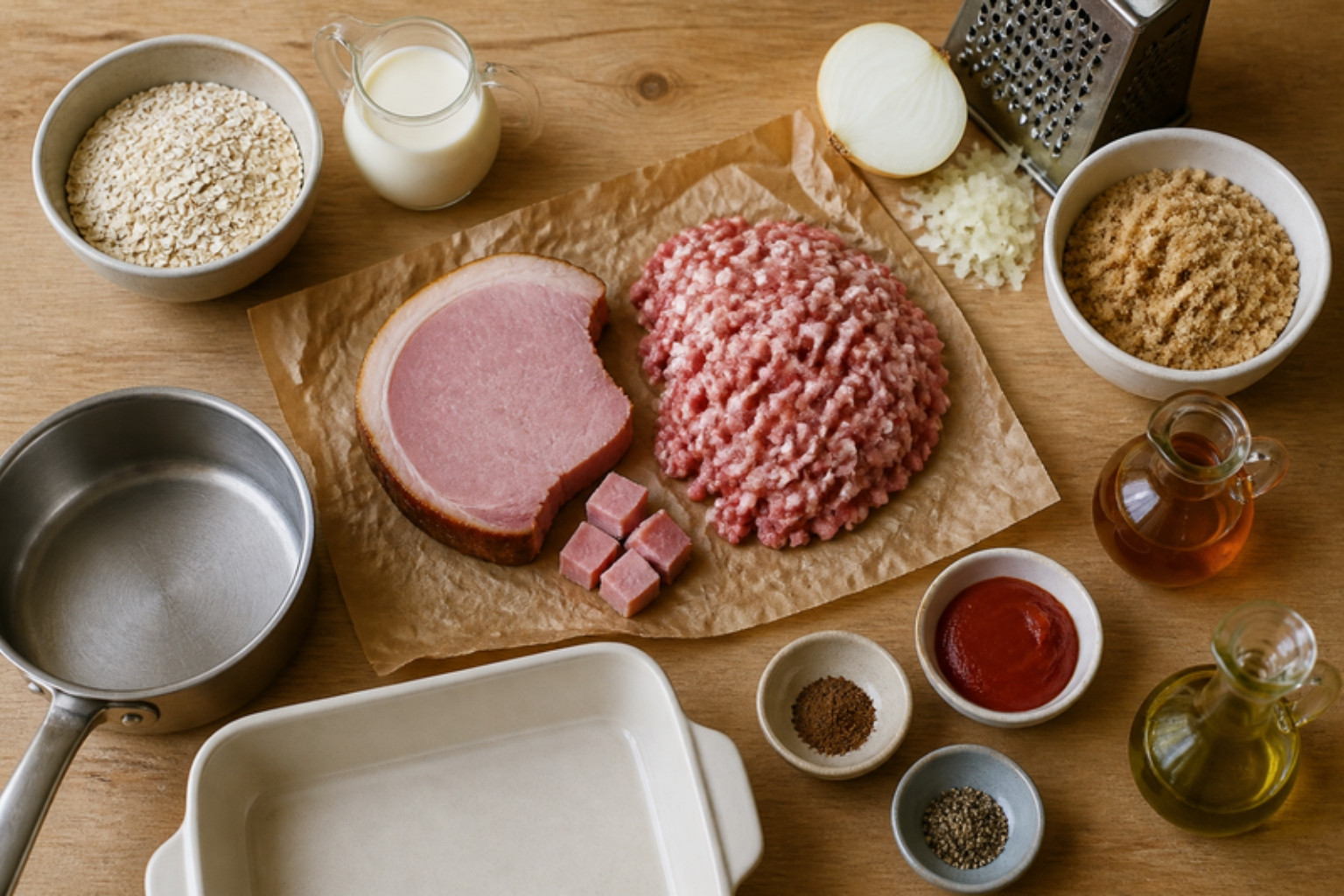
Iowa Ham Balls with Brown Sugar Glaze, No Eggs or Breadcrumbs (Top 9 Free)
Ingredients
Equipment
Method
- Heat the oven to 350°F (175°C). Rub the 9×13-inch baking dish with the olive oil.
- Make the glaze: in a small saucepan, combine the brown sugar, cider vinegar, water, tomato paste (if using), and cloves. Bring to a simmer over medium heat, stirring, until the sugar dissolves and the glaze is clear and syrupy, about 3 minutes. Set aside.
- In a large bowl, stir the oats and oat milk together and let them soak for 5 minutes, until the oats look swollen and the milk is mostly absorbed.
- Add the ground ham, ground pork, grated onion, and pepper. Mix with your hands just until evenly combined; the mixture should feel soft and slightly sticky but hold together when pressed.
- With damp hands, shape into about 24 balls, roughly 1/4 cup (60 g) each, and set them in the baking dish in rows, almost touching.
- Pour half the glaze over the ham balls. Bake uncovered for 20 minutes, then baste with the pan juices and some of the remaining glaze. Bake 25 to 35 minutes more, basting every 10 to 15 minutes, until the glaze is bubbling and sticky, the tops are lacquered and dark amber, and the centers reach 160°F (71°C) on an instant-read thermometer.
- Rest 5 minutes, spoon the thickened glaze from the dish over the top, and serve.
Notes
Troubleshooting
- Ham balls fall apart: the oats may not have soaked long enough, or the mix is too wet from very juicy onion. Chill the shaped balls for 20 minutes before baking, or add 2 more tablespoons of oats.
- Too salty: ham varies. If yours is very salty, use more ground pork and less ham (a 1:1.5 ratio), and don’t add any salt.
- Glaze burns at the edges: your dish may be too big, leaving bare spots. Use a dish where the balls nearly touch, or add 1/4 cup water halfway through.
- Glaze is thin: pour the pan juices into a small saucepan and simmer for a few minutes until syrupy, then spoon it back over.
Storage, Freezing, and Reheating
Refrigerate leftovers in their glaze for up to 4 days. To freeze, cool the cooked ham balls, pack them with the glaze in a freezer container, and freeze for up to 3 months. Thaw overnight in the fridge, then reheat covered at 325°F for 20 to 25 minutes, or until hot in the center (165°F). You can also shape the raw balls, freeze them on a sheet pan, then bag them; bake from frozen with the glaze, adding 15 to 20 minutes and checking for 160°F.
More Old-Fashioned Dinners
If you have a whole ham to start with, our brown sugar glazed Christmas ham (made without eggs or dairy) uses a similar mustard-free glaze, and its leftovers are perfect for this recipe. For another oat-bound, egg-free classic, try the Salisbury steak with mushroom onion gravy. If you want to make ham balls the traditional way with graham cracker crumbs, our homemade graham crackers are made without wheat (that swap is untested here). Browse more dinner recipes.
Frequently Asked Questions
What are ham balls?
Ham balls are a Midwestern dish, especially popular in Iowa, made from ground ham mixed with ground pork or beef, shaped into balls, and baked in a sweet and tangy brown sugar glaze. They’re a fixture at church dinners, potlucks, and holiday buffets. Think of them as glazed ham meatballs; they aren’t a whole baked ham, though they’re a good way to use one up.
Can I make this as a ham loaf?
Yes. Press the mixture into a 9×5-inch loaf pan rubbed with olive oil, pour half the glaze over it, and bake at 350°F for about 70 to 80 minutes, basting every 20 minutes, until the center reaches 160°F. Rest 10 minutes before slicing.
Can I make ham balls ahead?
Yes. Shape the ham balls, cover the dish, and refrigerate up to 24 hours. Make the glaze ahead too and warm it before pouring it over. Add about 5 minutes to the bake time if they go into the oven cold.
What do you serve with ham balls?
Mashed or baked potatoes catch the extra glaze nicely. Green beans with bacon, roasted carrots, or a crisp vinegar coleslaw balance the sweetness.
A note before you cook: These recipes are ideas and suggestions, not medical or dietary advice. As with any recipe or ingredient, it is each reader’s responsibility to confirm what they can and cannot eat, read every ingredient label, and source quality ingredients that fit their own needs. Ingredient formulations change, so always check the package you’re using.