
If you’ve looked for scalloped potatoes for a holiday table where milk, butter, and cheese are off the list, you’ve probably found a lot of recipes that lean on cream, a block of cheddar, and a flour roux. Take those away and most versions turn watery or bland. This one is built differently from the start. Thin slices of Yukon Gold potatoes bake in a sauce of softened onion, garlic, thyme, oat milk, and broth, thickened with a little cornstarch and enriched with extra-virgin olive oil. The potatoes’ own starch finishes the job, so the sauce turns thick and creamy around tender layers while the top bakes up golden with crisp, browned edges.
These are scalloped potatoes without cheese or milk: thin Yukon Gold slices baked in a creamy sauce of oat milk, broth, softened onion and garlic, thickened with cornstarch and enriched with olive oil. The dish is made without milk, eggs, wheat, soy, peanuts, tree nuts, fish, shellfish and sesame, with no butter, cream, cheese or flour.
It’s a make-ahead-friendly side for Thanksgiving dinner, a Christmas ham, or a Sunday roast, and it fits alongside the other dishes on our Thanksgiving recipes page.
Made without: peanuts, tree nuts, milk, eggs, wheat, soy, fish, shellfish, sesame.
Why You’ll Love This Recipe
- Creamy, sliceable layers without cream, cheese, butter, or flour.
- Everyday grocery ingredients: potatoes, onion, garlic, oat milk, broth, cornstarch, and olive oil.
- Bakes up to a day ahead, which frees the oven on the big day.
- A classic holiday side that sits happily next to turkey, ham, or roast beef.
How Scalloped Potatoes Work Without Milk or Cheese
Classic scalloped potatoes depend on dairy for two things: body and richness. Here, body comes from starch. A small amount of cornstarch thickens the oat milk and broth on the stove so the sauce already coats a spoon before it goes in the oven, and the unrinsed potato slices release more starch as they bake. That’s why the slices aren’t rinsed: the cloudy film on them is free thickener.
Richness comes from extra-virgin olive oil, used twice: once to slowly soften the onions, which adds a sweet, savory base, and once drizzled over the top so the final uncovered bake browns the edges. Broth adds savory depth that cheese would normally bring, and a pinch of nutmeg and fresh thyme give the sauce that familiar holiday-side flavor.
Ingredients & Swap Ideas
- Yukon Gold potatoes, 3 lb (1.36 kg): they hold their shape and turn buttery-tender. Russets work but break down more and make a softer, fluffier bake.
- Extra-virgin olive oil, 4 tbsp (55 ml): for the onions and the top. Rendered bacon fat is a good savory swap for the onions. Skip butter substitutes and cooking spray, which are usually made with seed oils.
- Unsweetened oat milk with no added oil, 2 cups (480 ml): many oat milks contain canola or sunflower oil, so read the label and choose a certified gluten-free one. Use it cold so the cornstarch whisks in without lumps.
- Chicken broth, 1 1/2 cups (360 ml): check for wheat, soy, yeast extract, and added oil. A homemade broth or vegetable broth with a clean label works too.
- Cornstarch, 3 tbsp (24 g): tapioca starch is a fine swap, though the sauce will be a touch stretchier.
- Onion, garlic, thyme, nutmeg, salt, and pepper: nutmeg is optional. Fresh rosemary or sage can stand in for thyme.
Kitchen Equipment
- 9×13-inch (3-quart) baking dish
- Mandoline or a sharp chef’s knife for even 1/8-inch (3 mm) slices
- Large saucepan or deep skillet and a whisk
- Aluminum foil
Step-by-Step Tips
- Slice evenly. Even 1/8-inch slices cook at the same rate. Thick slices stay firm in the center while thin ones collapse.
- Cook the onions until soft and just golden. Six to eight minutes over medium heat gives the sauce a sweet, savory base without browning the garlic.
- Thicken on the stove. Whisk the cornstarch into cold oat milk and broth first, then simmer until the sauce coats a spoon. A sauce that starts thick bakes up creamy instead of soupy.
- Coat every slice. Folding the potatoes into the sauce in the pan is faster than layering and gets sauce between every slice.
- Bake covered, then uncovered. Foil steams the potatoes tender; the uncovered stretch browns the top. It’s done when a knife slides through the center with no resistance and the sauce bubbles thickly at the edges.
- Rest 15 minutes. The sauce sets as it cools slightly, so squares hold together on the plate.
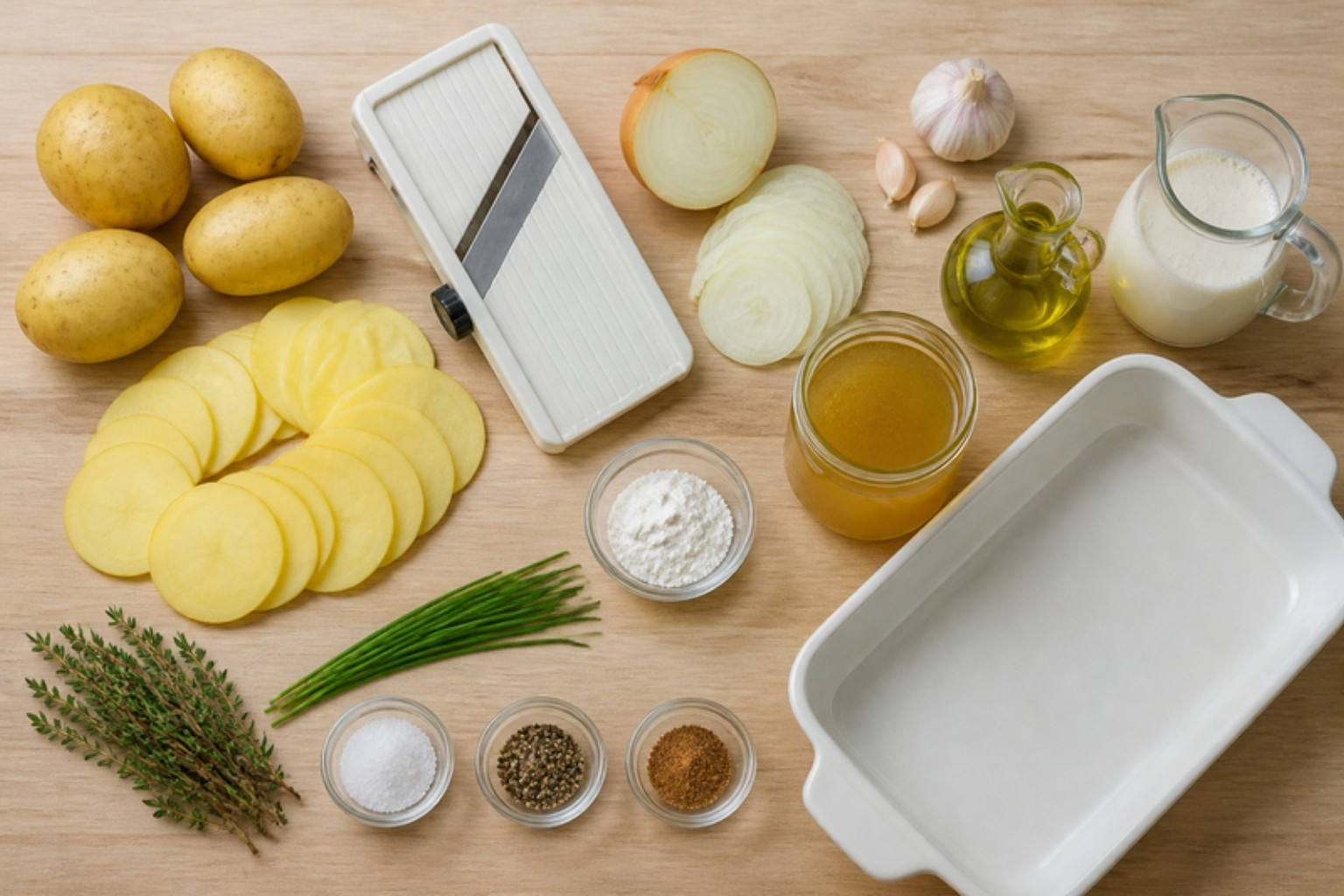
Scalloped Potatoes, No Milk or Cheese
Ingredients
Equipment
Method
- Heat the oven to 375°F (190°C). Lightly grease a 9×13-inch baking dish with olive oil.
- Slice the potatoes 1/8 inch (3 mm) thick. Keep them in a bowl, unrinsed; the surface starch helps thicken the sauce.
- Warm 3 tbsp olive oil in a large saucepan over medium heat. Cook the onion with a pinch of salt for 6 to 8 minutes, until soft, translucent, and just turning golden at the edges. Add the garlic and cook 30 seconds, until fragrant.
- In a bowl, whisk the cold oat milk, broth, cornstarch, salt, pepper, nutmeg, and thyme until no lumps remain. Pour into the pan and cook, whisking, until it simmers and thickens enough to coat a spoon, 2 to 3 minutes.
- Add the potato slices to the pan and fold gently to coat every slice. Spread into the dish and press the top layer flat so the sauce comes up around the edges. Drizzle with the remaining 1 tbsp olive oil.
- Cover tightly with foil and bake 45 minutes. Uncover and bake 30 to 40 minutes more, until a knife slides through the center with no resistance, the top is deep golden with browned edges, and the sauce bubbles thickly around the sides.
- Rest 15 minutes so the sauce sets before cutting. Sprinkle with chives or parsley and serve.
Notes
Troubleshooting & Tips
- Sauce is thin after baking: the potatoes may have been rinsed, or the sauce didn’t fully simmer before baking. Let the dish rest a full 15 to 20 minutes; it thickens a lot as it cools.
- Sauce looks curdled or grainy: oat milk can separate if it boils hard for a long time. Keep the stovetop simmer brief, and bake at 375°F (190°C), not hotter.
- Potatoes still firm in the middle: re-cover with foil and bake 10 to 15 minutes more. Uneven slicing is the usual cause.
- Top isn’t browning: brush on a little more olive oil and give it 5 minutes on the upper rack, watching closely.
Make-Ahead, Storage & Freezing
Make ahead: bake the dish up to 1 day ahead, cool, cover, and refrigerate. Reheat covered at 350°F (175°C) for 25 to 35 minutes, until hot in the center (165°F / 74°C), then uncover for the last few minutes to re-crisp the top.
Storage: refrigerate leftovers in a covered container up to 4 days. Reheat individual squares in the oven or microwave until steaming.
Freezing: you can freeze baked scalloped potatoes up to 1 month, wrapped well. Thawed potatoes are a bit softer and the sauce may look slightly grainy, so stir any loose sauce back in as it reheats. For the best texture, bake it fresh or a day ahead.
More Holiday Sides
Round out the table with mashed potatoes without milk or butter and green bean casserole without cream soup, or serve these scalloped potatoes with a roast turkey without butter or a brown sugar glazed Christmas ham. Browse every Top Nine Free side by aisle on the Thanksgiving recipes and Christmas recipes pages.
FAQ
Can you make scalloped potatoes without milk?
Yes. In this recipe, unsweetened oat milk and broth thickened with cornstarch replace milk and cream, and olive oil replaces butter. Choose an oat milk with no added oil and a certified gluten-free label.
What’s the difference between scalloped and au gratin potatoes?
Traditionally, scalloped potatoes bake in a creamy sauce, while au gratin potatoes add cheese and often a crumb topping. This version is the scalloped style, with no cheese.
Can I use a different plant milk?
Oat milk is used here because its mild flavor and natural starch suit a savory sauce. Other plant milks change the made-without profile (soy milk contains soy, and almond or cashew milk are tree nuts) and many contain added seed oils, so read labels carefully if you swap.
Can I make this in a smaller pan?
Halve everything and use an 8×8-inch dish. Start checking for doneness about 15 minutes sooner on the uncovered bake.
Can you make scalloped potatoes without cheese?
Yes. Scalloped potatoes never needed cheese; cheese is what turns them into au gratin potatoes. Here the savory depth comes from broth, slowly softened onion and garlic, thyme and a pinch of nutmeg, and the top browns from a final drizzle of olive oil rather than a cheese crust.
What can I use instead of butter and cream in scalloped potatoes?
Extra-virgin olive oil stands in for butter, and cold oat milk plus broth thickened with cornstarch stands in for cream. Simmer the sauce until it coats a spoon before it goes in the oven, and leave the potato slices unrinsed so their starch finishes thickening it. Skip plant butters and cooking spray, which are usually made with seed oils.
A note before you cook: These recipes are ideas and suggestions, not medical or dietary advice. As with any recipe or ingredient, it is each reader’s responsibility to confirm what they can and cannot eat, read every ingredient label, and source quality ingredients that fit their own needs. Ingredient formulations change, so always check the package you’re using.