
Wild rice is Minnesota’s state grain, and every fall it shows up on Upper Midwest tables in soups, hotdishes, and stuffings. This pilaf is one of the simplest and prettiest ways to serve it: long, dark grains simmered in broth until they split open and turn tender-chewy, then tossed with mushrooms browned in olive oil, sweet onion, celery, fresh thyme, and a handful of tart dried cranberries.
Many wild rice side dishes finish with butter and toasted pecans. This one gets its richness from olive oil and well-browned mushrooms instead, and its bright finish from a splash of cider vinegar and fresh parsley. It’s hearty enough to anchor a vegetable plate, festive enough for Thanksgiving, and it reheats well, which makes it a good make-ahead side when the oven is full.
Made without: peanuts, tree nuts, milk, eggs, wheat, soy, fish, shellfish, sesame.
Why You’ll Love This Recipe
- Nutty and chewy: real wild rice has a toasty, earthy flavor and a satisfying bite.
- Sweet-tart balance: cranberries and cider vinegar brighten the savory mushrooms.
- Holiday friendly: make it a day or two ahead and rewarm on the stovetop.
- No butter or nuts needed: browned mushrooms and olive oil bring the depth.
How It Gets Rich Without Butter or Pecans
In a classic pilaf, butter adds a round, rich flavor and pecans add crunch and toasty fat. The replacements here come from technique. Mushrooms browned in a hot pan without crowding develop deep savory, almost meaty flavors through browning. The key is to spread them in a single layer and leave them alone for a few minutes before stirring, so they sear instead of steam.
Extra-virgin olive oil carries those flavors and gives the grains a glossy finish. Wild rice itself contributes the nutty note that pecans usually supply, especially when it’s cooked just until the grains split, not until they burst and turn mushy. Celery stays slightly crisp for texture. If you miss the crunch, fried sage leaves or finely diced crisp apple are good nut-free toppers.
Ingredients & Swap Ideas
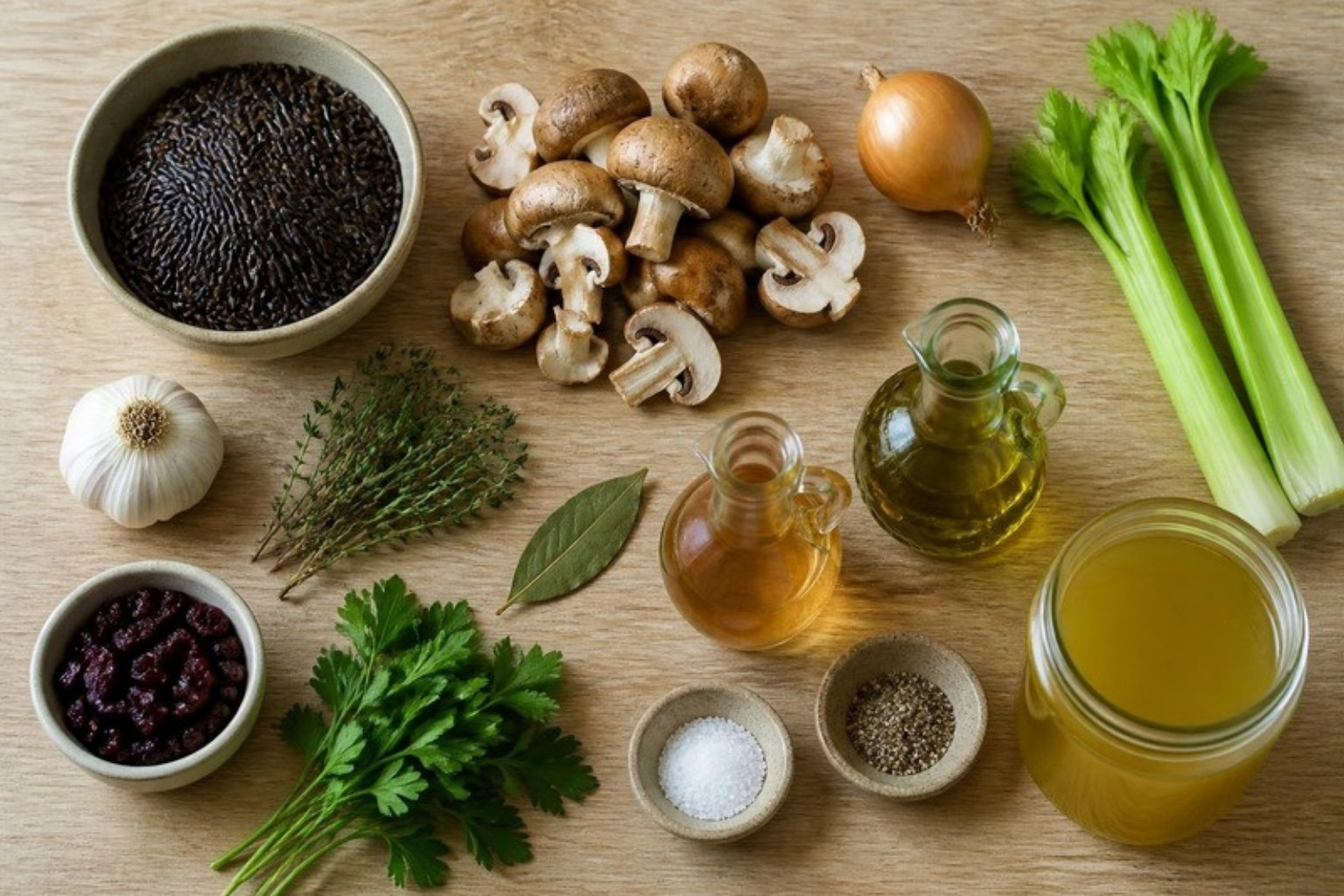
- Wild rice (1 cup / 160 g): look for 100% wild rice, not a seasoned blend or mix with a flavor packet. Hand-harvested lake wild rice cooks faster (often 25 to 30 minutes) than cultivated paddy rice, so start checking early.
- Chicken or vegetable broth (3 cups / 720 ml): label check, since some broths contain soy, yeast extracts, or added oils.
- Extra-virgin olive oil (3 Tbsp): for browning the mushrooms and softening the vegetables. Bacon fat is a savory swap. No cooking spray.
- Cremini mushrooms (8 oz / 225 g): white button or a mix of wild mushrooms also work.
- Dried cranberries (1/2 cup / 60 g): an important label check. Many sweetened dried cranberries are lightly coated in sunflower oil to keep them from clumping. Look for a brand with no added oil, or use chopped dried cherries or golden raisins with no added oil.
- Onion, celery, garlic, and fresh thyme: the classic aromatic base. Use 3/4 tsp dried thyme if fresh isn’t available.
- Apple cider vinegar and parsley: a final splash of acid wakes up the whole dish. Avoid malt vinegar, which is made from barley.
Kitchen Equipment
- A medium saucepan with a lid for the wild rice.
- A large (12-inch) skillet, so the mushrooms have room to brown.
- A fine-mesh strainer for rinsing and draining.
Step-by-Step Tips
- Rinse the rice. It removes dust and any loose hulls.
- Watch for the split. Wild rice is done when most grains have cracked open to show a pale interior but still have some chew. Drain any extra broth rather than cooking it all away.
- Don’t crowd the mushrooms. If your skillet is smaller, brown them in two batches.
- Warm the cranberries in the pan. A couple of minutes in the hot rice plumps them and spreads their sweetness.
- Finish off the heat. Stir in the vinegar and parsley last so they stay bright.
Minnesota Wild Rice Pilaf with Mushrooms and Cranberries
Ingredients
Equipment
Method
- Rinse the wild rice in a fine-mesh strainer under cold water until the water runs clear.
- Combine the rice, broth, and bay leaf in a saucepan. Bring to a boil, cover, and simmer over low heat 45 to 55 minutes, until most grains have split open to show their pale insides and the rice is tender but still pleasantly chewy. Drain any remaining liquid and discard the bay leaf.
- While the rice cooks, heat 2 Tbsp olive oil in a large skillet over medium-high heat until shimmering. Add the mushrooms in a single layer and leave them alone 3 to 4 minutes, until browned on the bottom. Stir and cook 2 to 3 minutes more, until golden and any released liquid has cooked off.
- Lower the heat to medium. Add the remaining 1 Tbsp oil, the onion, celery, and a pinch of salt. Cook 6 to 8 minutes, until the onion is soft and the celery is tender-crisp. Add the garlic and thyme and cook 30 seconds, until fragrant.
- Add the cooked wild rice, dried cranberries, salt, and pepper to the skillet. Toss over medium heat 2 to 3 minutes, until hot and the cranberries plump slightly.
- Off the heat, stir in the cider vinegar and parsley. Taste, adjust the salt, and serve warm.
Notes
Troubleshooting & Tips
- Rice still hard after an hour: cultivated wild rice can take up to 60 minutes. Add 1/2 cup hot water or broth if the pot runs dry and keep simmering.
- Mushy, curled grains: it cooked too long. Next time start checking at 40 minutes (25 for hand-harvested).
- Bland pilaf: add salt a pinch at a time and another splash of vinegar. Unsalted broth needs more seasoning.
- Soggy mushrooms: the pan was crowded or not hot enough. Brown in batches over medium-high heat.
Storage, Freezing & Reheating
Fridge: refrigerate in an airtight container for up to 4 days. Freezer: freeze in bags for up to 3 months; thaw overnight in the fridge. Reheat: warm in a covered skillet over medium-low heat with a splash of broth, stirring, until steaming. For holidays, cook the wild rice up to 2 days ahead and finish the pilaf the day of.
More Fall Sides and Wild Rice Ideas
Have extra wild rice? Use it in our dairy-free chicken and wild rice soup. For a full Thanksgiving-style spread, pair this pilaf with maple roasted butternut squash with crispy sage, or browse more side dishes.
FAQ
Is wild rice actually rice?
Not exactly. Wild rice is the grain of an aquatic grass native to the Great Lakes region. It’s related to rice but has a firmer texture and a nuttier, earthier flavor.
How do you know when wild rice is done?
Most grains will have split open to show their light-colored centers, and they’ll be tender with a slight chew. Uncooked grains look tightly closed and taste hard.
Can I add nuts to this pilaf?
Toasted pecans are traditional, but adding them would change the made-without profile. For crunch without nuts, top with fried sage leaves or finely diced crisp apple.
Can I make wild rice pilaf in a rice cooker?
Many rice cookers have a brown rice setting that works for wild rice. Use the same 1 cup rice to 3 cups broth, then drain any extra liquid and finish the vegetables in a skillet as written.
A note before you cook: These recipes are ideas and suggestions, not medical or dietary advice. As with any recipe or ingredient, it is each reader’s responsibility to confirm what they can and cannot eat, read every ingredient label, and source quality ingredients that fit their own needs. Ingredient formulations change, so always check the package you’re using.