
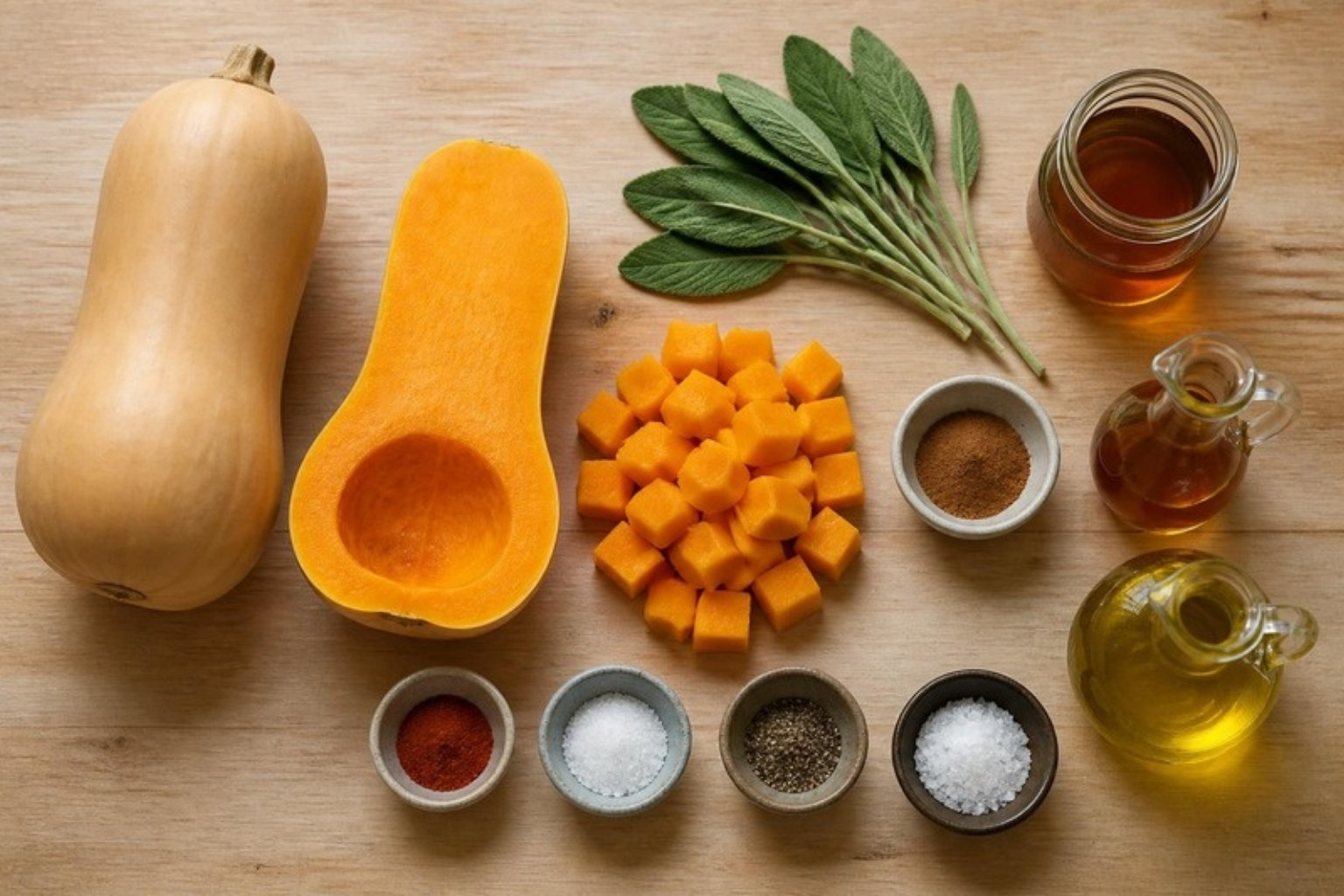
When the farm stands fill up with squash in October, this is one of the simplest ways to put it on the table. Cubes of butternut squash roast in a hot oven with olive oil until their edges turn deep golden, then get a quick glaze of maple syrup and a pinch of cinnamon for the last few minutes. A handful of sage leaves fried in olive oil adds a crackly, savory finish that keeps the dish from tasting like dessert.
Many roasted squash recipes call for brown butter, a sprinkle of Parmesan, or a handful of pecans. This version skips all three and doesn’t miss them: the caramelization from a hot sheet pan supplies the nutty, toasty flavor, and crispy sage brings the crunch. It’s an easy weeknight side and an easy make-ahead for Thanksgiving.
Made without: peanuts, tree nuts, milk, eggs, wheat, soy, fish, shellfish, sesame.
Why You’ll Love This Recipe
- Short ingredient list: squash, olive oil, maple syrup, cinnamon, sage, and salt.
- Deep caramelization: high heat and a roomy pan give you browned edges, not steamed squash.
- No burnt glaze: the maple goes on late, so the sugar caramelizes instead of scorching.
- Holiday friendly: roast it ahead and reheat while the turkey rests.
How It Gets Rich Flavor Without Butter, Cheese, or Nuts
Brown butter tastes nutty because its milk solids toast. Roasting butternut squash at 425°F does something similar to the squash itself: its natural sugars and proteins brown on contact with the hot pan, creating that same toasty depth. Extra-virgin olive oil helps the heat move evenly into each cube and adds its own fruity note.
For crunch, fried sage takes the place of chopped nuts. Fresh sage leaves turn crisp in hot oil in under a minute, and the oil they fry in picks up the sage flavor, so you can drizzle it over the finished squash. A teaspoon of cider vinegar at the end brightens the sweetness.
Ingredients & Swap Ideas
- Butternut squash (about 3 lb / 1.4 kg): pre-cut squash from the produce section saves 15 minutes; you’ll need about 8 cups. Delicata (no peeling needed) or kabocha also work, though cooking times vary.
- Extra-virgin olive oil (4 Tbsp / 54 g total): for roasting and frying the sage. For a smoky, savory twist, use bacon fat for roasting. Grease the pan with olive oil instead of cooking spray.
- Pure maple syrup (2 Tbsp / 40 g): pancake syrups are mostly corn syrup and flavoring. Brown sugar (2 Tbsp) works in a pinch.
- Cinnamon and cayenne: warm spice and a tiny bit of heat. Check spice labels for shared-facility statements.
- Fresh sage: dried sage won’t crisp. If you can’t find fresh, finish with fresh thyme or chopped parsley instead.
- Toppings to skip or swap: pecans, walnuts, and Parmesan would change the made-without profile. Pomegranate seeds or dried cranberries add color without changing it.
Kitchen Equipment
- A large rimmed sheet pan (18 x 13 inch). For a double batch, use two pans and rotate them halfway.
- A sharp chef’s knife and a sturdy Y-peeler.
- A small skillet for the sage and a thin metal spatula for flipping.
Step-by-Step Tips
- Cut safely. Slice off both ends, cut the squash where the neck meets the bulb, and stand each piece flat before peeling. Scoop out the seeds with a spoon.
- Keep cubes even. One-inch pieces cook at the same rate. Small bits will burn before large ones soften.
- Give them space. Crowded squash steams. You should see pan between the pieces.
- Glaze late. Add the maple mixture after flipping, when the squash is already golden on one side.
- Watch the sage. Pull the leaves out as soon as they stop bubbling; they keep crisping as they cool.
Maple Roasted Butternut Squash with Crispy Sage
Ingredients
Equipment
Method
- Heat the oven to 425°F (220°C) with a rack in the upper-middle position. Brush a large rimmed sheet pan lightly with olive oil.
- Toss the squash cubes with 3 Tbsp olive oil, the kosher salt, and pepper. Spread in a single layer with space between the pieces.
- Roast 20 minutes, until the undersides are golden brown. Flip with a thin spatula.
- Whisk the maple syrup, cinnamon, cayenne, and chopped sage. Drizzle over the squash and toss gently on the pan. Roast 10 to 15 minutes more, until a knife slides through the cubes easily and the edges are glossy and caramelized but not black.
- Meanwhile, heat 1 Tbsp olive oil in a small skillet over medium heat. Add the sage leaves in a single layer and fry 20 to 40 seconds, until they darken slightly and stop bubbling. Drain on a paper towel; they crisp as they cool.
- Transfer the squash to a platter, sprinkle with the cider vinegar if using, then top with crispy sage and a pinch of flaky salt. Serve warm.
Notes
Troubleshooting & Tips
- Squash is pale and soft: the pan was crowded or the oven ran cool. Split onto two pans and check your oven temperature.
- Glaze burned: it went on too early or the pieces were small. Next time, add the maple for only the last 10 minutes.
- Sage turned brown and bitter: the oil was too hot. Lower the heat to medium and fry a test leaf first.
- Too sweet: add the splash of cider vinegar and a little more flaky salt.
Storage, Freezing & Reheating
Fridge: store cooled squash in an airtight container for up to 4 days; keep the sage separate at room temperature for a day. Reheat: spread on a sheet pan at 400°F (205°C) for 8 to 10 minutes. Freezer: roasted squash freezes for up to 2 months but softens, so frozen leftovers are best blended into soup or mashed as a side.
Build a Fall Dinner
Serve this squash next to sheet pan chicken thighs or alongside sweet and sour braised red cabbage for a colorful holiday table. Find more ideas in our side dish recipes.
FAQ
Do you have to peel butternut squash before roasting?
For cubes, yes; the skin stays tough. If you’d rather skip peeling, roast the squash in halves cut side down and scoop out the flesh, or use delicata squash, which has thin, edible skin.
How do I know when roasted butternut squash is done?
A knife should slide through a cube with no resistance, and the edges should look deep golden and glossy. Most batches take 30 to 35 minutes at 425°F.
Can I make this ahead for Thanksgiving?
Yes. Roast up to 2 days ahead, refrigerate, and reheat on a sheet pan just before dinner. Fry the sage the day of for the best crunch.
Can I roast the squash seeds too?
You can, but they’re optional here and add another seed ingredient to the plate, so we leave them off. If you do roast them, toss with olive oil and salt and bake at 325°F until crisp.
A note before you cook: These recipes are ideas and suggestions, not medical or dietary advice. As with any recipe or ingredient, it is each reader’s responsibility to confirm what they can and cannot eat, read every ingredient label, and source quality ingredients that fit their own needs. Ingredient formulations change, so always check the package you’re using.