
Meatloaf is the definition of Midwestern Sunday supper: a thick slice of savory, tender beef with a sticky, tangy-sweet glaze, served next to a mound of mashed potatoes. It also tends to be one of the harder classics for allergy-aware kitchens, because the standard recipe leans on eggs, breadcrumbs, milk, and Worcestershire sauce to hold it together and season it.
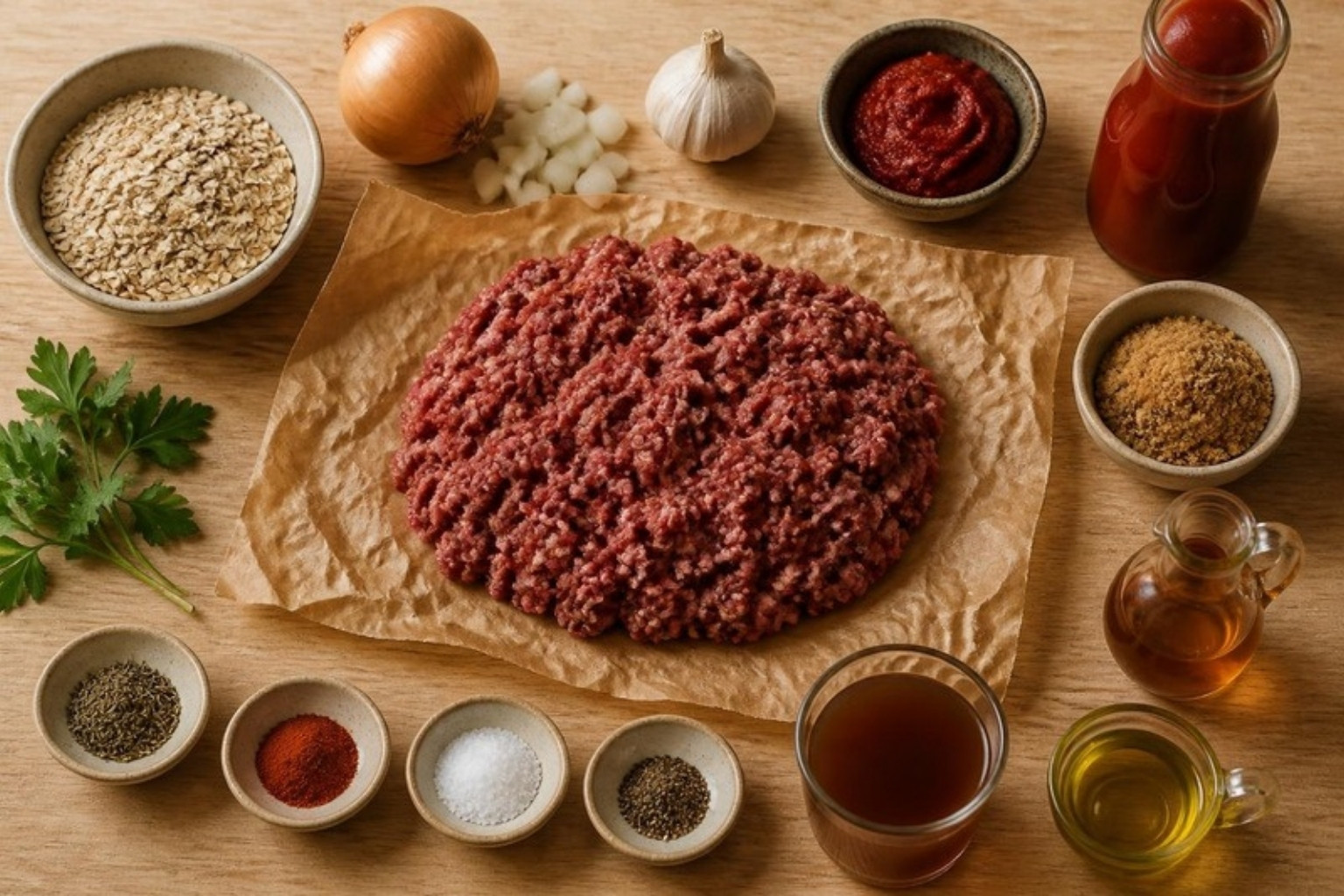
This version keeps everything people love about the original and rebuilds the structure from the ground up. Rolled oats soaked in broth and tomato paste replace the breadcrumb-and-milk panade, a couple of minutes of kneading does the binding work that an egg normally does, and a browned onion plus smoked paprika and tomato paste bring the savory depth that Worcestershire usually provides. Baked free-form on a sheet pan, it gets glaze on the top and sides and no greasy bottom.
Made without: peanuts, tree nuts, milk, eggs, wheat, soy, fish, shellfish, sesame. Also made without breadcrumbs, egg replacer, and Worcestershire sauce.
Why You’ll Love This Recipe
- Slices cleanly: firm enough for sandwiches the next day, without an egg.
- Classic glaze: ketchup, brown sugar, and cider vinegar caramelize into a sticky top.
- Pantry ingredients: no specialty flours, egg replacers, or flax.
- Freezes well: cooked slices reheat beautifully for weeknight dinners.
How Meatloaf Holds Together Without Eggs or Breadcrumbs
In a traditional meatloaf, the egg’s proteins set as the loaf bakes and act like glue, while breadcrumbs soaked in milk (a panade) keep the meat moist and tender. Both jobs can be done another way.
The oat panade: rolled oats soaked in beef broth and tomato paste swell into a thick paste. Like breadcrumbs, they trap juices that would otherwise run out, so the loaf stays moist. Oats also have a natural gumminess that helps hold the meat together.
Kneading with salt: when you mix ground beef with salt and work it with your hands for a few minutes, salt-soluble proteins in the meat (mostly myosin) dissolve and become sticky. That’s the same principle that binds sausage without any egg. You’ll feel the change: the mix goes from loose crumbles to slightly tacky and cohesive. Stop there; overworking past that point makes the loaf dense.
A rest before slicing: ten minutes on the pan lets the juices settle and the structure firm up so slices hold their shape.
Ingredients & Swap Ideas
- Ground beef (2 lb / 900 g, 85% lean): enough fat for a juicy loaf. Plain ground beef only; pre-seasoned meat can contain other ingredients. A mix of beef and plain ground pork works too.
- Old-fashioned rolled oats (2/3 cup / 60 g): quick oats also work. Oats are often processed alongside wheat and barley, so choose oats labeled gluten-free if that matters for your family.
- Beef broth (1/2 cup / 120 ml): label check, since some broths contain soy, yeast extracts, or added oils. Water works in a pinch.
- Extra-virgin olive oil or beef tallow (1 Tbsp): for softening the onion. Cooking the onion first keeps the loaf from tasting raw and sharp.
- Seasonings: dried thyme, smoked paprika, black pepper, and parsley. Read spice labels for added ingredients.
- Glaze: ketchup, brown sugar, and apple cider vinegar. Check the ketchup label. This glaze skips mustard. Avoid malt vinegar, which is made from barley.
Kitchen Equipment
- A rimmed baking sheet lined with parchment (no cooking spray needed).
- A medium skillet for the onion and garlic.
- A large mixing bowl.
- An instant-read thermometer. It’s the most reliable way to know meatloaf is done.
Step-by-Step Tips
- Cool the onions. Hot onions start melting the fat in the beef. Five minutes on a plate is enough.
- Soak the oats first. Five minutes in the broth and tomato paste turns them into a soft paste that disappears into the meat.
- Knead until tacky. Two to three minutes by hand. Press a handful together; if it holds without crumbling, it’s ready.
- Shape it free-form. A loaf on a sheet pan browns on all sides and the fat drains away, unlike a loaf pan where it pools.
- Glaze twice and temp it. Ground beef should reach 160°F (71°C) in the center, per the USDA safe temperature chart.
Egg-Free Classic Meatloaf with Brown Sugar Glaze
Ingredients
Equipment
Method
- Heat the oven to 350°F (175°C). Line a rimmed baking sheet with parchment.
- Warm the olive oil or tallow in a skillet over medium heat. Add the onion and a pinch of salt and cook 6 to 8 minutes, until soft, translucent, and just turning golden at the edges. Add the garlic and cook 30 seconds, until fragrant. Let cool 5 minutes.
- In a large bowl, stir together the oats, broth, and tomato paste. Let stand 5 minutes, until the oats have soaked up most of the liquid and look like a thick paste.
- Add the ground beef, cooked onion and garlic, salt, pepper, thyme, smoked paprika, and parsley. Mix and squeeze with your hands for 2 to 3 minutes, until the mixture turns slightly sticky and holds together when you press a handful (this replaces the egg as a binder).
- Shape the mixture into a 9 x 5-inch (23 x 13 cm) loaf on the lined baking sheet, pressing it firmly so there are no cracks.
- Whisk the ketchup, brown sugar, and cider vinegar in a small bowl. Spread half over the top and sides of the loaf.
- Bake 45 minutes. Spread on the remaining glaze and bake 15 to 20 minutes more, until the glaze is sticky and darkened at the edges and the center reaches 160°F (71°C) on an instant-read thermometer.
- Rest the meatloaf on the pan for 10 minutes, until the juices settle and it slices cleanly. Slice thick and serve.
Notes
Troubleshooting & Tips
- Crumbly slices: the mix needed more kneading, or it was sliced too soon. Knead until tacky and rest a full 10 minutes.
- Dense or tough: it was overworked or overbaked. Stop kneading once it holds together, and pull it at 160°F.
- Glaze burning: some ovens run hot. Tent loosely with foil for the last 10 minutes.
- Cracks on top: press the loaf firmly when shaping and smooth the surface with damp hands.
Storage, Freezing & Reheating
Fridge: refrigerate leftovers within 2 hours, airtight, for up to 4 days. Freezer: wrap cooled slices individually and freeze up to 3 months; thaw overnight in the fridge. Reheat: warm slices in a covered skillet with a splash of broth, or in a 325°F (165°C) oven, until they reach 165°F (74°C). Cold slices also make a classic meatloaf sandwich (check bread labels; most bread contains wheat and often milk, eggs, soy, or sesame).
What to Serve With Meatloaf
The classic partner is a pile of dairy-free mashed potatoes made with olive oil and broth. For a tangy fall side, add sweet and sour braised red cabbage with apples, or make it a full Sunday spread with sheet pan roasted Brussels sprouts with bacon.
FAQ
What can I use instead of eggs in meatloaf?
Soaked rolled oats and thorough kneading with salt bind the meat well. Cooked rice or mashed potato can also work as a panade, though oats give the firmest slice.
Can I make meatloaf without breadcrumbs?
Yes. Rolled oats are a classic breadcrumb substitute and keep the loaf moist. For a wheat-free loaf, choose oats labeled gluten-free.
What temperature should meatloaf be cooked to?
Beef meatloaf should reach 160°F (71°C) in the thickest part. At 350°F that usually takes about 60 to 65 minutes for a 2-pound loaf.
Can I make it ahead?
Shape the loaf, cover, and refrigerate up to 24 hours. Add the glaze and add 5 to 10 minutes to the baking time since it starts cold.
A note before you cook: These recipes are ideas and suggestions, not medical or dietary advice. As with any recipe or ingredient, it is each reader’s responsibility to confirm what they can and cannot eat, read every ingredient label, and source quality ingredients that fit their own needs. Ingredient formulations change, so always check the package you’re using.