
Creamy chicken and wild rice soup is a cold-weather staple across Minnesota, Wisconsin, and Michigan. Wild rice grows naturally in the Upper Midwest, and its nutty, chewy grains make this soup heartier than a standard chicken noodle. The classic version, though, starts with a butter-and-flour roux and finishes with heavy cream, which puts it off the table for many allergy families.
This dairy-free chicken and wild rice soup gets its creamy body from a surprisingly simple trick: a potato simmered in the broth, then blended with some of the hot soup until silky smooth. Stirred back into the pot, it thickens the broth and gives it a velvety, cream-of-something texture without dairy, flour, or a plant-based cream. Tender shredded chicken thighs, carrots, celery, and thyme round out a bowl that tastes like the classic. It’s made without all nine major allergens.
Made without: milk, eggs, wheat, soy, peanuts, tree nuts, fish, shellfish, sesame.
Why You’ll Love This Soup
- Creamy without cream, and without coconut milk or nut-based creams.
- No flour roux. The blended potato does the thickening.
- Hearty and filling, with chewy wild rice and plenty of chicken.
- Freezer-friendly for future lunches and sick days.
How to Make Creamy Soup Without Dairy or Flour
In the traditional version, the roux thickens the broth and the cream adds richness and an opaque, creamy look. A russet potato can do both jobs. Russets are high in starch, and when they’re cooked until soft and blended with hot liquid, that starch creates a smooth, thick purée. Stirring the purée back into the soup gives you body and a creamy appearance without changing the flavor.
Ingredients and Swap Ideas
- Wild rice: Use 100% wild rice, not a seasoned wild rice blend or boxed mix, which can include wheat, soy, or dairy-based seasonings. Hand-harvested Minnesota wild rice cooks faster than cultivated, black-grained wild rice.
- Chicken thighs: They stay juicier than breasts during the long simmer. Breasts work too; pull them out as soon as they reach 165°F (74°C).
- Russet potato: Its high starch content makes the creamiest purée. Yukon Gold works but makes a slightly thinner soup.
- Chicken broth: Read the label, since some broths contain wheat, soy, or yeast extracts.
- Lemon juice: Optional, but a small squeeze at the end brightens the flavors the way cream’s tang would.
Equipment
- A large Dutch oven or soup pot (at least 5 quarts)
- A blender or immersion blender
- An instant-read thermometer
Step-by-Step Tips
- Soften the vegetables first. Cooking the onion, carrots, and celery until the onion turns translucent builds a sweet, savory base.
- Pull the chicken when it’s done. Check that the thickest piece reaches 165°F (74°C), the minimum for poultry on the USDA safe minimum internal temperature chart, then remove it so it doesn’t dry out while the rice finishes.
- Cook the wild rice until it “blooms.” It’s ready when many grains have split open to show their pale insides and the texture is tender but still pleasantly chewy.
- Blend safely. Hot liquids expand in a blender. Fill it no more than halfway, remove the center cap, cover with a folded towel, and start on low.
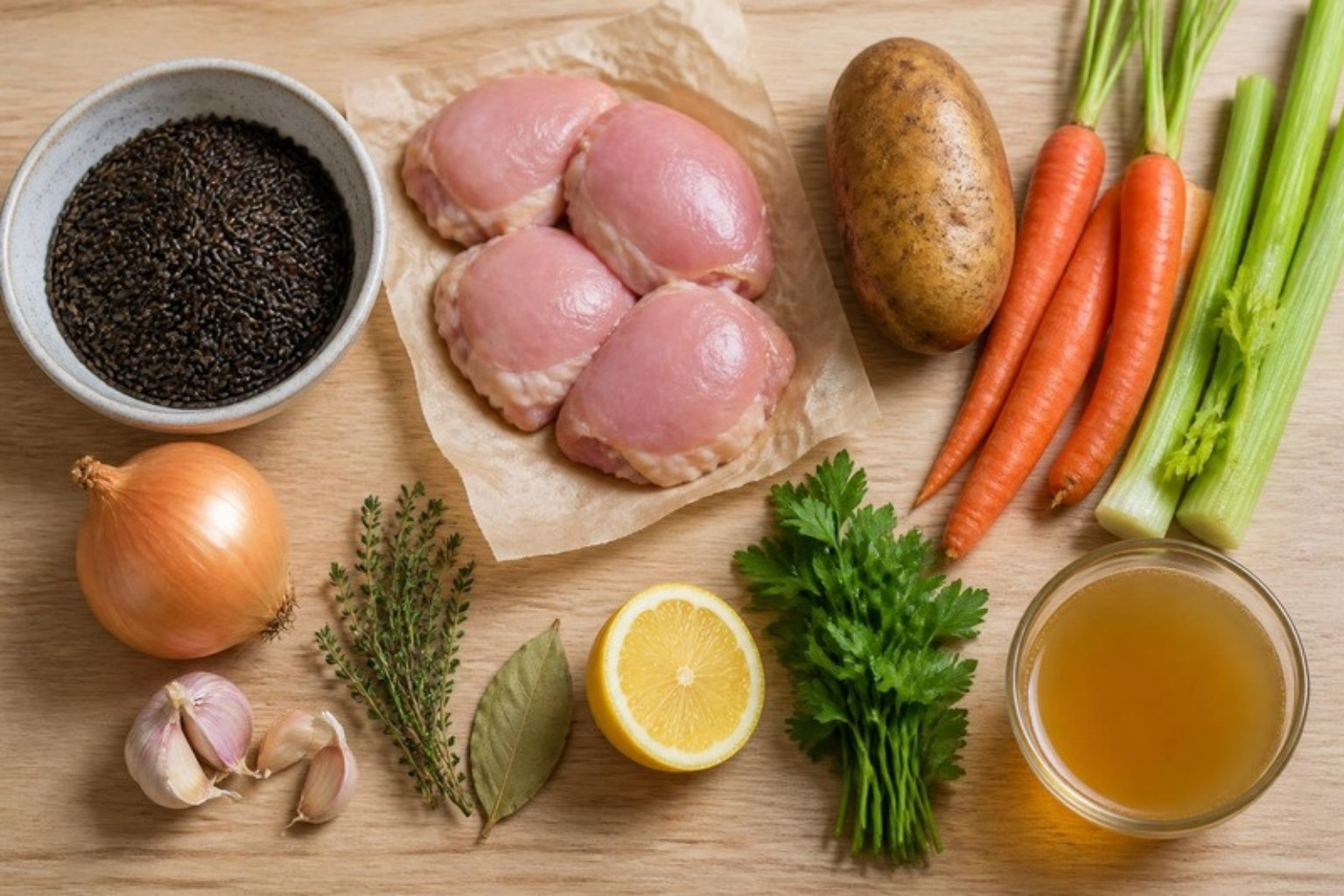
Dairy-Free Chicken and Wild Rice Soup (Top 9 Free)
Ingredients
Equipment
Method
- Heat the olive oil in a large pot over medium heat. Add the onion, carrots, and celery and cook 6 to 8 minutes, until softened and the onion is translucent. Stir in the garlic and thyme and cook 30 seconds.
- Add the broth, wild rice, chicken thighs, diced potato, bay leaf, salt, and pepper. Bring to a boil, then reduce to a gentle simmer and cover.
- Simmer 25 to 30 minutes, until the chicken reaches 165°F (74°C). Transfer the chicken to a cutting board. Use a slotted spoon to scoop out the potato pieces and about 1 cup of the vegetables into a blender.
- Continue simmering the soup, covered, 20 to 30 minutes more, until the wild rice grains split open and are tender but still slightly chewy.
- Meanwhile, add 1 1/2 cups of the hot broth to the blender with the potatoes. Vent the lid, cover with a towel, and blend until completely smooth and creamy. Shred the chicken.
- Stir the potato purée and shredded chicken back into the pot. Simmer 5 minutes to thicken. Remove the bay leaf, add lemon juice if using, and season to taste. Top with parsley.
Notes
Troubleshooting
- Soup too thin: Blend another cup of the soup’s vegetables and rice, or simmer uncovered for 10 minutes.
- Soup too thick: Wild rice keeps absorbing liquid as it sits. Add broth, ½ cup at a time.
- Rice still hard: Cooking times vary widely by brand and whether the rice is cultivated or hand-harvested. Keep simmering and check every 10 minutes.
- Flat flavor: Add salt a pinch at a time and finish with lemon juice. Low-sodium broth needs more seasoning than regular.
Storage, Freezing, and Reheating
- Refrigerator: Store in airtight containers up to 4 days.
- Freezer: Cool quickly, then freeze in portions up to 3 months. Because there’s no dairy, it won’t separate when thawed.
- Reheating: Warm on the stovetop over medium heat, adding broth to loosen, until it reaches 165°F (74°C).
Looking for more cozy Top 9 Free dinners? Try the slow cooker pot roast or the easy sheet pan chicken thighs with potatoes and green beans.
Frequently Asked Questions
How do you thicken soup without flour or cream?
Blend a cooked starchy potato with some of the hot broth and stir it back into the pot. You can also blend part of the soup’s own vegetables. Both methods add body without dairy or wheat.
Is wild rice actually rice?
Not exactly. Wild rice is the seed of an aquatic grass native to the Great Lakes region. It’s naturally gluten-free and has a nutty, chewy texture. Check labels on blends, which can contain other grains.
Can I make this in a slow cooker?
Yes, though it hasn’t been written for one. Sauté the vegetables first, add everything except the lemon and parsley, and cook on LOW 6 to 7 hours. Then blend the potato and some vegetables with broth and stir it back in (untested method).
Can I use leftover cooked chicken?
Yes. Skip adding raw chicken, cook the soup until the rice is tender, and stir in about 3 cups of shredded cooked chicken for the last 10 minutes.
A note before you cook: These recipes are ideas and suggestions, not medical or dietary advice. As with any recipe or ingredient, it is each reader’s responsibility to confirm what they can and cannot eat, read every ingredient label, and source quality ingredients that fit their own needs. Ingredient formulations change, so always check the package you’re using.