
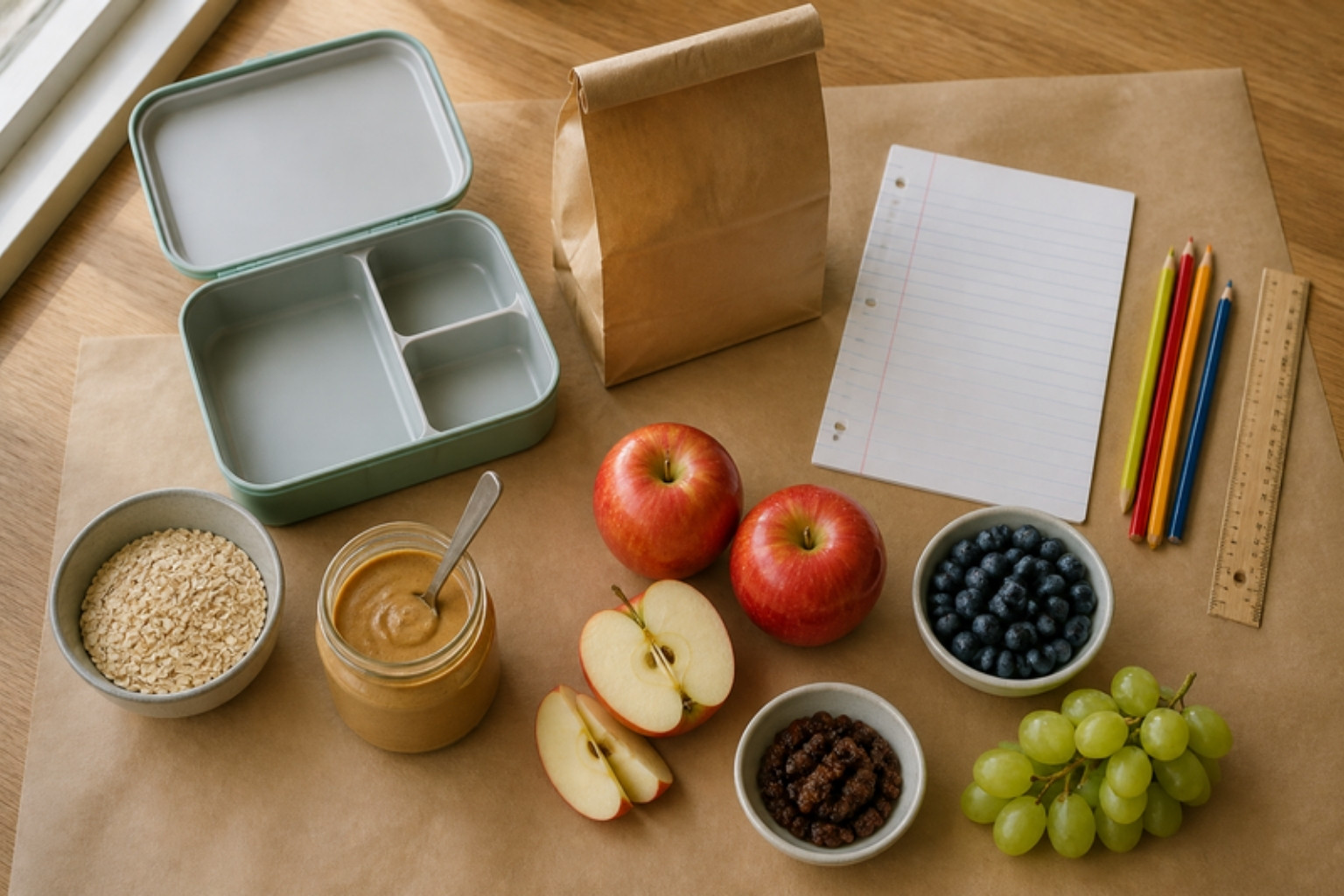
The note came home in a backpack, or maybe it arrived as an email on a Sunday night: our school is now nut-free. If your kid has eaten a peanut butter sandwich nearly every school day since kindergarten, that sentence can feel like a pop quiz you didn’t study for. Lunch was the one part of the morning that ran on autopilot, and now it doesn’t.
Nut-free lunch ideas that work for most schools: a sunflower seed butter and jam sandwich, a chicken salad and cracker protein box, mini corn dog muffins, leftover chicken nuggets, or a beef jerky snack plate, plus fruit, vegetables and a homemade snack such as granola bars. Every Top Nine Free recipe linked here is made without peanuts and tree nuts.
Take a breath. You don’t need a whole new kitchen or a cart full of specialty products. You need a short checklist, a few dependable lunches, and a plan for the first week. This guide gives you all three, using homemade recipes made without peanuts or tree nuts. For the full library of snacks, lunch ideas and party treats, keep our Nut-Free School Snacks hub bookmarked.
Every school writes its own rules. Always follow your own school’s policy, and read every ingredient label on anything you pack, every time you buy it.
Why nut-free rules feel so frustrating (and why you’re not alone)
Most parents who grumble about a nut-free policy aren’t against the classmate it’s meant to support. They’re frustrated because the easiest, cheapest, kid-approved protein just left the building, and the replacement plan wasn’t included in the email. Picky eaters, tight budgets and 6:45 AM mornings are real. The goal here isn’t to make you feel guilty; it’s to make Monday easier.
The good news: once you have five or six go-to lunches in rotation, a nut-free lunchbox runs on autopilot again within a couple of weeks.
Your week-one checklist
- Read the actual policy. Some schools ban peanuts only, some ban peanuts and tree nuts, some apply rules to one classroom or one lunch table, and some cover coconut or seeds differently. The wording matters, so read the handbook or ask the office.
- Ask how “may contain” foods are handled. Many schools have a specific rule about packaged foods with advisory statements like “may contain” or “made in a facility with.” Ask before you stock up.
- Clear the pantry shelf you pack from. Move peanut butter, nut-based granola, trail mix and nut bars to a separate spot so they don’t end up in the lunchbox on a rushed morning.
- Wash the lunch gear. Run lunchboxes, containers, ice packs and reusable bags through a good wash, and use a clean knife and cutting board for school lunches.
- Pick one sandwich replacement. Sunflower seed butter is the most common swap for peanut butter. Some kids love it right away; others need a few tries. Check the label for added oils and for any allergens your family avoids.
- Re-read labels on the “usual” snacks. Crackers, cereal bars and cookies you have bought for years may carry nut ingredients or advisory statements. Formulations change, so check each package.
- Bake one batch of something on the weekend. A pan of muffins or granola bars covers most of the week’s snacks and gives you full control over the ingredient list.
- Talk to your kid. A quick, matter-of-fact explanation (“some kids in your class can’t be around nuts, so we pack lunches without them”) helps them avoid trading food and keeps the new routine from feeling like a punishment.
How to read labels for a nut-free school
In the U.S., packaged foods must declare peanuts and tree nuts when they are ingredients, either in the ingredient list or in a “Contains” statement. Advisory lines such as “may contain” or “processed in a facility that also processes” are different: they are voluntary, and companies don’t all use them the same way. That’s why many school policies spell out how they treat them. FARE’s guide to food labels explains the basics.
A simple habit that helps: read the ingredient list, then the “Contains” line, then look for any advisory statement, every time you buy the product, not only the first time.
5-day sample nut-free lunch and snack plan
These are ideas, not rules. Mix and match, repeat the favorites, and keep fresh fruit and cut vegetables in the rotation every day. Every recipe linked below is made without peanuts and tree nuts.
Monday: the easy sandwich swap
- Main: sunflower seed butter and jam on your usual bread, or rolled up in a tortilla
- Snack: chewy oat granola bars
- Sides: apple slices, baby carrots
Tuesday: a protein box
- Main: chicken salad with apples and grapes (no mayo) with homemade rosemary sea salt crackers
- Snack: homemade grape fruit snacks
- Sides: cucumber rounds, clementine
Wednesday: muffin-tin lunch
- Main: mini corn dog muffins (they travel well cold)
- Snack: baked cinnamon apple chips
- Sides: snap peas, a cup of slow cooker cinnamon applesauce
Thursday: leftovers night becomes lunch
- Main: leftover homemade chicken nuggets, packed cold or warm in an insulated food jar
- Snack: homemade graham crackers
- Sides: grapes (halved for younger kids), bell pepper strips
Friday: a fun finish
- Main: a “snack plate” lunch: homemade beef jerky (no soy sauce), crackers and vegetables
- Snack: a blueberry muffin from the weekend batch
- Sides: homemade pear fruit leather, a banana
Make-ahead snacks that cover the whole week
One Sunday bake can stock the snack bin through Friday. These freeze well, so you can pull a day’s portion the night before:
- Pumpkin bread, sliced and wrapped individually
- Blueberry muffins made without eggs, milk or wheat
- Homemade animal crackers for the younger crowd
- Strawberry toaster pastries for a once-a-week treat
Tips for picky eaters and busy mornings
- Introduce one new thing at a time. Pair the new sunflower butter sandwich with snacks your kid already loves.
- Pack the night before. Assemble everything except the sandwich, then add it in the morning so the bread stays soft.
- Let kids choose. Offer two options for each slot. Kids eat more of what they picked.
- Keep a running list. Note which lunches came home empty. In two weeks you’ll have your rotation.
FAQ
What can replace peanut butter in a school lunch?
Sunflower seed butter is the most common swap. Some families skip the spread entirely and pack a protein box instead, or pair jam with a protein on the side. Check each label and your school’s policy before packing.
Does nut-free include coconut?
It depends on the school. Policies treat coconut differently, so read yours or ask the office.
Can I pack foods labeled “may contain nuts”?
That’s a school-by-school decision. Many policies say how advisory statements should be handled, so check yours before you shop.
What are good nut-free protein ideas for lunch?
Leftover chicken, homemade nuggets, chicken salad, jerky, sliced meat roll-ups and bean dips (if your family eats legumes) are all easy options.
My child’s school just went nut-free. What can I pack?
Start with one main, one snack and two sides: a sunflower seed butter sandwich or a protein box for the main, a homemade granola bar or muffin for the snack, and fruit and vegetables for the sides. The 5-day plan above gives a full week, and every linked recipe is made without peanuts and tree nuts.
Is sunflower seed butter a good swap for peanut butter?
It’s the most common one, and it spreads and sandwiches the same way. It tastes a little earthier, and in baking it can turn green from a harmless reaction with baking soda. Our sunflower butter swaps guide covers sandwiches and baking; check the label and your school’s policy, since some schools treat seeds differently.
What nut-free snacks can I make ahead for the week?
Granola bars, muffins, pumpkin bread, crackers and fruit leather all keep well, and most freeze. One Sunday batch covers the snack slot through Friday; the nut-free school snacks page has more.
You’ve got this
The first week of a nut-free policy is the hardest. After that, it’s just lunch again. Start with the checklist, borrow the five-day plan, and bake one batch of something on the weekend. When you’re ready for more, the Nut-Free School Snacks hub has muffins, crackers, fruit snacks, cookies and party ideas, all made without peanuts or tree nuts.
Follow your own school’s policy, and read every ingredient label on everything you pack.
A note before you cook: These recipes are ideas and suggestions, not medical or dietary advice. As with any recipe or ingredient, it is each reader’s responsibility to confirm what they can and cannot eat, read every ingredient label, and source quality ingredients that fit their own needs. Ingredient formulations change, so always check the package you’re using.