
Ask any kid what they want in a lunchbox or on a rushed school morning, and a frosted, jam-filled toaster pastry is near the top of the list. For families avoiding wheat, eggs, milk, or soy, the boxed kind usually isn’t an option: the crust is wheat-based, the glaze often has milk or soy in it, and the ingredient list can run long. These homemade toaster pastries bring back the same flat, sealed rectangle with a sweet strawberry center and a crackly vanilla glaze, using a flaky crust made from rice and oat flour.
The pastry is a simple lard crust, the same kind of dough used for old-fashioned pies, rolled thin and cut into rectangles. A spoonful of jam thickened with cornstarch stays put in the oven instead of bubbling out the sides. They take some time on the first batch, but they freeze beautifully, so one afternoon of baking can cover a couple of weeks of breakfasts.
Made without: peanuts, tree nuts, milk, eggs, wheat, soy, fish, shellfish, sesame.
Why You’ll Love This Recipe
- The classic shape and flavor: a sealed, crimped pastry with jam inside and glaze on top.
- Short, simple ingredient list with no eggs, butter, wheat, or egg replacer.
- Freezer-friendly. Bake, freeze unglazed, and warm a few at a time.
- Easy to change up with any thick jam, apple butter, or a cinnamon-sugar filling.
How the Crust Works Without Wheat or Butter
Wheat pastry holds together because gluten forms a stretchy network when the flour meets water. Rice and oat flour don’t have gluten, so this dough gets its structure another way. Sweet rice flour (also sold as glutinous rice flour; it contains no gluten despite the name) turns slightly sticky when hydrated and acts like glue between the other flours. Oat flour adds a little tenderness and a toasty flavor. White rice flour keeps the crust crisp.
The flakiness comes from cold lard. Small pieces of solid fat stay scattered through the dough, and in a hot oven they melt and leave thin layers behind. A teaspoon of cider vinegar keeps the dough tender. Because there’s no gluten to fight, you can press cracks back together without making the crust tough, which makes this dough more forgiving than you might expect.
Ingredients and Swap Ideas
Imperial and metric amounts are in the recipe card below. Keep the lard and water cold until the moment you use them.
- Flours: white rice flour, sweet rice flour, and oat flour. Choose oat flour labeled gluten-free, since regular oats are often grown and processed near wheat and barley. If you need an oat-free version, replace the oat flour with more white rice flour; the crust will be a bit crisper and paler.
- Fat: lard gives the flakiest result. Refined coconut oil, used firm and cold, also works and keeps the pastries meat-free; if you avoid coconut, stick with lard. Light-tasting olive oil can be used, but because it’s liquid the crust turns out tender and crumbly rather than flaky. Please skip shortening, margarine, and plant-based butters, which are usually made from seed oils.
- Filling: any thick jam or preserves. Strawberry is classic; raspberry, blackberry, cherry, and apple butter are all good. Read the jar, since some jams use flavorings or pectin blends you may want to check. For a brown sugar version, mix 1/2 cup brown sugar, 1 1/2 teaspoons cinnamon, and 1 tablespoon rice flour, and use about 1 tablespoon per pastry.
- Glaze: powdered sugar plus oat milk with no added oil. Many oat milks contain canola or sunflower oil, so check the label. Water works in a pinch. Sprinkles are optional and worth a label check too; many contain seed oils or soy lecithin.
Kitchen Equipment
You’ll need a large bowl, a pastry blender or fork, a rolling pin, two sheets of parchment paper, a ruler, a pizza cutter or sharp knife, and a rimmed baking sheet. Rolling between parchment is the key tool here: it keeps the soft dough from sticking and lets you flip and move it without tearing.
Step-by-Step Tips
- Leave some fat in pea-size pieces. Those bits make the flakes. If the lard starts to soften while you work, chill the bowl for 10 minutes.
- Hydrate fully. Gluten-free dough that’s too dry cracks badly. It should hold together in a squeeze and feel soft, like play dough.
- Measure your rectangles. A ruler gives even pastries that bake at the same rate. Save the scraps, press them together, and reroll for one or two extras.
- Don’t overfill. One level tablespoon of filling per pastry is plenty. More will leak no matter how well you seal.
- Seal with water and a fork. Brushing the border with water helps the top layer stick, and pressing with a fork crimps the edges shut.
- Bake until truly golden. Rice flour crusts look pale longer than wheat. Wait for golden brown edges and dry, lightly golden tops.
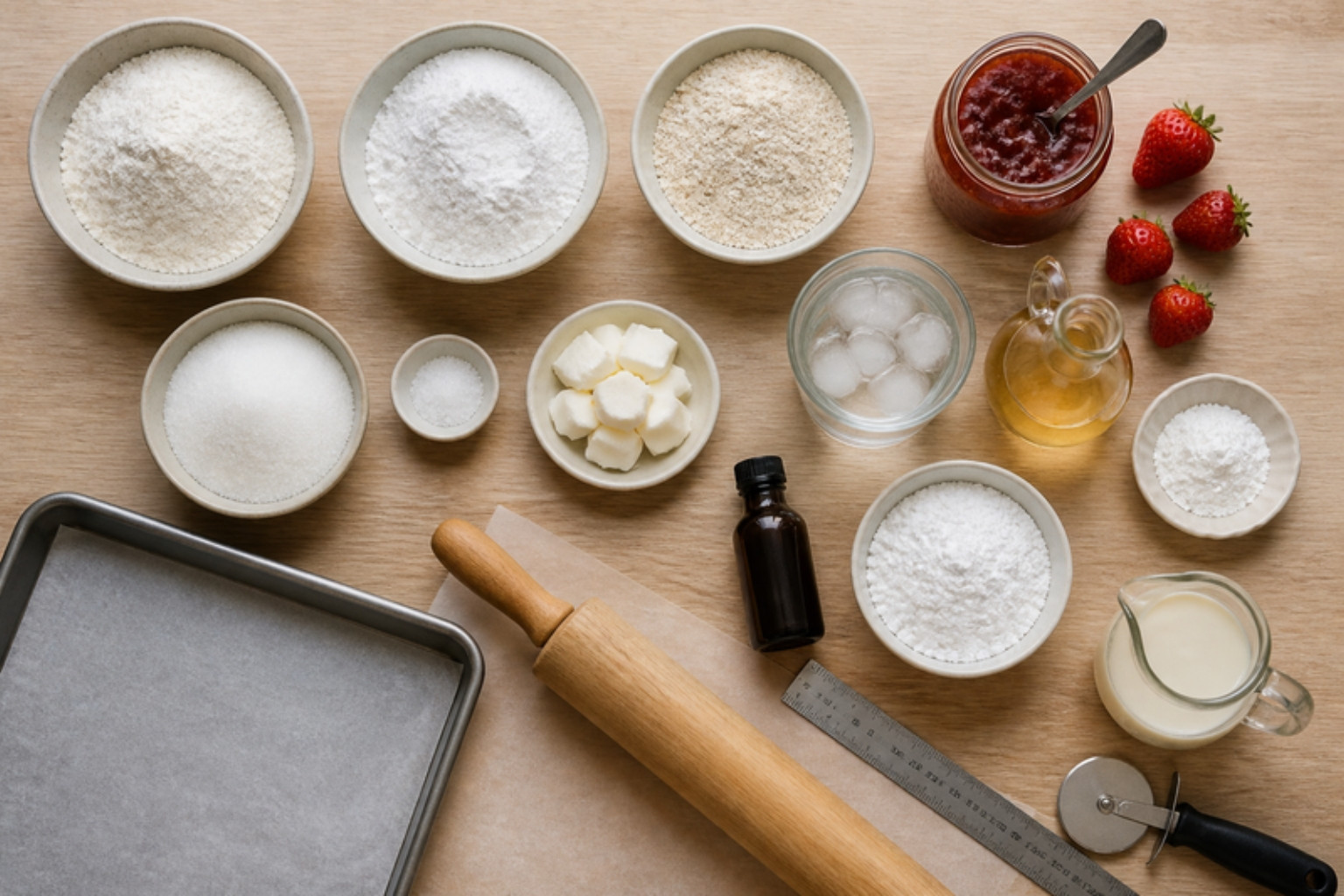
Homemade Toaster Pastries with Strawberry Filling, No Eggs, Dairy-Free, No Wheat (Top 9 Free)
Ingredients
Equipment
Method
- Whisk the white rice flour, sweet rice flour, oat flour, sugar, and salt in a large bowl. Cut in the cold lard with a pastry blender or fork until the mixture looks like coarse crumbs with a few pea-size pieces.
- Stir the vinegar into 6 tablespoons of ice water and drizzle it over the flour, tossing with a fork. Add more water a teaspoon at a time until the dough holds together when squeezed and feels like soft play dough, not crumbly. Divide in half, pat each into a flat rectangle, wrap, and chill 30 minutes.
- Stir the jam and cornstarch together in a small bowl until smooth. Heat the oven to 400°F (200°C) and line a baking sheet with parchment.
- Roll one dough rectangle between two sheets of parchment to about 9 x 12 inches (23 x 30 cm) and 1/8 inch thick. Trim the edges and cut into eight 3 x 4 1/2-inch rectangles. Repeat with the second half. If the dough cracks, press it back together; it patches easily.
- Lay 8 rectangles on the baking sheet. Spoon about 1 tablespoon of filling onto each, leaving a 1/2-inch border. Brush the borders lightly with water, top with the remaining rectangles, and press the edges firmly with a fork to seal. Poke a few holes in the tops so steam can escape. Chill the tray 10 minutes if the dough feels soft.
- Brush the tops lightly with oat milk. Bake 20 to 24 minutes, until the edges are golden brown and the tops look dry and lightly golden. Cool on the pan 10 minutes (the filling is very hot), then move to a rack and cool completely.
- Whisk the powdered sugar, vanilla, and enough oat milk to make a thick but spreadable glaze. Spread over the cooled pastries, add sprinkles if you like, and let the glaze set about 20 minutes.
Notes
Troubleshooting
- Dough cracks when rolling: it’s a little dry or too cold. Sprinkle on a teaspoon of water, knead briefly, or let it sit at room temperature 5 minutes.
- Filling leaked out: the jam was too loose or the edges weren’t sealed. Stir cornstarch into the jam, leave a full 1/2-inch border, and press the edges firmly.
- Pastries spread or lost their shape: the dough got warm. Chill the filled tray for 10 minutes before baking.
- Glaze is runny: add powdered sugar a spoonful at a time. Glaze only completely cooled pastries, or it will melt and soak in.
Storage, Freezing and Reheating
Keep glazed pastries in an airtight container at room temperature for up to 2 days, or in the refrigerator for up to 5 days. To freeze, cool the baked pastries completely, leave them unglazed, and freeze in a single layer before moving them to a freezer bag; they keep about 2 months. Reheat from frozen on a baking sheet at 350°F for 8 to 10 minutes, or in a toaster oven, then glaze if you like. A rice flour crust is more delicate than wheat pastry, so an oven or toaster oven is a better choice than an upright toaster, where the pastries can break and drip.
More Breakfast Bakes and Lunchbox Ideas
If you like working with this kind of crust, the pear cranberry galette uses a similar rice and oat flour lard pastry. For a grab-and-go breakfast that’s easier to make on a weeknight, try the blueberry muffins with no eggs, milk, or wheat, and for crunchy lunchbox snacks, the homemade graham crackers are a favorite. Browse more lunchbox recipes.
Frequently Asked Questions
Can I put these in a regular toaster?
We suggest a toaster oven or regular oven instead. The crust is more fragile than a wheat-based pastry, and the glaze and filling can drip into a pop-up toaster. A few minutes at 350°F warms them through and crisps the crust again.
Can I make the dough ahead of time?
Yes. Wrap the dough rectangles tightly and refrigerate up to 2 days, or freeze up to 1 month and thaw overnight in the refrigerator. Let chilled dough sit at room temperature 10 to 15 minutes so it rolls without cracking.
What other fillings work?
Any thick jam or preserves, apple butter, or a brown sugar and cinnamon mix. Avoid thin or runny fillings like fresh fruit or pie filling with lots of liquid, which tend to leak.
Can I skip the glaze?
Yes. Unglazed pastries are less sweet and travel better in a lunchbox. You can also sprinkle the tops with a little sugar before baking for a crackly finish.
A note before you cook: These recipes are ideas and suggestions, not medical or dietary advice. As with any recipe or ingredient, it is each reader’s responsibility to confirm what they can and cannot eat, read every ingredient label, and source quality ingredients that fit their own needs. Ingredient formulations change, so always check the package you’re using.