
Ask anyone who grew up in the South about tea cakes and you’ll likely hear about a grandmother’s kitchen and a tin that never seemed to empty. These old-fashioned cookies are simple on purpose: soft, cakey, lightly sweet rounds with vanilla and a whisper of nutmeg, somewhere between a sugar cookie and a little cake. The original recipes are built on butter, eggs, buttermilk, and wheat flour, which puts them out of reach for many allergy families. This version brings them back with pantry swaps that keep the gentle, nostalgic flavor.
They’re rolled and cut into plain circles, sprinkled with sugar, and baked just until set, so they stay pale on top with a soft, tender middle. They’re quiet cookies that disappear quickly from a Christmas cookie tray and are just as welcome with a cup of tea in January.
Made without: peanuts, tree nuts, milk, eggs, wheat, soy, fish, shellfish, sesame. Contains coconut.
Why You’ll Love Southern Tea Cakes
- Soft and cakey, not crisp, with a gentle vanilla-nutmeg flavor.
- No eggs, butter, buttermilk, or wheat.
- Simple round cutter, no decorating required.
- Lightly sweet, so kids and grown-ups both like them.
- The dough freezes well, so you can bake a few at a time.
How Tea Cakes Work Without Eggs or Butter
A tea cake’s soft, cake-like texture usually comes from eggs, which add lift and moisture, and from buttermilk reacting with baking soda. Applesauce replaces the eggs’ moisture and some of their binding. A combination of baking powder and baking soda, helped by the natural acid in applesauce, gives the cookies a gentle rise and a light crumb.
Softened refined coconut oil stands in for butter. Because it’s solid at room temperature, it creams with sugar like butter does, trapping tiny air bubbles that make the cookies tender, and it keeps the dough firm enough to roll. The flour blend is white rice flour for structure, oat flour for a soft, wheaty flavor, and cornstarch for tenderness. Pulling them from the oven while the tops are still pale is what keeps them soft.
Ingredients and Swap Ideas
- Refined coconut oil: use refined so the cookies don’t taste like coconut, and soften it to the texture of soft butter. If you avoid coconut, cold leaf lard is the closest swap (untested here; chill the dough longer). Liquid oils make the dough too soft to roll. Skip shortening, margarine, and plant butters.
- Applesauce: unsweetened and smooth. Canned pumpkin works but tints the cookies.
- Oat flour and oat milk: certified gluten-free oat flour; oat milk with no added oil (many contain canola or sunflower oil).
- Nutmeg: traditional. Some families use lemon zest or a little cinnamon instead.
- Topping: plain sugar is classic. For Christmas, use coarse sugar or red and green sanding sugar; check sprinkles and colored sugars for seed oils and dyes you avoid.
Equipment
- Stand or hand mixer
- Rolling pin and two sheets of parchment
- 2 1/2-inch round cutter (or a glass rim)
- Two parchment-lined baking sheets
Step-by-Step Tips
- Soften, don’t melt. The coconut oil should be soft and spoonable, like room-temperature butter. If your kitchen is cold, warm the jar briefly in warm water.
- Cream well. Two minutes of beating with the sugar builds air for a light texture.
- Chill the dough. Thirty minutes firms it for clean rolling and cutting.
- Roll between parchment. No extra flour needed, and the dough won’t stick. Keep it at an even 1/4 inch.
- Bake pale. Pull them when the tops look dry and set and the bottoms are just golden. Brown tops mean a drier cookie.
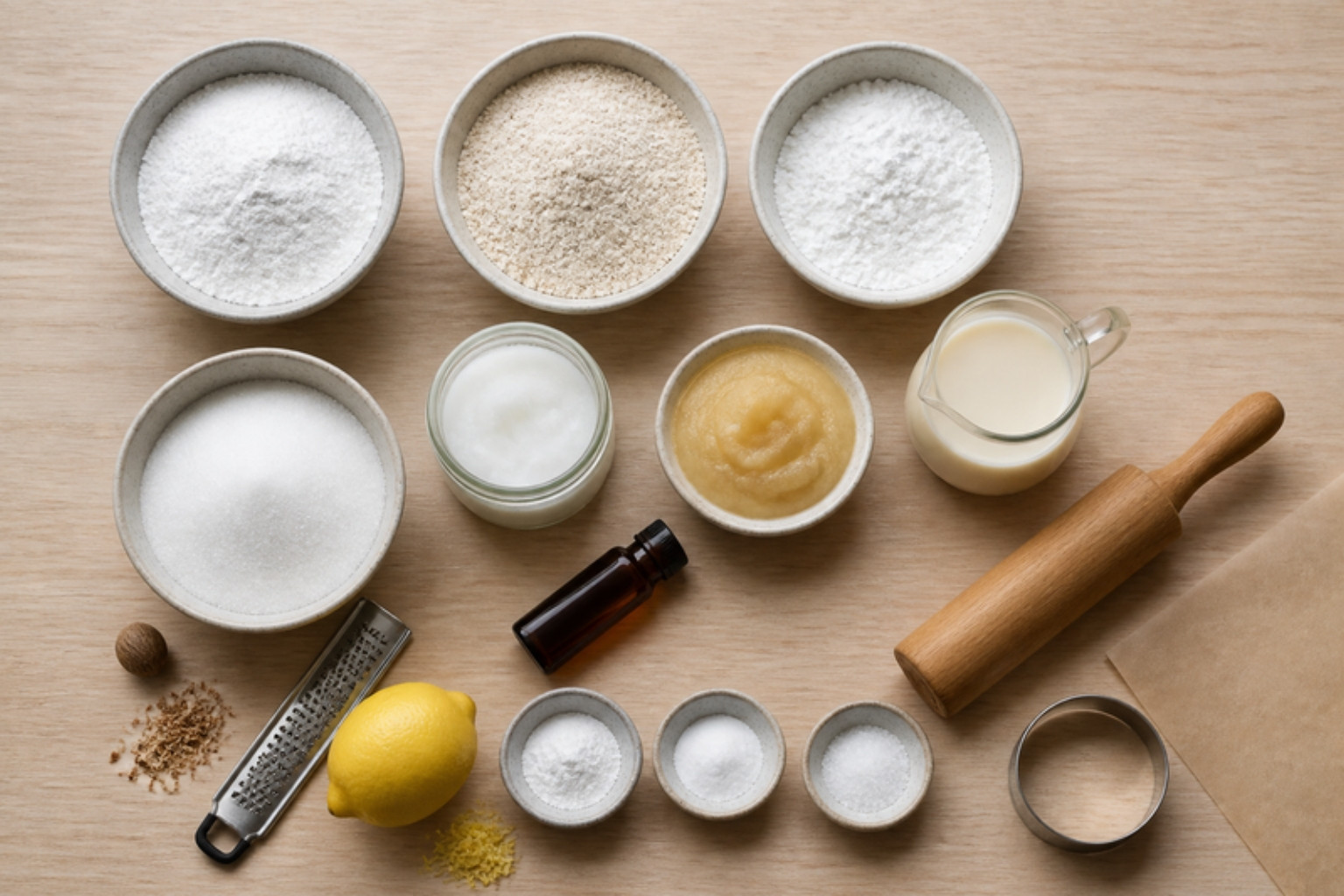
Old-Fashioned Southern Tea Cakes
Ingredients
Equipment
Method
- Whisk the rice flour, oat flour, cornstarch, baking powder, baking soda, salt, and nutmeg in a bowl.
- In a large bowl, beat the sugar and softened coconut oil on medium speed until fluffy and pale, about 2 minutes. Beat in the applesauce, oat milk, vanilla, and lemon zest until smooth; it may look slightly curdled, which is fine.
- Add the dry ingredients and mix on low just until a soft dough forms. Divide in half, flatten into disks, wrap, and chill 30 minutes.
- Heat the oven to 350°F (175°C) and line two baking sheets with parchment. Roll one disk between two sheets of parchment to 1/4 inch (6 mm) thick. Cut 2 1/2-inch rounds and transfer them to the sheets 1 inch apart. Reroll scraps once.
- Sprinkle the tops lightly with sugar. Bake 10 to 12 minutes, until the tops look set and dry and are still pale, the edges are just firm, and the bottoms are lightly golden. Do not let the tops brown.
- Cool on the pan 5 minutes, then move to a rack. They soften slightly as they sit.
Notes
Troubleshooting
- Dough too soft to cut: the coconut oil was too warm. Chill the rolled dough on its parchment for 10 minutes, then cut.
- Dough cracks when rolling: it’s too cold. Let it sit 5 minutes.
- Cookies spread thin: the dough was warm or the oil was melted. Chill the cut cookies on the sheet for 10 minutes before baking.
- Dry or crumbly cookies: overbaked or rolled too thin. Keep them 1/4 inch thick and bake until just set.
Make-Ahead, Freezing, and Gifting
Store baked tea cakes in a cookie tin or airtight container with parchment between the layers for up to 5 days at room temperature. They stay soft and actually taste a little more mellow on day two. To freeze baked cookies, layer them with parchment in a freezer container for up to 3 months and thaw at room temperature in the container. You can also freeze the wrapped dough disks for up to 2 months, thaw them overnight in the fridge, and roll and bake as needed. For gifts, stack tea cakes in a tin or tie a short stack with ribbon in a cellophane bag; they’re sturdy enough to travel.
More Christmas Cookies
Browse the Cookies aisle on our Christmas recipes page. For more rolled cookies, try the soft cut-out sugar cookies or the buttery-style shortbread cookies, made without butter.
FAQ
What’s the difference between tea cakes and sugar cookies?
Tea cakes are softer, thicker, and less sweet, with a cake-like crumb. Sugar cookies are usually crisper at the edges and often frosted.
Do these taste like coconut?
Refined coconut oil is neutral, so the vanilla and nutmeg come through. Unrefined (virgin) coconut oil would add coconut flavor.
Can I make drop tea cakes instead?
Yes. Add 1 to 2 tablespoons more oat milk, scoop tablespoon-size balls, flatten slightly, and bake 11 to 13 minutes.
Can I glaze them?
A thin glaze of powdered sugar, oat milk, and vanilla works well. Traditional tea cakes are usually left plain.
A note before you cook: These recipes are ideas and suggestions, not medical or dietary advice. As with any recipe or ingredient, it is each reader’s responsibility to confirm what they can and cannot eat, read every ingredient label, and source quality ingredients that fit their own needs. Ingredient formulations change, so always check the package you’re using.