
Beef jerky is one of the most convenient high-protein snacks around, but if you’ve ever read the back of a bag, you know the problem. Most store-bought jerky is marinated in soy sauce or teriyaki, many brands add Worcestershire (which usually contains anchovies), and some include wheat, hydrolyzed soy protein, or flavor blends with unclear sources.
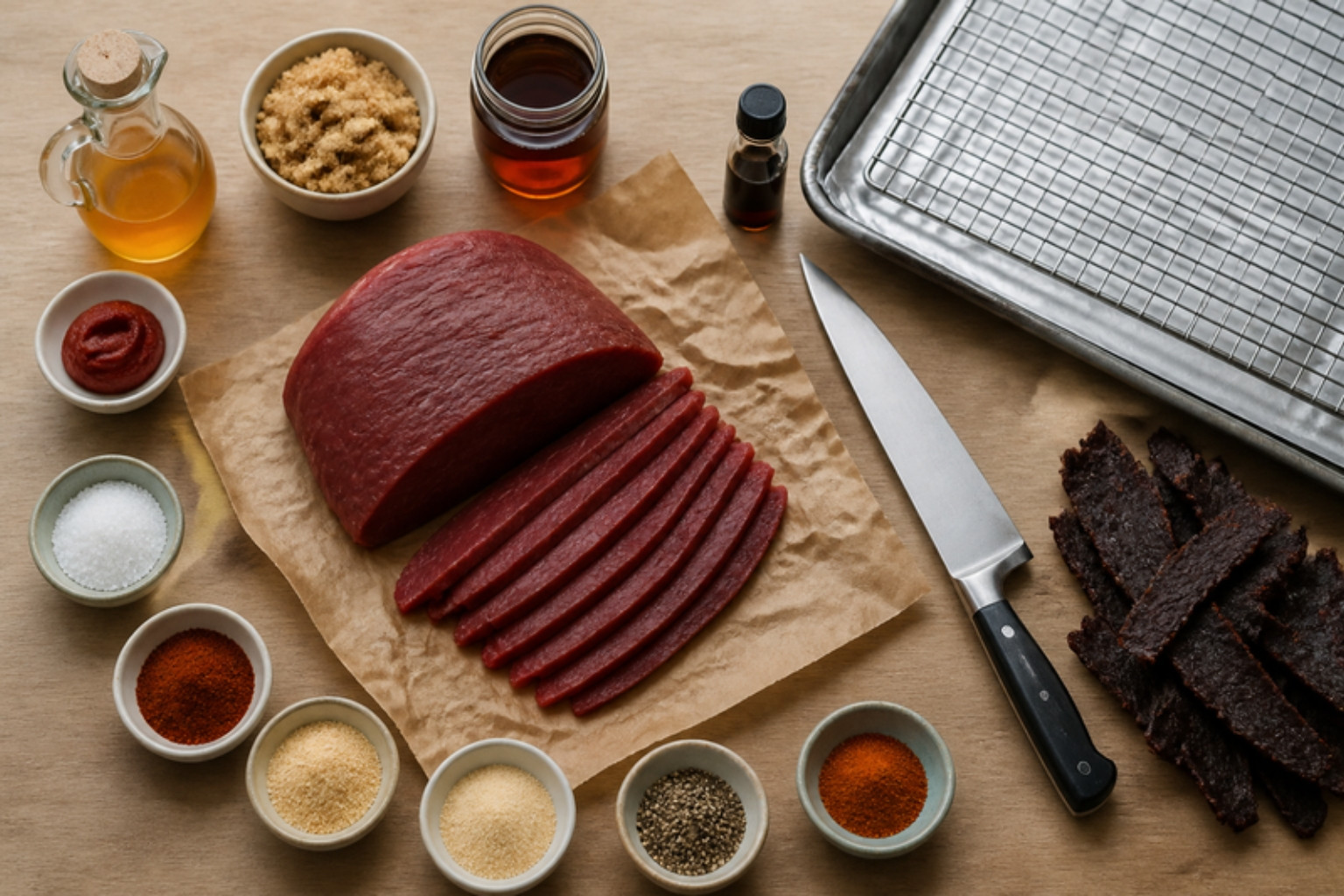
To make beef jerky without soy sauce, marinate thin strips of lean eye of round for 6 to 24 hours in kosher salt, apple cider vinegar, brown sugar, maple syrup, tomato paste and smoked paprika. Bake at 275°F until they reach 160°F inside, then dry them low in a regular oven, door propped open, until they bend and crack.
This Top Nine Free version is made without milk, eggs, wheat, soy, peanuts, tree nuts, fish, shellfish and sesame. It comes out chewy and smoky-sweet, and no dehydrator is needed.
This version uses lean eye of round, sliced thin and marinated in apple cider vinegar, brown sugar, maple syrup, tomato paste, salt, and smoked paprika. The salt and vinegar season the meat deeply, the sugar and maple give it a gentle sweetness, and smoked paprika (with optional liquid smoke) supplies that campfire flavor. After a quick high-heat step, the strips dry low and slow until chewy and dark.
Made without: peanuts, tree nuts, milk, eggs, wheat, soy, fish, shellfish, sesame.
Why You’ll Love This Recipe
- Smoky, slightly sweet, peppery jerky with no soy sauce, teriyaki, or Worcestershire.
- Made in a regular oven with wire racks; no dehydrator needed.
- About 12 ounces of jerky from a 2-pound roast, for road trips, hunting season, game days, and hikes.
- Easy to adjust the heat with cayenne or extra black pepper.
How It Gets Big Flavor Without Soy Sauce
Soy sauce brings two things to a typical jerky marinade: salt and savory depth. Here, kosher salt handles the seasoning and helps draw moisture from the meat, while tomato paste adds a concentrated savory note. Apple cider vinegar tenderizes the surface slightly and adds tang, brown sugar and maple balance it, and smoked paprika, garlic, onion, and black pepper finish the flavor. Because the meat is sliced thin, a marinade of 6 to 24 hours seasons it all the way through.
The oven method has two stages. First, the strips bake at 275°F until they reach 160°F inside, the heating step the USDA recommends for homemade jerky before drying. Then the oven drops to its lowest setting with the door propped open so moisture escapes, and the jerky dries over several hours. Trimming all the fat is important, since fat doesn’t dry and can turn rancid in storage.
Soy sauce and Worcestershire swaps at a glance
| What soy sauce or Worcestershire does | What this marinade uses instead |
|---|---|
| Salt and seasoning | Kosher salt |
| Savory depth | Tomato paste, garlic, onion |
| Tang | Apple cider vinegar |
| Sweet balance | Brown sugar, pure maple syrup |
| Smoke and color | Smoked paprika, optional liquid smoke |
| Heat | Black pepper, optional cayenne |
Ingredients and Swap Ideas
- Eye of round, 2 lb (900 g): lean, inexpensive, and easy to slice evenly. Top round and bottom round also work. Ask the butcher to slice it 1/4 inch thick to save time.
- Ground venison or venison roast: lean venison roast works in the same marinade. Keep the same 160°F heating step, and ask your processor whether anything was added to the meat.
- Apple cider vinegar: use cider vinegar rather than malt vinegar, which is made from barley.
- Brown sugar and maple syrup: use pure maple syrup, not pancake syrup. Honey works if you prefer (not for children under 1).
- Tomato paste: adds savory depth and color. Check the label for added ingredients.
- Spices: single spices rather than seasoning blends, which can include wheat, soy, or added oils.
- Liquid smoke: optional. Check the label; most are just smoke and water, but formulations vary.
- Coconut aminos: some cooks use coconut aminos in place of soy sauce. It would add coconut to the recipe, so it isn’t included here.
Kitchen Equipment
- 2 rimmed baking sheets lined with foil, each fitted with an oven-safe wire rack
- A sharp chef’s knife (partially freezing the beef makes slicing easy)
- Gallon zip-top bag or glass dish for marinating
- Instant-read thermometer
- Wooden spoon to prop the oven door
Step-by-Step Tips
- Partially freeze the beef. One to two hours firms it up so you can cut even 1/4-inch slices. Even thickness means even drying.
- Choose your grain. Slicing against the grain gives a more tender bite; with the grain gives the classic tug-and-chew strip.
- Pat the strips dry. Removing surface marinade speeds drying and helps the jerky develop a better texture.
- Heat first, then dry. Bake at 275°F until the thickest strip reaches 160°F (71°C). See the USDA safe temperature chart for cooking temperatures.
- Prop the door. Moisture needs somewhere to go. If your oven’s lowest setting is higher than 170°F, check the jerky earlier.
- Test a piece. Let a strip cool for 5 minutes, then bend it. It should crack along the bend without snapping, and the torn edge should show no moist spots.
Homemade Beef Jerky in the Oven, No Soy Sauce or Worcestershire
Ingredients
Equipment
Method
- Trim every bit of visible fat from the beef (fat turns rancid as jerky sits). Wrap and freeze 1 to 2 hours, until firm on the outside but not frozen solid.
- Slice the beef 1/4 inch thick. Cut against the grain for a tender, easier-to-chew jerky, or with the grain for a classic chewy strip.
- Whisk all marinade ingredients until the sugar and salt dissolve. Add the beef, turn to coat every slice, seal, and refrigerate 6 to 24 hours, turning once or twice.
- Heat the oven to 275°F (135°C). Set the wire racks on foil-lined baking sheets. Lift the beef from the marinade (discard the marinade), pat each strip dry with paper towels, and lay the strips on the racks without touching.
- Bake 10 to 15 minutes, until the thickest strip reads 160°F (71°C) on an instant-read thermometer. This heating step is recommended by the USDA before drying jerky.
- Lower the oven to its lowest setting, ideally 170°F (75°C). Prop the door open about 1 inch with a wooden spoon so moisture can escape. Dry 3 to 5 hours, rotating the pans halfway, until the jerky is dark, dry to the touch, and bends and cracks without snapping in half. There should be no moist spots when you tear a piece.
- Cool completely on the racks. Blot any beads of fat with a paper towel, then store airtight.
Notes
Troubleshooting
- Jerky is brittle: it dried too long or the slices were too thin. Start checking at 3 hours next time.
- Still soft in places: thicker strips need more time. Pull the done pieces and keep drying the rest.
- Too salty: shorten the marinating time to 6 to 8 hours, or reduce the salt to 1 1/2 teaspoons kosher salt.
- Greasy spots during storage: fat wasn’t fully trimmed. Blot it off and eat that batch sooner, or keep it refrigerated.
Storage, Freezing, and Reheating
Let the jerky cool completely before storing. Keep it in an airtight container or zip-top bag at cool room temperature for up to 1 week, in the refrigerator for up to 3 weeks, or in the freezer for up to 3 months. If you see moisture inside the container, the jerky needed more drying time; refrigerate it and eat it within a few days. No reheating needed.
More Recipes to Try
For more snacks made without seed oils, try the homemade kettle chips fried in beef tallow , the spicy rolled tortilla chips with chili lime, or the nut-free party snack mix. If you like smoky beef and pork flavors, the smoked pulled pork with homemade BBQ sauce is a weekend project worth trying. Find more road-trip and party snacks in our game day recipes.
FAQ
What is the best cut of beef for jerky?
Lean cuts from the round, especially eye of round, are best. They have little fat, slice evenly, and are budget-friendly. Avoid well-marbled cuts like chuck or ribeye, which don’t dry well.
How do you make beef jerky without soy sauce?
Use salt for seasoning and savory ingredients like tomato paste, smoked paprika, garlic, and onion for depth, with a little vinegar and sugar for balance. That’s the approach in this recipe.
What can I use instead of soy sauce and Worcestershire in a jerky marinade?
In this marinade, kosher salt handles the seasoning, tomato paste adds savory depth, apple cider vinegar adds tang, and brown sugar and maple syrup balance it. Smoked paprika, garlic, onion, black pepper, and optional liquid smoke round out the flavor.
Can I use a dehydrator instead?
Yes, as long as you heat the strips to 160°F first, either in the oven as written or by following your dehydrator manufacturer’s instructions. Dehydrator times vary, so start checking after 4 hours.
How long does homemade jerky last?
Homemade jerky has no added preservatives, so it doesn’t keep as long as store-bought. Plan on about 1 week at room temperature, 3 weeks in the refrigerator, or 3 months frozen.
How long does beef jerky take in the oven?
Plan on about 4 hours of oven time: the strips bake at 275°F until the thickest piece reaches 160°F, then dry at the oven’s lowest setting with the door propped open. Start checking at 3 hours, since thinner strips finish first.
Is this beef jerky made without soy and wheat?
Yes. The marinade has no soy sauce, teriyaki, Worcestershire or seasoning blends, and the recipe is made without milk, eggs, wheat, soy, peanuts, tree nuts, fish, shellfish and sesame. Tomato paste, spices and liquid smoke vary by brand, so read those labels.
A note before you cook: These recipes are ideas and suggestions, not medical or dietary advice. As with any recipe or ingredient, it is each reader’s responsibility to confirm what they can and cannot eat, read every ingredient label, and source quality ingredients that fit their own needs. Ingredient formulations change, so always check the package you’re using.