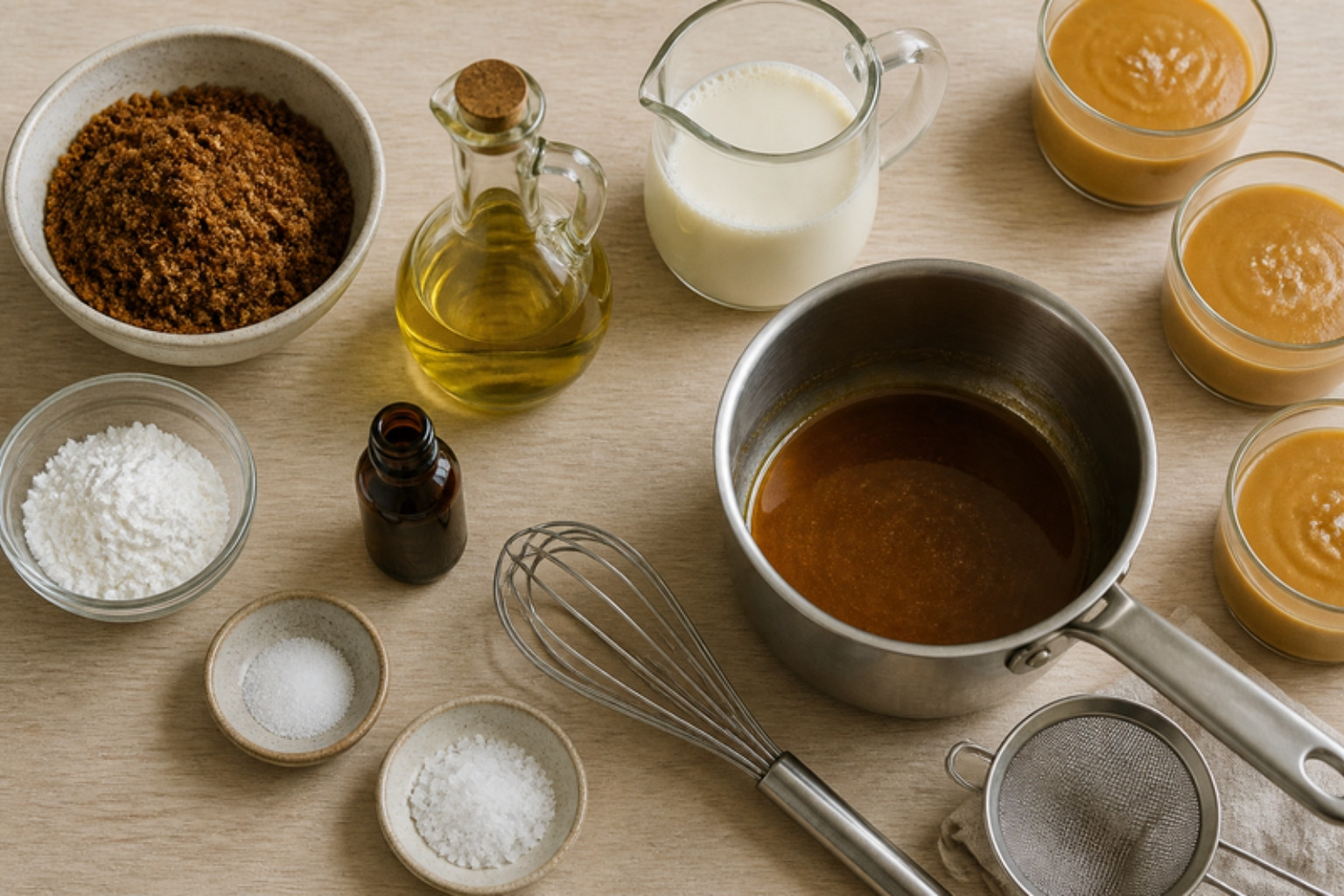
Ingredients
Equipment
Method
- In a small bowl, whisk the cornstarch into 1 cup of the cold oat milk until completely smooth. Set aside next to the stove.
- In a heavy-bottomed saucepan over medium heat, stir together the brown sugar, olive oil, and water. Once it melts, let it bubble without stirring for 2 to 3 minutes, until it darkens a shade, the bubbles turn large and slow, and it smells like caramel. Don't let it smoke.
- Remove the pan from the heat and slowly pour in the remaining 2 cups oat milk while whisking; it will steam and the sugar may seize into lumps. Return to medium heat and whisk until the sugar fully dissolves and the mixture is steaming, 2 to 4 minutes.
- Whisk the cornstarch mixture again and pour it into the pan. Cook, whisking constantly and scraping the bottom and corners with a spatula, until the pudding thickens and comes to a gentle boil with slow, thick bubbles. Let it bubble 1 full minute; it should coat the back of a spoon and hold a line drawn through it.
- Remove from the heat and whisk in the salt and vanilla. For the smoothest texture, pour it through a fine-mesh strainer.
- Divide among serving cups. Press plastic wrap or parchment directly on the surface to prevent a skin. Chill at least 3 hours, until cold and set. Top with a few flakes of sea salt to serve.
Notes
Made without: peanuts, tree nuts, milk, eggs, wheat, soy, fish, shellfish, sesame. Traditional butterscotch pudding uses butter, milk or cream, and egg yolks; this version uses none of them.
Label check: oat milk (unsweetened, no added oil, certified gluten-free), vanilla extract, brown sugar.
Fat: light-tasting (refined) olive oil means mild flavor, not fewer calories. Melted refined coconut oil also works; if you avoid coconut, use the olive oil. Skip butter substitutes and margarine, which are usually made with seed oils.
Storage: refrigerate, covered, up to 4 days. Freezing is not recommended; cornstarch puddings turn watery when thawed.
Nutrition is an automated estimate.
