
Homemade butterscotch pudding is a diner and church-supper classic, but nearly every recipe starts with butter and brown sugar, then adds whole milk or cream and thickens it with egg yolks. Boxed mixes are no help either, since most are made to be stirred into dairy milk. If you’ve been looking for a butterscotch pudding without milk, butter, or eggs that still tastes like the real thing, this one is built from the ground up to do that.
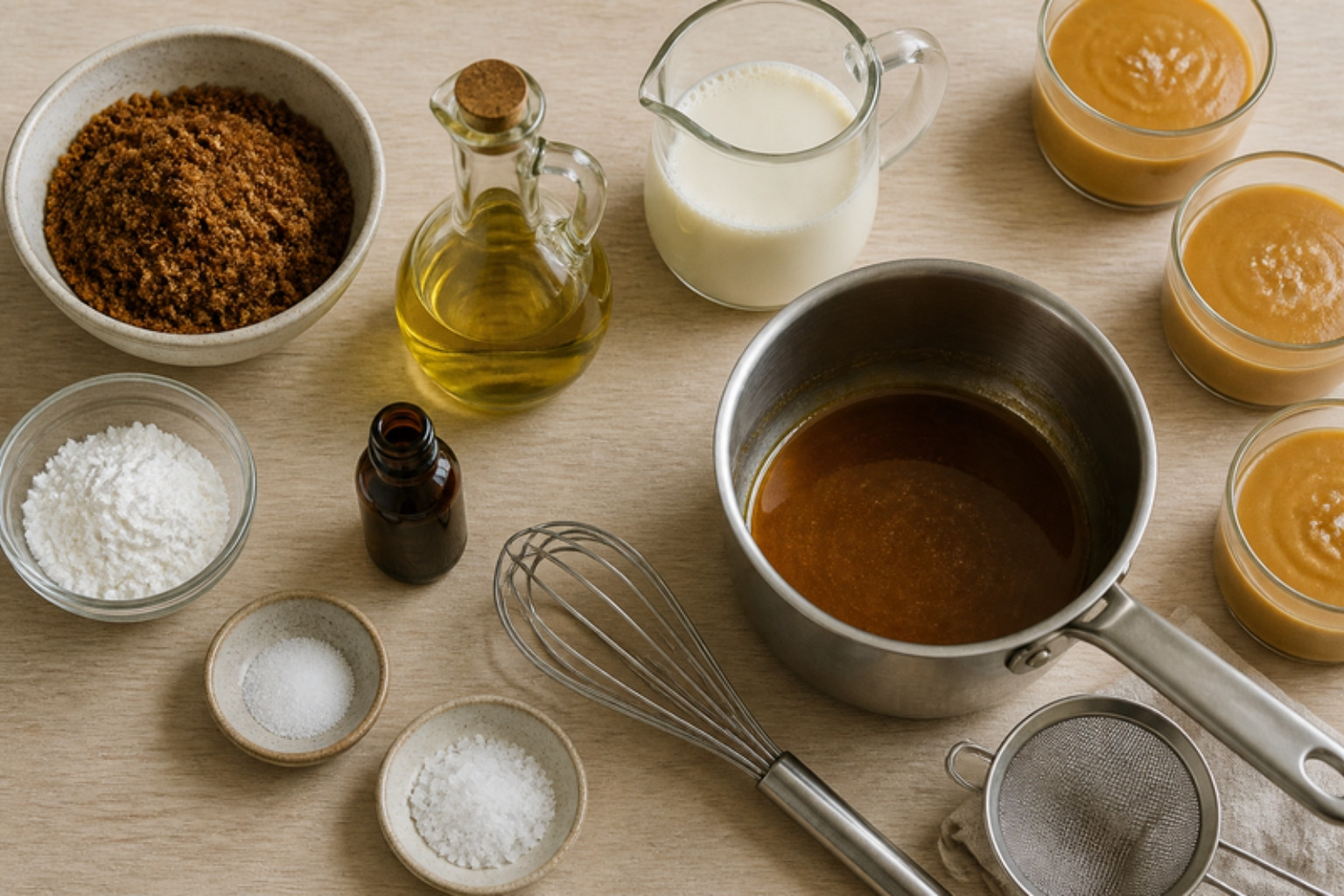
Dark brown sugar is cooked with a little light-tasting olive oil until it bubbles and deepens into a caramel-like syrup. Oat milk goes in next, then a cornstarch slurry that thickens the pudding without yolks. Vanilla and a good pinch of salt bring out that buttery, toasty butterscotch flavor. It takes about 15 minutes on the stove and a few hours in the fridge.
Made without: peanuts, tree nuts, milk, eggs, wheat, soy, fish, shellfish, sesame.
Why You’ll Love This Recipe
- Deep, caramelized brown-sugar flavor with no butter.
- Silky and spoonable, thickened with cornstarch instead of egg yolks.
- Seven ingredients and one saucepan.
- Make it a day ahead; it only gets better as it chills.
How It Works Without Milk, Butter, or Eggs
Butterscotch flavor comes mostly from cooked brown sugar, with butter adding richness and a slightly nutty note. Here, the brown sugar is melted with a small amount of light-tasting olive oil and a splash of water and allowed to bubble until it darkens a shade. That short cook develops caramel flavors that carry through the finished pudding. Dark brown sugar has more molasses than light, which gives more depth.
Egg yolks normally make pudding rich and help it set. Cornstarch takes over the setting job: once the pudding comes to a full boil and bubbles for a minute, the starch thickens completely and holds its shape when chilled. Oat milk gives body and a gentle sweetness. A generous pinch of salt is the final key; it sharpens the caramel flavor the way salted butter would.
Ingredients and Swap Ideas
- Dark brown sugar, 3/4 cup (165 g): gives the richest butterscotch flavor. Light brown sugar works for a milder, more caramel-like pudding.
- Light-tasting olive oil, 2 tablespoons: “light” means refined and mild in flavor, not fewer calories. Melted refined coconut oil also works; if you avoid coconut, use the olive oil. Skip butter substitutes and margarine, which are usually made with seed oils.
- Oat milk, 3 cups (720 ml): unsweetened, with no added oil. Many oat milks contain canola or sunflower oil, so read the label, and choose one labeled gluten-free. For a richer pudding, full-fat coconut milk can replace 1 cup of the oat milk, which adds coconut to the recipe.
- Cornstarch, 1/4 cup (32 g): arrowroot can work, but it thins if boiled too long, so cook just until thick.
- Vanilla extract: check the label. A splash of pure maple syrup is a nice extra if you like a maple note.
- Salt: don’t skip it. A few flakes of sea salt on top make it taste like salted butterscotch.
Kitchen Equipment
- Heavy-bottomed 3-quart saucepan (thin pans scorch sugar)
- Whisk and heatproof spatula
- Fine-mesh strainer, optional
- Six small cups or ramekins and plastic wrap or parchment
Step-by-Step Tips
- Make the slurry first. Whisk the cornstarch into cold oat milk before you start the sugar, so it’s ready when you need it.
- Cook the sugar by sight and smell. When the bubbles turn large and slow and the kitchen smells like caramel, it’s ready. If it smokes or smells sharp, it has gone too far.
- Add the milk off the heat. Hot sugar steams and sputters when liquid goes in. Pour slowly and whisk; any hardened lumps will melt back in once the pan returns to the heat.
- Bring it to a real boil. Cornstarch needs to boil for about a minute to fully thicken. Undercooked pudding stays loose and can turn watery in the fridge.
- Strain for silkiness. A quick pass through a fine-mesh strainer catches any small lumps.
- Cover the surface. Press plastic wrap or parchment directly onto the pudding to prevent a skin as it chills.
Butterscotch Pudding, No Milk, Butter or Eggs
Ingredients
Equipment
Method
- In a small bowl, whisk the cornstarch into 1 cup of the cold oat milk until completely smooth. Set aside next to the stove.
- In a heavy-bottomed saucepan over medium heat, stir together the brown sugar, olive oil, and water. Once it melts, let it bubble without stirring for 2 to 3 minutes, until it darkens a shade, the bubbles turn large and slow, and it smells like caramel. Don’t let it smoke.
- Remove the pan from the heat and slowly pour in the remaining 2 cups oat milk while whisking; it will steam and the sugar may seize into lumps. Return to medium heat and whisk until the sugar fully dissolves and the mixture is steaming, 2 to 4 minutes.
- Whisk the cornstarch mixture again and pour it into the pan. Cook, whisking constantly and scraping the bottom and corners with a spatula, until the pudding thickens and comes to a gentle boil with slow, thick bubbles. Let it bubble 1 full minute; it should coat the back of a spoon and hold a line drawn through it.
- Remove from the heat and whisk in the salt and vanilla. For the smoothest texture, pour it through a fine-mesh strainer.
- Divide among serving cups. Press plastic wrap or parchment directly on the surface to prevent a skin. Chill at least 3 hours, until cold and set. Top with a few flakes of sea salt to serve.
Notes
Troubleshooting
- Pudding didn’t set: it likely didn’t boil long enough. Return it to the pan and bring it back to a full boil for 1 minute while whisking.
- Lumpy pudding: the cornstarch settled before it went in, or the pan wasn’t whisked constantly. Strain it, or blend briefly with an immersion blender.
- Bitter taste: the sugar cooked too dark. Next time, stop as soon as it darkens a shade and smells like caramel.
- Grainy texture: the sugar didn’t fully dissolve after the oat milk went in. Keep whisking over heat until the mixture is smooth before adding the slurry.
Storage, Freezing, and Reheating
Keep the pudding covered in the refrigerator for up to 4 days. It’s best served cold. Freezing isn’t recommended, since cornstarch puddings weep and turn watery after thawing. For a make-ahead dessert, pour it into small jars with lids so it’s ready to grab for lunches or after dinner.
More Recipes to Try
If you love stovetop puddings, try the homemade chocolate pudding with oat milk or the cinnamon-scented old-fashioned stovetop rice pudding. For a warm dessert, the hot fudge pudding cake makes its own sauce as it bakes.
FAQ
What is the difference between butterscotch and caramel?
Caramel is traditionally made by cooking white sugar until it browns. Butterscotch starts with brown sugar, which already contains molasses, so it has a deeper, more toffee-like flavor. Classic butterscotch also uses butter, which this recipe replaces with a small amount of olive oil.
Does butterscotch contain dairy?
Traditional butterscotch is made with butter, and many butterscotch chips and sauces contain milk. This homemade version is made without milk or butter. Always read labels on store-bought butterscotch products.
Can I use a different plant milk?
Oat milk was chosen for its body and mild flavor. Rice milk is thinner and makes a lighter pudding. Soy, almond, or cashew milk would change what this pudding is made without.
Can I make this into a pie filling?
A pie version hasn’t been worked out. A pie filling would likely need more cornstarch to slice cleanly, so for now this recipe is meant for serving in cups.
A note before you cook: These recipes are ideas and suggestions, not medical or dietary advice. As with any recipe or ingredient, it is each reader’s responsibility to confirm what they can and cannot eat, read every ingredient label, and source quality ingredients that fit their own needs. Ingredient formulations change, so always check the package you’re using.