
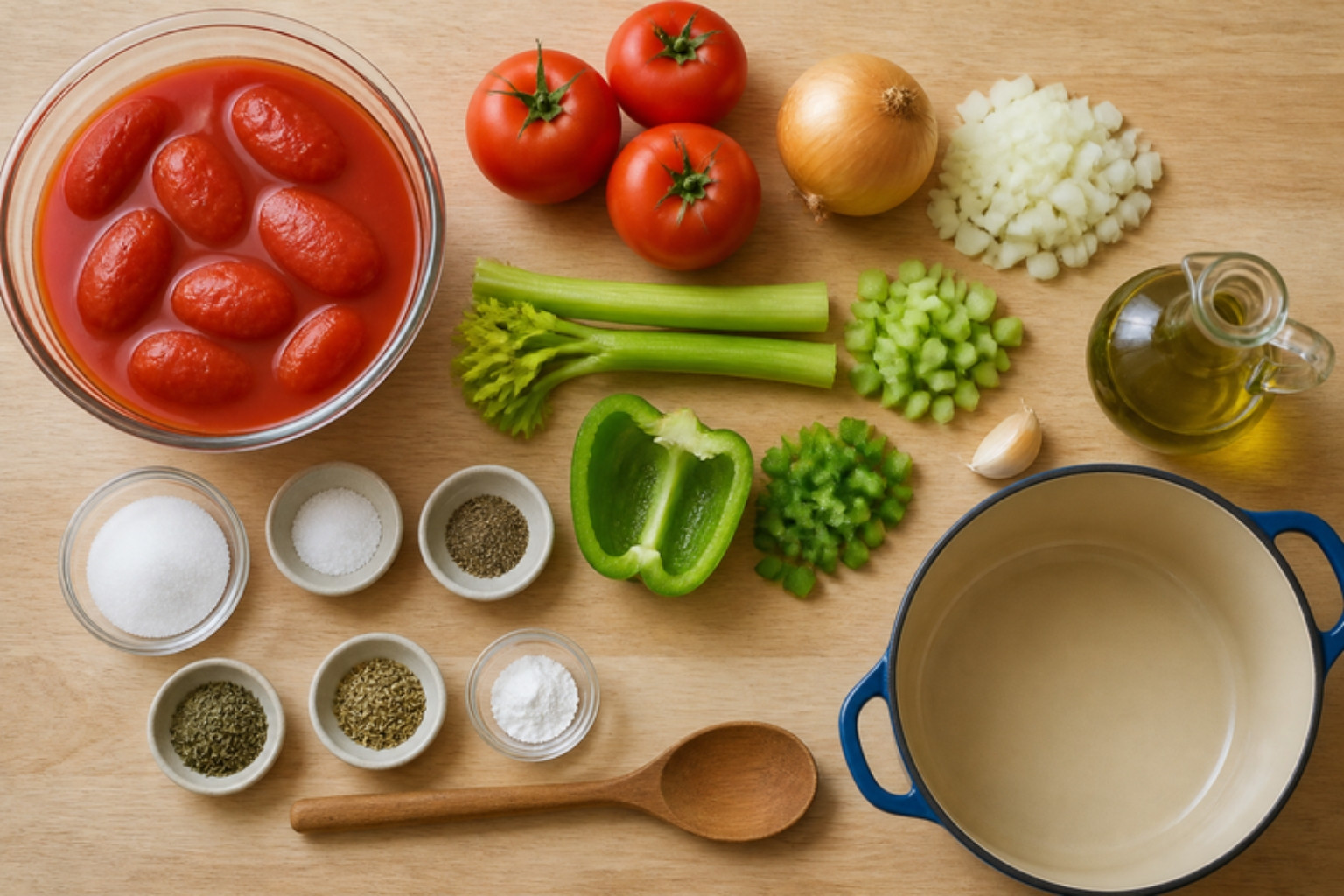
Plenty of old family recipes for stewed tomatoes start with a big pat of butter and finish with torn bread cubes stirred in to thicken the pot. If you cook without milk or wheat, that makes a simple side surprisingly hard to find. This version keeps everything that makes stewed tomatoes a Midwestern supper staple: soft, sweet-tart tomatoes, tender onion, celery, and green pepper, and a glossy, spoonable sauce. It just gets there with extra-virgin olive oil and a slow simmer instead.
It’s the kind of side that shows up next to meatloaf, pork chops, or a pan of cornbread, and it costs very little to make with two cans of whole tomatoes from the pantry. In late summer, swap in ripe garden tomatoes. A little sugar balances the acidity, and a pinch of basil and oregano gives it that homey, grandma’s-kitchen flavor.
Made without: peanuts, tree nuts, milk, eggs, wheat, soy, fish, shellfish, sesame.
Why You’ll Love This Recipe
- Pantry-friendly: two cans of whole tomatoes plus onion, celery, and green pepper.
- No butter, no bread: olive oil builds richness and a slow simmer does the thickening.
- One pot, about 40 minutes start to finish.
- Make-ahead and freezer-friendly: the flavor gets even better the next day.
- Flexible: serve as a side, spoon over rice or mashed potatoes, or use as a base for soup or goulash.
How Stewed Tomatoes Work Without Butter or Bread
In older recipes, butter adds a rounded richness and bread cubes soak up the juices so the dish eats more like a stew than a soup. Both jobs are easy to cover without milk or wheat. Sautéing the onion, celery, and pepper in extra-virgin olive oil until soft and sweet gives the pot a savory base, and the oil carries the flavor of the herbs through the tomatoes.
For thickness, the simplest tool is time. Simmering uncovered for 20 to 25 minutes reduces the tomato juice by about a third and concentrates the flavor. If you like stewed tomatoes thick enough to mound on a fork, a small cornstarch slurry at the end tightens the juices in a minute or two without clouding the flavor. Whole peeled tomatoes that you break up by hand give the best texture: chunky, soft pieces rather than the uniform cubes of canned diced tomatoes, which often contain firming agents that keep them from softening.
Ingredients and Swap Ideas
- Whole peeled tomatoes: two 28-ounce (794 g) cans with their juice. Check the label for tomatoes, salt, and citric acid only; some brands add oil or seasoning blends. Fresh option: about 3 1/2 pounds (1.6 kg) ripe tomatoes, peeled (score an X, blanch 30 to 60 seconds, then slip off the skins) and quartered.
- Extra-virgin olive oil: 2 tablespoons (30 ml). Bacon fat is a classic, smoky swap. Skip vegetable oil, margarine, plant butters, and cooking spray, which are usually made with seed oils.
- Onion, celery, and green pepper: the Midwestern trio. Leave out the pepper if you prefer and add a second rib of celery.
- Sugar: 1 1/2 tablespoons (18 g) to balance acidity. Taste your tomatoes; very sweet ones may need less. Brown sugar gives a deeper, old-fashioned flavor.
- Dried basil and oregano: use single-ingredient herbs rather than blends, which can include other ingredients.
- Cornstarch (optional): 2 teaspoons stirred into 1 tablespoon cold water for a thicker finish. Potato starch works the same way.
- Bacon (optional): crumbled on top. Look for a simple cure without added soy or other flavorings.
Kitchen Equipment
A heavy 3- to 4-quart saucepan or deep skillet, a wooden spoon for breaking up the tomatoes and scraping the bottom, and a cutting board and chef’s knife. A heavy pot matters here: thin pans can scorch the sugars in the tomatoes during the simmer.
Step-by-Step Tips
- Soften the vegetables fully. Cook the onion, celery, and pepper until the onion is translucent and the celery no longer crunches. Undercooked celery stays stringy in the finished dish.
- Break up the tomatoes by hand. Squeeze them through your fingers into the pot or crush them with the side of a spoon. Aim for bite-size chunks, not purée.
- Simmer gently, uncovered. Lazy bubbles reduce the juice without scorching. Scrape the bottom every few minutes.
- Look for gloss. When it’s ready, the liquid has dropped by about a third and looks glossy and slightly thick.
- Season at the end. Canned tomatoes vary in salt and acidity, so taste and adjust the sugar and salt just before serving.
Old-Fashioned Stewed Tomatoes
Ingredients
Equipment
Method
- Warm the olive oil in a large heavy saucepan over medium heat until it shimmers. Add the onion, celery, and green pepper with a pinch of the salt and cook, stirring often, 7 to 9 minutes, until the onion is soft and translucent and the celery has lost its raw crunch. Add the garlic, if using, and cook 30 seconds, until fragrant.
- Add the tomatoes and their juice. Break the whole tomatoes into rough bite-size chunks with the side of a wooden spoon (or squeeze them through your fingers as they go in).
- Stir in the sugar, remaining salt, pepper, basil, and oregano. Bring to a gentle boil, then lower the heat so the pot bubbles lazily.
- Simmer uncovered 20 to 25 minutes, stirring now and then and scraping the bottom, until the tomatoes have softened, the liquid has reduced by about a third, and the stew looks glossy and slightly thick.
- For a thicker, spoonable stew, stir the cornstarch into the cold water, stir it into the pot, and simmer 1 to 2 minutes, until the liquid turns clear and lightly thickened.
- Taste and adjust with a pinch more sugar or salt. Serve hot in small bowls or over rice or mashed potatoes, topped with crumbled bacon if you like.
Notes
Troubleshooting
- Too sour or sharp: add sugar 1 teaspoon at a time, or a tiny pinch of baking soda, which neutralizes some of the acid (it will foam briefly).
- Too thin: simmer 5 to 10 minutes longer, or use the cornstarch slurry.
- Scorched on the bottom: don’t scrape the burnt layer into the stew. Pour the tomatoes into a clean pot and lower the heat.
- Tomato pieces stay firm: diced canned tomatoes often contain calcium chloride, which keeps them from breaking down. Whole peeled tomatoes soften much better.
Storage, Freezing, and Reheating
Cool the stewed tomatoes and refrigerate in a covered container for up to 5 days. To freeze, ladle into freezer containers with 1/2 inch of headspace and freeze for up to 3 months. Thaw overnight in the refrigerator, then reheat in a saucepan over medium heat, stirring, until bubbling. If you used the cornstarch slurry, the juices may thin a little after freezing; a few minutes of simmering brings them back.
What to Serve With Stewed Tomatoes
Stewed tomatoes are a natural partner for the egg-free meatloaf with brown sugar glaze. For a full old-fashioned supper plate, add creamed corn made without milk or butter or green beans with bacon and onions. Find more ideas in our side dish recipes.
Frequently Asked Questions
What are stewed tomatoes?
Stewed tomatoes are tomatoes simmered slowly with aromatics, usually onion, celery, and green pepper, plus a little sugar and seasoning, until soft and saucy. They’re served as a side dish or used as an ingredient in soups, casseroles, and goulash.
Can I use fresh tomatoes?
Yes. Use about 3 1/2 pounds of ripe tomatoes, peeled and quartered. Fresh tomatoes release more water, so plan on a few extra minutes of simmering.
How do you thicken stewed tomatoes without bread?
Simmer them uncovered to reduce the juices, or stir in a slurry of 2 teaspoons cornstarch and 1 tablespoon cold water and cook for a minute or two until the liquid turns clear and thickens.
Can I use homemade stewed tomatoes in recipes that call for a can?
Yes. About 1 3/4 cups equals one 14.5-ounce can. Freeze them in portions of that size so they’re ready for soups and casseroles.
A note before you cook: These recipes are ideas and suggestions, not medical or dietary advice. As with any recipe or ingredient, it is each reader’s responsibility to confirm what they can and cannot eat, read every ingredient label, and source quality ingredients that fit their own needs. Ingredient formulations change, so always check the package you’re using.
Leave a Reply