
Lemon bars are usually one of the first treats to go when eggs are off the menu. The filling is basically a baked lemon curd, held together by a lot of eggs, and the crust is built on butter and wheat flour. If you’ve searched for a version without them and come up with runny filling or a soggy base, this recipe takes a different approach. A crisp, sandy shortbread crust made with rice flour and refined coconut oil bakes first. The filling is cooked on the stove like an old-fashioned lemon pie filling, thickened with cornstarch, then poured over the hot crust and chilled until it slices into clean, glossy squares.
The result is tart, sunny, and a welcome contrast on a Christmas cookie tray full of spice and chocolate. Find more bars and cookies on our Christmas recipes page.
Made without: peanuts, tree nuts, milk, eggs, wheat, soy, fish, shellfish, sesame. (Contains coconut from refined coconut oil in the crust.)
Why You’ll Love These Lemon Bars
- Bright, real-lemon flavor from fresh juice and zest.
- A crisp shortbread base that stays crisp under the filling.
- No eggs or egg replacer: the filling is set entirely with cornstarch.
- One 8×8 pan makes 16 small bars, just right for a cookie tray.
How Lemon Bars Set Without Eggs
In classic lemon bars, eggs coagulate in the oven and turn lemon juice and sugar into a firm custard. Here, cornstarch does that job on the stovetop. Cornstarch thickens when it reaches a full boil, so the sugar, cornstarch, and water are cooked first until thick and translucent. The lemon juice goes in afterward, off the heat. That order matters: acid weakens cornstarch’s thickening power when it’s boiled for long, so adding the juice at the end keeps the filling firm enough to slice while keeping the lemon flavor fresh.
The crust is a press-in shortbread. Rice flour gives the sandy, crisp texture traditional Scottish shortbread is known for, cornstarch keeps it tender, and refined coconut oil acts like butter, solid at room temperature and neutral in flavor. Pouring the hot filling onto the hot crust helps the two layers bond, and baking the crust fully before adding filling keeps it from going soggy.
Ingredients & Swap Ideas
- White rice flour, 1 cup (160 g): a fine grind gives a smooth, crisp crust.
- Cornstarch: 1/4 cup (32 g) in the crust and 6 tbsp (48 g) in the filling. Tapioca starch isn’t a good swap in the filling; it sets softer and stringier.
- Refined coconut oil, 6 tbsp (80 g): use it soft-solid. If you avoid coconut, use 6 tbsp (75 g) light-tasting olive oil. “Light” means refined and mild in flavor, not fewer calories. The crust will be a bit more crumbly, so press it firmly. Skip shortening, margarine, and plant butters, which are typically made with seed oils.
- Fresh lemons, 3 to 4: you need 1/2 cup (120 ml) juice and 1 tbsp zest. Meyer lemons make a sweeter, milder bar. Bottled juice tends to taste flat.
- Sugar: 1 cup (200 g) granulated in the filling and powdered sugar in the crust and for dusting.
- Turmeric (optional): a tiny pinch gives the filling the yellow color eggs usually provide. You won’t taste it.
Kitchen Equipment
- 8×8-inch metal baking pan and parchment paper
- Medium heavy-bottomed saucepan and a whisk
- Microplane or fine grater, and a citrus juicer
- Sharp knife for cutting
Step-by-Step Tips
- Use a parchment sling. Leave overhang on two sides so you can lift the chilled slab out for neat cutting.
- Press the crust firmly. Use the bottom of a measuring cup to pack it into an even layer. Loose spots crumble when cut.
- Bake the crust until golden at the edges. It should look dry and firm on top, 20 to 24 minutes. A pale crust will soften under the filling.
- Boil the cornstarch fully. Whisk constantly until the mixture boils and turns from cloudy to clear and thick, then keep it boiling 1 more minute.
- Add lemon off the heat. Whisk in juice and zest, then return briefly to low heat just until it bubbles again and looks glossy.
- Chill fully. Cool 1 hour, then refrigerate at least 4 hours. Cut with a sharp knife wiped clean between cuts, and dust with powdered sugar just before serving.
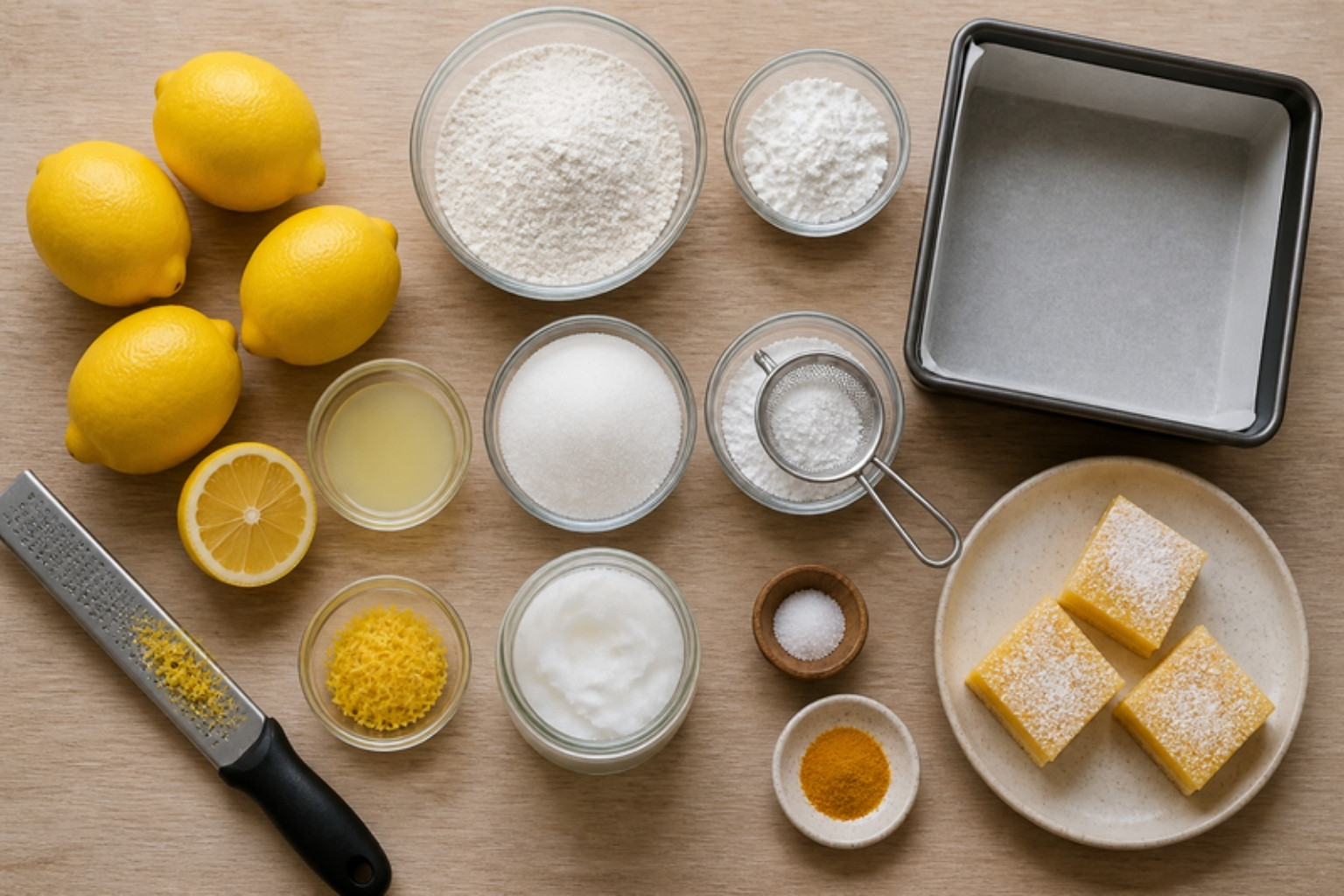
Lemon Bars, No Eggs or Butter
Ingredients
Equipment
Method
- Heat the oven to 350°F (175°C). Grease an 8×8-inch pan lightly with coconut oil and line with a parchment sling.
- Crust: whisk the rice flour, cornstarch, powdered sugar, and salt. Rub in the coconut oil with your fingertips until it looks like damp sand, then add cold water 1 tbsp at a time until a handful holds together when squeezed. Press firmly and evenly into the pan.
- Bake 20 to 24 minutes, until the crust is firm, dry on top, and light golden at the edges.
- Filling (start while the crust bakes): whisk the sugar, cornstarch, and salt in a saucepan, then whisk in the water until smooth. Cook over medium heat, whisking constantly, until it boils and turns thick and translucent. Boil 1 minute more.
- Off the heat, whisk in the lemon juice, zest, and turmeric. Return to low heat and whisk 30 to 60 seconds, just until it bubbles again and looks glossy and thick enough to mound.
- Pour the hot filling over the hot crust and smooth the top. Cool at room temperature 1 hour, then refrigerate uncovered at least 4 hours, until fully set and cold.
- Lift out with the parchment, trim the edges if you like, and cut into 16 bars with a sharp knife wiped clean between cuts. Dust with powdered sugar just before serving.
Notes
Troubleshooting & Tips
- Filling is soft or runny: the cornstarch didn’t reach a full boil, or the juice was boiled too long. Next time, boil the base for a full minute and add the lemon at the end.
- Filling is cloudy or lumpy: whisk the cornstarch into the sugar before adding water, and whisk constantly as it heats.
- Powdered sugar disappears: the moist filling dissolves it. Dust right before serving.
- Crust crumbles when cutting: chill the bars longer and use a long, sharp knife, pressing straight down rather than sawing.
Make-Ahead, Freezing & Gifting
- Make ahead: bake the bars 1 to 2 days before serving and keep them covered in the refrigerator, uncut if possible.
- Storage: refrigerate covered up to 4 days.
- Freezing: wrap the uncut slab well and freeze up to 1 month; thaw overnight in the fridge. Cornstarch fillings can soften and weep a little after freezing, so these are at their best fresh.
- Gift tins: lemon bars are a chilled bar, not a shelf-stable cookie. Pack them in a parchment-lined tin in a single layer, keep them refrigerated until handing off, and let the recipient know to keep them cold. Dust with powdered sugar on arrival.
More for the Cookie Tray
The crust here is a cousin of our classic shortbread cookies made without butter, and if you love citrus, try old-fashioned candied orange peel for gift boxes. See every cookie and bar on the Christmas recipes page.
FAQ
Can you make lemon bars without eggs?
Yes. This version cooks the filling on the stove with cornstarch, the way many old-fashioned lemon pie fillings are made, so it sets firm when chilled without any eggs.
Why do the lemon bars need to chill so long?
Cornstarch gels continue to firm as they cool. Four hours in the fridge gives a filling that slices cleanly; cut too early, it will be soft.
Can I use limes or oranges?
Lime juice works one-for-one. Orange juice is much sweeter, so reduce the sugar to about 3/4 cup and add 2 tablespoons of lemon juice for brightness.
Can I double the recipe?
Yes. Use a 9×13-inch pan, bake the crust a few minutes longer, and cook the filling in a larger saucepan so it boils evenly.
A note before you cook: These recipes are ideas and suggestions, not medical or dietary advice. As with any recipe or ingredient, it is each reader’s responsibility to confirm what they can and cannot eat, read every ingredient label, and source quality ingredients that fit their own needs. Ingredient formulations change, so always check the package you’re using.