
Crystallized ginger is one of those old-fashioned candies that shows up in Christmas tins and fancy grocery bins at a surprising price. It’s also easy to make at home with three ingredients: fresh ginger, sugar, and water. Slices of ginger are simmered until tender, cooked slowly in sugar syrup until they turn translucent, then rolled in sugar and left to dry into chewy, sparkling pieces that are sweet first and pleasantly fiery after. If you buy candied ginger and wonder about shared lines or processing, making it yourself lets you control every step.
You also get a bonus: a jar of golden ginger syrup to stir into hot tea, sparkling water, cider, or glazes. Crystallized ginger is made without peanuts, tree nuts, milk, eggs, wheat, soy, fish, shellfish, and sesame, and it has no added fat.
Made without: peanuts, tree nuts, milk, eggs, wheat, soy, fish, shellfish, sesame.
Why You’ll Love Homemade Crystallized Ginger
- Three simple ingredients, no special equipment beyond a thermometer.
- Two gifts in one batch: candied ginger and ginger syrup.
- Keeps for months, so it can be made well before the holidays.
- Great in baking: chop it into cookies, scones, or crumb toppings.
How Candying Works
Candying replaces most of the water in the ginger with sugar. The first simmer in plain water softens the tough fibers and tames some of the heat. Then, as the slices cook gently in syrup, water moves out of the ginger and sugar moves in. As the syrup reduces and reaches about 225°F (107°C), the slices turn glassy and translucent, a sign they’re saturated. That sugar is what preserves the ginger and gives it its chewy texture. The final roll in sugar keeps the pieces from sticking together and gives the sparkly coating.
There’s no fat, egg, or dairy involved at any point, so this is naturally made without the top nine allergens. The only place to watch labels is the optional chocolate dip.
Ingredients & Swap Ideas
- Fresh ginger: choose plump, firm hands with smooth, shiny skin. Young ginger (thin-skinned, pinkish tips) is less fibrous and makes the most tender candy. Avoid wrinkled ginger, which is woody.
- Sugar: plain granulated sugar keeps the color golden. Raw or turbinado sugar makes a crunchier coating.
- Heat level: for milder ginger, do a second 15-minute simmer in fresh water before the syrup step. For hotter ginger, skip the second simmer and slice a bit thicker.
- Dairy-free dark chocolate (optional): read the label for milk, soy lecithin, added seed oils, and shared lines.
Kitchen Equipment
A medium heavy saucepan, a spoon for peeling, a sharp knife or mandoline, a candy or instant-read thermometer, a wire rack set over a rimmed baking sheet, and a clean glass jar for the syrup.
Step-by-Step Tips
- Peel with a spoon. Scraping removes only the thin skin and gets around knobs easily.
- Slice evenly. Even 1/8-inch slices candy at the same rate. Cut across the fibers for the most tender bite.
- Simmer, don’t boil hard. A gentle bubble keeps the syrup clear and stops it from caramelizing.
- Watch for translucence. When the slices look like stained glass and the syrup is at 225°F, they’re ready.
- Coat while tacky. Sugar sticks best after about 10 minutes of draining.
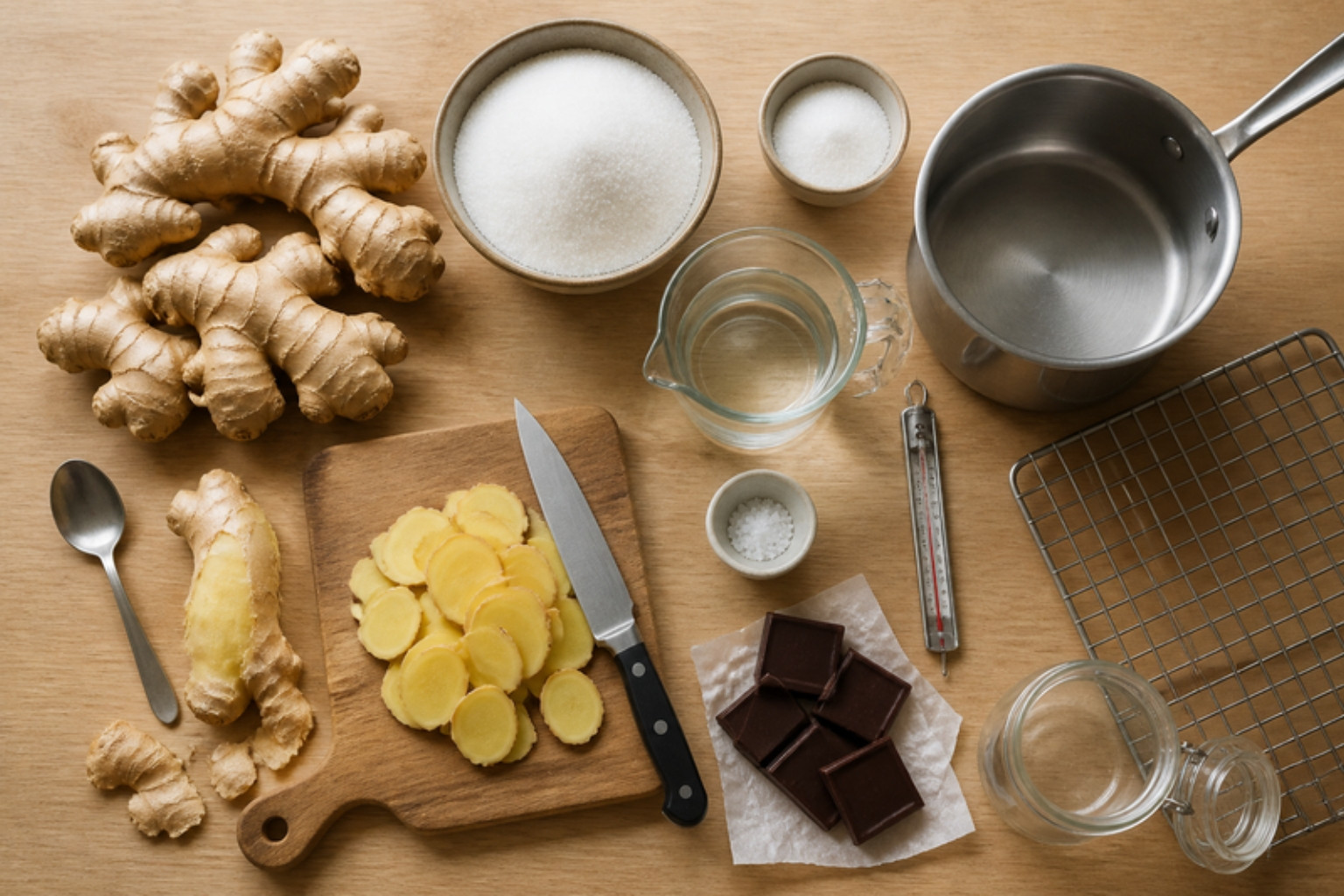
Homemade Crystallized Ginger
Ingredients
Equipment
Method
- Peel the ginger by scraping off the skin with the edge of a spoon. Slice it into even 1/8-inch (3 mm) coins or planks with a sharp knife or mandoline.
- Put the slices in a saucepan, cover with water by 1 inch, and simmer until a knife slides through easily, 30 to 35 minutes. Drain. For milder ginger, repeat with fresh water for 15 minutes more.
- In the same pan, stir the 2 cups sugar, 2 cups water, and salt over medium heat until the sugar dissolves. Add the ginger and simmer gently, stirring now and then, until the slices look translucent and the syrup thickens and reaches about 225°F (107°C), 30 to 40 minutes. Do not let it brown.
- Set a rack over a rimmed baking sheet. Lift the ginger out with a slotted spoon and spread it on the rack to drain for 10 minutes. Pour the hot syrup into a clean jar; it is ginger syrup for drinks, glazes, and baking.
- While the ginger is still slightly tacky, toss the slices in the 1/2 cup sugar a handful at a time until well coated. Spread back on the rack in a single layer and let dry at room temperature until no longer sticky, 4 to 12 hours depending on humidity.
- Optional: melt the chocolate and dip half of each slice. Set on parchment until firm.
Notes
Troubleshooting
- Ginger is tough or stringy: the root was old, or the first simmer was too short. Simmer until a knife slides through easily before adding sugar.
- Syrup crystallized in the pan: it was stirred too hard or cooked too long. Add a splash of water and warm gently to dissolve.
- Still sticky after drying: humidity slows drying. Roll in more sugar and let it sit longer, or dry in a 150°F oven with the door cracked for an hour.
- Too spicy: next batch, do the second water simmer. Chocolate dipping also softens the heat.
Boiling sugar syrup is extremely hot and causes serious burns. Use a heavy pan and keep children and pets away from the stove while it cooks.
Storage & Gifting
Crystallized ginger keeps in an airtight jar or tin at room temperature for up to 3 months; chocolate-dipped pieces are best within a month, layered with parchment. It doesn’t need freezing. Refrigerate the ginger syrup and use it within a month. For gifts, pack the ginger in small glass jars or cellophane bags tied with ribbon, and pair it with a little bottle of the syrup and a tag suggesting it for hot tea or sparkling water. It also tucks nicely into a cookie tin beside spice cookies.
More Holiday Candy and Gifts
Find all our candy and edible gifts on the Christmas recipes page. The candied orange peel uses the same simmer-and-sugar method, and sugared cranberries make a festive partner in a gift tin. Chopped crystallized ginger is a nice addition to the gingerbread crinkle cookies, too.
FAQ
Is crystallized ginger the same as candied ginger?
Yes. The terms are used interchangeably. Some sources use candied ginger for pieces stored in syrup and crystallized ginger for sugar-coated dry pieces like these.
How do I use the ginger syrup?
Stir it into hot tea, sparkling water, lemonade, or warm cider; brush it over cakes; or use it in glazes for ham or carrots.
How do I bake with crystallized ginger?
Chop it finely with a lightly oiled knife and fold about 1/3 cup into a batch of cookie or scone dough, or sprinkle it over a crumb topping.
Can I use less sugar?
The sugar is what preserves and texturizes the ginger, so reducing it shortens the shelf life and makes softer pieces. Keep reduced-sugar batches in the fridge and use them within a couple of weeks.
A note before you cook: These recipes are ideas and suggestions, not medical or dietary advice. As with any recipe or ingredient, it is each reader’s responsibility to confirm what they can and cannot eat, read every ingredient label, and source quality ingredients that fit their own needs. Ingredient formulations change, so always check the package you’re using.
Leave a Reply