
Most butternut squash mash recipes lean on a few tablespoons of butter and a splash of cream to make it rich. If dairy is off your table, that usually means a mash that tastes flat or watery. This version gets its richness somewhere else: the squash is roasted until the edges caramelize, mashed with soft roasted garlic, and stirred with warm sage oil left over from frying a handful of sage leaves. A spoonful of maple brings out the squash’s sweetness, and the crispy sage on top adds crunch.
The result is a bright orange, velvety side that sits happily next to turkey, ham, or a roast, and it reheats well, so you can make it days before Thanksgiving and free up the stovetop.
Made without: peanuts, tree nuts, milk, eggs, wheat, soy, fish, shellfish, sesame.
Why You’ll Love This Mash
- No butter, cream, or plant butter: extra-virgin olive oil and sage do the work.
- Roasting instead of boiling keeps the mash thick and full of flavor.
- Crispy sage leaves add crunch and make it look like a holiday dish.
- Make it up to 3 days ahead, or freeze it for later.
- Easy to keep savory: just leave out the maple.
How It Gets Creamy Without Butter or Cream
Boiled or steamed squash absorbs water, so it needs butter and cream to taste rich and to hide the wateriness. Roasting does the opposite: it drives off moisture and browns the sugars at the edges, so the mash is naturally thick and sweet. Butternut squash is already smooth and low in starch, so it turns creamy with just a masher. Olive oil steeped with fresh sage carries flavor through every bite, and a little warm broth or water adjusts the texture at the end without thinning the taste.
Ingredients and Swap Ideas
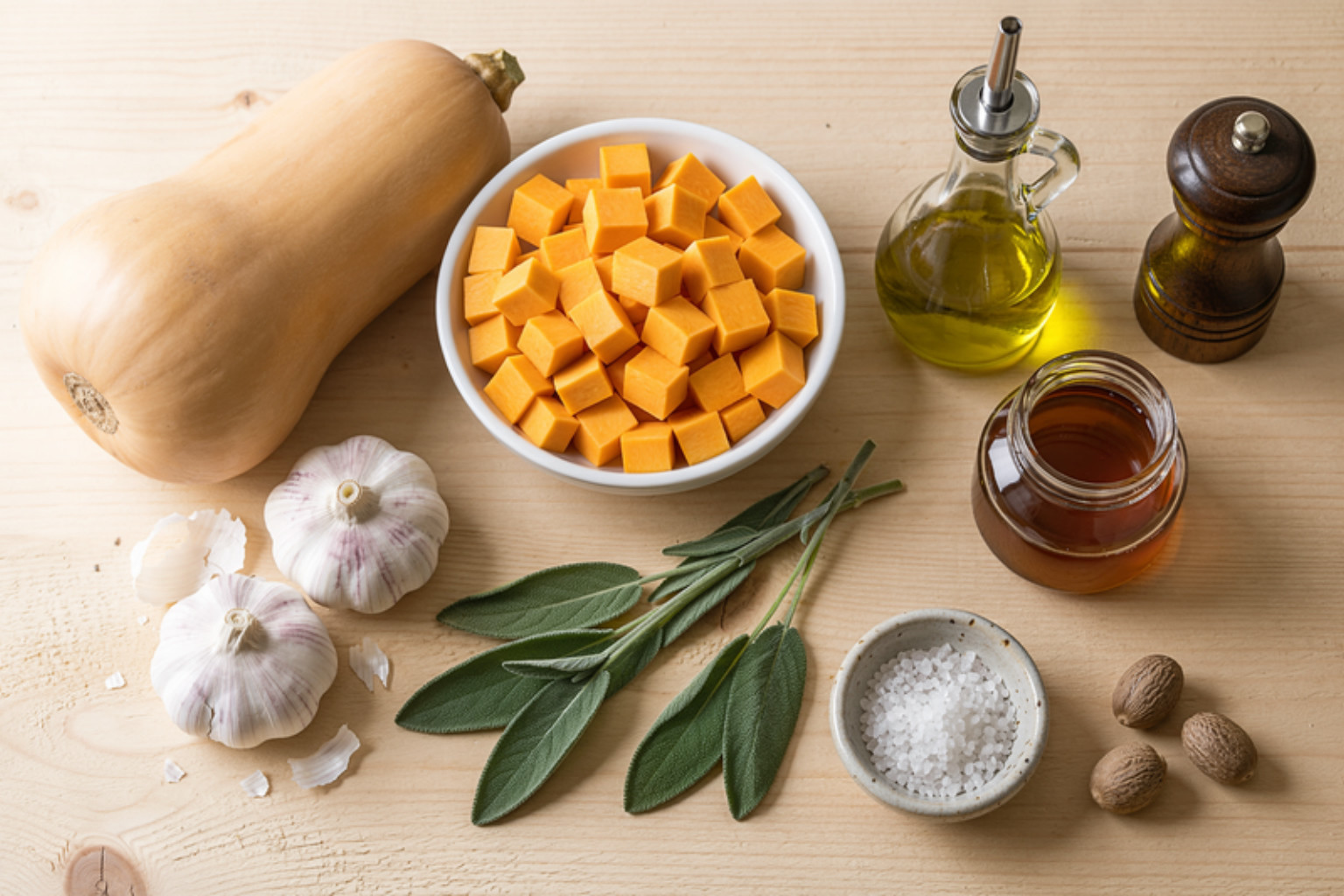
- Butternut squash (about 3 lb / 1.4 kg): pre-cut cubes from the produce section save time; you’ll need about 8 cups (1.1 kg). Kabocha or red kuri squash also mash well.
- Extra-virgin olive oil (5 tbsp total): 2 tablespoons for roasting and 3 for frying the sage. Bacon fat is a good swap for the frying oil if you like a smoky note. Skip butter, plant butters, and cooking spray.
- Garlic (4 cloves): roasted in their skins, they turn soft and sweet.
- Fresh sage (16 leaves): dried sage won’t fry, but 1/2 teaspoon dried can go into the oil for flavor.
- Pure maple syrup (1 to 2 tbsp, optional): brown sugar works too. Leave it out for a savory side.
- Chicken broth or water (1/4 to 1/2 cup): broth adds savory depth. Check the label, because some broths contain wheat, soy, yeast extract, or added seed oils. Water works fine.
- Nutmeg, salt, and pepper: a small pinch of nutmeg is enough.
Equipment
- Rimmed half-sheet pan (18 x 13 in / 46 x 33 cm)
- Sharp chef’s knife and a sturdy Y-peeler
- Small skillet for the sage
- Potato masher (a food processor makes it gummy-smooth, if you prefer that)
Step-by-Step Tips
- Peel safely. Trim both ends, cut the neck from the round bottom, and peel each piece standing flat on the board. Scoop the seeds from the bottom half.
- Give the cubes space. Crowded squash steams instead of browning. Use two pans if your cubes overlap.
- Check doneness with a fork. The thickest cubes should offer no resistance, and many edges should be deep golden.
- Fry the sage by sound. The leaves sizzle hard at first. When the bubbling slows and they darken slightly, they’re crisp. Pull them right away; they go from crisp to bitter quickly.
- Steep the chopped sage. Stirring chopped sage into the warm oil off the heat infuses it without burning.
- Mash while hot. Hot squash mashes smoother. Add the warm liquid a splash at a time until the mash is spoonable.
Butternut Squash Mash with Crispy Sage (No Butter)
Ingredients
Equipment
Method
- Heat the oven to 425°F (220°C). Toss the squash cubes and unpeeled garlic cloves with 2 tablespoons olive oil and 3/4 teaspoon salt on a rimmed sheet pan. Spread in one layer with space between the pieces.
- Roast 35 to 40 minutes, stirring once halfway, until a fork slides through the thickest cubes with no resistance and many edges are deep golden brown.
- While the squash roasts, warm 3 tablespoons olive oil in a small skillet over medium heat. Add the whole sage leaves in one layer and fry 30 to 60 seconds, until the bubbling slows and the leaves turn darker green and crisp. Lift onto a paper towel and sprinkle with a pinch of salt.
- Take the skillet off the heat and stir the chopped sage into the warm oil. Let it steep while the squash finishes.
- Squeeze the soft roasted garlic out of its skins into a large bowl (or straight onto the hot pan). Add the squash, the sage oil, maple syrup if using, remaining 1/2 teaspoon salt, pepper, and nutmeg.
- Mash with a potato masher until mostly smooth with a few soft lumps. Add warm broth or water a splash at a time until it’s spoonable and creamy. Taste and adjust salt.
- Spoon into a warm serving bowl, crumble or scatter the crispy sage over the top, and finish with flaky salt and a thin drizzle of olive oil.
Notes
Troubleshooting
- Mash tastes bland: add salt in small pinches; squash needs more than you’d expect. A squeeze of lemon or a splash of cider vinegar also wakes it up.
- Too stringy: some squash is more fibrous. Pass it through a food mill or pulse it briefly in a food processor.
- Too thin: the squash was likely steamed in a crowded pan. Simmer the mash in a wide pan over low heat, stirring, until it thickens.
- Sage turned brown and bitter: the oil was too hot. Fry a fresh batch over medium heat for less time.
Make-Ahead, Storage, and Freezing
Make ahead: refrigerate the finished mash (without the crispy sage) in a covered baking dish for up to 3 days. Reheat covered at 350°F (175°C) for 20 to 25 minutes, stirring once, or warm it on the stove with a splash of broth. Keep the fried sage at room temperature in a paper-towel-lined container for up to 2 days.
Freezing: freeze the mash in an airtight container for up to 3 months. Thaw overnight in the refrigerator and reheat with a little broth or water, then top with freshly fried sage.
More Thanksgiving Sides
Browse every side, appetizer, and pie on our Thanksgiving recipes page. Serve this mash alongside mashed potatoes without milk or butter, or put out maple bacon butternut squash bites as an appetizer. If you’d rather keep the squash in pieces, try maple roasted butternut squash with crispy sage.
FAQ
Can you make mashed butternut squash without butter?
Yes. Roasting concentrates the squash’s flavor and sweetness, and extra-virgin olive oil infused with sage adds the richness butter usually brings. A little warm broth or water gives a creamy texture without milk or cream.
Is it better to roast or boil butternut squash for mash?
Roasting gives a thicker, sweeter mash with caramelized flavor. Boiling is faster but adds water, so the mash can turn loose and bland. If you’re short on time, steam the squash instead of boiling, then cook the mash in a wide pan for a few minutes to dry it out.
Can I make this the day before Thanksgiving?
Yes, up to 3 days ahead. Reheat it covered in the oven or on the stove with a splash of broth, and fry the sage leaves the day you serve it or keep them in a dry container.
How do I make it savory instead of sweet?
Skip the maple syrup and add an extra clove of roasted garlic, a pinch of smoked paprika, or a few crumbles of crisp bacon on top.
A note before you cook: These recipes are ideas and suggestions, not medical or dietary advice. As with any recipe or ingredient, it is each reader’s responsibility to confirm what they can and cannot eat, read every ingredient label, and source quality ingredients that fit their own needs. Ingredient formulations change, so always check the package you’re using.
Leave a Reply