
Beef and broccoli is one of the most-ordered takeout dishes in the country, and one of the hardest to order when soy, shellfish, or sesame is off the table. The classic sauce leans on soy sauce and oyster sauce, and many restaurant versions finish with sesame oil. This homemade beef and broccoli keeps the parts that make it worth craving: thin, tender slices of beef, bright crisp-tender broccoli, and a glossy, garlicky brown sauce that clings to every piece. It just builds that sauce a different way.
Coconut aminos, a salty-sweet seasoning made from coconut sap, stands in for soy sauce. Beef broth, a little brown sugar and molasses add the savory depth and dark color oyster sauce usually brings, and rice vinegar balances the sweetness. A quick baking soda “velvet” keeps flank steak tender in a hot pan, the same trick takeout kitchens use. This is an AI-developed recipe that hasn’t been kitchen-tested yet, so taste the sauce and adjust the salt to your brand of coconut aminos.
Made without: peanuts, tree nuts, milk, eggs, wheat, soy, fish, shellfish, sesame. Contains: coconut (coconut aminos).
Why You’ll Love This Beef and Broccoli
- Tastes like the takeout version, with no soy sauce, oyster sauce, fish sauce or sesame oil.
- Tender beef every time thanks to a 15-minute velveting step.
- One skillet, about 35 minutes, and dinner is on the table with a pot of rice.
- The sauce thickens with cornstarch, so there’s no wheat flour anywhere.
How the Sauce Works Without Soy Sauce or Oyster Sauce
Soy sauce gives stir-fry sauces salt and savory depth. Oyster sauce adds body, sweetness, and that dark, glossy look. Coconut aminos covers the salty-savory part; it’s a little sweeter and milder than soy sauce and has less sodium, which is why the recipe adds a pinch of kosher salt. Beef broth brings meaty depth, brown sugar and an optional teaspoon of molasses mimic oyster sauce’s sweetness and color, and cornstarch turns it all glossy in about a minute. Garlic and fresh ginger carry the aroma that sesame oil usually adds.
Velveting matters too. Tossing sliced beef with a little baking soda raises the pH on the meat’s surface, which helps it hold onto moisture in a very hot pan. A light coat of cornstarch then gives the slices a silky surface that the sauce grabs. The same no-soy approach shows up in our Breakfast Fried Rice with Sausage and Homemade Beef Jerky.
Ingredients and Swap Ideas
- Flank steak (1 1/4 lb / 565 g): sirloin or skirt steak also work. Slice across the grain for tender bites.
- Coconut aminos (1/2 cup / 120 ml): check the label; it should list coconut sap and salt. Brands vary in saltiness, so taste before adding more salt. Don’t swap in a “soy-free” seasoning blend without reading every ingredient.
- Beef broth (1/2 cup / 120 ml): check for wheat, soy, yeast extract and added seed oils, or use homemade.
- Light-tasting olive oil (3 tablespoons): it handles high stir-fry heat with a mild flavor. (“Light” means refined, not lower in calories.) Beef tallow is a good swap. Skip “vegetable oil” or other seed oils that many takeout recipes call for.
- Broccoli (1 1/2 lb / 680 g): peel and slice the stems too; they’re sweet and tender. Frozen florets work if you skip the steaming step and add them straight to the hot pan.
- Rice vinegar: use unseasoned. Apple cider vinegar works in a pinch.
Kitchen Equipment
A 12-inch skillet or wok with a lid, a sharp chef’s knife, a cutting board, a small bowl and whisk for the sauce, and an instant-read thermometer if you want to check the beef.
Step-by-Step Tips
- Freeze, then slice. Fifteen to 20 minutes in the freezer firms the steak so you can cut even 1/8- to 1/4-inch slices.
- Measure the baking soda. A quarter teaspoon is plenty for over a pound of beef. More can leave a soapy taste.
- Cook the broccoli first. A quick stir-fry and 2 to 3 minutes of steaming under a lid gets it bright green and crisp-tender. Pull it while a knife still meets slight resistance in the stems.
- Sear in batches. Crowding drops the pan temperature and the beef steams gray. Let each batch sit untouched for a minute so it browns.
- Whisk the sauce again. Cornstarch settles to the bottom of the bowl. Give it a stir right before it hits the pan, then simmer until glossy.
Thin beef strips cook through in about 2 minutes. For whole steaks, the USDA safe temperature chart lists 145°F (63°C) with a 3-minute rest, and 165°F (74°C) for reheated leftovers.
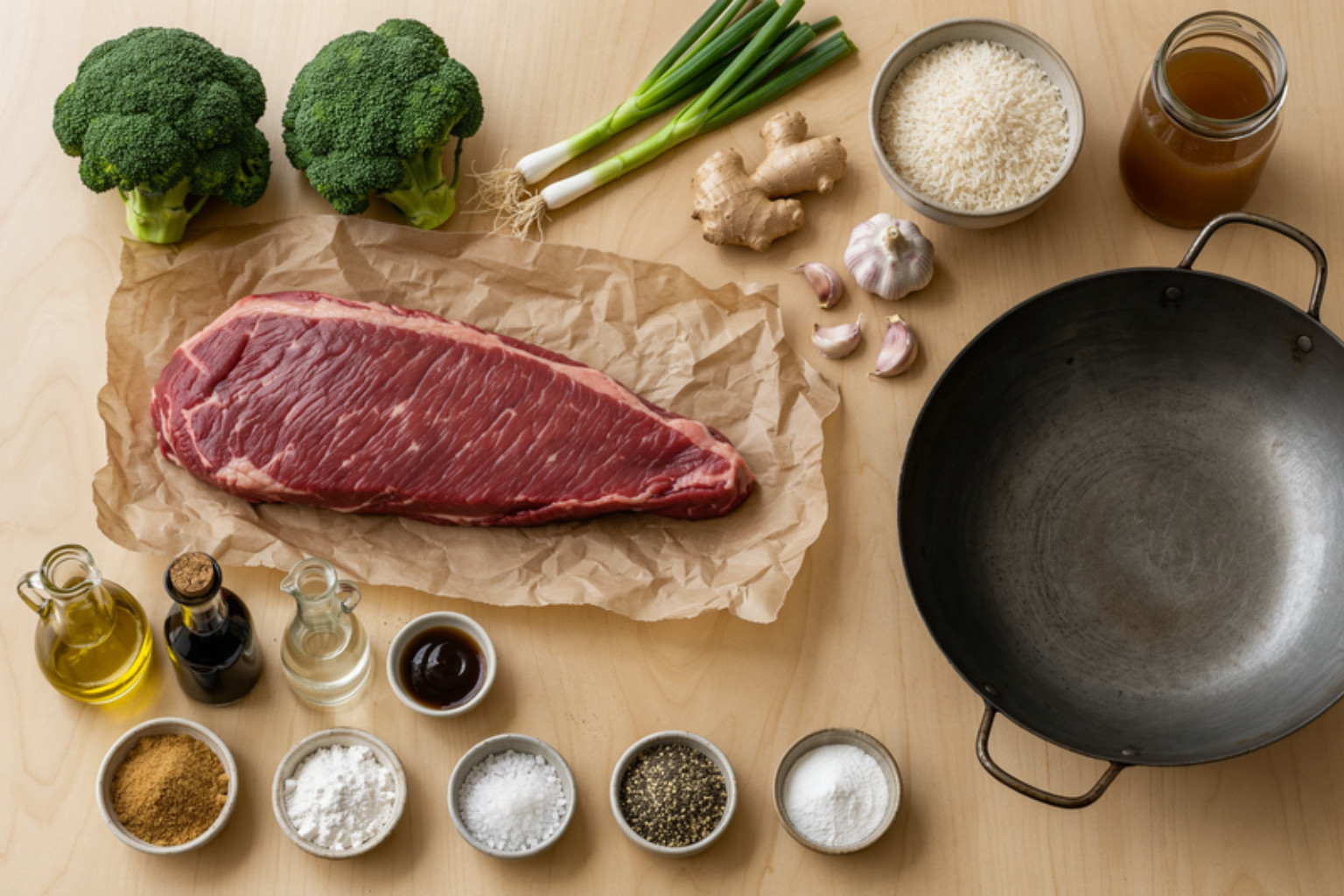
Beef and Broccoli Without Soy Sauce
Ingredients
Equipment
Method
- Firm the steak in the freezer for 15 to 20 minutes for easier slicing. Cut it with the grain into 2-inch (5 cm) strips, then slice each strip across the grain into 1/8- to 1/4-inch (3–5 mm) slices.
- Velvet the beef: in a bowl, stir the baking soda into 1 tablespoon water, add the beef and toss to coat. Let stand 15 minutes at room temperature, then toss with 1 tablespoon cornstarch until no white streaks remain.
- Whisk all sauce ingredients in a small bowl until the cornstarch dissolves. Set aside and whisk again right before using.
- Heat 1 tablespoon of the oil in a large skillet or wok over medium-high heat until it shimmers. Add the broccoli and stir-fry 1 minute, then add 1/4 cup water, cover, and steam 2 to 3 minutes, until the florets are bright green and a knife slides into a stem with slight resistance. Transfer to a plate.
- Wipe the pan dry and return it to high heat with 1 tablespoon oil. When the oil shimmers, add half the beef in a single layer and leave it alone for 1 minute, until the bottom is browned. Flip and cook 30 to 60 seconds more, until no pink shows on the outside. Transfer to the plate and repeat with the remaining oil and beef. Thin strips cook through quickly; the USDA lists 145°F (63°C) for beef steaks.
- Lower the heat to medium. Add the garlic and ginger and stir 30 seconds, until fragrant but not browned.
- Whisk the sauce again and pour it into the pan. Simmer, stirring, 1 to 2 minutes, until it turns glossy and thick enough to coat a spoon.
- Return the beef, any juices and the broccoli to the pan and toss 1 minute, until everything is coated and hot. Taste and add a pinch of salt if needed. Serve over rice, topped with green onions.
Notes
Troubleshooting
- Beef is chewy: it was sliced with the grain or cooked too long. Look for the long muscle lines and cut across them, and pull each batch as soon as the outside loses its pink.
- Sauce is too thin: simmer another minute, or stir in 1 teaspoon cornstarch mixed with 1 tablespoon cold water.
- Sauce is too sweet: some coconut aminos run sweeter than others. Add a splash more rice vinegar and a pinch of salt.
- Broccoli is soggy: steam it for less time next round, and add it back to the pan only at the very end.
Storage, Freezing and Reheating
Refrigerate leftovers in an airtight container for up to 3 days. Reheat in a skillet over medium heat with a splash of water or broth to loosen the sauce, or in the microwave, until steaming hot (165°F / 74°C). Freezing isn’t recommended because the broccoli turns soft, but you can freeze the sliced, velveted raw beef in a flat bag for up to 3 months and thaw it overnight in the fridge.
What to Serve With It
Steamed white or jasmine rice is the classic pairing. For a savory side with more flavor, try our Rice Pilaf (No Butter or Orzo). If you love broccoli on its own, the Roasted Broccoli with Garlic and Lemon is an easy weeknight side. Find more ideas in our dinner recipes.
FAQ
What can I use instead of soy sauce in beef and broccoli?
Coconut aminos is the closest swap: salty, savory, and slightly sweet. Pairing it with beef broth, a little brown sugar or molasses, and rice vinegar rounds out the flavor that soy sauce and oyster sauce usually provide.
Does beef and broccoli usually have oyster sauce?
Many takeout and restaurant versions do, and oyster sauce is made from shellfish. Some also use sesame oil. This homemade version uses neither.
What cut of beef is best for beef and broccoli?
Flank steak is the classic choice because it’s lean, flavorful, and slices thinly across the grain. Sirloin and skirt steak work well too.
Is coconut aminos the same as soy sauce?
No. Coconut aminos is made from fermented coconut sap and salt, with no soybeans or wheat. It’s milder, sweeter and lower in sodium than soy sauce, so you may want to add a little salt to taste.
A note before you cook: These recipes are ideas and suggestions, not medical or dietary advice. As with any recipe or ingredient, it is each reader’s responsibility to confirm what they can and cannot eat, read every ingredient label, and source quality ingredients that fit their own needs. Ingredient formulations change, so always check the package you’re using.
Leave a Reply