
Party appetizers built around meat often hide the top allergens in the sauce: soy sauce or Worcestershire in the marinade, butter in the glaze, a cream cheese stuffing tucked inside the bacon. If you’re cooking for someone who avoids those, a lot of the classic bacon-wrapped bites are off the table. These bacon-wrapped duck bites go back to the basics: tender cubes of duck breast, a simple salt, pepper, garlic and orange zest rub, a strip of bacon, and a glossy maple-orange glaze made from four pantry ingredients.
Duck breast is rich and beefy, and it pairs naturally with smoky bacon and something sweet and tart. It’s a favorite with hunting families who have wild duck in the freezer every November, and farm-raised duck breast from the grocery store works just as well. If duck isn’t available, boneless chicken thighs make a good stand-in with the same method. Set them out next to the stuffed mushrooms and a snack mix and you have a Thanksgiving appetizer spread that’s ready while the turkey rests.
Made without: peanuts, tree nuts, milk, eggs, wheat, soy, fish, shellfish, sesame.
Why You’ll Love These Duck Bites
- No soy sauce or Worcestershire. Salt, garlic, orange zest and the bacon itself season the duck.
- A butter-free glaze. Maple syrup, fresh orange juice and cider vinegar reduce into a sticky, shiny coating.
- Crisp bacon, juicy duck. Par-cooking the bacon first means it crisps in the time the duck needs to cook through.
- Great for wild game. A simple way to serve the ducks from opening weekend.
- Make-ahead. Wrap them in the morning and roast when guests arrive.
How They Work Without the Usual Marinade and Butter Glaze
Many recipes marinate duck in soy sauce, teriyaki or Italian dressing (often made with soybean or canola oil). This one uses a short dry rub with olive oil instead: salt seasons the meat, orange zest adds the bright note people associate with duck à l’orange, and garlic rounds it out. The bacon supplies the salty, smoky flavor that soy sauce would normally bring.
For the glaze, reducing maple syrup with orange juice concentrates the sugar so it turns syrupy without butter. A tablespoon of cider vinegar keeps it from tasting flat. Brushing half the glaze on partway through and the rest at the end gives a lacquered finish without burning the sugar.
Ingredients and Swap Ideas
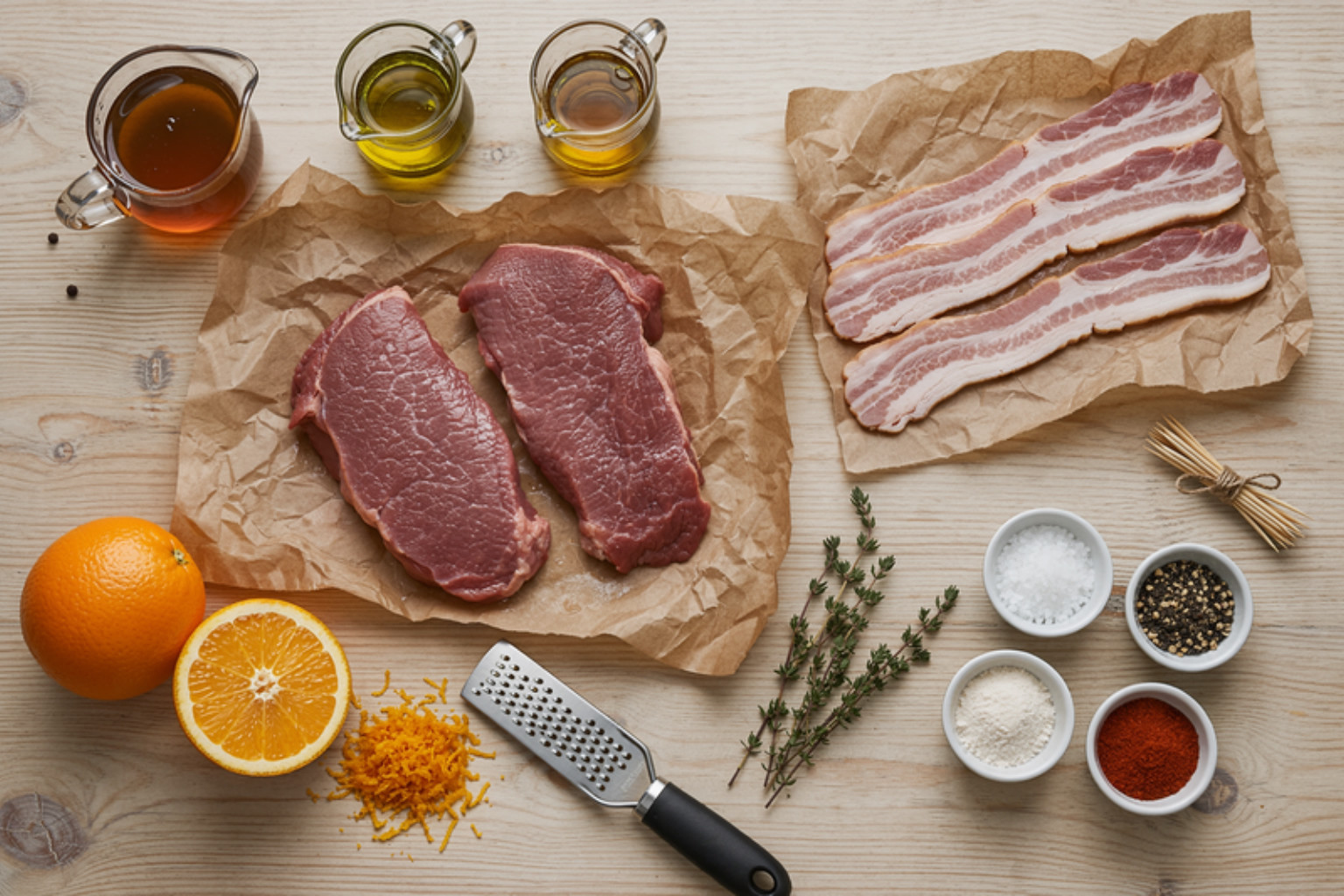
- Duck breast (1 lb / 450 g): remove the skin and thick fat layer (render it later for roasting potatoes) and cut the meat into 1-inch cubes. Wild duck breasts are smaller and leaner, so check them a few minutes early.
- Swap: boneless, skinless chicken thighs cut into 1-inch pieces work with the same timing; cook to 165°F (74°C).
- Thin-cut bacon: thin slices wrap neatly and crisp faster. Label check: some bacon includes flavorings or smoke-flavor carriers that can contain soy or milk.
- Extra-virgin olive oil: for the rub. Skip “vegetable oil” and bottled marinades, which usually contain seed oils.
- Pure maple syrup: pancake syrup is mostly corn syrup and won’t reduce the same way. Honey works in a pinch.
- Fresh orange: you’ll use both the zest and the juice.
- Cayenne: optional, for a little warmth.
Kitchen Equipment
- Rimmed baking sheet with an oven-safe wire rack
- Wooden toothpicks, soaked in water for 15 minutes so they don’t scorch
- Small saucepan and pastry brush
- Instant-read thermometer
Step-by-Step Tips
- Rub and rest the duck. Thirty minutes in the fridge lets the salt season the meat. Up to 8 hours is fine.
- Par-cook the bacon. Bake the half-strips at 400°F for 8 to 10 minutes, just until the fat looks translucent but the slices still bend. Fully raw bacon would still be flabby when the duck is done.
- Reduce the glaze. Simmer until it has reduced by about half and the bubbles look big and glossy. It thickens as it cools.
- Wrap snugly. Overlap the bacon ends and pin through the overlap and the duck with a soaked toothpick. Set seam side down on the rack.
- Roast, glaze, roast. 12 minutes at 425°F, brush with glaze, then 6 to 8 minutes more until the bacon is crisp and browned at the edges.
- Check the temperature. The USDA lists 165°F (74°C) for duck; check the center of a larger cube. See the USDA safe temperature chart.
Bacon-Wrapped Duck Bites with Maple-Orange Glaze
Ingredients
Equipment
Method
- Toss the duck cubes with the olive oil, salt, pepper, garlic powder and orange zest. Refrigerate 30 minutes (or up to 8 hours).
- Heat the oven to 400°F (200°C). Lay the half-strips of bacon on a rimmed baking sheet (no rack) and bake 8 to 10 minutes, until the fat turns translucent and the edges just begin to brown but the bacon is still soft and bendable. Let cool 5 minutes. Pour off the fat and save it for another use.
- Meanwhile, simmer the maple syrup, orange juice, vinegar, cayenne and salt in a small saucepan over medium heat 5 to 7 minutes, until reduced by about half and the bubbles turn large and glossy. It will thicken more as it cools.
- Raise the oven to 425°F (220°C). Set a wire rack in the rimmed sheet. Wrap each duck cube in a half-strip of bacon, overlapping the ends, and secure with a soaked toothpick. Arrange seam side down on the rack with space between.
- Roast 12 minutes. Brush with half the glaze and roast 6 to 8 minutes more, until the bacon is crisp and browned at the edges and the duck reads 165°F (74°C) in the center of a cube, the USDA temperature for duck.
- Brush with the remaining glaze, rest 3 minutes, sprinkle with thyme or chives and serve warm.
Notes
Troubleshooting
- Bacon still soft: run the sheet under the broiler for 1 to 2 minutes, watching closely so the glaze doesn’t burn.
- Glaze burning: the oven may run hot. Brush the glaze on only in the last 5 minutes next time.
- Bacon unwrapping: use thin-cut slices, let the par-cooked bacon cool so it’s easy to handle, and pin through the overlap.
- Duck tough or dry: lean wild duck cooks faster. Cut slightly larger cubes and check the temperature a few minutes early.
Storage, Make-Ahead and Reheating
Make ahead: wrap the bites, set them on the rack, cover and refrigerate up to 8 hours. The glaze keeps in a jar in the fridge for up to 3 days; warm it before brushing. Leftovers: refrigerate up to 3 days and reheat on a rack at 375°F (190°C) for 6 to 8 minutes, until hot (165°F / 74°C). Freezing: you can freeze the raw, wrapped bites on a tray, then bag them for up to 2 months; thaw overnight in the fridge before roasting.
More Thanksgiving Appetizers
Find every starter, side and main in our Thanksgiving recipes hub. These bites sit nicely next to our sausage stuffed mushrooms made without cheese and a big bowl of nut-free party snack mix. Cooking a whole bird for Christmas? Try our roast duck with orange sauce.
Frequently Asked Questions
Can I use wild duck for bacon-wrapped duck bites?
Yes. Wild duck breasts are smaller and leaner than farm-raised ones, so cut slightly larger cubes and start checking the temperature a few minutes early.
What temperature should duck be cooked to?
The USDA lists 165°F (74°C) for duck and other poultry. Use an instant-read thermometer in the center of a cube.
Why par-cook the bacon first?
Raw bacon takes longer to crisp than small cubes of duck take to cook. A short head start in the oven lets both finish at the same time.
What can I use instead of duck?
Boneless, skinless chicken thighs are the easiest swap. Pheasant breast also works; like wild duck, it’s lean, so check it a few minutes early.
A note before you cook: These recipes are ideas and suggestions, not medical or dietary advice. As with any recipe or ingredient, it is each reader’s responsibility to confirm what they can and cannot eat, read every ingredient label, and source quality ingredients that fit their own needs. Ingredient formulations change, so always check the package you’re using.
Leave a Reply