
If you grew up in the Midwest, goulash probably meant a big pot of ground beef, tomatoes, and elbow macaroni on a busy weeknight. For allergy families, the boxed-pasta-and-shortcut versions of that memory often run into trouble: wheat pasta, gluten-free pasta that quietly contains egg, Worcestershire sauce with anchovies, and seasoning packets with long ingredient lists. This old-fashioned American goulash keeps the familiar flavor and the one-pot ease, and builds it from simple ingredients you can check one at a time.
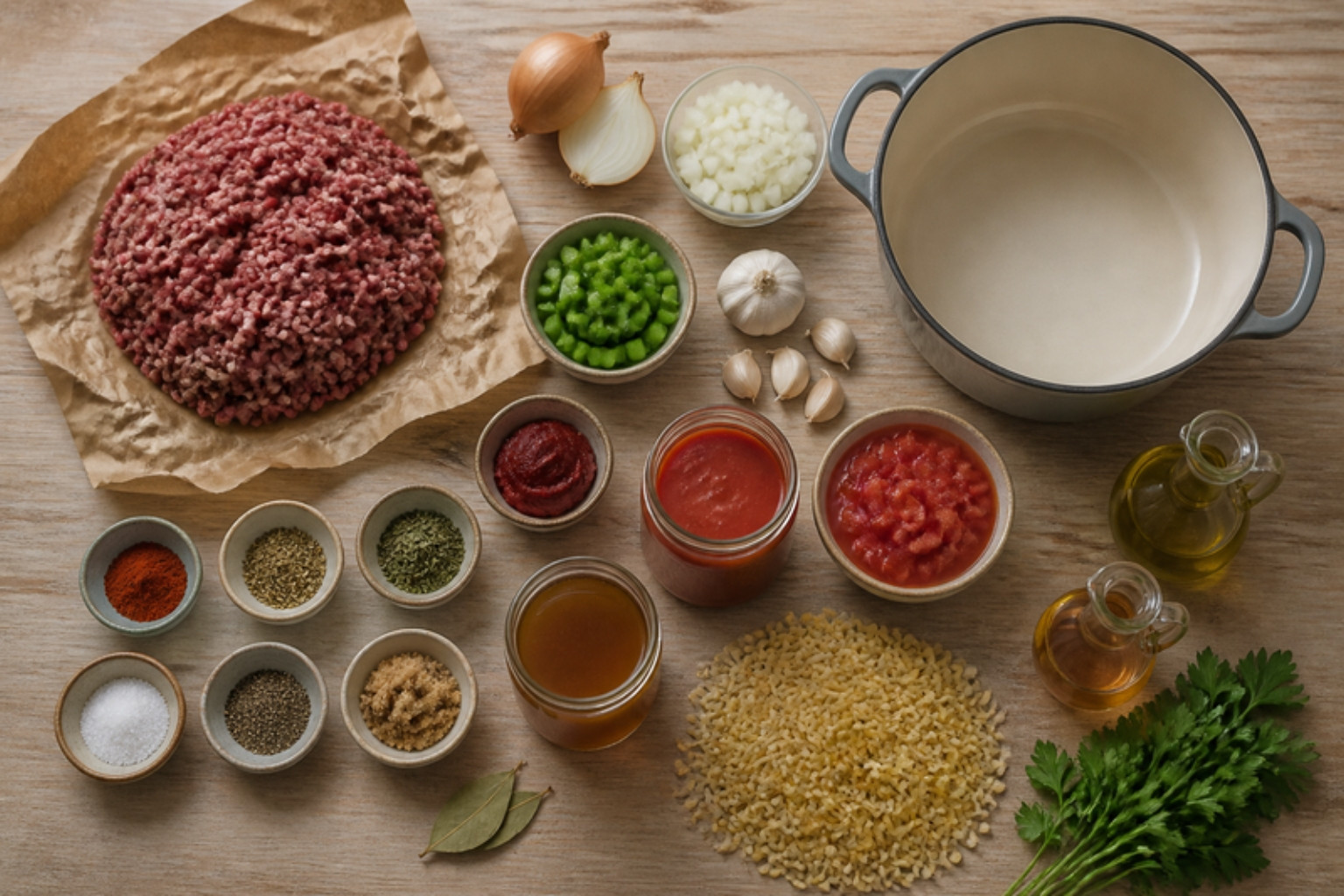
Browned beef, onion, and green pepper go into a paprika-and-herb tomato sauce, then dry egg-free gluten-free elbow macaroni simmers right in the pot until tender. The pasta soaks up the sauce as it cooks, so every bite is seasoned, and you only wash one pot. It’s sometimes called American chop suey in New England; whatever you call it, it feeds a crowd for very little money.
Made without: peanuts, tree nuts, milk, eggs, wheat, soy, fish, shellfish, sesame.
Why You’ll Love This Recipe
- One pot, no draining pasta: the macaroni cooks in the sauce.
- Classic flavor without Worcestershire: tomato paste, paprika, and a splash of cider vinegar fill in the savory tang.
- Feeds eight on two pounds of ground beef.
- No cheese needed: the sauce is rich and thick on its own.
- Freezer-friendly sauce for a future dinner.
How Goulash Works Without Wheat Pasta or Worcestershire
The pasta. Rice- or corn-based gluten-free elbows cook well in a simmering sauce, but they absorb liquid faster than wheat pasta and turn soft if overcooked. That’s why this recipe uses plenty of broth, stirs often, and starts tasting a couple of minutes before the package time. Read the label carefully: many gluten-free pastas, especially “egg noodle” styles, contain egg. Choose one made only from rice, corn, or a rice-corn blend.
The savory depth. Many goulash recipes add Worcestershire sauce, which usually contains anchovies and can contain soy or barley malt vinegar. Cooking tomato paste and paprika in the beef fat until they darken builds a deeper, browned flavor, and a tablespoon of apple cider vinegar at the end supplies the tangy edge Worcestershire would. A teaspoon of brown sugar rounds out the acidity of the tomatoes.
Ingredients and Swap Ideas
- Ground beef: 85% lean has enough fat for flavor; spoon off the extra. Ground turkey works but benefits from an extra tablespoon of olive oil. Plain ground meat only; pre-seasoned blends can contain other ingredients.
- Extra-virgin olive oil: for starting the beef. Beef tallow is a fine swap. Skip vegetable oil and cooking spray.
- Egg-free gluten-free elbow macaroni: 12 ounces (340 g), rice- or corn-based. Check for egg on every package, even brands you’ve bought before.
- Tomato sauce and diced tomatoes: plain canned versions; skip “Italian-style” cans with seasoning blends or added oil. Homemade old-fashioned stewed tomatoes can replace the diced tomatoes.
- Beef broth: label check for wheat, soy, yeast extract, and added oils. Homemade broth or water plus a pinch more salt works too.
- Paprika, oregano, basil: single-ingredient spices. Smoked paprika gives a smokier, campfire flavor.
- Green bell pepper: traditional; a red pepper makes it slightly sweeter.
Kitchen Equipment
A 6- to 7-quart Dutch oven or heavy pot with a lid, a sturdy wooden spoon, and an instant-read thermometer for checking the beef. A wide pot helps the pasta cook evenly without clumping.
Step-by-Step Tips
- Get some browning on the beef. Don’t stir constantly; letting it sit for a minute between stirs creates browned bits that flavor the sauce.
- Toast the tomato paste. Stir it with the paprika and herbs for a full minute, until it turns brick red and smells toasty.
- Simmer the sauce first. Fifteen minutes before the pasta goes in lets the flavors blend.
- Stir every few minutes once the pasta is in. Gluten-free pasta likes to stick to the bottom of the pot.
- Pull it a little early. Stop when the pasta still has a slight bite; it keeps softening during the 5-minute rest.
- Check the temperature. Ground beef should reach 160°F (71°C). See the USDA safe temperature chart.
Old-Fashioned American Goulash
Ingredients
Equipment
Method
- Heat the olive oil in a large Dutch oven over medium-high heat. Add the ground beef and cook, breaking it into small crumbles, 6 to 8 minutes, until no pink remains and some bits are browned. Spoon off all but about 1 tablespoon of the fat.
- Add the onion and green pepper and cook, stirring, 5 to 6 minutes, until the onion is soft and turning golden at the edges. Add the garlic, tomato paste, paprika, oregano, and basil and stir 1 minute, until the paste darkens to brick red and smells toasty.
- Stir in the tomato sauce, diced tomatoes, broth, bay leaves, brown sugar, vinegar, salt, and pepper, scraping up any browned bits. Bring to a boil, then reduce the heat, cover, and simmer 15 minutes so the flavors blend.
- Stir in the dry macaroni. Return to a steady simmer, cover, and cook 12 to 16 minutes, stirring every 3 to 4 minutes so the pasta doesn’t stick, until the pasta is just tender with a little bite and the sauce has thickened around it. Start tasting 2 minutes before the package time; gluten-free pasta softens quickly.
- Remove the bay leaves. Make sure the beef has reached 160°F (71°C). Turn off the heat and let the goulash stand, uncovered, 5 minutes; the sauce thickens as it rests. If it’s too thick, loosen with a splash of broth or water.
- Taste for salt and pepper, sprinkle with parsley, and serve hot.
Notes
Troubleshooting
- Pasta is mushy: it cooked too long or sat in the hot pot. Next time, pull it 2 minutes early, or cook the pasta separately and fold it in just before serving.
- Pasta is still firm but the sauce is gone: add 1/2 cup hot broth or water, cover, and simmer a few minutes more.
- Sauce tastes flat: add a pinch of salt and another splash of cider vinegar; acid and salt wake up tomato sauces.
- Too acidic: stir in another teaspoon of brown sugar.
Storage, Freezing, and Reheating
Refrigerate leftovers in a covered container for up to 4 days. Gluten-free pasta keeps drinking up sauce in the fridge, so add a splash of broth or water when you reheat on the stove or in the microwave, and heat to 165°F (74°C). For freezing, the best plan is to set aside some of the meat sauce before adding the pasta: freeze it for up to 3 months, then thaw overnight, bring to a simmer with a little extra broth, and cook fresh pasta in it. Frozen goulash with the pasta already in it turns soft after thawing.
More Ground Beef Weeknight Dinners
If goulash is in your regular rotation, you’ll probably like homemade sloppy joes without Worcestershire and retro porcupine meatballs made without eggs or breadcrumbs. On a cold night, the hamburger soup uses many of the same pantry ingredients. Browse all of our dinner recipes.
Frequently Asked Questions
What is the difference between American goulash and Hungarian goulash?
Hungarian goulash is a paprika-rich beef stew or soup made with chunks of beef. American goulash is a quicker pasta dish of ground beef, tomatoes, and macaroni; it borrows the paprika but not much else.
Can I make goulash without Worcestershire sauce?
Yes. Toasting tomato paste and paprika and adding a tablespoon of apple cider vinegar gives a similar savory, tangy depth without the anchovies most Worcestershire sauces contain.
Can I make it in a slow cooker?
You can simmer the browned beef and sauce on low for 4 to 6 hours, then cook the pasta separately and stir it in at the end. That method hasn’t been worked out in detail, and adding dry gluten-free pasta to the slow cooker tends to make it mushy.
What should I serve with goulash?
A crisp green salad with an oil-and-vinegar dressing, steamed green beans, or a vinegar coleslaw balances the rich tomato sauce.
A note before you cook: These recipes are ideas and suggestions, not medical or dietary advice. As with any recipe or ingredient, it is each reader’s responsibility to confirm what they can and cannot eat, read every ingredient label, and source quality ingredients that fit their own needs. Ingredient formulations change, so always check the package you’re using.
Leave a Reply