
Waffles were one of the breakfasts we had to rethink. Classic Belgian waffle recipes count on eggs, sometimes whipped egg whites, for lift and structure, and our daughter is anaphylactic to eggs. Instead of hunting for one ingredient that magically replaces them, we looked at the whole batter: flour for structure, milk to hydrate it, fat for tenderness and browning, and chemical leavening for lift.
Belgian waffles without eggs work because the hot iron sets the batter from both sides. This batter uses all-purpose flour, milk and water, melted butter or light-tasting olive oil, and baking powder plus baking soda with apple cider vinegar for lift. They are made without eggs, peanuts, tree nuts, soy, sesame, fish and shellfish; they contain milk and wheat.
These egg-free Belgian waffles are built on that idea. They’re designed to come out of the iron with a lightly crisp, golden outside and a soft, tender inside. Apple cider vinegar reacts with baking soda for an extra boost of lift, a mix of milk and water keeps the batter light, and there’s no commercial egg replacer or flax anywhere in the bowl. The recipe makes a big batch, roughly 10 to 14 Belgian waffles depending on your iron, so you can feed everyone today and freeze the rest for school mornings.
Made without: eggs, peanuts, tree nuts, soy, sesame, fish, shellfish.
Contains: milk, wheat.
Why You’ll Love These Egg-Free Waffles
- Crisp outside, fluffy inside, the way a Belgian waffle should be.
- No egg replacer, no flax, no banana. Just everyday pantry ingredients.
- Freezer-friendly. Reheat straight from frozen in the toaster for a homemade alternative to boxed frozen waffles.
- Big batch. Enough for a family breakfast plus leftovers.
- Simple method. Two bowls, one whisk, and a short rest.
How Waffles Work Without Eggs
In a traditional waffle, eggs bind the batter, help it set in the hot iron, and add richness. This recipe handles each of those jobs differently:
- Structure: All-purpose flour provides the framework. Because the iron cooks the batter from both sides at once, waffles set firmly even without egg.
- Lift: Baking powder plus baking soda reacting with apple cider vinegar creates lots of small bubbles for a light interior.
- Crispness and browning: Oil or melted butter and a little sugar help the outside turn golden and crisp.
- Lightness: Using half water and half milk keeps the batter from getting heavy, which helps the waffles stay crisp.
Ingredients and Swap Ideas
Full measurements in cups and grams are in the recipe card below.
- All-purpose flour: Spoon and level it, or weigh it (500 g), so the batter isn’t too thick.
- Baking powder and baking soda: Both are needed. The soda reacts with the vinegar right away, and the baking powder gives a second boost of lift from the heat of the iron. Check that both are fresh.
- Whole milk and water: If you prefer, you can use all milk for a richer, softer waffle (untested swap; the batter may need a splash more liquid).
- Apple cider vinegar: White vinegar or lemon juice can stand in; the small amount won’t taste sour once cooked.
- Oil or butter: Melted butter gives the best flavor. For an oil option, light-tasting olive oil or melted refined coconut oil makes slightly crisper waffles. We skip seed oils like canola and blends labeled “vegetable oil.” Many buttery spreads are made from seed oils and soy, so we skip those too.
- Vanilla: Use pure vanilla extract and check the label.
Equipment
- A Belgian waffle maker (deep pockets). A standard waffle iron works too and will make more, thinner waffles.
- A large and a medium mixing bowl
- A wire cooling rack. This is what keeps the waffles crisp.
- A sheet pan, if you want to keep waffles warm in the oven
Step-by-Step Tips
- Fully preheat the iron. Wait for the ready light, or a few extra minutes if your iron doesn’t have one. A cold iron makes pale, soft waffles that stick.
- Mix just until combined. A few small lumps are fine. Overmixing makes waffles tough and bready rather than crisp.
- Rest the batter 5 to 10 minutes. You’ll see small bubbles forming as the baking soda and vinegar react.
- Don’t overfill. Cover about two-thirds of the grid; the batter spreads as the lid closes.
- Watch the steam, not the clock. When the steam coming from the iron slows to a wisp and the waffle releases easily, it’s done, usually 4 to 6 minutes.
- Cool on a rack, never a plate. Stacking traps steam and turns crisp waffles soggy.
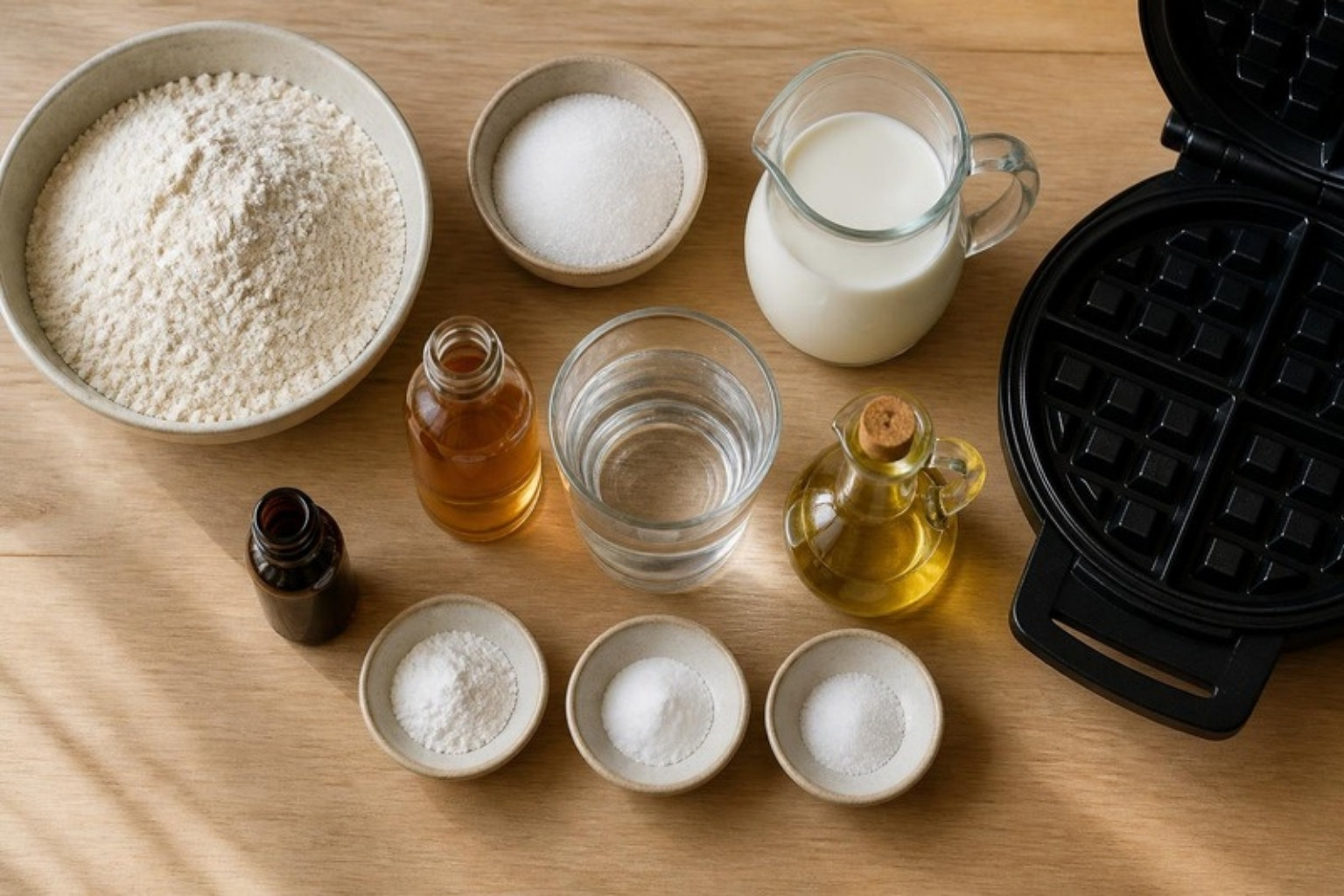
Egg-Free Belgian Waffles
Ingredients
Equipment
Method
- Preheat your Belgian waffle maker.
- In a large bowl, whisk together the flour, sugar, baking powder, baking soda, and salt.
- In a medium bowl, whisk together the milk, water, apple cider vinegar, oil or melted butter, and vanilla.
- Pour the wet ingredients into the dry ingredients and stir gently just until combined. A few small lumps are fine; overmixing makes waffles tough instead of crisp.
- Let the batter rest 5 to 10 minutes. You’ll see small bubbles as the baking soda reacts with the vinegar.
- Lightly grease the waffle iron if needed with olive oil in a spritzer or a pastry brush. Pour in enough batter to cover about two-thirds of the grid and close the lid.
- Cook 4 to 6 minutes, until the steam slows to a wisp and the waffle is deep golden and releases easily. Don’t open the lid early or the waffle can tear.
- Transfer each waffle to a wire rack in a single layer so steam escapes and the outside stays crisp. Keep finished waffles warm on a rack in a 200°F (95°C) oven while you cook the rest.
Notes
Troubleshooting Egg-Free Waffles
- Waffles sticking or tearing: The iron wasn’t hot enough, or the lid was opened too early. Lightly grease the iron with olive oil in a spritzer or brushed on (most cooking sprays are seed-oil based and many contain soy lecithin), and wait until the steam has nearly stopped.
- Soft, not crisp: Cook a minute longer, use oil instead of butter, and always cool on a wire rack in a single layer.
- Dense or flat: Check that the baking powder and soda are fresh, and cook the batter within about 15 minutes of mixing.
- Batter thinner than expected: Measuring by weight helps. If it’s runny, whisk in a tablespoon or two of flour.
Storage, Freezing, and Reheating
- Refrigerator: Store cooled waffles in an airtight container for 3 to 4 days.
- Freezer: Cool completely, freeze in a single layer on a sheet pan, then transfer to a freezer bag. They keep well for about 2 months.
- Reheating: Toast straight from frozen until hot and crisp, or bake on a rack in a 375°F (190°C) oven for 6 to 10 minutes. Avoid the microwave if you want them crisp.
Prefer pancakes? Try our egg-free oatmeal pancakes, a hearty big-batch recipe that also freezes well. Out of milk as well as eggs? Our pancakes without milk are made with water or oat milk. Browse all Top Nine Free breakfast recipes for more ideas, including hash brown waffles with no eggs.
Frequently Asked Questions
Can you make waffles without eggs?
Yes. A waffle iron cooks the batter from both sides, so egg-free waffles set well. Balancing the flour and liquid and using baking powder, baking soda, and an acid gives them lift without eggs.
How do I keep egg-free waffles crisp?
Cook them until the steam nearly stops, cool them on a wire rack instead of a plate, and keep finished waffles warm in a single layer on a rack in a 200°F (95°C) oven while you cook the rest.
Can I use this batter in a regular waffle maker?
Yes. A standard (thinner) waffle iron will make more waffles and they’ll cook a little faster, so start checking a minute or two earlier.
Can I halve the recipe?
Yes. Use the servings adjuster in the recipe card to scale every ingredient automatically. For a half batch, use 1 tablespoon of baking powder and ½ teaspoon of baking soda.
What replaces eggs in waffles?
Nothing one-for-one. The hot iron does the setting, flour gives structure, baking powder and baking soda with vinegar give lift, and butter or light-tasting olive oil plus a little sugar handle browning. For more on each job eggs usually do, see what eggs do in baking.
Are these egg-free waffles also dairy-free?
No. These waffles contain milk and wheat. For a breakfast made without eggs, milk and wheat, try the hash brown waffles or the gingerbread pancakes.
A note before you cook: These recipes are ideas and suggestions, not medical or dietary advice. As with any recipe or ingredient, it is each reader’s responsibility to confirm what they can and cannot eat, read every ingredient label, and source quality ingredients that fit their own needs. Ingredient formulations change, so always check the package you’re using.