
Saturday mornings at our house mean pancakes. When your daughter is anaphylactic to eggs and a long list of other foods, though, a “simple” pancake turns into a puzzle. Most egg-free recipes we found leaned on commercial egg replacers, flax “eggs,” or mashed banana, none of which work for our family. So we went back to basics and asked a different question: what does the egg actually do in a pancake, and what else in the pantry can do that job?
These egg-free oatmeal pancakes follow that approach. They’re designed to be fluffy, a little hearty from the rolled oats, and lightly sweetened with pure maple syrup instead of refined sugar. The milk-and-vinegar mixture tenderizes the crumb and gives the baking powder something to react with, and a short rest lets the oats soak up liquid so the batter holds together on the griddle without any egg at all. The recipe makes a big batch, about 20 to 24 pancakes, which means leftovers for the freezer and easy weekday breakfasts.
Made without: eggs, peanuts, tree nuts, soy, sesame, fish, shellfish.
Contains: milk, wheat, oats.
Why You’ll Love These Egg-Free Pancakes
- No egg replacer, no flax, no banana. Just flour, oats, milk, butter, and leavening.
- They taste like regular pancakes. Golden edges, soft centers, and a classic buttery, vanilla-maple flavor.
- Big, family-sized batch. Enough to feed a crowd or stock the freezer.
- Lightly sweetened. Maple syrup in the batter instead of granulated sugar.
- Pantry ingredients. Nothing you need to order online.
How to Make Pancakes Without Eggs
In a regular pancake, eggs help bind the batter, add moisture and richness, and give a little structure and lift. Instead of swapping in a single “egg substitute,” this recipe spreads those jobs across ingredients you already have:
- Binding and structure: All-purpose flour and rolled oats. As the batter rests, the oats absorb liquid and thicken it, which helps the pancakes hold together when you flip them.
- Lift: A generous amount of baking powder, boosted by the acidity of the vinegar, creates the bubbles that make the pancakes fluffy.
- Tenderness and richness: Whole milk and melted butter replace the fat and moisture eggs usually bring.
- Flavor: Vanilla and maple give these the familiar diner-pancake taste, so nobody misses the eggs.
Ingredients and Swap Ideas
Full measurements in cups and grams are in the recipe card below. A few notes on the key ingredients:
- All-purpose flour: Spoon it into the cup and level it off, or weigh it (375 g). Packed flour makes thick, gummy pancakes.
- Old-fashioned rolled oats: Use them whole, not blended. Quick oats also work but give a softer, less hearty texture. Oats are often processed alongside wheat and barley, so if cross-contact matters for your family, look for oats labeled gluten-free and read the label.
- Baking powder: Make sure it’s fresh. Old baking powder is the most common reason egg-free pancakes turn out flat.
- Whole milk and apple cider vinegar: Together they act like buttermilk. If you have buttermilk, you can use 3 cups of buttermilk and skip the vinegar (untested swap).
- Butter: Use real butter rather than a buttery spread. Many spreads contain soybean oil or soy lecithin.
- Pure maple syrup and vanilla: Check labels on flavored or imitation versions.
Note on swaps: Replacing the milk and butter with a plant-based milk and oil would change this recipe’s “made without” profile, since many plant milks are made from soy or nuts. If you try a dairy-free version, choose ingredients that fit your own needs and expect a slightly different texture.
Equipment
- A large and a medium mixing bowl
- A large nonstick or cast-iron skillet, or an electric griddle set to about 350°F (175°C)
- A ¼-cup measure or scoop for even pancakes
- A thin, wide spatula
Step-by-Step Tips
- Mix gently. Stir the wet and dry ingredients just until the dry flour streaks disappear. Lumps are good; a smooth batter means you’ve developed too much gluten and the pancakes will be chewy.
- Don’t skip the rest. Five to ten minutes gives the oats time to hydrate and thicken the batter. This is what helps egg-free pancakes hold together.
- Watch the heat. Medium-low to medium works best. Too hot and the outsides brown before the centers cook; too cool and the pancakes spread thin and pale.
- Flip at the right moment. Wait until bubbles cover the surface, some pop and stay open, and the edges look set and slightly matte, usually 2 to 3 minutes.
- Check for doneness. After flipping, cook 1 to 2 minutes more, until the bottom is golden and the center springs back when gently pressed.
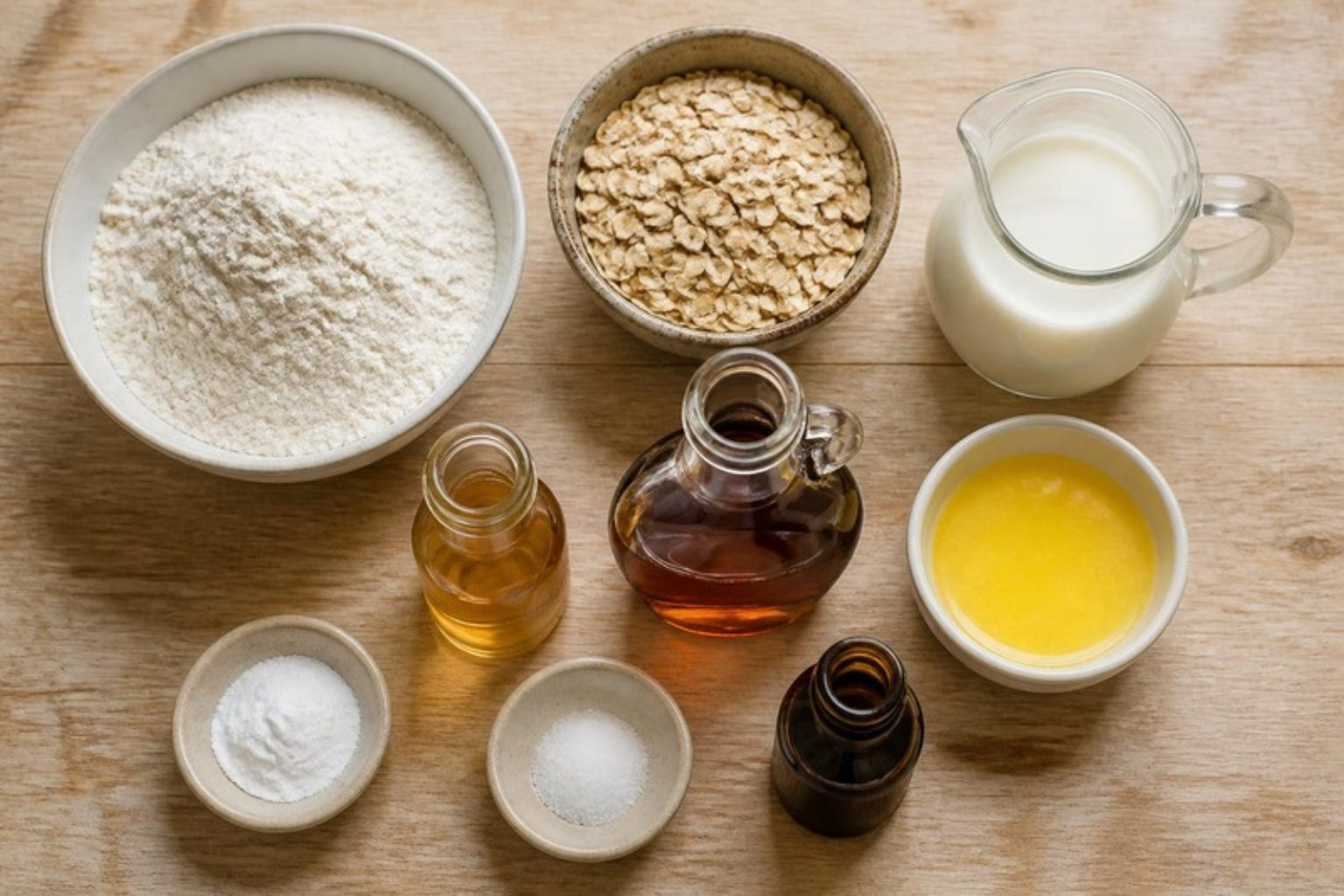
Egg-Free Oatmeal Pancakes
Ingredients
Equipment
Method
- In a large bowl, whisk together the flour, rolled oats, baking powder, and salt.
- In a medium bowl, whisk the milk and apple cider vinegar together and let stand 2 to 3 minutes. Whisk in the melted butter, maple syrup, and vanilla. If the butter firms up into small bits from cold milk, that’s fine.
- Pour the wet ingredients into the dry ingredients and stir with a spatula just until no dry flour streaks remain. A lumpy batter is what you want; overmixing makes tough pancakes.
- Let the batter rest 5 to 10 minutes so the oats and flour hydrate. It will thicken and look slightly puffy.
- Heat a skillet or griddle over medium-low to medium heat and lightly grease it with butter. A drop of water should sizzle, not instantly evaporate.
- Pour about 1/4 cup of batter per pancake. Cook 2 to 3 minutes, until bubbles form across the surface, a few pop and stay open, and the edges look set and slightly matte.
- Flip and cook 1 to 2 minutes more, until the underside is golden brown and the center springs back when lightly pressed. Adjust the heat if they brown before the centers cook.
- Serve warm, or cool completely on a wire rack for freezing.
Notes
Troubleshooting Egg-Free Pancakes
- Gummy centers: The heat is too high or the pancakes are too thick. Lower the heat slightly and spread the batter a little after pouring. Egg-free batters need a bit more time to set in the middle.
- Flat pancakes: Check that your baking powder is fresh, and don’t let the mixed batter sit much longer than 10 minutes before cooking, since the leavening starts working as soon as it gets wet.
- Batter too thick to pour: Oats keep absorbing liquid. Stir in a tablespoon or two of milk at a time until it flows slowly off the spoon.
- Pancakes falling apart when flipped: Give them another 30 seconds before flipping, and make sure the batter rested long enough.
Storage, Freezing, and Reheating
- Refrigerator: Store cooled pancakes in an airtight container for 3 to 4 days.
- Freezer: Cool completely on a wire rack, freeze in a single layer on a sheet pan, then transfer to a freezer bag. They keep well for about 2 months.
- Reheating: Pop frozen pancakes straight into the toaster, or warm them on a sheet pan in a 350°F (175°C) oven for 8 to 10 minutes. The microwave works in a pinch but makes them softer.
Want waffles instead? Our Belgian waffles without eggs use a similar milk-and-vinegar approach and freeze just as well. If your family also avoids dairy and wheat, try our pancakes without milk, made with water or oat milk and rice and oat flours. You can find more ideas in our breakfast recipes.
Frequently Asked Questions
Can you make pancakes without eggs?
Yes. Pancakes rely mostly on flour for structure and baking powder for lift, so the egg is easier to leave out than in many baked goods. Adding a little extra leavening, an acid like vinegar, and a short rest helps make up for what the egg usually provides.
What can I use instead of eggs in pancakes?
You don’t need a single replacement ingredient. In this recipe, the oats and flour handle binding, milk and butter add moisture and richness, and baking powder plus vinegar provide lift. That’s why it works without a commercial egg replacer or flax.
Can I use quick oats instead of rolled oats?
Quick oats absorb liquid faster and give a softer, smoother pancake. Start with the same amount and add a splash more milk if the batter gets too thick while it rests.
Can I make the batter the night before?
It’s best to cook the batter within about 10 minutes of mixing, because the baking powder starts reacting right away. To get a head start, whisk the dry ingredients in one bowl and the wet ingredients in another the night before, refrigerate the wet bowl, and combine them in the morning.
A note before you cook: These recipes are ideas and suggestions, not medical or dietary advice. As with any recipe or ingredient, it is each reader’s responsibility to confirm what they can and cannot eat, read every ingredient label, and source quality ingredients that fit their own needs. Ingredient formulations change, so always check the package you’re using.