
Holiday vegetable sides have a way of picking up butter, cream, cheese and nut toppings, until the only thing left for an allergy family is a dish of plain boiled carrots. A big pan of roasted root vegetables is the easy way out. Nothing needs replacing, the vegetables do the work, and it looks like a harvest on the table.
How do you roast root vegetables so they caramelize? Cut carrots, parsnips, sweet potato, rutabaga and beets into even 1-inch pieces (denser roots a bit smaller), toss them with olive oil, salt and herbs, and spread them in a single layer on two sheet pans. Roast at 425°F for 40 to 50 minutes, flipping once, until the edges are deep golden.
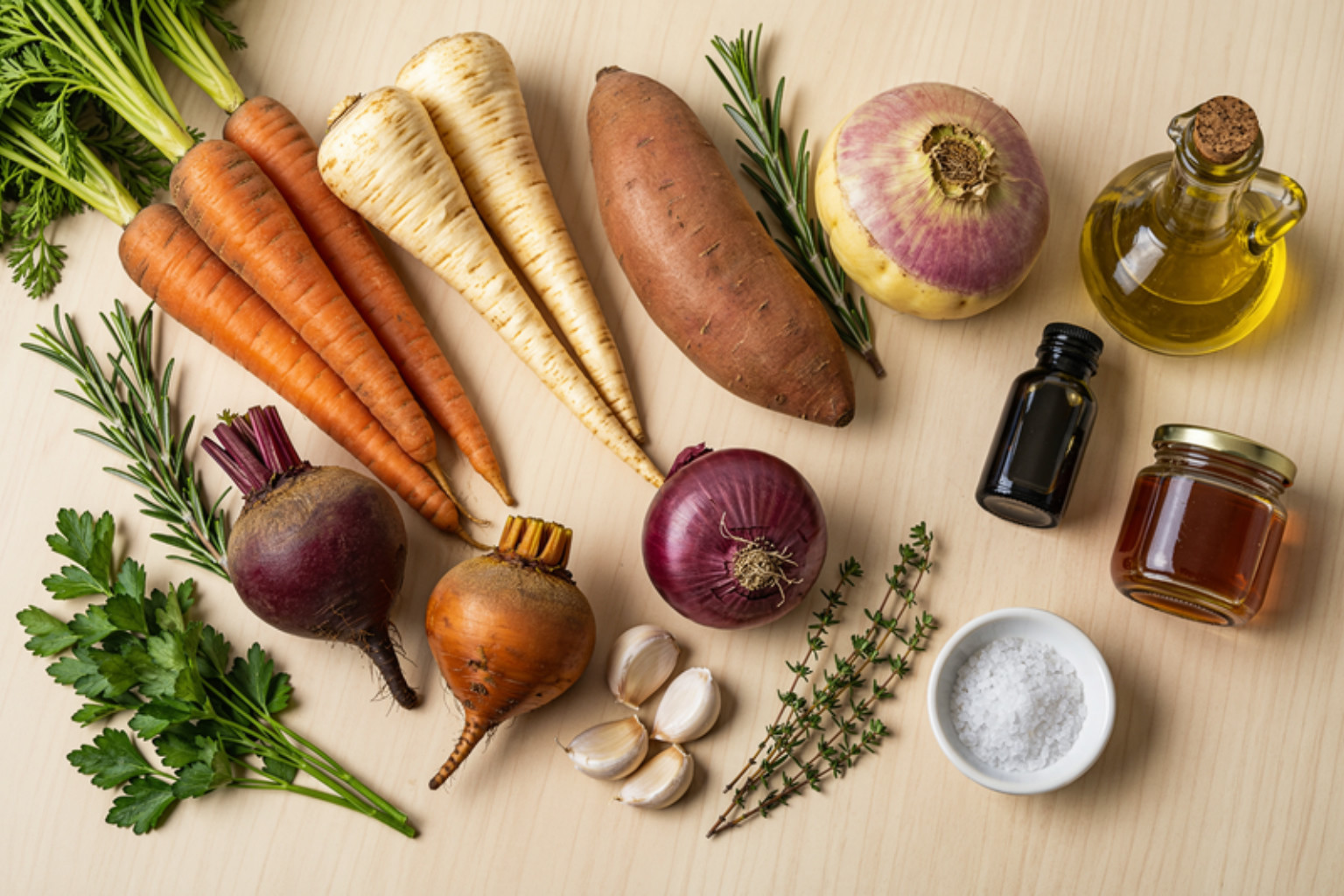
High heat and room on the pan are what turn root vegetables sweet and browned instead of soft and steamed. Extra-virgin olive oil carries the rosemary and thyme, smashed garlic cloves roast into soft, mellow nuggets, and red onion wedges go jammy at the edges. A quick drizzle of maple syrup and balsamic at the end gives the pan a glossy, sweet-tart finish, and the beets stay in their own corner so the whole platter doesn’t turn pink.
Made without: peanuts, tree nuts, milk, eggs, wheat, soy, fish, shellfish, sesame.
Why You’ll Love These Roasted Root Vegetables
- Simple ingredients: root vegetables, olive oil, herbs and garlic, with no butter, cheese or nuts.
- All the peeling and chopping can be done two days ahead.
- One recipe feeds eight and goes with turkey, ham, roast beef or venison.
- The colors make the holiday table look generous with very little work.
Ingredients and Swap Ideas
- Carrots and parsnips: the sweet base of the pan. Halve thick ends lengthwise so every piece is about the same size, and cut out woody parsnip cores.
- Sweet potato: roasts fastest and creamiest. Butternut squash works the same way.
- Rutabaga or turnips: peppery and dense, so cut them a little smaller (3/4 inch). Celery root is a good swap.
- Beets: red or golden. Golden beets don’t bleed, so you can toss them with everything else.
- Red onion and garlic: wedges kept together by the root end, and whole smashed cloves that turn soft and sweet.
- Extra-virgin olive oil: roasts well at 425°F and replaces butter entirely. Bacon fat or duck fat can stand in for up to half of it for a richer pan.
- Maple and balsamic (optional): pure maple syrup and a balsamic vinegar with a short ingredient list. Check the label; some contain added caramel color or thickeners.
Kitchen Equipment
Two rimmed half-sheet pans (18×13 inches), a large mixing bowl, a sharp chef’s knife and a vegetable peeler, and a thin metal spatula for flipping. Oven at 425°F (220°C) with racks in the upper and lower thirds.
How to Roast Root Vegetables
- Heat the oven and prep the pans. 425°F with two racks, and a light brush of olive oil on each pan.
- Cut evenly. 1-inch chunks for carrots, parsnips and sweet potato; 3/4-inch for rutabaga and beets, which take longer.
- Season. Toss the beets on their own with a little oil and salt. Toss everything else with the remaining oil, salt, pepper, rosemary and thyme.
- Spread them out. Single layer, cut sides down, with space around each piece. Beets go at one end of a pan.
- Roast and flip. 20 minutes, then flip and swap the pans, and roast 20 to 30 minutes more, until the edges are caramelized and a knife slides easily into the rutabaga and beets.
- Finish. Drizzle with maple and balsamic while hot, toss, pile onto a platter with the beets on top, and add parsley and flaky salt.
Troubleshooting and Tips
- Pale, soft vegetables: the pans were crowded or the oven wasn’t hot enough. Use two pans, and preheat fully.
- Some pieces burnt, others hard: the pieces were uneven. Cut dense roots smaller and soft ones a bit larger.
- Stuck to the pan: wait to flip until the bottoms release on their own, and use a thin metal spatula.
- Garlic too dark: keep the cloves whole and tucked between vegetables rather than on the pan edges.
Storage, Make-Ahead and Reheating
Peel and cut the vegetables up to 2 days ahead and refrigerate them in covered containers, with the beets kept separate. You can also roast them a day ahead and reheat on sheet pans at 400°F for 10 to 15 minutes, which frees the oven on the big day; add the maple-balsamic finish after reheating. Leftovers keep 4 days in the fridge. They’re good cold in a grain bowl, folded into hash in the morning, or blended with broth into a quick soup. Freezing makes them soft, so it isn’t recommended.
If you like this, try our cider-glazed roasted carrots and parsnips or a bowl of mashed rutabaga with olive oil. For something green on the same plate, add garlic green beans with lemon. More sides are on our Thanksgiving recipes and Christmas recipes pages.
Roasted Root Vegetables FAQ
What temperature do you roast root vegetables at?
425°F (220°C) is the sweet spot. It’s hot enough to caramelize the edges while the centers turn tender, which takes 40 to 50 minutes for 1-inch pieces.
Which root vegetables roast well together?
Carrots, parsnips, sweet potatoes, rutabaga, turnips, beets, celery root and red onion all roast well together. Cut the denser ones (rutabaga, beets, celery root) smaller so everything finishes at the same time.
How do you keep beets from staining the other vegetables?
Toss red beets in their own bowl and roast them at one end of the pan, then pile them on top of the platter just before serving. Golden beets don’t bleed and can be mixed right in.
Can I make roasted root vegetables ahead for Thanksgiving?
Yes. Cut them up to 2 days ahead, or roast them a day ahead and reheat at 400°F for 10 to 15 minutes. They reheat well, with edges that crisp up again in the hot oven.
Roasted Root Vegetables with Rosemary and Garlic, No Butter
Ingredients
Equipment
Method
- Set racks in the upper and lower thirds of the oven and heat to 425°F (220°C). Brush two rimmed sheet pans lightly with olive oil.
- Toss the beets in a small bowl with 1 Tbsp of the olive oil and 1/4 tsp of the salt. Keep them separate so they don’t stain the other vegetables.
- In a large bowl, toss the carrots, parsnips, sweet potato, rutabaga, onion and garlic with the remaining olive oil, remaining salt, pepper, rosemary and thyme until everything is glossy.
- Spread the mixed vegetables over both pans in a single layer with space between pieces, cut sides down where you can. Tuck the beets into one end of one pan. Don’t crowd the pans, or the vegetables will steam instead of brown.
- Roast 20 minutes. Flip the vegetables with a metal spatula and swap the pans top to bottom. Roast 20 to 30 minutes more, until the edges are deep golden and caramelized and a knife slides easily into the rutabaga and beets.
- For the maple-balsamic finish, whisk the maple syrup and balsamic vinegar and drizzle over the hot vegetables on the pans; toss gently. Pile onto a platter (beets on top so they don’t bleed), scatter with parsley and flaky salt, and serve.
Notes
A note before you cook: These recipes are ideas and suggestions, not medical or dietary advice. As with any recipe or ingredient, it is each reader’s responsibility to confirm what they can and cannot eat, read every ingredient label, and source quality ingredients that fit their own needs. Ingredient formulations change, so always check the package you’re using.
Leave a Reply