
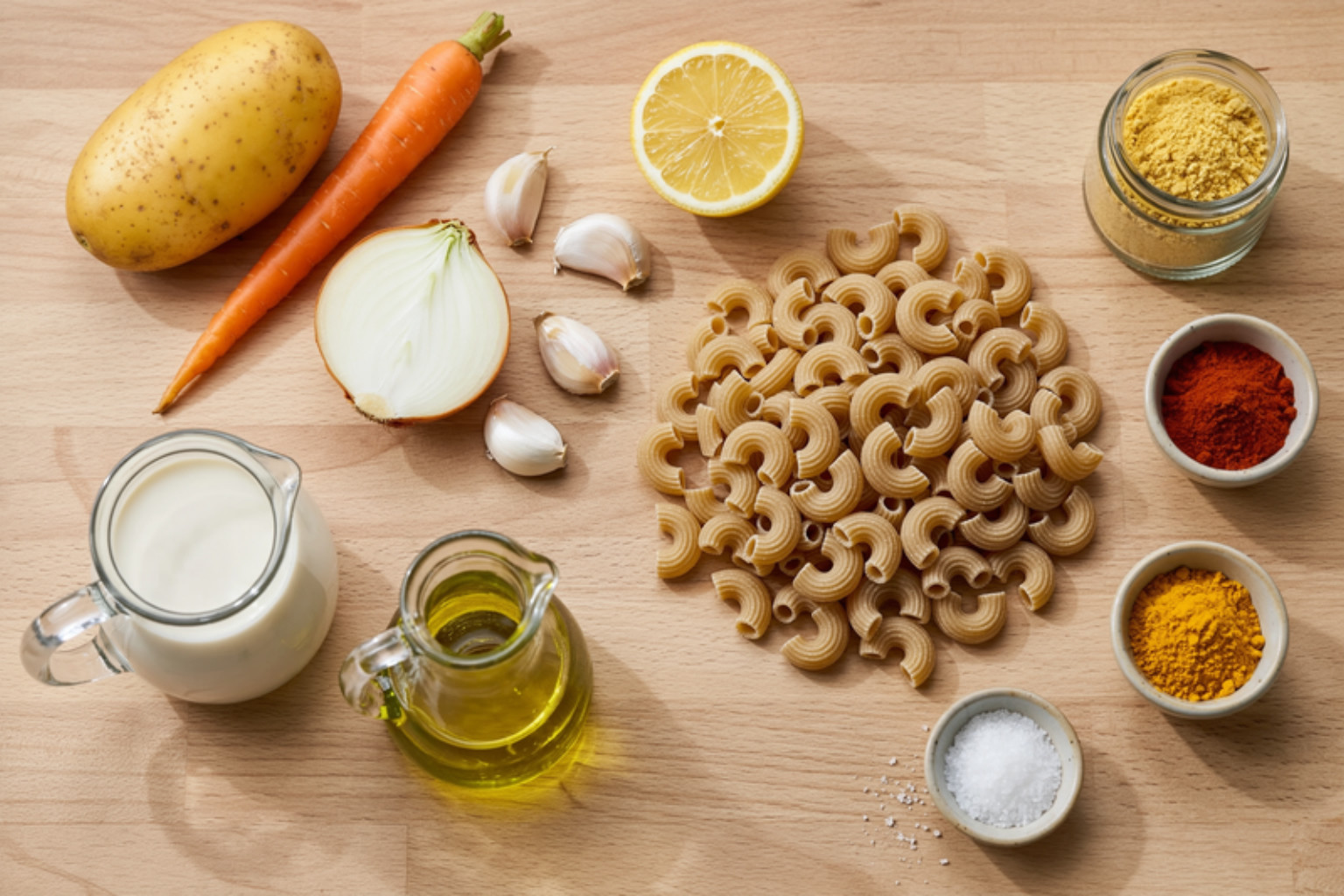
Mac and cheese without milk sounds like a contradiction, and most dairy-free versions you’ll find lean on cashews, vegan butter or a bag of processed dairy-free shreds, which doesn’t help if you also avoid nuts, soy or seed oils. This one skips all of that. The “cheese” sauce is made from vegetables you already have: a Yukon Gold potato and a carrot, simmered with onion and garlic, then blended with oat milk, olive oil, nutritional yeast, lemon and a pinch of turmeric until it’s silky, golden and clings to every elbow. The potato starch gives it body and stretch, the carrot gives it color and a little sweetness, and the nutritional yeast and lemon bring the savory, tangy notes you expect from cheddar.
It’s a Southern Thanksgiving side in many families, and a weeknight dinner the rest of the year. Make it on the stovetop in 40 minutes, or bake it with a crisp oat topping.
Made without: peanuts, tree nuts, milk, eggs, wheat, soy, fish, shellfish, sesame.
Why You’ll Love This Dairy-Free Mac and Cheese
- No milk, cheese, cashews, dairy-free cheese or plant butter.
- Made from a potato, a carrot and pantry staples.
- Two ways to serve: creamy stovetop or baked with a golden top.
- The sauce can be made 3 days ahead, which frees up the stove on Thanksgiving Day.
- Kid-friendly color and flavor.
How It Gets Creamy Without Milk or Cheese
Cheese sauce is really three things: a creamy body, fat, and a savory, slightly tangy flavor. Cooked, blended potato supplies the body. Its starch thickens the sauce the way flour does in a roux, with a soft, almost stretchy texture. Light-tasting olive oil provides the richness butter and cheese would bring, and blending it in hard emulsifies the sauce so it looks glossy instead of oily. Nutritional yeast (deactivated yeast flakes) adds a savory, cheesy depth, and lemon juice and a little mustard powder echo the sharpness of cheddar. Turmeric and paprika make it orange; they don’t change the flavor much.
Ingredients & Swap Ideas
- Gluten-free elbows (12 oz / 340 g): brown rice or corn-rice pasta. Many gluten-free pastas contain egg, so read the label. Shells or cavatappi work too.
- Yukon Gold potato and carrot: russet works but makes a thicker, slightly gluey sauce; add more liquid. Butternut squash can replace the carrot.
- Oat milk with no added oil (3/4 cup / 180 ml): many oat milks contain canola or sunflower oil; choose one without, certified gluten-free. Chicken broth or the pasta water also works, for a more savory sauce.
- Light-tasting olive oil (1/4 cup / 60 ml): refined olive oil with a mild flavor (“light” means mild, not fewer calories). Extra-virgin olive oil works but tastes more peppery. Melted refined coconut oil is another option; if you avoid coconut, use light-tasting olive oil.
- Nutritional yeast (3 tbsp): read the label. If you skip it, add 1/2 teaspoon more salt and 1 more teaspoon of lemon juice.
- Dry mustard powder (optional): mustard is a seed; leave it out if you avoid it.
- Topping: certified gluten-free oats (oats can carry barley cross-contact) or crushed plain rice cakes, tossed with extra-virgin olive oil.
Kitchen Equipment
- Large pot for the pasta and a medium saucepan for the vegetables
- Blender (a high-speed blender gives the smoothest sauce; an immersion blender works in a tall container)
- 2-quart or 8×8-inch baking dish, for the baked version
Step-by-Step Tips
- Cook the vegetables until very soft. If a knife meets any resistance in the carrot, keep simmering; undercooked carrot leaves flecks in the sauce.
- Undercook the pasta by 1 minute. Gluten-free pasta keeps softening in the sauce, especially if you bake it.
- Blend longer than you think, a full 1 to 2 minutes, until the sauce is completely smooth and shiny.
- Loosen with pasta water. The sauce should look a little thinner than you want; it thickens as it sits.
- For baking, make it even looser, since the oven pulls moisture out.
Mac and Cheese Without Milk or Cheese, Dairy-Free (Top 9 Free)
Ingredients
Equipment
Method
- Put the potato, carrot, onion and garlic in a medium saucepan, cover with water by 1 inch and add a pinch of salt. Simmer 12 to 15 minutes, until a knife slides through the carrot with no resistance. Drain.
- Meanwhile, bring a large pot of well-salted water to a boil and cook the macaroni 1 minute less than the package says, stirring often in the first 2 minutes so it doesn’t clump. Scoop out 1/2 cup cooking water, then drain. Gluten-free pasta goes soft fast, so taste early.
- In a blender, combine the cooked vegetables, warm oat milk, olive oil, nutritional yeast, lemon juice, salt, paprika, turmeric, garlic powder and mustard powder if using. Blend 1 to 2 minutes, until completely smooth and glossy, like a thick cheese sauce.
- Return the pasta to its pot over low heat, pour in the sauce and stir 1 to 2 minutes, adding cooking water a splash at a time, until every elbow is coated and the sauce is creamy rather than tight. Taste and add salt. Serve right away for stovetop mac and cheese.
- To bake: heat the oven to 375°F (190°C) and oil a 2-quart dish with olive oil. Make the sauce a little looser with an extra 1/4 cup water, spread the mac and cheese in the dish, and top with the oats or crushed rice cakes tossed with the olive oil, paprika and salt. Bake 15 to 20 minutes, until the edges bubble and the top is golden.
Notes
Troubleshooting
- Sauce is gluey: the potato was over-blended in a very small amount of liquid, or a russet was used. Thin it with warm water and stir rather than blend again.
- Tastes like potato: add salt first, then another teaspoon of lemon juice and a tablespoon of nutritional yeast. Under-salted sauce tastes flat.
- Dry after baking: stir in a splash of hot water or oat milk before serving, and next time bake covered for the first 10 minutes.
- Pasta broke apart: gluten-free pasta is fragile when overcooked. Stir gently and pull it early.
Make-Ahead, Storage & Reheating
Blend the sauce up to 3 days ahead and refrigerate it in a jar. On the day, cook the pasta, warm the sauce with a splash of water, and combine (or assemble and bake). Leftovers keep 3 days in the fridge; reheat on the stove over low heat with a splash of water or oat milk, stirring. We don’t recommend freezing finished mac and cheese because gluten-free pasta turns grainy, but the sauce alone freezes for up to 2 months.
More Thanksgiving Sides
See every side, appetizer and pie on our Thanksgiving recipes hub, or browse our roundup of dairy-free Thanksgiving sides. For more creamy potato dishes without milk, try scalloped potatoes without cheese or milk and mashed potatoes without milk or butter.
FAQ
Can you make mac and cheese without milk?
Yes. A blended vegetable sauce made with potato, carrot, olive oil and oat milk or broth gives a creamy, cheesy-looking sauce without any milk, cheese or cream.
What can I use instead of cheese in mac and cheese?
This recipe uses cooked potato and carrot for body, nutritional yeast for savory flavor, and lemon juice for tang. It doesn’t use cashews or processed dairy-free cheese.
Does it taste exactly like cheddar mac and cheese?
No, and it isn’t meant to. It’s creamy, savory and a little tangy, closer to a mild boxed-style mac than an aged-cheddar bake. A pinch more salt and nutritional yeast pushes it in a cheesier direction.
Can I make it without nutritional yeast?
Yes. The sauce will be milder; add a little more salt, lemon and smoked paprika for depth.
A note before you cook: These recipes are ideas and suggestions, not medical or dietary advice. As with any recipe or ingredient, it is each reader’s responsibility to confirm what they can and cannot eat, read every ingredient label, and source quality ingredients that fit their own needs. Ingredient formulations change, so always check the package you’re using.
Leave a Reply