
Chicken paprikash is one of those church-supper and Sunday-dinner dishes that came to the Midwest with Hungarian families in Cleveland, Toledo, Detroit and the steel towns in between. The trouble for a lot of allergy households is the finish: a big spoonful of sour cream stirred into the sauce, then the whole thing piled onto egg noodles or egg dumplings. If you’ve gone looking for chicken paprikash without sour cream and found versions that just leave the creaminess out, this one keeps it.
Boneless chicken thighs are browned in extra-virgin olive oil, then simmered in a deep, brick-red gravy of slow-cooked onion, red bell pepper, garlic, and a generous three tablespoons of sweet paprika. A little sweet rice flour thickens the broth, oat milk turns it creamy orange at the end, and a squeeze of lemon brings back the gentle tang sour cream usually adds. It’s one pot and about an hour, and it’s made without milk, eggs, wheat, and the rest of the top nine allergens.
Made without: peanuts, tree nuts, milk, eggs, wheat, soy, fish, shellfish, sesame.
Why You’ll Love This Recipe
- Creamy paprika gravy with no sour cream, cream, butter, or dairy-free substitutes.
- Chicken thighs stay juicy and forgiving through the simmer.
- One Dutch oven, weeknight-friendly, and it reheats even better the next day.
- Serve it the classic way over noodles, or over mashed potatoes or rice.
- Freezes well for a ready-made dinner.
How Paprikash Gets Creamy Without Sour Cream
Sour cream does two things in paprikash: it adds body and a mild tang. This version splits those jobs. Sweet rice flour (also called glutinous rice flour; it contains no gluten) thickens the broth into a smooth, glossy sauce that doesn’t break when reheated. Oat milk with no added oil, stirred in at the end, rounds out the color and gives the sauce a creamy feel. Lemon juice supplies the tang. The onions matter too: cooking them a full 8 to 10 minutes until soft and golden gives the gravy its natural sweetness and body.
The other key is blooming the paprika off the heat. Paprika has a lot of natural sugar and burns quickly in a hot pan, which turns it bitter and brown. Stirring it in after you pull the pot from the burner lets the residual heat wake up the color and flavor without scorching it.
Ingredients & Swap Ideas
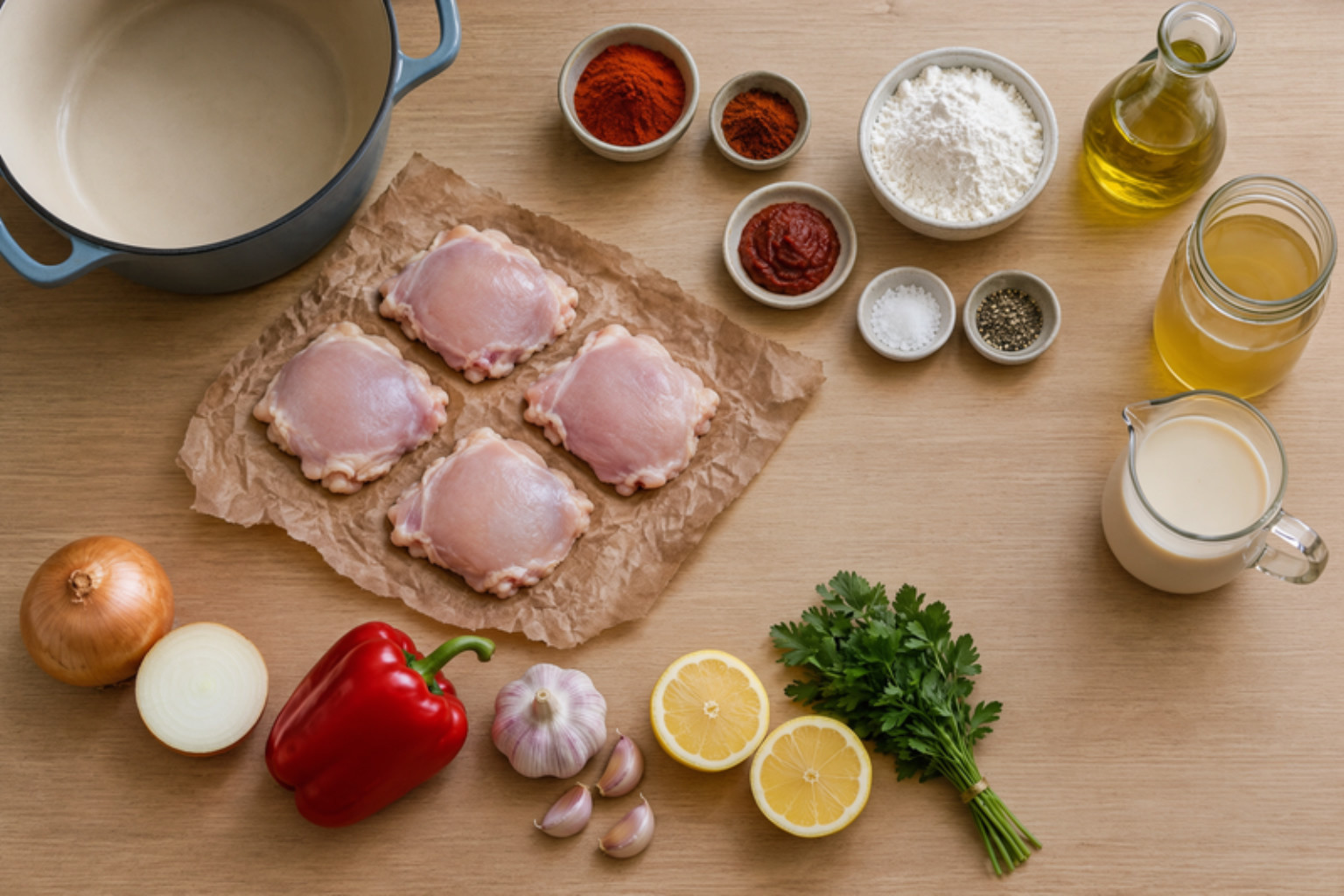
- Boneless, skinless chicken thighs (2 lb / 900 g): bone-in, skin-on thighs also work; brown them skin-side down longer and add 10 to 15 minutes to the simmer. Breasts dry out more easily, so pull them at 165°F.
- Extra-virgin olive oil (2 tbsp / 30 ml): for browning. Lard or bacon fat is a good, more traditional swap. Skip vegetable oil and butter substitutes.
- Onion, red bell pepper, garlic: one large yellow onion (about 2 cups chopped), one red pepper, three cloves.
- Sweet Hungarian paprika (3 tbsp / 21 g): fresh paprika makes the dish, so if yours has been open for a year, replace it. Use single-ingredient paprika (label check). Smoked paprika (1 tsp) is optional for a deeper flavor; hot paprika adds heat.
- Tomato paste (1 tbsp): deepens the color and adds a little acidity.
- Sweet rice flour (3 tbsp / 30 g): cornstarch or potato starch (1 1/2 tbsp, whisked into the cold broth) works but gives a slightly glossier, thinner sauce.
- Chicken broth (1 1/2 cups / 360 ml): label check for wheat, soy, yeast extract, and added oils.
- Oat milk with no added oil (3/4 cup / 180 ml): choose certified gluten-free; many oat milks contain canola or sunflower oil. For an oat-free version, use more broth. We don’t use dairy-free sour cream or yogurt here; they often contain seed oils, soy, or nuts.
- To serve: egg-free gluten-free noodles (label check: many gluten-free “egg noodles” contain egg), mashed potatoes, or rice.
Kitchen Equipment
- 5- to 6-quart Dutch oven or a deep, heavy skillet with a lid
- Whisk and wooden spoon
- Instant-read thermometer
Step-by-Step Tips
- Brown in batches. Crowded chicken steams instead of browning. You want deep golden patches; the inside finishes later in the sauce.
- Take the onions all the way. Soft, sweet, and light golden, scraping up the browned bits as they release their moisture.
- Paprika off the heat. Stir for 30 seconds until the vegetables turn deep red and smell sweet and toasty, then add the sweet rice flour.
- Whisk in the broth gradually so the flour doesn’t clump. The sauce thickens within a minute or two of simmering.
- Simmer gently until the chicken reaches at least 165°F, the safe minimum on the USDA safe temperature chart. Thighs are most tender around 175°F.
- Finish with oat milk and lemon, simmering just until the sauce coats the back of a spoon.
Chicken Paprikash Without Sour Cream
Ingredients
Equipment
Method
- Pat the chicken dry and season with 1/2 teaspoon of the salt and the black pepper.
- Heat the olive oil in a Dutch oven over medium-high heat until it shimmers. Brown the chicken in two batches, 3 to 4 minutes per side, until deep golden in spots. It does not need to be cooked through. Move it to a plate.
- Lower the heat to medium. Add the onion and the remaining 1/2 teaspoon salt and cook, scraping up the browned bits, 8 to 10 minutes, until soft, sweet, and light golden. Add the red pepper and cook 3 minutes more, then the garlic for 30 seconds, until fragrant.
- Take the pot off the heat. Stir in both paprikas and the tomato paste for 30 seconds; the residual heat blooms the paprika without scorching it (scorched paprika turns bitter). Sprinkle in the sweet rice flour and stir until no dry flour remains.
- Return the pot to medium heat and whisk in the broth a little at a time until smooth. Bring to a simmer; it should thicken into a glossy, brick-red sauce within a minute or two.
- Return the chicken and any juices. Cover, reduce the heat to low, and simmer gently 20 to 25 minutes, stirring once or twice, until the chicken is tender and reads at least 165°F (74°C); thighs are most tender around 175°F (79°C).
- Stir in the oat milk and simmer uncovered 3 to 5 minutes, until the sauce turns a creamy orange and coats the back of a spoon. Thin with a splash of broth if it gets too thick.
- Stir in the lemon juice, taste, and add salt as needed. Sprinkle with parsley and serve over egg-free noodles, mashed potatoes, or rice.
Notes
Troubleshooting
- Bitter or brownish sauce: the paprika scorched. Next time, take the pot fully off the burner before adding it. A pinch of sugar and an extra squeeze of lemon can soften the bitterness.
- Sauce too thin: simmer uncovered a few minutes more; sweet rice flour keeps thickening as it cooks.
- Sauce too thick or pasty: whisk in broth, a few tablespoons at a time.
- Tastes flat: it usually needs salt. Add it a pinch at a time, plus a little more lemon.
Storage, Freezing & Reheating
Refrigerate the paprikash in an airtight container for up to 4 days; the flavor deepens overnight. Freeze it without noodles for up to 3 months, then thaw in the refrigerator. Reheat gently on the stove with a splash of broth until it’s steaming and reaches 165°F. Store noodles separately so they don’t soak up all the sauce.
For the classic pairing, spoon it over our mashed potatoes without milk or butter or a pot of rice pilaf with no butter. Like old-world Midwestern dinners? Try stuffed cabbage rolls (golabki) or Midwestern beef and noodles, and find more in our dinner recipes.
FAQ
Can you make chicken paprikash without sour cream?
Yes. A flour-thickened broth finished with oat milk gives the creamy body, and lemon juice adds the tang. The paprika, onion, and chicken carry most of the flavor anyway.
What do you serve with chicken paprikash?
Traditionally egg noodles or small egg dumplings (nokedli). Egg-free gluten-free noodles, mashed potatoes, or rice all work, along with a simple cucumber salad or braised cabbage on the side.
Is paprikash the same as goulash?
No. Hungarian goulash is a brothy beef stew, and Midwestern “American goulash” is ground beef and macaroni in tomato sauce. Paprikash is usually chicken in a thicker, creamy paprika sauce.
Can I use chicken breasts?
Yes. Cut them into large chunks, shorten the simmer to 12 to 15 minutes, and pull them as soon as they reach 165°F so they stay juicy.
A note before you cook: These recipes are ideas and suggestions, not medical or dietary advice. As with any recipe or ingredient, it is each reader’s responsibility to confirm what they can and cannot eat, read every ingredient label, and source quality ingredients that fit their own needs. Ingredient formulations change, so always check the package you’re using.
Leave a Reply