
If you have flipped through an old church or Amish community cookbook looking for a sugar cookie you could make without eggs or butter, you know most of them start with “cream 1 cup butter, add 2 eggs.” Amish sugar cookies are worth the effort to rework. They are the soft, pale, crackly-topped drop cookies that show up on every Christmas cookie tray in Pennsylvania and Ohio, rich and tender, almost melt-away, with a sugary crust on top. No rolling pin, no cutters, no chilling overnight.
Their secret has always been the combination of granulated and powdered sugar with oil and cream of tartar, which gives that fine, tender crumb. That makes them a natural fit for a version built on rice flour, oat flour, applesauce, and light-tasting olive oil. The dough comes together in one bowl, rests 20 minutes, and gets rolled in plain or red-and-green sanding sugar for the holidays.
Made without: peanuts, tree nuts, milk, eggs, wheat, soy, fish, shellfish, sesame.
Why You’ll Love These Amish Sugar Cookies
- Soft, tender centers and crackled, sugar-crusted tops, the classic Amish texture.
- No eggs, butter, egg replacer, or wheat flour, and no rolling or cutting.
- One bowl of dough, about 30 minutes of hands-on time.
- Dough balls freeze well, so you can bake a fresh dozen anytime in December.
- Plain enough to pair with every other cookie on the tray, and easy to dress up with colored sugar.
How Amish Sugar Cookies Work Without Eggs or Butter
In a classic recipe, eggs bind the dough and add moisture, and butter adds tenderness. Here, those jobs are split up:
- Structure: white rice flour gives the crisp edges, oat flour adds a soft, slightly chewy middle, and cornstarch keeps the crumb fine and tender, the way cake flour would.
- Binding and moisture: applesauce holds the dough together and keeps the cookies soft for days. The 20-minute rest lets the rice flour absorb liquid so the dough rolls smoothly instead of crumbling.
- Tenderness: powdered sugar (which contains a little starch) plus light-tasting olive oil gives the short, melt-away bite Amish sugar cookies are known for.
- Lift and crackle: baking soda reacts with acidic cream of tartar, so the cookies puff and the sugared tops crack in the oven.
Ingredients & Swap Ideas
- White rice flour and certified gluten-free oat flour (240 g and 60 g). Oats can pick up barley from shared fields and mills, so look for a certified gluten-free label. For an oat-free batch, use all rice flour (300 g total); expect a slightly sandier cookie.
- Cornstarch: tapioca starch also works.
- Granulated and powdered sugar: keep both for the classic texture. Check which starch your powdered sugar uses.
- Light-tasting olive oil: “light” means refined and mild in flavor, not fewer calories. Melted refined coconut oil works too, with a slightly firmer cookie; if you avoid coconut, stick with light-tasting olive oil. Skip vegetable oil, margarine, shortening, and plant butters.
- Applesauce: unsweetened, at room temperature so the oil doesn’t seize.
- Cream of tartar and baking soda: both needed for the lift. If you are out of cream of tartar, use 1 teaspoon lemon juice in the wet ingredients.
- Sanding sugar: plain granulated sugar is traditional. Colored sanding sugars and sprinkles can contain milk, soy lecithin, or seed oils, so read the label.
Kitchen Equipment
Two rimmed baking sheets lined with parchment, a large and a medium bowl, a whisk, a 1-tablespoon cookie scoop (optional but helpful for even baking), a flat-bottomed glass, and a wire rack.
Step-by-Step Tips
- Whisk the wet ingredients well. A full minute of whisking turns the sugars, oil, and applesauce into a thick, glossy mixture that holds the oil in the dough.
- Rest the dough. Right after mixing it feels soft and a little gritty; after 20 minutes it should feel like play dough and roll into a smooth ball. Add a teaspoon of oat milk or water if it cracks, or chill 10 minutes if it sticks.
- Weigh or scoop. About 22 g per cookie keeps them baking evenly.
- Press gently. Flatten to about 1/2 inch with a sugared glass. Thinner cookies bake crisp; thicker ones stay softer.
- Pull them while pale. They’re done when the tops have crackled, the edges look dry and set, and the bottoms are just turning light golden, 10 to 12 minutes. The tops should not brown.
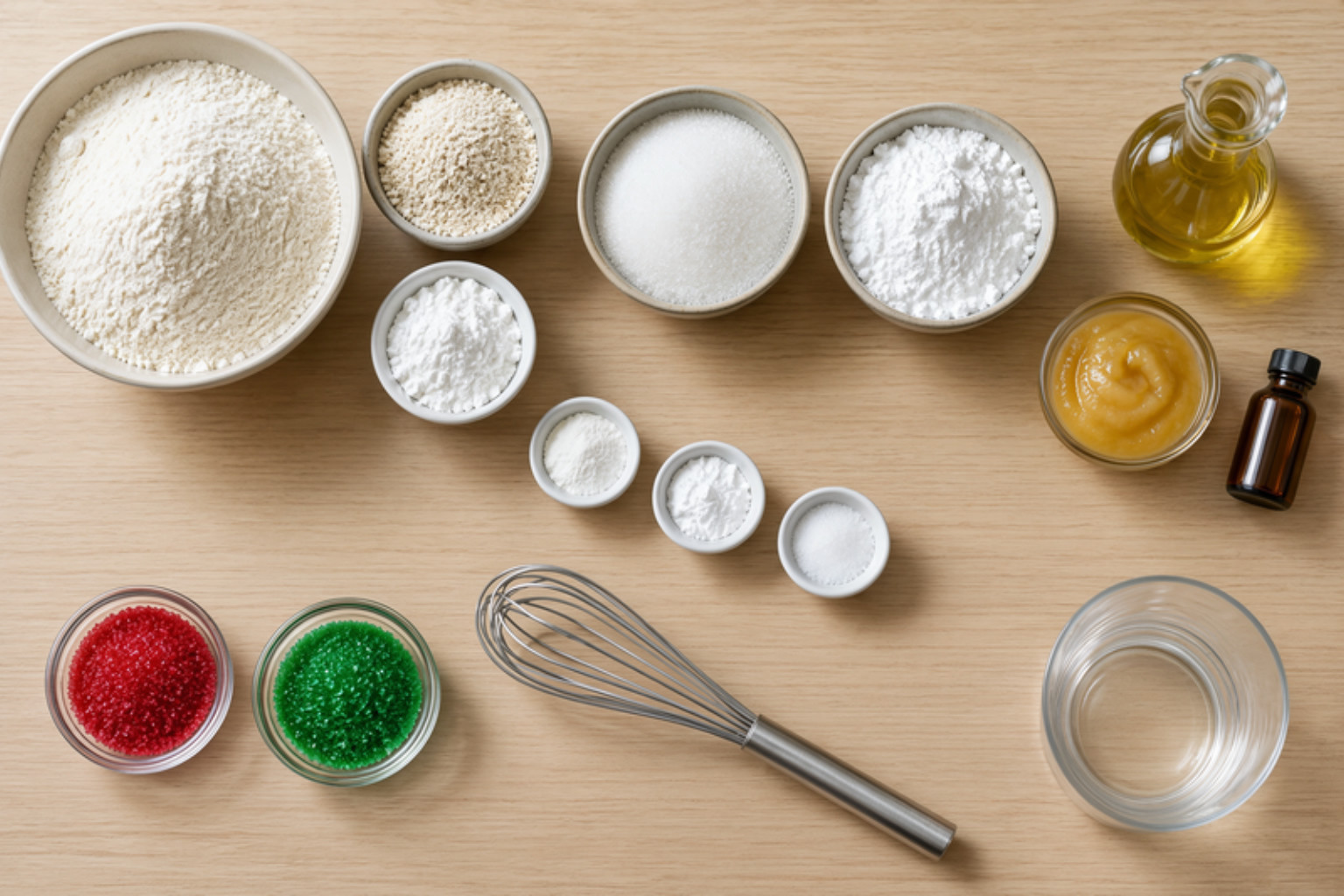
Amish Sugar Cookies, No Eggs, Dairy-Free
Ingredients
Equipment
Method
- Whisk the rice flour, oat flour, cornstarch, baking soda, cream of tartar, and salt in a medium bowl.
- In a large bowl, whisk the granulated sugar, powdered sugar, olive oil, applesauce, and vanilla for about 1 minute, until thick, glossy, and smooth, like a loose frosting.
- Stir the dry ingredients into the wet until a soft dough forms with no dry streaks. Cover and let it rest 20 minutes so the rice flour hydrates. It should feel like soft play dough and roll into a ball without cracking; if it crumbles, stir in the oat milk or water 1 teaspoon at a time. If it is sticky, chill 10 minutes.
- Heat the oven to 350°F (175°C) and line two baking sheets with parchment.
- Scoop level tablespoons of dough (about 22 g each) and roll into smooth balls. Roll each ball in the sugar for rolling and set 2 inches apart.
- Press each ball to about 1/2 inch thick with the bottom of a glass dipped in sugar. Keep the edges round; small cracks around the rim are fine.
- Bake one sheet at a time for 10 to 12 minutes, until the cookies have puffed, the sugared tops have crackled, the edges look set and dry, and the bottoms are just turning light golden. The tops should stay pale; they firm up as they cool.
- Cool 5 minutes on the sheet so they set, then move to a rack and cool completely.
Notes
Troubleshooting
- Cookies spread flat: the dough was too warm or wet. Chill the dough balls 15 minutes and make sure the applesauce was measured level.
- Crumbly dough that won’t roll: rice flours vary in how much water they absorb. Add liquid 1 teaspoon at a time and let it sit 5 minutes before deciding.
- No crackle on top: the oven may be running cool, or the cookies weren’t pressed. An oven thermometer helps.
- Gritty texture: skipping the rest is the usual cause. Superfine (finely milled) white rice flour gives the smoothest result.
Make-Ahead, Freezing & Gifting
- Room temperature: airtight up to 5 days. A slice of apple or bread in the tin isn’t needed; the applesauce keeps them soft.
- Freeze baked cookies: up to 3 months in a freezer bag with the air pressed out. Thaw at room temperature, still sealed, so condensation doesn’t melt the sugar.
- Freeze the dough: roll and sugar the balls, freeze on a tray, then bag them for up to 2 months. Bake from frozen, pressing after 3 minutes in the oven and adding 1 to 2 minutes.
- Cookie tins and exchanges: pack fully cooled cookies in layers with parchment between them. They’re sturdy enough to mail, and they don’t stick together like frosted cookies do.
More Christmas Cookies to Bake
Find every cookie, candy, and dessert in one place on our Christmas recipes page. For a cinnamon-sugar cousin of these, try the soft snickerdoodles; for shapes and decorating, make the soft cut-out sugar cookies with royal icing without egg whites.
FAQ
What makes a sugar cookie “Amish”?
Amish sugar cookies are soft drop cookies made with both granulated and powdered sugar, oil (often alongside butter), and cream of tartar. That combination gives a very tender, fine crumb and a crackled top, unlike rolled sugar cookies, which are firmer so they hold a cut shape.
How are these different from snickerdoodles?
Both use cream of tartar, but snickerdoodles are rolled in cinnamon sugar and are chewier. Amish sugar cookies are plain vanilla, softer, and more delicate, with a sugar crust on top.
Can I frost Amish sugar cookies?
Yes. Skip the sugar coating, bake as directed, and spread cooled cookies with a thin powdered sugar glaze or royal icing. They’ll need time to set before stacking.
Can I make them without oat flour?
Yes. Replace the oat flour with the same weight of white rice flour (60 g). The cookies will be a bit sandier and crisper at the edges. Rest the dough the full 20 minutes.
A note before you cook: These recipes are ideas and suggestions, not medical or dietary advice. As with any recipe or ingredient, it is each reader’s responsibility to confirm what they can and cannot eat, read every ingredient label, and source quality ingredients that fit their own needs. Ingredient formulations change, so always check the package you’re using.
Leave a Reply