
Ask anyone who grew up around Detroit, Cleveland, or Pittsburgh about city chicken and you’ll probably hear about a grandmother’s Sunday dinner or a butcher-counter tray of wooden skewers. There’s no chicken in it at all. During the Depression, pork and veal scraps were often cheaper than chicken in city markets, so cooks threaded cubes of meat onto sticks, breaded them to look like drumsticks, browned them, and braised them until tender. The trouble for allergy families is the classic coating: an egg wash and wheat breadcrumbs. If you’ve gone looking for city chicken without eggs or wheat and come up empty, this version keeps the shape, the golden crust, and the fork-tender pork.
Pork shoulder cubes get a double coat of seasoned rice flour with a simple flour-and-water slurry in between, which grips the meat the way an egg wash would. They’re browned in lard, then oven-braised over onions and broth and crisped at the end.
Made without: peanuts, tree nuts, milk, eggs, wheat, soy, fish, shellfish, sesame.
Why You’ll Love This Recipe
- A nostalgic Midwestern and Rust Belt dinner that’s hard to find made without eggs and breadcrumbs.
- Budget-friendly pork shoulder turns fork-tender in the oven.
- A crisp, well-seasoned coating with no egg wash and no egg replacer.
- Kid-friendly drumstick shape, and the pan juices double as a light gravy.
- Freezes and reheats well.
How the Coating Works Without Eggs or Breadcrumbs
An egg wash is just glue: something wet and sticky that holds the crumbs on. A thin slurry of rice flour and cold water does the same job. The first dredge in dry seasoned flour gives the slurry something to cling to, and the second dredge builds a thicker, craggy crust. Cornstarch in the dry mix browns and crisps well, and a 10-minute rest before frying helps the layers set so they don’t slide off in the pan.
Because the skewers are braised, the coating softens slightly where it touches the broth. That’s why the liquid only comes partway up the meat, and why the last 12 to 15 minutes are uncovered at a higher temperature to bring the crunch back.
Ingredients and Swap Ideas
- Pork shoulder, 2 pounds (900 g): its marbling keeps the cubes juicy during the braise. Boneless pork loin works too but dries out faster; cut the baking time to about 40 minutes. Many old family versions mix pork and veal, which also works here.
- White rice flour (160 g) and cornstarch (32 g): potato starch can replace the cornstarch.
- Lard, 1/4 cup (50 g): bacon fat or beef tallow brown just as well. Skip vegetable oil, shortening, and cooking spray.
- Chicken broth, 1 cup (240 ml): read the label; some broths include wheat, soy, yeast extract, or added oils. Homemade broth or water with a pinch of salt also works.
- Spices: use single-ingredient paprika, garlic powder, and onion powder rather than seasoning blends.
Kitchen Equipment
- Ten 6-inch wooden skewers (most butcher-style city chicken skewers are 4 to 6 inches)
- 12-inch cast iron or heavy oven-safe skillet, or a skillet plus a 9×13-inch baking dish
- Two shallow dishes for dredging and a wire rack
- Foil or a tight lid, and an instant-read thermometer
Step-by-Step Tips
- Cut even cubes. About 1 1/4 inches each, so every skewer cooks at the same pace. Press the cubes together tightly on the stick.
- Dry the meat. Pat it well with paper towels before seasoning so the first dredge sticks.
- Check the slurry. It should coat a spoon like heavy cream. Too thick and the crust turns pasty; too thin and it drips off.
- Don’t crowd the pan. Brown 4 or 5 skewers at a time. The fat should sizzle steadily; if it smokes, lower the heat a little.
- Test for tenderness, not just temperature. Pork is safe to eat at 145°F (63°C), but shoulder only turns fork-tender as it approaches 190°F. A fork should slide in with no resistance.
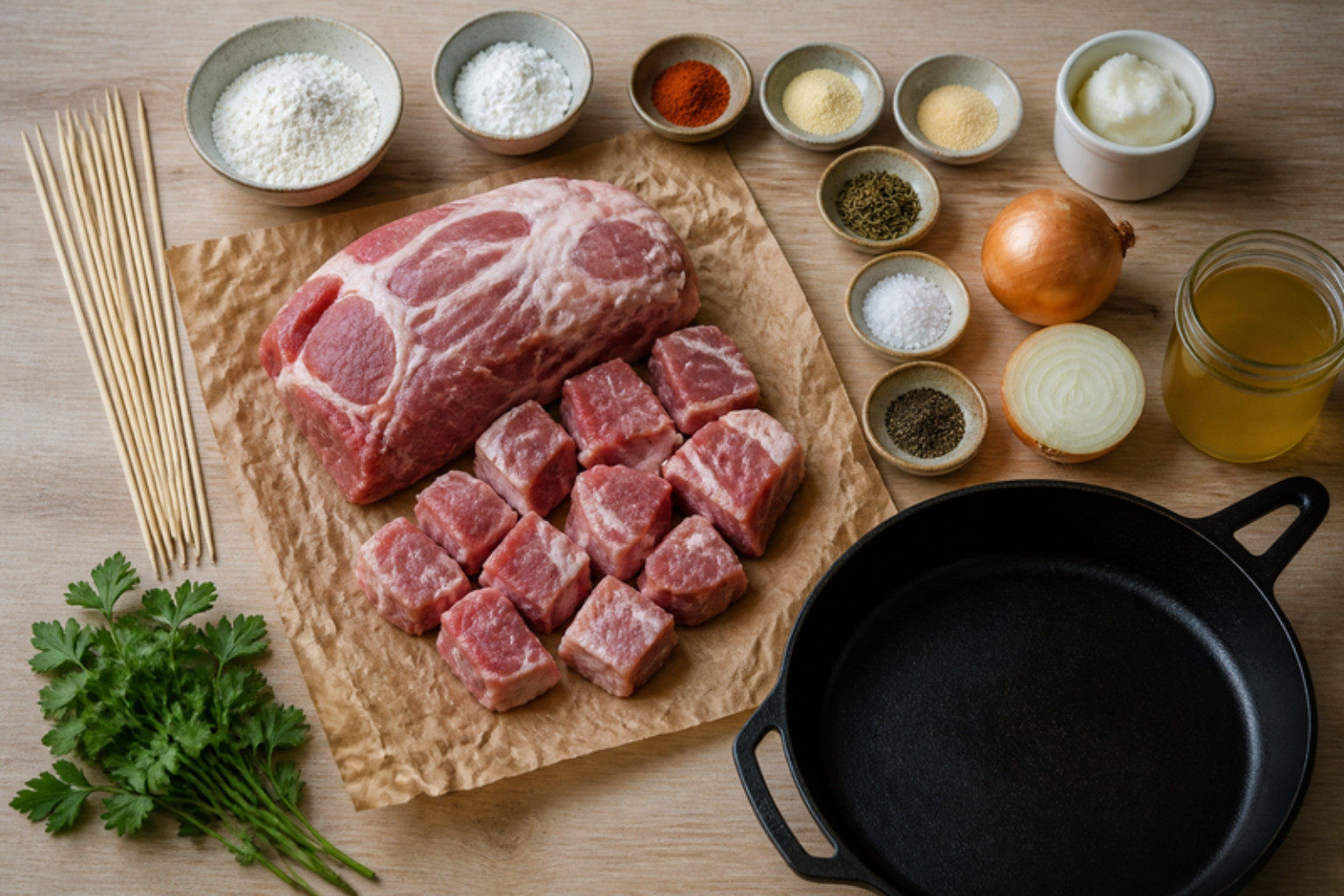
Old-Fashioned City Chicken (Crispy Pork Skewers), No Eggs or Wheat
Ingredients
Equipment
Method
- Heat the oven to 325°F (165°C). Pat the pork cubes dry and season with 1 teaspoon salt and 1/2 teaspoon pepper. Thread 4 or 5 cubes snugly onto each skewer, pressing them together so they look like a drumstick. You should have about 10 skewers.
- In a shallow dish, whisk 3/4 cup (120 g) of the rice flour with the cornstarch, paprika, garlic powder, onion powder, thyme, 1 teaspoon salt, and 1/2 teaspoon pepper.
- In a second shallow dish, whisk the remaining 1/4 cup (40 g) rice flour with the cold water into a smooth slurry about as thick as heavy cream.
- Roll each skewer in the seasoned flour, dip it in the slurry and let the excess drip off, then roll it in the seasoned flour again, pressing so the coating covers every side. Set on a rack for 10 minutes so the coating sets.
- Heat the lard in a 12-inch oven-safe skillet over medium-high heat until it shimmers and a pinch of flour sizzles right away. Brown the skewers in batches, 2 to 3 minutes per side, turning until all sides are deep golden. Move them to a plate.
- Pour off all but 1 tablespoon fat. Add the onion and cook 3 to 4 minutes, scraping up the browned bits, until soft. Add the broth and bring to a simmer.
- Return the skewers to the skillet in a single layer on top of the onions (use a 9×13-inch dish if they don’t fit). The broth should come only partway up, leaving the tops above the liquid. Cover tightly with foil or a lid.
- Bake 60 to 75 minutes, until a fork slides into the pork with no resistance. Pork is safe at 145°F (63°C); shoulder turns tender closer to 190°F (88°C).
- Uncover, raise the oven to 400°F (200°C), and bake 12 to 15 minutes more, until the tops are crisp and the pan juices have reduced. Rest 5 minutes, sprinkle with parsley, and serve with the onions and pan juices spooned around.
Notes
Troubleshooting
- Coating fell off in the pan: the meat was wet or the skewers didn’t rest. Pat dry, and give the coated skewers their full 10 minutes.
- Pale crust: the fat wasn’t hot enough. Wait for it to shimmer and test with a pinch of flour.
- Soggy after braising: the broth came up too high. Keep the tops above the liquid and don’t skip the uncovered finish.
- Still chewy: cover again and keep baking in 15-minute stretches. Shoulder needs time to soften.
Storage, Freezing and Reheating
Refrigerate cooled skewers and pan juices in a covered container for up to 4 days. Freeze in a single layer, then bag for up to 3 months; thaw overnight in the refrigerator. Reheat on a sheet pan, uncovered, at 375°F (190°C) for 15 to 20 minutes, until hot through to 165°F (74°C) and crisp again. Warm the juices separately on the stove. For cooking and reheating temperatures, see the USDA safe temperature chart.
What to Serve With City Chicken
City chicken almost always comes with a scoop of potatoes. Try our mashed potatoes without milk or butter with the pan juices spooned over. For more old-fashioned pork suppers, see smothered pork chops with onion gravy, or try the same egg-free coating idea on chicken fried steak with country gravy. You’ll find more weeknight ideas in our dinner recipes.
Frequently Asked Questions
Why is it called city chicken if it’s pork?
In the early 1900s and through the Depression, chicken was often more expensive than pork or veal in city markets. Cooks shaped cheaper cuts on skewers to look like chicken legs, and the name stuck in places like Detroit, Cleveland, Pittsburgh, and Buffalo.
How do you make city chicken without eggs?
Replace the egg wash with a thin slurry of rice flour and cold water. Dredge in seasoned flour, dip in the slurry, and dredge again, then let the coating rest before browning.
Can I make city chicken in the air fryer?
We’ve written this as a brown-and-braise recipe, because shoulder needs a long, moist cook to turn tender. An air fryer is handy for reheating leftovers: 375°F for 6 to 8 minutes, until hot and crisp.
Can I make it ahead?
Yes. Braise it a day ahead, refrigerate, and do the uncovered 400°F crisping step just before serving, adding 10 minutes or so since the skewers start cold.
A note before you cook: These recipes are ideas and suggestions, not medical or dietary advice. As with any recipe or ingredient, it is each reader’s responsibility to confirm what they can and cannot eat, read every ingredient label, and source quality ingredients that fit their own needs. Ingredient formulations change, so always check the package you’re using.
Leave a Reply