
Chicken fried steak is one of those dinners that seems off the table when a family cooks without eggs, milk, and wheat. The usual method runs the steak through flour, an egg-and-buttermilk wash, and more flour, then smothers it in a gravy made with butter, flour, and whole milk. That’s four of the big allergens before you even get to the mashed potatoes. This version keeps everything that makes the dish worth it: a thin, tender steak, a deep golden crust with plenty of crispy edges, and a pool of black-pepper country gravy.
The short answer: a thick rice flour and oat milk batter does the egg wash’s job, sandwiched between two coats of seasoned rice flour and cornstarch, and a 10-minute rest after coating keeps the crust on in the pan. Jump to the recipe
The coating is rice flour and cornstarch with a simple batter in place of the egg wash, and the steaks fry in beef tallow, which gives them a rich, savory crust. The gravy is made right in the same skillet with oat milk and sweet rice flour, so it picks up all the browned bits from frying.
Made without: peanuts, tree nuts, milk, eggs, wheat, soy, fish, shellfish, sesame.
Why You’ll Love This Recipe
- A shaggy, crunchy crust that holds on without an egg wash.
- Real country gravy, thick and peppery, made in the same pan.
- Budget-friendly: cube steak is one of the least expensive beef cuts.
- Dinner in about 45 minutes, start to finish.
How the Coating Sticks Without Eggs
In a classic breading, the egg wash is glue: it grabs the first layer of flour and holds the outer layer in place. Here, a thick batter of rice flour and oat milk does that job. The steak goes into a seasoned dry mix first, which gives the batter something to grip, then into the batter, then back into the dry mix. Pressing firmly on that last coat creates the little ridges and flakes that turn extra crunchy in hot fat.
Two details help a lot. A 10-minute rest after coating lets the flour absorb moisture so the crust doesn’t slide off in the pan. And a little baking powder in the dry mix makes the crust lighter and more open. Rice flour and cornstarch also fry up crisper than wheat flour, so the crust stays crunchy even under gravy for longer than you might expect.
Ingredients and Swap Ideas
Imperial and metric amounts are in the recipe card below.
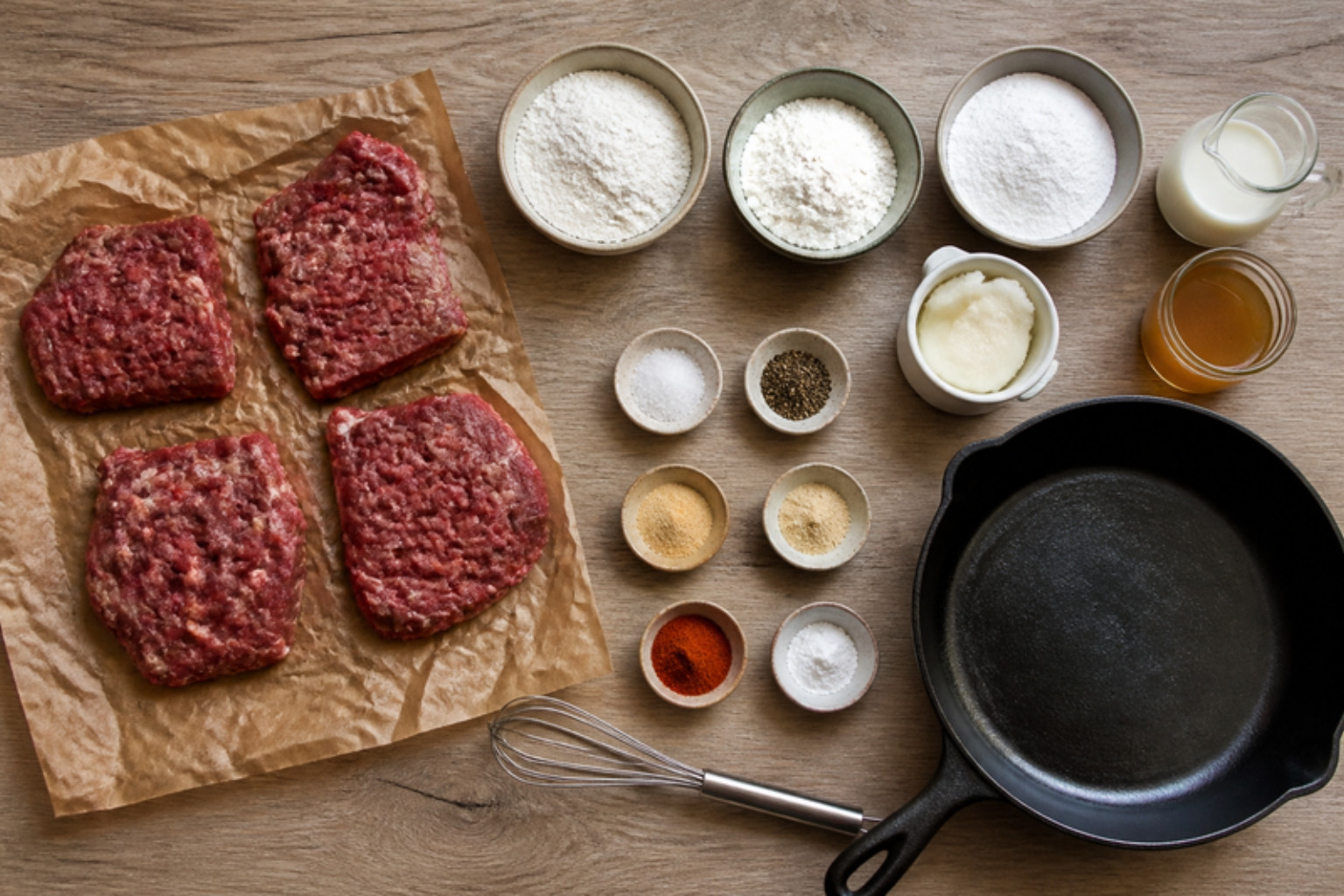
- Cube steak: round steak that the butcher has run through a tenderizer, which leaves the little square marks. If you can only find top or bottom round, pound it to about 1/4 inch thick. Plain cube steak is just beef, but check the package if it’s labeled seasoned or marinated.
- Coating: white rice flour, cornstarch, and baking powder (read the label, since some brands vary in their starch). Use single-ingredient garlic powder, onion powder, and paprika rather than seasoning blends, which can include other ingredients.
- Oat milk: choose one with no added oil; many brands include canola or sunflower oil. For the batter, cold water works just as well.
- Frying fat: beef tallow is our first choice for flavor and crispness. Lard also works well. Please don’t swap in vegetable, canola, or peanut oil.
- Gravy: sweet rice flour makes the smoothest gravy without wheat. Regular white rice flour works but can be slightly grainy. Chicken broth adds savory depth; check the label for added oil, soy, or wheat.
Kitchen Equipment
A 12-inch cast-iron skillet holds steady frying heat and makes great gravy. You’ll also want three shallow dishes for the coating station, an instant-read thermometer for both the fat and the steaks, a whisk, and a wire rack set over a baking sheet so the fried steaks stay crisp underneath.
Step-by-Step Tips
- Dry the steaks well. Surface moisture makes the coating gummy.
- Use one hand for dry, one for wet. It keeps your fingers from turning into breaded clubs.
- Press the final coat on hard. Then drizzle a few drops of batter into the dry mix and rub them in; those little clumps become extra crunchy bits.
- Check the fat temperature. Around 350°F is the target. Too cool and the crust soaks up fat; too hot and it browns before the steak is done.
- Fry two at a time. Crowding the pan drops the temperature. Flip once, when the first side is deep golden.
- Check doneness with a thermometer. Cube steak is mechanically tenderized, so check the thickest piece and follow the USDA safe temperature chart. Thin steaks usually pass 145°F by the time the crust is deep golden.
- Cook the roux until it smells toasty. That minute or two takes away the raw flour taste and gives the gravy its color.
Chicken Fried Steak with Country Gravy, No Eggs, Dairy-Free (Top 9 Free)
Ingredients
Equipment
Method
- Set up three shallow dishes. Dish 1: 1 cup rice flour, the cornstarch, 1 1/2 teaspoons salt, 1 1/2 teaspoons pepper, garlic powder, onion powder, paprika, and baking powder, whisked together. Dish 2: 1/2 cup rice flour, the remaining 1/2 teaspoon each salt and pepper, and the oat milk, whisked into a smooth batter the thickness of pancake batter. Leave dish 3 empty for now.
- Pat the steaks very dry and season lightly with salt. Dredge each steak in the dry mix, dip it in the batter and let the excess drip off, then press it firmly back into the dry mix on both sides. Lay the coated steaks on a plate and let them rest 10 minutes so the coating hydrates and sticks.
- Heat the tallow in the skillet over medium-high heat to 350°F (175°C); a pinch of the dry mix should sizzle right away. Fry 2 steaks at a time, 3 to 4 minutes per side, until the crust is deep golden and crisp and the thickest part reaches at least 145°F (63°C) on an instant-read thermometer. Move to the wire rack and keep warm in a 200°F oven while you fry the rest.
- Carefully pour off all but 3 tablespoons of fat, keeping the browned bits in the pan. Set the skillet over medium heat, whisk in the sweet rice flour, and cook 1 to 2 minutes until it smells toasty and looks like wet sand.
- Slowly whisk in the oat milk and broth. Simmer, whisking often, 4 to 6 minutes, until the gravy is thick enough to coat a spoon. Season generously with black pepper and add salt to taste. If it gets too thick, whisk in a splash of broth.
- Serve the steaks right away, smothered in gravy, with mashed potatoes and a green vegetable.
Notes
Troubleshooting
- Coating fell off: the steak was wet, the coated steaks didn’t rest, or they were flipped too early. Let the first side set and brown before turning.
- Greasy crust: the fat wasn’t hot enough, or too many steaks went in at once. Let the fat come back up to temperature between batches.
- Gravy too thick: rice flour gravies thicken quickly as they sit. Whisk in broth or oat milk a tablespoon at a time.
- Gravy tastes flat: it needs more salt and pepper than you’d think. Country gravy should be noticeably peppery.
Storage and Reheating
Store leftover steaks and gravy separately in the refrigerator for up to 3 days. Reheat the steaks on a rack in a 375°F oven or air fryer for 10 to 12 minutes, until hot and crisp again, and warm the gravy on the stove with a splash of oat milk, whisking until smooth. Reheat to 165°F. You can freeze the fried steaks for up to 2 months; reheat from frozen in the oven, adding a few minutes. The gravy is best made fresh.
What to Serve with Chicken Fried Steak
Mashed potatoes are almost required; our creamy dairy-free mashed potatoes use olive oil and broth and soak up extra gravy nicely. Add green beans or a skillet of mushrooms and onions on the side. If you like steak dinners with gravy, try the Salisbury steak with mushroom onion gravy or the slow-braised old-fashioned Swiss steak. Browse more dinner recipes.
Frequently Asked Questions
What’s the difference between chicken fried steak and country fried steak?
The names are often used for the same dish. Some cooks use “chicken fried” for a steak breaded like fried chicken and served with white pepper gravy, and “country fried” for one with a lighter flour coating and brown onion gravy. This recipe follows the first style.
Can I make chicken fried steak in the air fryer?
You can, though the crust will be drier and less craggy. Brush or drizzle the coated steaks on both sides with melted beef tallow or light-tasting olive oil (refined and mild in flavor; “light” doesn’t mean fewer calories) and air fry at 400°F for 6 to 7 minutes per side, until golden and the thickest part reaches a safe temperature. Make the gravy on the stove with 3 tablespoons of tallow.
Can I use chicken instead?
Yes. Pound boneless, skinless chicken breasts or thighs to about 1/4 inch thick, coat and fry the same way, and cook to 165°F. That’s often called chicken fried chicken.
Why sweet rice flour for the gravy?
Sweet rice flour is very starchy and makes a smooth, creamy gravy that holds together when reheated. Despite its other name, glutinous rice flour, it contains no gluten.
How do you get breading to stick without eggs?
Use a thick batter of rice flour and oat milk (or cold water) in place of the egg wash. Dredge the dry steak in the seasoned flour mix, dip it in the batter, then press it firmly back into the dry mix. Let the coated steaks rest for 10 minutes before frying, and don’t flip them until the first side is set and deep golden.
A note before you cook: These recipes are ideas and suggestions, not medical or dietary advice. As with any recipe or ingredient, it is each reader’s responsibility to confirm what they can and cannot eat, read every ingredient label, and source quality ingredients that fit their own needs. Ingredient formulations change, so always check the package you’re using.