
If you’ve been looking for a Thanksgiving side that doesn’t lean on butter, cream, cheese, or breadcrumbs, a pot of Southern collard greens is an easy answer. The classic version never had any of those in the first place. Tough, sturdy collards are simmered low and slow with smoked meat, onion, and garlic until they turn dark, silky, and tender, and the cooking liquid (the “pot liquor”) becomes a smoky broth worth sopping up with cornbread.
This version uses smoked turkey wings, necks, or a drumstick instead of a ham hock, bacon fat or extra-virgin olive oil for the onions, and a splash of cider vinegar with a pinch of brown sugar to balance the greens’ natural bitterness. It’s a make-ahead side that tastes even better the next day, and it’s made without peanuts, tree nuts, milk, eggs, wheat, soy, fish, shellfish, and sesame.
Made without: peanuts, tree nuts, milk, eggs, wheat, soy, fish, shellfish, sesame.
Why You’ll Love These Collard Greens
- Nothing to replace: traditional Southern greens are already made without dairy, eggs, and wheat.
- Deep, smoky flavor from smoked turkey simmered into the broth first.
- Make-ahead friendly: cook them a day or two early and reheat on Thanksgiving, freeing up the stovetop.
- Feeds a crowd for very little money; collards are one of the cheapest holiday vegetables.
How Collards Get Tender Without Butter or Cream
Collards are thick, fibrous greens. A quick sauté leaves them chewy and bitter, but a long, gentle simmer breaks down their tough fibers until the leaves are soft enough to cut with a spoon. Richness comes from the smoked turkey, which gives up its smoky flavor and a little gelatin as it cooks, and from the fat you soften the onions in. Simmering the turkey in broth on its own for 45 minutes before the greens go in builds that flavor so the finished pot liquor tastes full, not watery.
Acid and a touch of sugar do the balancing work that some recipes give to butter. Cider vinegar brightens the greens and cuts their bitterness, and a tablespoon of brown sugar rounds out the edges. Season with salt only at the end, because smoked turkey can be quite salty.
Ingredients & Swap Ideas
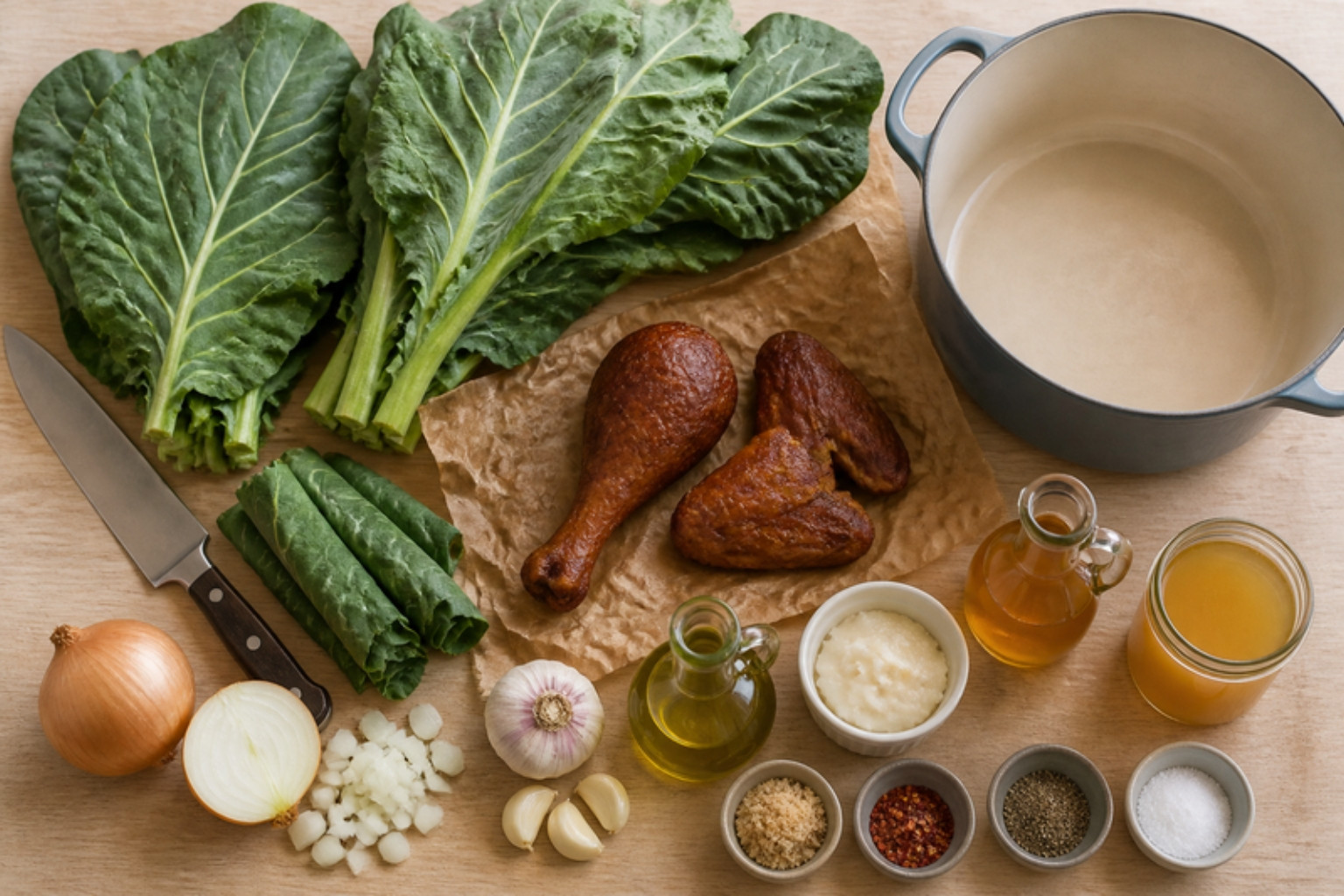
- Collard greens: 2 large bunches, about 2 1/2 lb (1.1 kg). Pre-cut bagged collards save time; they still need a rinse and a pick-through for thick stems.
- Smoked turkey: wings, necks, or one large drumstick, about 1 1/2 lb (680 g). Most are sold fully cooked; check the label, and look for products without added soy or flavorings you avoid. A smoked ham hock works the same way.
- Fat: bacon fat for the most traditional flavor, or extra-virgin olive oil. Skip vegetable oil and butter substitutes.
- Broth: chicken broth or water. Many boxed broths contain soy, wheat, or added seed oils, so read the label, or use water and let the turkey make the broth.
- Vinegar and heat: apple cider vinegar and red pepper flakes. Serve with extra vinegar or a homemade pepper vinegar at the table.
- Other greens: turnip greens or mustard greens can replace half the collards; they cook faster, so add them for the last 25 minutes.
Kitchen Equipment
A large Dutch oven or stockpot (6 quarts or bigger, since raw greens are bulky), a big cutting board, a sharp chef’s knife, and an instant-read thermometer for reheating.
Step-by-Step Tips
- Wash twice. Collards trap grit. Swish them in a sink of cool water, lift them out, and repeat if sand settles on the bottom.
- Strip the stems. Fold each leaf in half and pull or cut away the thick center rib. Stack, roll, and slice into ribbons.
- Add greens in batches. They look like far too much at first but wilt down to about a quarter of their volume.
- Cook by texture, not the clock. They’re done when they’re dark green, silky, and tender, usually 45 to 60 minutes.
- Salt last. Taste after the turkey meat goes back in, then season.
Southern Collard Greens with Smoked Turkey
Ingredients
Equipment
Method
- Put the smoked turkey and broth in a large Dutch oven. Bring to a boil, then cover, lower the heat, and simmer 45 minutes, until the broth smells smoky and the meat is starting to loosen from the bones. This is the start of the pot liquor.
- Meanwhile, wash the collards well in a sink of cool water, lifting them out so grit stays behind; repeat if any sand settles. Strip the leaves off the thick center stems, stack several leaves, roll them up, and slice into 1/2-inch ribbons.
- Lift the turkey onto a plate. Pour the broth into a bowl. Add the bacon fat or olive oil to the empty pot over medium heat. Cook the onion 6 to 8 minutes, until soft and golden at the edges. Add the garlic and red pepper flakes and stir 30 seconds, until fragrant.
- Pour the broth back in, then add the collards a few handfuls at a time, stirring each batch until it wilts enough to make room. Return the turkey to the pot and stir in the vinegar, brown sugar, and black pepper.
- Cover and simmer gently 45 to 60 minutes, stirring now and then, until the greens are dark, silky, and tender enough to cut with a spoon. Add a splash of water if the liquid drops below the greens.
- Lift out the turkey. When cool enough to handle, pull the meat off the bones, discarding skin, bones, and cartilage, chop it, and stir it back in. Simmer 5 more minutes, until the greens and meat reach 165°F (74°C). Taste, then season with salt and more vinegar. Serve with some of the pot liquor.
Notes
Troubleshooting
- Greens taste bitter: simmer them longer, then add another teaspoon of brown sugar and a splash of vinegar.
- Too salty: add a cup of water or unsalted broth and a squeeze of lemon, or serve with plain cornbread or rice.
- Gritty bite: the greens needed another wash. Next time, rinse until the water stays clear.
- Not much flavor: the turkey needs more time in the broth before the greens go in, or the pot needs more salt and vinegar at the end.
Make-Ahead, Storage & Freezing
Collards are one of the best make-ahead Thanksgiving sides. Cook them up to 2 days ahead, cool, and refrigerate in their liquid. Rewarm on the stove or in a slow cooker on low, and bring to 165°F (74°C) before serving (see the USDA safe temperature chart). Leftovers keep 4 days in the fridge. To freeze, pack the greens with plenty of pot liquor in airtight containers for up to 3 months, then thaw overnight in the refrigerator.
More Holiday Sides
Browse every side on our Thanksgiving recipes page. Serve these greens with a wedge of skillet cornbread for dipping into the pot liquor, and round out a Southern-style plate with candied yams and a scoop of corn casserole without eggs. For another slow-simmered vegetable, try the old-fashioned green beans with bacon and onions.
FAQ
What is pot liquor?
Pot liquor (or potlikker) is the flavorful broth left after simmering greens with smoked meat. It’s traditionally served with the greens and soaked up with cornbread.
Can I make collard greens without meat?
Yes. Use vegetable broth with no added oils, 3 tablespoons of extra-virgin olive oil, and 1 teaspoon of smoked paprika for a smoky note. Simmering time stays the same.
Can I cook collards in a slow cooker?
Sauté the onion and garlic first, then add everything to a slow cooker and cook on low 6 to 7 hours or high 3 to 4 hours, until the greens are silky. Pull the turkey meat off the bones at the end.
Should I eat the stems?
The thick center ribs stay woody, so most cooks remove them. Thin stems near the top of the leaf are fine to slice and cook with the greens.
A note before you cook: These recipes are ideas and suggestions, not medical or dietary advice. As with any recipe or ingredient, it is each reader’s responsibility to confirm what they can and cannot eat, read every ingredient label, and source quality ingredients that fit their own needs. Ingredient formulations change, so always check the package you’re using.
Leave a Reply