
If you’ve gone looking for a Thanksgiving pie without eggs, milk, or nuts, you already know how short the list gets. Pecan pie is out, most custard pies are built on eggs and cream, and many crumb toppings lean on butter. Old-fashioned raisin pie is one of the few classics that never needed eggs in the first place. Pennsylvania Dutch and Mennonite cooks baked it for generations, and because raisins kept all winter, it became the pie families carried to wakes and church dinners, which is how it earned the nickname “funeral pie.”
This version keeps that simple formula: plump raisins simmered in water, then thickened with brown sugar and cornstarch into a glossy, jammy filling with cinnamon, nutmeg, and a good squeeze of lemon. It bakes under a lattice in a flaky crust made with rice flour, oat flour, and lard instead of wheat and butter. The result tastes like a cross between mincemeat and a spiced fruit tart, and it slices cleanly once it cools.
Made without: peanuts, tree nuts, milk, eggs, wheat, soy, fish, shellfish, sesame.
Why You’ll Love This Raisin Pie
- A traditional pie that never relied on eggs, so nothing has to be imitated.
- Pantry ingredients you can buy any time of year: raisins, brown sugar, cornstarch, lemon, and spices.
- A nut-free alternative on a dessert table that often leans on pecans and walnuts.
- The filling can be made two days ahead, and the baked pie freezes well.
- Rich, warm flavor that pairs with pumpkin and apple pies without tasting like either.
How Raisin Pie Works Without Eggs, Butter, or Wheat
The filling: in many fruit pies, eggs are not doing the thickening at all; starch is. Here, cornstarch is cooked on the stove until the mixture bubbles for a full minute. That step matters: cornstarch only reaches full thickness once it boils, and the filling changes from cloudy to glossy and translucent when it’s there. Lemon juice goes in after cooking, because acid added during the boil can weaken cornstarch.
The crust: without gluten, the crust gets its structure from a balance of flours. Rice flour gives crispness, oat flour adds tenderness and a wheat-like flavor, cornstarch lightens it, and a little sweet rice flour (made from glutinous rice, which contains no gluten) keeps the dough pliable enough to roll. Cold lard makes flaky layers the way butter does in a wheat crust. Rolling between parchment keeps the dough from tearing.
Ingredients and Swap Ideas
- Raisins: dark raisins give a deep, molasses-like filling; golden raisins make it brighter and tangier. A mix works too. Some brands coat raisins in sunflower or other seed oils to keep them loose, so look for raisins with no added oil.
- Brown sugar and cornstarch: light brown sugar adds caramel notes. Cornstarch is the thickener, so measure it level.
- Lemon: fresh juice and zest keep the pie from tasting flat. Orange zest is a nice swap if you prefer it.
- Spices: cinnamon and nutmeg are traditional. A pinch of ground cloves or allspice deepens it.
- Lard: use pure rendered lard and keep it cold. If you avoid lard, cold refined coconut oil works in the crust (this adds coconut). Skip shortening, margarine, and butter substitutes, which are usually made with seed oils.
- Light-tasting olive oil (optional in the filling): one tablespoon rounds out the filling the way a pat of butter would. “Light” means refined and mild in flavor, not lower in calories.
- Oat flour and oat milk: choose certified gluten-free oat flour, since regular oats can pick up barley and wheat in processing. For the brush on top, use oat milk with no added oil; many brands contain canola or sunflower oil.
Kitchen Equipment
- 9-inch glass or metal pie plate (glass lets you check the bottom crust’s color)
- Medium heavy saucepan for the filling
- Rolling pin and two sheets of parchment paper
- Pastry cutter or fork
- Rimmed baking sheet to catch drips
Step-by-Step Tips
- Make the crust first. Cut the lard in until you see pea-sized pieces and a few flat flakes. Add ice water slowly; the dough is ready when a squeezed handful holds together without feeling sticky.
- Plump the raisins. Five minutes of simmering softens them so they don’t pull moisture from the filling as it bakes.
- Cook the filling until it is truly thick. Stir constantly. Look for the moment it turns glossy and see-through, then keep it bubbling for one more minute.
- Cool the filling before filling the crust. Hot filling melts the lard and makes a soggy bottom. Just warm is fine.
- Roll between parchment. Flip the bottom crust into the plate using the parchment, then peel it off. Press any cracks closed; gluten-free dough patches easily.
- Weave a simple lattice. Chilled strips are easier to lift. A plain top crust with steam slits works too.
- Bake until the filling bubbles thickly through the lattice and the crust is deep golden. Pale crust tastes floury, so don’t pull it early.
- Cool for at least 3 hours. The filling finishes setting as it cools.
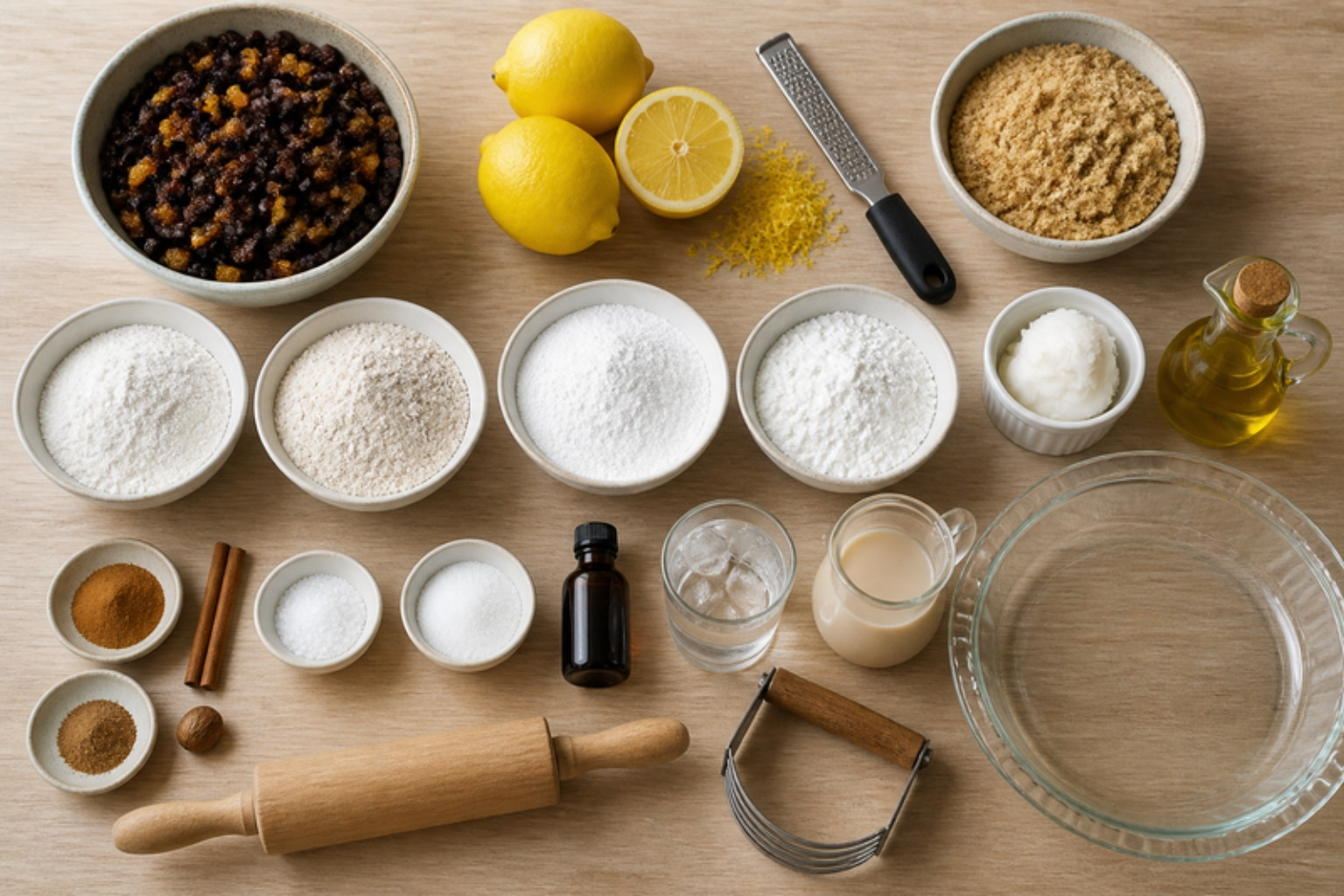
Old-Fashioned Raisin Pie (Funeral Pie), No Eggs, Dairy-Free
Ingredients
Equipment
Method
- Whisk the rice flour, oat flour, sweet rice flour, cornstarch, sugar, and salt in a large bowl. Cut in the cold lard with a pastry cutter or fork until the pieces are the size of small peas with some flat flakes.
- Stir the vinegar into 6 tablespoons of the ice water. Drizzle it over the flour mixture and toss with a fork. Add more ice water a teaspoon at a time just until the dough holds together when squeezed. It should feel like soft play dough, not sticky and not crumbly.
- Divide the dough in two, one piece slightly larger. Flatten each into a disc, wrap, and chill 30 minutes.
- Combine the raisins and 1 1/2 cups (360 ml) of the water in a saucepan. Bring to a simmer and cook 5 minutes, until the raisins are plump and glossy.
- Whisk the brown sugar, cornstarch, cinnamon, nutmeg, and salt with the remaining 1/2 cup (120 ml) cold water until smooth. Stir it into the simmering raisins.
- Cook, stirring constantly, until the mixture turns from cloudy to glossy and translucent, thickens to the texture of thick jam, and bubbles for 1 full minute.
- Remove from the heat. Stir in the lemon juice, lemon zest, olive oil (if using), and vanilla. Cool at least 30 minutes, until just warm.
- Heat the oven to 425°F (220°C) with a rack in the lower third. Roll the larger disc between two sheets of parchment to an 11-inch circle about 1/8 inch thick. Peel off the top sheet, flip the dough into the pie plate, and press it in. Patch any cracks with your fingertips.
- Pour in the cooled filling and smooth it. Roll the second disc between parchment and cut 1-inch strips. Lay them over the filling in a lattice (chilling the strips for 10 minutes makes them easier to move). Trim and crimp the edges.
- Brush the lattice with oat milk and sprinkle with sugar. Set the pie on a rimmed baking sheet.
- Bake 15 minutes at 425°F (220°C), then lower the oven to 375°F (190°C) and bake 30 to 40 minutes more, until the crust is deep golden and the filling bubbles thickly between the lattice strips. Tent the edges with foil if they brown too fast.
- Cool on a rack at least 3 hours so the filling sets before slicing.
Notes
Troubleshooting
- Runny filling: the cornstarch likely didn’t boil long enough, or the pie was cut warm. Next time, cook until glossy and bubbling for a full minute, and cool the pie completely.
- Crumbly dough that won’t roll: sprinkle in another teaspoon of ice water and knead briefly. If it’s cold and cracking, let it sit 5 minutes.
- Sticky dough: chill it 15 minutes and roll between parchment instead of on a floured counter.
- Edges browning too fast: cover them with a foil ring or a pie shield for the last 15 to 20 minutes.
Make-Ahead, Storage, and Freezing
Cook the filling up to 2 days ahead and keep it covered in the fridge. The crust dough keeps 2 days chilled or 2 months frozen. The baked pie keeps covered at room temperature for a day, then in the fridge up to 4 days. To freeze, cool the pie completely, wrap it (or individual slices) tightly, and freeze up to 2 months. Thaw overnight in the fridge and warm at 325°F (165°C) for about 15 minutes to re-crisp the crust. For carrying to a dinner, a cooled pie travels well in its plate with a loose foil cover.
More Holiday Pies
Browse every pie and dessert on our Thanksgiving recipes page. If you like warm fruit-and-spice pies, try the old-fashioned mincemeat pie, which uses the same kind of lard crust, the egg-free Concord grape pie with an oat crumb top, or the maple syrup pie for a nut-free stand-in for pecan pie. The classic apple pie post has more tips on handling crust made without wheat.
FAQ
Why is raisin pie called funeral pie?
Raisins were available all year, so the pie could be made on short notice when a neighbor passed. Families brought it to the meal after a funeral, and the name stuck in Pennsylvania Dutch and Midwestern communities.
Does traditional raisin pie have eggs?
Most old recipes don’t; they use flour or cornstarch to thicken the filling. Sour cream raisin pie is a different dessert that uses eggs and sour cream, so it isn’t the same as this one.
Can I add apples or nuts?
Many classic versions stir in chopped walnuts, which this recipe leaves out. A cup of finely diced apple can be cooked with the raisins for a lighter filling; add an extra tablespoon of cornstarch.
Can I use a store-bought crust?
You can, but many store-bought gluten-free crusts contain eggs, milk, or seed oils, so read the label carefully. The homemade lard crust above is made without all of those.
A note before you cook: These recipes are ideas and suggestions, not medical or dietary advice. As with any recipe or ingredient, it is each reader’s responsibility to confirm what they can and cannot eat, read every ingredient label, and source quality ingredients that fit their own needs. Ingredient formulations change, so always check the package you’re using.