
Christmas morning pancakes usually start with eggs, buttermilk, and a bag of wheat flour, which leaves a lot of families making a separate breakfast or skipping the tradition. If you’ve searched for a holiday pancake without eggs or milk and found only mixes with long ingredient lists, these gingerbread pancakes are worth a try. They taste like a soft gingerbread cookie in pancake form: dark molasses, warm ginger and cinnamon, a hint of cloves, and fluffy, tender centers.
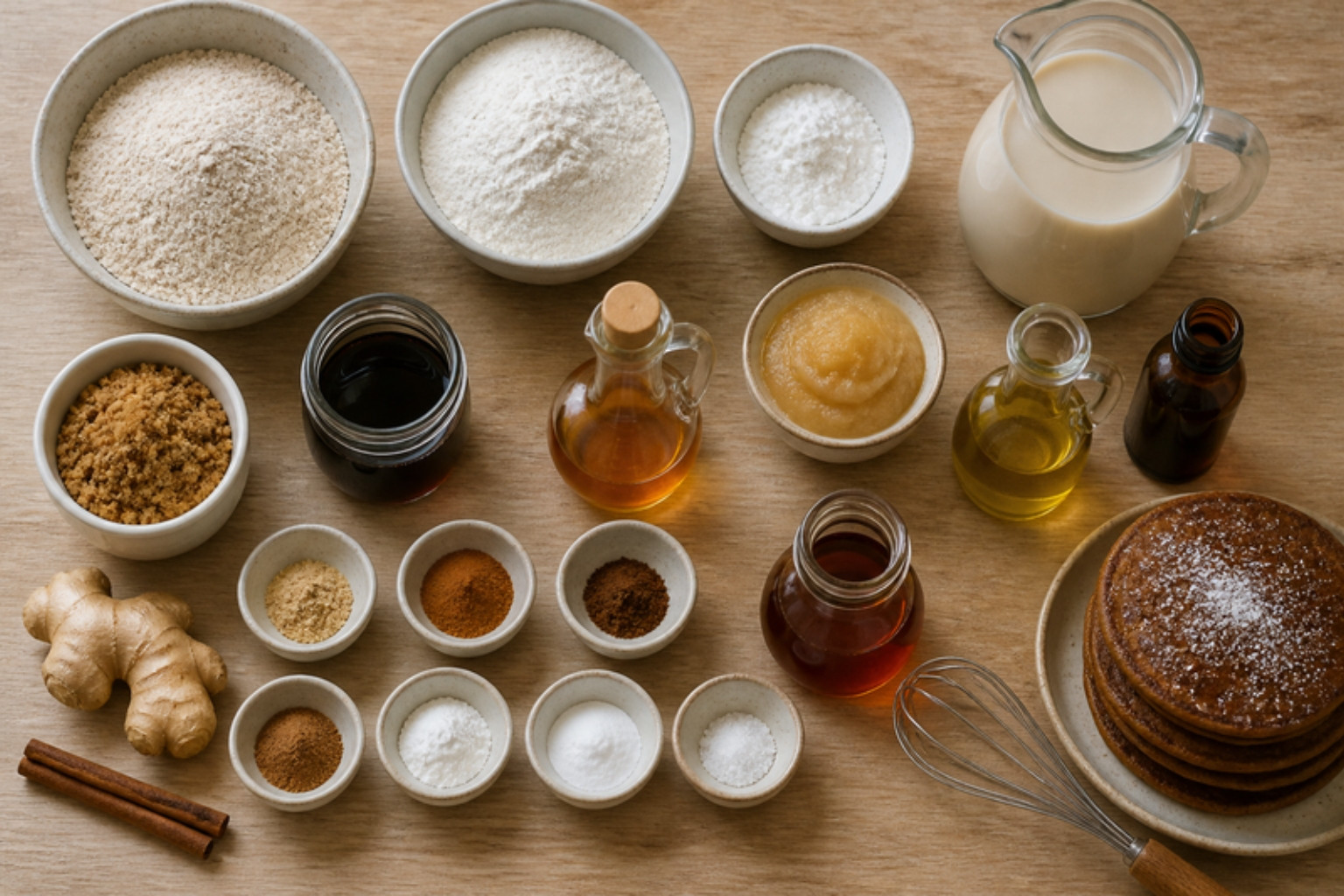
The batter is built on certified gluten-free oat flour and white rice flour with a little cornstarch, lifted with baking powder and baking soda reacting with molasses and a splash of cider vinegar. Applesauce and oat milk handle the moisture and binding that eggs and buttermilk usually cover, and light-tasting olive oil keeps the crumb tender. Mix the dry ingredients the night before and breakfast comes together in about 30 minutes.
Made without: peanuts, tree nuts, milk, eggs, wheat, soy, fish, shellfish, sesame.
Why You’ll Love These Gingerbread Pancakes
- All the gingerbread flavor. Molasses and four warm spices give real cookie-jar flavor without tasting heavy.
- Fluffy without eggs. A short batter rest and a double leavening system make them rise and stay tender.
- Grocery-store ingredients. No egg replacer, flax, or specialty flour blend.
- Make-ahead friendly. Pre-mix the dry ingredients or freeze cooked pancakes for an easy holiday morning.
How These Pancakes Work Without Eggs, Milk, or Wheat
In a standard pancake, egg binds the batter and helps it puff, buttermilk adds tang and activates baking soda, and wheat gluten gives the pancake its stretch. Here’s how this recipe covers those jobs:
- Oat flour and rice flour. Oat flour brings a soft, wheat-like crumb and mild sweetness. Rice flour adds structure so the pancakes hold together when flipped. Cornstarch lightens the texture.
- “Buttermilk” from oat milk. A tablespoon of cider vinegar stirred into oat milk gives the acid baking soda needs. Molasses is slightly acidic too, which is why gingerbread batters rise so well.
- Applesauce for binding. Its natural pectin helps hold the batter together and keeps the pancakes moist.
- A 10-minute rest. Rice and oat flours absorb liquid slowly. Resting thickens the batter so the pancakes stand tall instead of spreading thin.
Ingredients and Swap Ideas
Exact amounts in cups and grams are in the recipe card below. Use room-temperature oat milk if you can; cold milk can firm up the oil into small specks.
- Oat flour and oat milk: choose certified gluten-free products, since oats are often processed alongside barley and wheat. Many oat milks contain canola or sunflower oil, so look for one with no added oil.
- Molasses: unsulphured “original” or “mild” molasses. Blackstrap is bitter and makes the pancakes taste burnt.
- Fat: light-tasting olive oil works well here. “Light” means refined and mild in flavor, not fewer calories. Melted refined coconut oil also works; if you avoid coconut, stay with light-tasting olive oil. Skip vegetable oil, butter substitutes, and cooking spray, which are usually made from seed oils.
- Spices: single ground spices rather than a pumpkin pie or gingerbread blend, so you know exactly what’s in the jar. Use up to 1 tablespoon ginger if you like a stronger bite.
- Sweetener on top: pure maple syrup rather than pancake syrup, which can contain additives and flavorings.
Equipment
- A large griddle or 12-inch skillet (nonstick or well-seasoned cast iron)
- Two mixing bowls, a whisk, and a 1/4-cup measure
- A rimmed baking sheet with a wire rack to keep finished pancakes warm in a 200°F (95°C) oven
Step-by-Step Tips
- Whisk the dry ingredients well. Spices clump; a thorough whisk keeps every pancake evenly flavored.
- Dissolve the molasses first. Whisk it into the oat milk mixture before it meets the flour so it doesn’t sink in sticky streaks.
- Stir gently, then rest. Stop as soon as no dry flour shows. After 10 minutes the batter should be thick, puffy, and scoopable.
- Cook lower and slower. Molasses browns faster than plain sugar. Medium-low heat gives a deep brown outside and a cooked center.
- Flip by the signs, not the clock. Turn when bubbles open on top and the edges look dry and matte. After flipping, the center should spring back when pressed.
Gingerbread Pancakes (No Eggs, Milk or Wheat)
Ingredients
Equipment
Method
- Stir the vinegar into the oat milk and set aside 5 minutes; it will thicken slightly.
- In a large bowl, whisk the oat flour, rice flour, cornstarch, brown sugar, baking powder, baking soda, ginger, cinnamon, cloves, nutmeg, and salt until no streaks of spice remain.
- Whisk the molasses, applesauce, olive oil, and vanilla into the oat milk mixture until the molasses dissolves. Pour into the dry ingredients and stir just until no dry flour remains. The batter will look thick and bubbly.
- Rest the batter 10 minutes so the rice and oat flours hydrate. It should thicken to the consistency of thick cake batter. If it is too stiff to spread on its own, stir in 1-2 tablespoons more oat milk.
- Heat the griddle over medium-low (about 350°F / 175°C on an electric griddle) and brush lightly with olive oil. Molasses browns fast, so keep the heat a notch lower than for plain pancakes.
- Scoop 1/4 cup batter per pancake and gently spread to about 4 inches. Cook 2 1/2-3 minutes, until bubbles open on top, the edges look matte and set, and the underside is deep brown.
- Flip and cook 1 1/2-2 minutes more, until the center springs back when pressed. Keep warm on a rack in a 200°F (95°C) oven while you cook the rest, brushing the griddle with oil between batches.
- Serve warm with maple syrup and a dusting of powdered sugar or sliced pears.
Notes
Troubleshooting
- Gummy centers: the heat was too high, so the outside browned before the middle set. Lower the heat and spread the batter a little thinner.
- Flat pancakes: the batter may have been overmixed or the baking powder is old. Check the date and give the batter its full rest.
- Pancakes tear when flipped: wait until the edges look fully set, and use a thin spatula slid all the way under.
- Gritty texture: use finely ground white rice flour and don’t skip the rest, which softens the grains.
Make-Ahead, Storage, and Freezing
- Dry mix: whisk the dry ingredients into a jar up to 2 weeks ahead. On the morning, add the wet ingredients. A labeled jar of the dry mix also makes a sweet holiday gift.
- Fridge: keep cooked pancakes airtight up to 3 days.
- Freezer: freeze on a sheet pan in a single layer, then bag with parchment between layers for up to 2 months.
- Reheat: toast from frozen, or warm on a sheet pan at 350°F (175°C) for 8 to 10 minutes.
Planning the whole holiday morning? Browse the Breakfast & Drinks aisle of our Christmas recipes. For a fall version with the same flour base, try our pumpkin pancakes, and if gingerbread is a family favorite, the cut-out gingerbread cookies use the same warm spice mix.
FAQ
Can I make gingerbread pancakes with all-purpose flour?
You can, but it changes what the recipe is made without, since wheat is one of the top nine allergens. Most US all-purpose flour also contains malted barley flour. This version was written for oat and rice flour, and swapping flours will change how much liquid the batter needs.
Can I make the batter the night before?
Mixing the dry and wet ingredients separately the night before works best. Once combined, the baking powder and soda start reacting, and a batter that sits overnight cooks up flatter. Combine them in the morning and rest 10 minutes.
Can I cook these as waffles?
A waffle version hasn’t been worked out for this batter. Egg-free waffles usually need a little more fat and a crisper flour balance; our Belgian waffles without eggs are a better starting point.
What can I serve with them besides syrup?
Sliced pears, warm cinnamon applesauce, or a spoonful of homemade cranberry sauce all go well with the molasses and ginger. A dusting of powdered sugar makes them look snowy for Christmas morning.
A note before you cook: These recipes are ideas and suggestions, not medical or dietary advice. As with any recipe or ingredient, it is each reader’s responsibility to confirm what they can and cannot eat, read every ingredient label, and source quality ingredients that fit their own needs. Ingredient formulations change, so always check the package you’re using.