
Twice-baked potatoes are usually a dairy delivery system: butter, sour cream, milk, and a blanket of melted cheddar. If your family skips dairy, that leaves a holiday side you scroll right past. These keep everything that makes twice-baked potatoes worth the extra step, the crackly skins, the fluffy, rich filling, the golden ridges on top, and get there with extra-virgin olive oil, warm oat milk, garlic, crisp bacon, and green onions. A splash of cider vinegar gives the filling the gentle tang you’d normally get from sour cream.
They’re also one of the most make-ahead-friendly sides on a Thanksgiving or Christmas table. Fill the shells up to two days early, or freeze them, and bake while the turkey or roast rests.
Made without: peanuts, tree nuts, milk, eggs, wheat, soy, fish, shellfish, sesame.
Why You’ll Love This Recipe
- Crisp skins, creamy middles. Oiled and salted russets bake up with skins that stay crisp through the second bake.
- No cheese needed. Bacon, garlic, smoked paprika, and green onions carry the flavor.
- Portion-friendly. Each half is a serving, which makes holiday planning easy.
- Make ahead or freeze. Assemble days early and bake straight from the refrigerator or freezer.
- Oven space friendly. The second bake fits in the time a roast spends resting.
How They Get Creamy Without Dairy
Russet potatoes are high in starch and low in moisture, so once baked, the flesh turns dry and fluffy and soaks up whatever fat and liquid you add. Olive oil takes the place of butter and gives a silky texture with a little peppery flavor. Warm oat milk loosens the mash; adding it a splash at a time keeps the filling soft but firm enough to mound. The vinegar is small but important: sour cream’s job in a classic filling is mostly tang, and two teaspoons of cider vinegar brightens the potatoes the same way. Bacon fat, if you save some, adds a smoky richness that stands in for cheese.
Ingredients and Swap Ideas
- Russet potatoes: large, evenly sized potatoes (about 10 to 11 ounces each) give sturdy shells. Yukon Golds make a creamier filling but thinner, softer skins.
- Extra-virgin olive oil: for the skins and the filling. Skip butter substitutes, which are usually made with seed oils.
- Bacon: look for a simple cure. For a bacon-free version, use all olive oil, add an extra green onion, and a pinch more smoked paprika.
- Oat milk: unsweetened, with no added oil (many oat milks contain canola or sunflower oil). Warm broth also works and makes a slightly lighter filling.
- Cider vinegar: the tang that replaces sour cream. Lemon juice works too. Avoid malt vinegar, which is made from barley.
- Green onions or chives: either one, or both.
Kitchen Equipment
- Rimmed baking sheet
- Skillet for the bacon
- Potato masher or ricer
- Instant-read thermometer for make-ahead and frozen potatoes
- Piping bag with a large star tip (optional, for ridged tops)
Step-by-Step Tips
- Bake until truly tender. A paring knife should slide into the center with no resistance. Underbaked potatoes make a gluey, lumpy filling.
- Cool briefly, then scoop. Ten minutes is enough to handle them with a towel. Hot potatoes mash more smoothly than cold ones.
- Leave a 1/4-inch wall. Thinner shells tear; thicker ones leave you short on filling.
- Add oat milk gradually. Stop when the mash is soft and creamy but still holds a peak on a spoon.
- Mound it high. The filling from four potatoes fills eight shells generously. Rough up the tops with a fork, or pipe them, for more golden edges.
- Bake until the ridges brown. The tops should be golden and crisp at the peaks and the filling steaming.
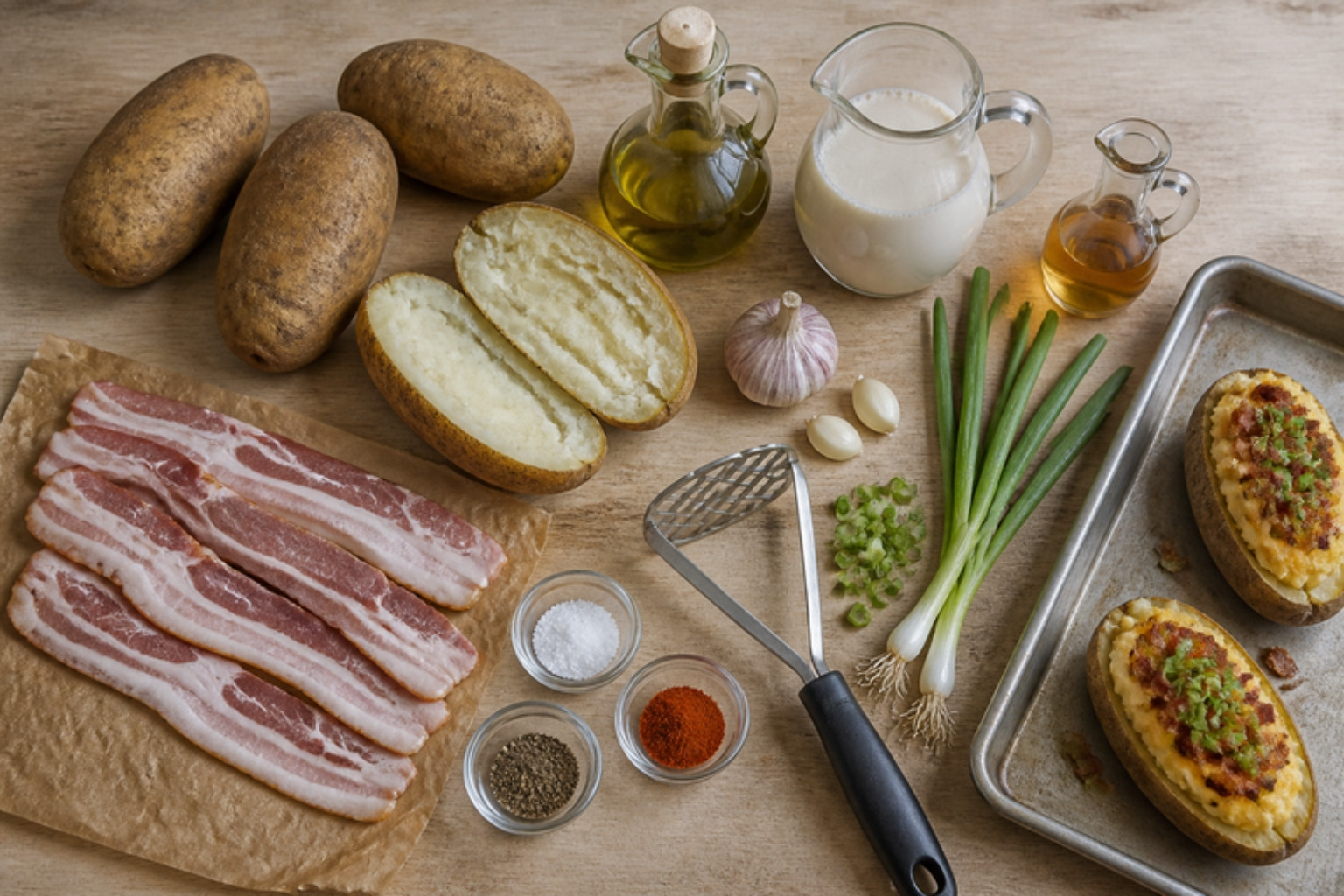
Twice-Baked Potatoes (No Cheese or Sour Cream)
Ingredients
Equipment
Method
- Heat the oven to 400°F (200°C). Prick each potato a few times with a fork, rub with 1 tbsp olive oil, and sprinkle with salt. Set directly on the oven rack (or on a sheet pan) and bake 55-70 minutes, until the skins are crisp and a paring knife slides into the center with no resistance.
- Meanwhile, cook the bacon in a skillet over medium heat until crisp and the fat has rendered, 8-10 minutes. Drain on paper towels, chop, and save 2 tbsp of the fat if you want to use it in the filling.
- Let the potatoes cool 10 minutes, just until you can handle them with a towel. Cut each in half lengthwise and scoop the flesh into a bowl, leaving a 1/4-inch (6 mm) wall so the shells hold their shape.
- Mash or rice the hot potato with 1/4 cup olive oil (or the oil and bacon fat), then stir in warm oat milk a splash at a time until creamy and soft but still able to hold peaks. Stir in the vinegar, garlic, salt, and pepper. Taste and adjust.
- Fold in most of the bacon and green onions, saving a little of each for the top. Spoon or pipe the filling into the shells, mounding it high. Set on a sheet pan, drizzle with 1 tbsp olive oil, and dust with smoked paprika.
- Bake at 400°F (200°C) for 20-25 minutes, until the tops are golden and crisp at the ridges and the filling is steaming hot. Sprinkle with the reserved bacon and green onions and serve.
Notes
Troubleshooting
- Filling is gluey. Overmixing (especially with a hand mixer or food processor) releases too much starch. Use a masher or ricer and stir gently.
- Shells collapse. Scoop with a spoon, not a knife, and leave a little more potato in the walls. A sheet pan with sides keeps them upright.
- Tops aren’t browning. Drizzle with a little more olive oil and move the pan to the upper third of the oven for the last 5 minutes.
- Bland filling. Potatoes need more salt than you expect. Taste the mash before filling and adjust salt and vinegar.
Make-Ahead, Freezing and Reheating
Refrigerator: fill the shells, cover, and refrigerate up to two days. Bake cold at 375°F (190°C) for 30 to 35 minutes, until the center of the filling reaches 165°F (74°C).
Freezer: freeze filled, unbaked halves on a sheet pan until solid, then wrap or bag them for up to two months. Bake from frozen at 375°F for 45 to 55 minutes, to 165°F in the center. Add the reserved bacon and green onions after baking.
Leftovers: refrigerate up to four days and reheat to 165°F.
Planning the rest of the menu? See all the sides on the Thanksgiving recipes page. If you’d rather skip the shells, the creamy dairy-free mashed potatoes use the same olive oil approach, and scalloped potatoes with no milk or cheese make a good Christmas dinner side.
FAQ
How do you make twice-baked potatoes without cheese?
Lean on fat, salt, and strong flavors: olive oil for richness, bacon for savory smokiness, garlic and green onions for bite, and smoked paprika on top. A little vinegar adds the tang cheese and sour cream usually bring.
Can I make twice-baked potatoes the day before?
Yes, up to two days ahead. Fill the shells, cover, and refrigerate, then bake them cold at 375°F until the filling reaches 165°F, about 30 to 35 minutes.
Can twice-baked potatoes be frozen?
They freeze well before the second bake. Freeze them on a tray until firm, then bag them for up to two months and bake from frozen.
Can I add dairy-free cheese?
Many dairy-free cheeses are made with coconut oil, cashews, soy, or seed oils, so the made-without list would change depending on the brand. This recipe was written to stand on its own without one.
A note before you cook: These recipes are ideas and suggestions, not medical or dietary advice. As with any recipe or ingredient, it is each reader’s responsibility to confirm what they can and cannot eat, read every ingredient label, and source quality ingredients that fit their own needs. Ingredient formulations change, so always check the package you’re using.