
Almost every classic acorn squash recipe starts the same way: cut it in half and drop a big pat of butter into each cavity with a spoonful of brown sugar. If butter is off the table at your house, that can leave you wondering how to get the same glossy, caramelized result. The answer is olive oil and a little technique. Roasted acorn squash with brown sugar is one of the easiest fall sides you can make, and it doesn’t need butter to taste rich.
Instead of baking halves, this recipe cuts the squash into wedges along its natural ridges. More cut surface means more browning. The wedges roast in extra-virgin olive oil until golden underneath, then get brushed with a warm brown sugar, maple, and cinnamon glaze and go back into the oven until it bubbles. The result is tender, sweet squash with caramelized edges, ready for a weeknight dinner or the Thanksgiving table, and it’s made without the top nine allergens.
Made without: peanuts, tree nuts, milk, eggs, wheat, soy, fish, shellfish, sesame.
Why You’ll Love This Recipe
- Caramelized, glossy squash with no butter.
- Wedges roast faster and brown better than halves.
- Only one sheet pan and a handful of pantry ingredients.
- No peeling: acorn squash skin softens enough to eat once roasted.
How It Works Without Butter
Butter does two things in a classic recipe: it adds fat for browning and richness, and it melts with the brown sugar into a syrupy glaze. Olive oil handles both. Roasting the oiled wedges cut-side down against a hot pan browns their surfaces before any sugar goes on, so the glaze doesn’t burn before the squash is tender. Warming the brown sugar with maple syrup, a spoonful of olive oil, and a splash of cider vinegar makes a loose glaze that brushes on evenly and thickens as it bubbles. The vinegar keeps the sweetness from tasting flat, the way the slight tang of butter does. Extra-virgin olive oil adds a gentle fruitiness that suits squash.
Ingredients and Swap Ideas
- Acorn squash (2 medium, about 1 1/2 lb / 680 g each): choose squash that feel heavy for their size, with dull, dark green skin and a dry stem. A patch of orange on one side is normal.
- Extra-virgin olive oil (3 tbsp / 45 ml total): for roasting and the glaze. Bacon fat makes a savory version. Skip butter substitutes, which are usually made with seed oils, and cooking spray.
- Brown sugar (3 tbsp / 40 g): light or dark. Dark brown sugar gives a deeper molasses flavor.
- Pure maple syrup (1 tbsp / 15 ml): real maple syrup, not pancake syrup. You can use all maple syrup instead of brown sugar for a thinner, less sweet glaze.
- Cinnamon and nutmeg: single spices rather than a blend, so you know what’s in them. A pinch of cayenne balances the sweetness.
- Other squash: the same method works for carnival or sweet dumpling squash. Butternut squash should be peeled and cubed instead.
Kitchen Equipment
- A rimmed baking sheet, brushed with olive oil.
- A large, sharp chef’s knife and a kitchen towel to steady the squash.
- A small saucepan or microwave-safe bowl for the glaze, and a pastry brush.
Step-by-Step Tips
- Cut safely. Set the squash on a damp towel so it won’t roll. Trim a thin slice off the stem end to create a flat base, then cut down through the middle. If it’s very hard, microwave the whole squash for 2 minutes to soften the skin.
- Slice along the ridges. The grooves show you where to cut, and each half makes 4 even wedges.
- Give them space. Crowded wedges steam. Leave a little room between pieces.
- Brown first, glaze second. Roast cut-side down for 20 minutes before any sugar goes on.
- Check for doneness by feel. The glaze should bubble and the tip of a knife should slide into the thickest part with no resistance.
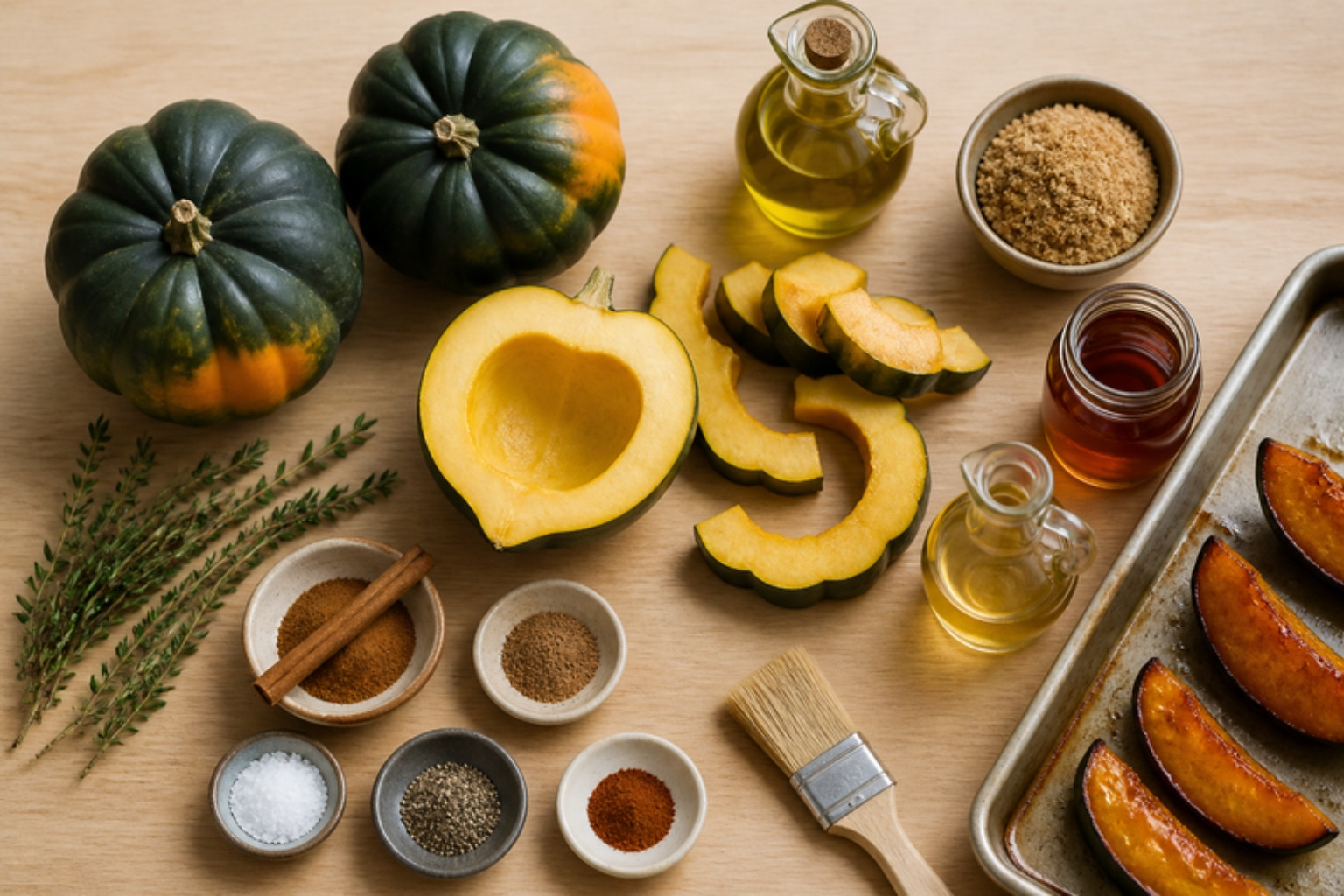
Roasted Acorn Squash with Brown Sugar, No Butter
Ingredients
Equipment
Method
- Heat the oven to 400°F (200°C) with a rack in the middle. Brush a rimmed baking sheet with olive oil.
- Set each squash on a towel so it doesn’t roll. Trim a thin slice off the stem end, then cut lengthwise through the center. Scoop out the seeds and strings and discard them.
- Lay each half cut-side down and slice along the ridges into 4 wedges. Toss the wedges with 2 tablespoons olive oil, the salt, and the pepper.
- Arrange the wedges cut-side down on the baking sheet with space between them. Roast 20 minutes, until the undersides are golden brown and a knife meets only slight resistance.
- Meanwhile, warm the brown sugar, maple syrup, 1 tablespoon olive oil, vinegar, cinnamon, nutmeg, and cayenne in a small saucepan over low heat (or 20 seconds in the microwave), stirring until the sugar melts into a loose glaze.
- Flip the wedges skin-side down and brush the glaze generously over the cut sides. Roast 10 to 15 minutes more, until the glaze bubbles and turns glossy at the edges and a knife slides easily into the thickest part.
- Spoon any glaze from the pan back over the squash, sprinkle with thyme, and serve warm. The skin is edible once roasted, or scoop the flesh away from it.
Notes
Troubleshooting and Tips
- Glaze burning: your oven runs hot, or the wedges are thin. Lower the heat to 375°F for the glazed stage and check at 8 minutes.
- Squash still firm: large squash can need 5 to 10 minutes more. Tent the wedges loosely with foil if the glaze is already dark.
- Pale wedges: the pan wasn’t oiled, or the wedges were turned too early. Leave them cut-side down for the full first roast.
- Make it savory: skip the sugar and maple, and toss the roasted wedges with olive oil, garlic, thyme, and a pinch of smoked paprika.
Storage, Freezing and Reheating
Refrigerate leftovers in a covered container for up to 4 days. Reheat the wedges on a baking sheet at 375°F for 10 to 12 minutes, until hot and the glaze loosens. Leftovers also make a quick mash: scoop the flesh from the skin and mash with a splash of olive oil and a pinch of salt. Freezing isn’t recommended for roasted wedges because the texture turns watery, but mashed squash freezes well for up to 3 months. For Thanksgiving, you can cut the squash a day ahead and refrigerate the wedges, then roast just before dinner.
More Fall Sides
If you like this, try our maple roasted delicata squash rings, which roast even faster, or the cider-glazed roasted carrots and parsnips. Planning the big meal? Browse every side, pie, and main on our Thanksgiving recipes page.
FAQ
Can you eat the skin of acorn squash?
Yes. Once roasted, acorn squash skin is tender enough to eat, especially on smaller squash. If you prefer, scoop the flesh away from the skin as you eat.
How do I know when acorn squash is done?
A knife should slide into the thickest part of a wedge with no resistance, and the edges should be browned and caramelized. Undercooked acorn squash tastes starchy and bland.
Can I roast acorn squash halves instead of wedges?
Yes. Roast oiled halves cut-side down for 30 minutes, flip, spoon the glaze into the cavities, and roast 15 to 20 minutes more, until tender. Halves look classic, but wedges brown more evenly.
What can I do with the seeds?
This recipe discards them. Some cooks roast squash seeds like pumpkin seeds, but seeds are a concern for some families, so they aren’t part of this dish.
A note before you cook: These recipes are ideas and suggestions, not medical or dietary advice. As with any recipe or ingredient, it is each reader’s responsibility to confirm what they can and cannot eat, read every ingredient label, and source quality ingredients that fit their own needs. Ingredient formulations change, so always check the package you’re using.