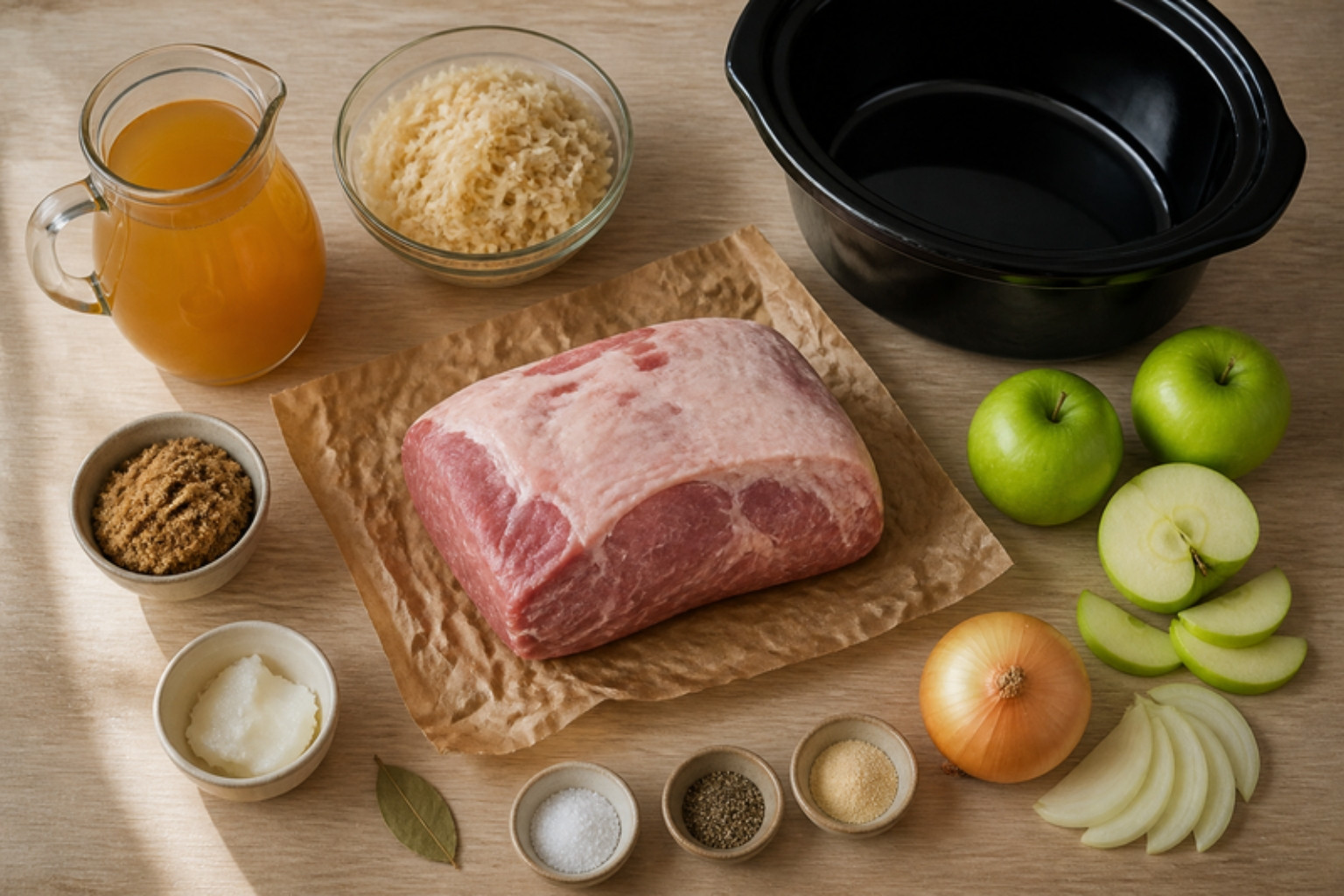
Ingredients
Equipment
Method
- Pat the pork dry and season all over with the salt, pepper, and garlic powder.
- Heat the lard in a large skillet over medium-high heat until it shimmers. Sear the pork 3 to 4 minutes per side, until deeply browned. Don't move the pieces until they release on their own.
- While the pork sears, taste the drained sauerkraut. If it tastes very sharp or salty, rinse it briefly in a colander and squeeze it dry.
- Spread half the sauerkraut in the slow cooker. Top with half the onion and half the apples, then the seared pork. Cover with the remaining onion, apples, and sauerkraut, and sprinkle with the brown sugar.
- Pour off the excess fat from the skillet, add the cider, and scrape up the browned bits over medium heat for 1 minute. Pour the cider over the sauerkraut and tuck in the bay leaf.
- Cover and cook on LOW 8 to 9 hours or HIGH 5 to 6 hours, until the pork pulls apart easily with a fork. Pork is safe at 145°F, but shoulder needs to reach about 195°F to turn tender.
- Remove the bay leaf. Break the pork into large chunks, stir it gently into the sauerkraut and apples, and serve with plenty of the juices.
Notes
Made without: milk, eggs, wheat, soy, peanuts, tree nuts, fish, shellfish, sesame.
Label check: sauerkraut (cabbage and salt only; many brands add caraway seed, wine, or preservatives), pork shoulder (plain, not enhanced), garlic powder, lard (pure), apple cider (not hard cider). If you add smoked sausage or kielbasa, read the label carefully: many contain dry milk, soy, mustard, wheat fillers, or corn syrup solids.
Seeds: traditional recipes often add caraway seed. It is left out here; add 1 teaspoon if it suits your table.
Fat: lard or bacon fat for searing; extra-virgin olive oil works too. Skip vegetable oil.
Food safety: cook pork to at least 145°F; reheat leftovers to 165°F. See the USDA safe temperature chart.
Storage: refrigerate up to 4 days; freeze up to 3 months with the juices. Reheat covered on the stove or in a 325°F oven.
Nutrition is an automated estimate.
