
If you’ve cooked a turkey without butter under the skin or a store-bought injection, you know the worry: will the breast come out dry? Many brine kits and pre-seasoned birds carry flavorings, broth powders or added solutions you’d have to check. This turkey brine recipe keeps it simple: apple cider, kosher salt, a little brown sugar, citrus, garlic and a handful of fresh sage, thyme and rosemary. An overnight soak seasons the meat all the way through and helps it hold on to its juices, so an olive oil rub is all the bird needs afterward.
Quick answer: For a 12–16 lb turkey, dissolve 2 cups Diamond Crystal kosher salt (or 1 cup + 2 tbsp Morton) and 1/2 cup brown sugar in 2 quarts simmering water with herbs, garlic and citrus. Cool it with 1 gallon cold apple cider and 2 quarts ice water, then brine the turkey 12–18 hours in the fridge, pat dry and air-dry before cooking.
Made without: peanuts, tree nuts, milk, eggs, wheat, soy, fish, shellfish, sesame.
Why You’ll Love This Turkey Brine
- Seasoned, juicy meat from the breast to the thigh, with no butter or injection.
- Gentle apple sweetness and a warm herb aroma that carries into the pan drippings.
- Pantry ingredients and one pot. The brine is made the day before you need it.
- Works for oven-roasted, smoked or spatchcocked turkey, and for a turkey breast (halve the brine).
- An overnight schedule that leaves your oven free on brining day.
Ingredients and Swap Ideas
- Kosher salt, 2 cups Diamond Crystal (256 g) or 1 cup + 2 tbsp Morton (270 g). The two brands measure very differently by volume, so weigh it if you can. Don’t swap table salt cup for cup; it’s much saltier by volume.
- Apple cider, 1 gallon (3.8 L), cold. Plain cider with no added flavorings. Unfiltered gives the most apple flavor. Apple juice works but is sweeter; cut the brown sugar to 1/4 cup.
- Light brown sugar, 1/2 cup (100 g). Helps browning. Maple syrup or white sugar work too.
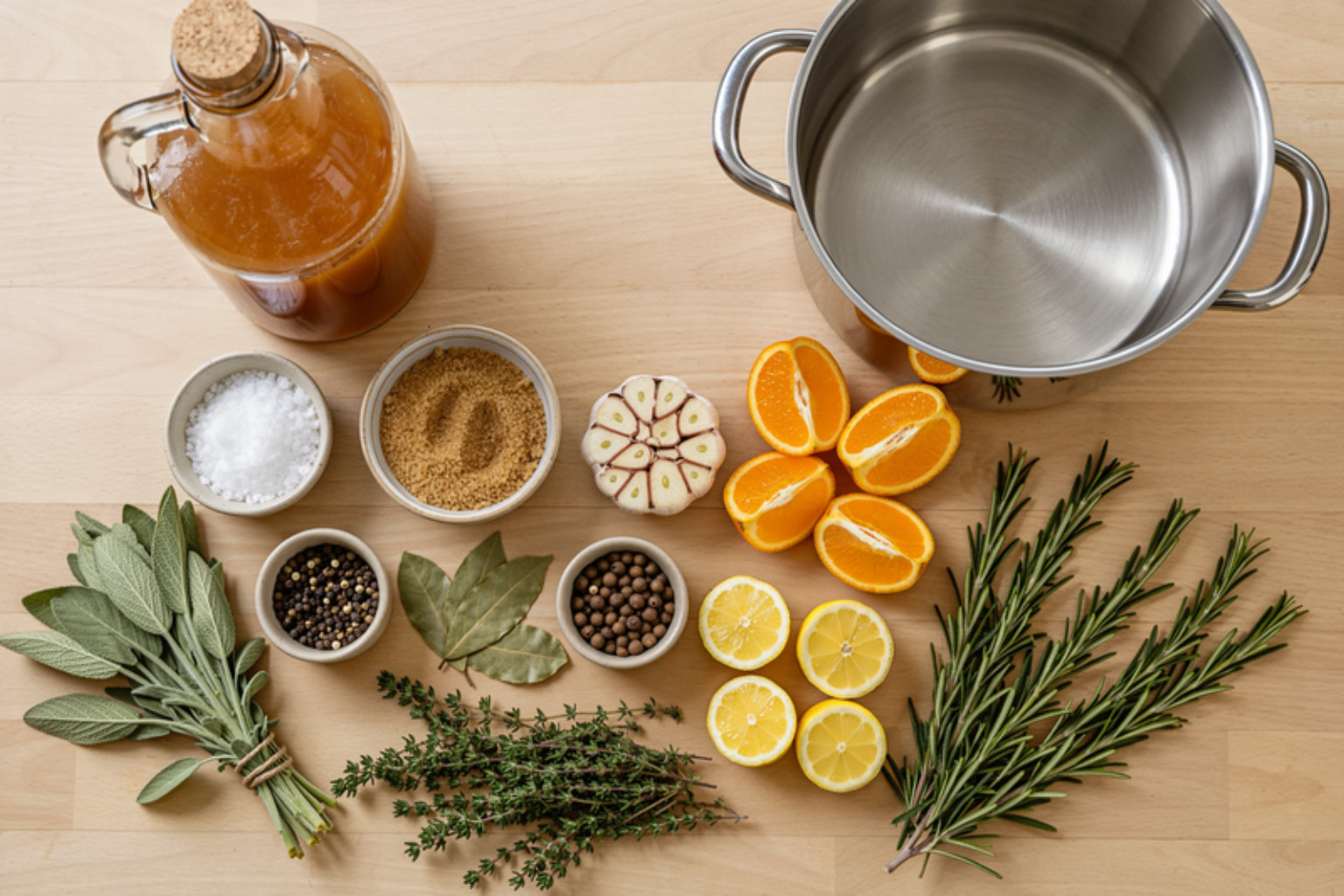
- Aromatics: 1 head garlic, 1 orange, 1 lemon, 2 tbsp black peppercorns, 6 bay leaves, optional allspice berries, and a small bunch each of fresh sage and thyme plus 3 rosemary sprigs. Dried herbs work in a pinch (1 tbsp each sage and thyme).
- Water and ice, 2 quarts each (1.9 L each). Cold water in the concentrate only needs to dissolve the salt; the ice and cold cider bring it down to fridge temperature fast.
- Turkey, 12–16 lb (5.4–7.3 kg), fully thawed. Check the label: skip birds marked pre-brined, kosher, self-basting or “contains up to X% solution,” which are already salted.
For cooking after brining, rub the skin with extra-virgin olive oil or melted duck fat. No butter, plant butter or cooking spray needed.
Kitchen Equipment
- Stockpot of at least 8 quarts (7.5 L)
- Turkey brining bag, or a food-safe 5-gallon container with a lid
- Fridge space, or a cooler with ice packs and a fridge thermometer
- Rimmed sheet pan with a wire rack for air-drying
- Instant-read thermometer for the finished bird
How to Brine a Turkey, Step by Step
- Make the concentrate. Combine the water, salt, brown sugar, garlic, squeezed citrus quarters, peppercorns, allspice, bay leaves and herbs in the stockpot. Bring to a simmer, stirring, until the salt and sugar dissolve and the liquid turns clear, about 5 minutes.
- Steep. Turn off the heat and let it sit 10 minutes, until the kitchen smells of citrus and sage.
- Chill. Pour in the cold cider, then the ice and water, and stir until the ice melts. Check with a thermometer: the brine should be 40°F (4°C) or colder. If it isn’t, refrigerate it before adding the turkey.
- Submerge the turkey. Put the bird breast side down in the bag or container, pour in the brine with all the aromatics, press out the air and seal. The turkey should be fully covered; top up with cold water if needed.
- Brine 12–18 hours in the fridge, no more than 24. In a cooler, keep the sealed bag surrounded by ice packs and check that the brine stays at 40°F (4°C) or below.
- Drain and dry. Lift out the turkey and discard the brine. Skip rinsing; just pat the bird very dry inside and out.
- Air-dry for crisp skin. Set the turkey on a rack over a sheet pan and refrigerate uncovered 8–24 hours, until the skin looks dry and slightly papery.
- Cook. Rub with olive oil and roast, smoke or spatchcock, leaving out any extra salt in your rub. The turkey is done when the thickest part of the breast and the innermost thigh both read 165°F (74°C), per the USDA safe temperature chart. Brined skin browns faster, so tent with foil if it darkens early.
Apple Cider and Herb Turkey Brine
Ingredients
Equipment
Method
- Put the water, salt, brown sugar, garlic, orange, lemon (squeeze the citrus as it goes in), peppercorns, allspice, bay leaves, sage, thyme and rosemary in a large stockpot. Bring to a simmer over medium-high heat, stirring until the salt and sugar dissolve completely and the liquid turns clear, about 5 minutes.
- Take the pot off the heat and let the aromatics steep 10 minutes. The kitchen should smell strongly of citrus and sage.
- Pour in the cold apple cider, then the ice and cold water. Stir until the ice melts. The brine must be 40°F (4°C) or colder before the turkey goes in; refrigerate it if it isn’t.
- Set a brining bag inside a 5-gallon container (or use the container alone). Put the turkey in breast side down, pour the cold brine over it with all the aromatics, and press out the air so the bird is fully submerged. Add a little cold water if needed.
- Seal and refrigerate 12–18 hours (no more than 24). If you use a cooler, surround the bag with ice packs and check that the brine stays at 40°F (4°C) or below; add ice packs as needed, not loose ice that dilutes the brine.
- Lift the turkey out and discard the brine. Don’t rinse the bird; pat it very dry inside and out with paper towels.
- Set the turkey on a rack over a rimmed sheet pan and refrigerate uncovered 8–24 hours. The skin should look dry and slightly papery, which helps it brown and crisp.
- Roast, smoke or spatchcock the turkey with your usual recipe, but leave out any extra salt in the rub. Cook until the thickest part of the breast and the innermost thigh both read 165°F (74°C) on an instant-read thermometer. Brined birds brown faster, so tent with foil if the skin darkens early.
Notes
Troubleshooting and Tips
- Turkey too salty? It was likely a pre-salted (“enhanced”) bird, table salt was used, or it brined past 24 hours. Next time check the label and weigh the salt.
- Pale or rubbery skin? Give it the full uncovered air-dry, and pat away any moisture right before it goes in the oven.
- Bird floats? Set a heavy plate or a sealed zip-top bag of brine on top to keep it under.
- Salty gravy? Brined drippings carry salt. Make the gravy, taste, then season. Our make-ahead turkey gravy lets you season it before the drippings go in.
How to Cook a Brined Turkey
Any whole-turkey method works. For the oven, follow our classic roast turkey without butter and skip its dry-brine salt step. For the smoker, use the herb rub and wood from our smoked turkey, again leaving out the salt. For the rest of the menu, browse the Thanksgiving recipes hub.
Make-Ahead and Storage
- Brine: make it up to 2 days ahead and keep it covered in the fridge until you add the turkey.
- Timeline for a Thursday dinner: make the brine Tuesday afternoon, brine Tuesday night to Wednesday morning, air-dry Wednesday into Thursday, roast Thursday.
- Used brine: discard it; never reuse brine that held raw poultry.
- Leftover turkey: refrigerate within 2 hours in airtight containers up to 4 days, or freeze up to 3 months. Reheat to 165°F (74°C).
Turkey Brine FAQ
How long should I brine a turkey?
For this brine, 12–18 hours for a 12–16 lb turkey, and no more than 24. A bone-in turkey breast needs 6–8 hours in half a batch.
Do you rinse a turkey after brining?
No. At this salt level the surface isn’t overly salty, and rinsing raw poultry splashes juices around the sink. Pat it dry instead.
Is a wet brine or a dry brine better?
Both season the meat. A wet brine like this adds flavor from the cider and herbs and gives a little extra juiciness; a dry brine takes less fridge space and gives slightly crisper skin. The air-dry step here closes most of that gap.
Can I brine a frozen turkey?
Thaw it fully in the fridge first (about 1 day per 4–5 lb). A partly frozen bird won’t absorb the brine evenly.
Can I use this brine for chicken or pork?
Yes. Use half a batch for a whole chicken (4–8 hours) or thick pork chops (2–4 hours).
A note before you cook: These recipes are ideas and suggestions, not medical or dietary advice. As with any recipe or ingredient, it is each reader’s responsibility to confirm what they can and cannot eat, read every ingredient label, and source quality ingredients that fit their own needs. Ingredient formulations change, so always check the package you’re using.
Leave a Reply