
Most soft dinner rolls get their richness from eggs, milk and a stick of butter, which is why so many families who skip those end up with rolls that are dry by the second day. Sweet potato rolls fix that problem the old Southern way: a cup of mashed sweet potato goes into the dough, bringing moisture, natural sugar and a soft golden crumb that stays tender without any eggs or dairy. These are pillowy, pull-apart rolls with a gentle sweetness and a glossy maple top, made for the Thanksgiving bread basket.
The short answer: To make sweet potato rolls without eggs or butter, mix 1 cup mashed roasted sweet potato with warm oat milk, yeast, brown sugar, light olive oil, salt and about 4 cups of flour. Knead, let rise until doubled, shape 16 balls in a 9×13 pan, rise again and bake at 375°F for 20 to 24 minutes.
Made without: peanuts, tree nuts, milk, eggs, soy, fish, shellfish, sesame. Contains: wheat.
Why You’ll Love These Rolls
- Soft and moist for days: sweet potato holds water in the crumb, so the rolls don’t stale as fast as plain lean rolls.
- No eggs, milk or butter, and no egg replacer. The sweet potato does the work.
- A warm orange-gold color and a light, earthy sweetness that suits turkey, ham and gravy.
- Shape them the night before and bake on the holiday morning, or freeze baked rolls weeks ahead.
How Sweet Potato Replaces Eggs and Butter
In an enriched dough, eggs and milk add moisture and tenderness, and butter coats the gluten so the crumb stays soft. Mashed sweet potato is mostly water and starch: its starch holds moisture through baking and cooling, and its sugars help the crust brown. A quarter cup of light-tasting olive oil does the tenderizing job of butter. (Light-tasting olive oil is refined olive oil with a mild flavor, not lower in calories.) The result is a dough that’s soft and slightly tacky, which is exactly what you want.
Ingredients and Swap Ideas
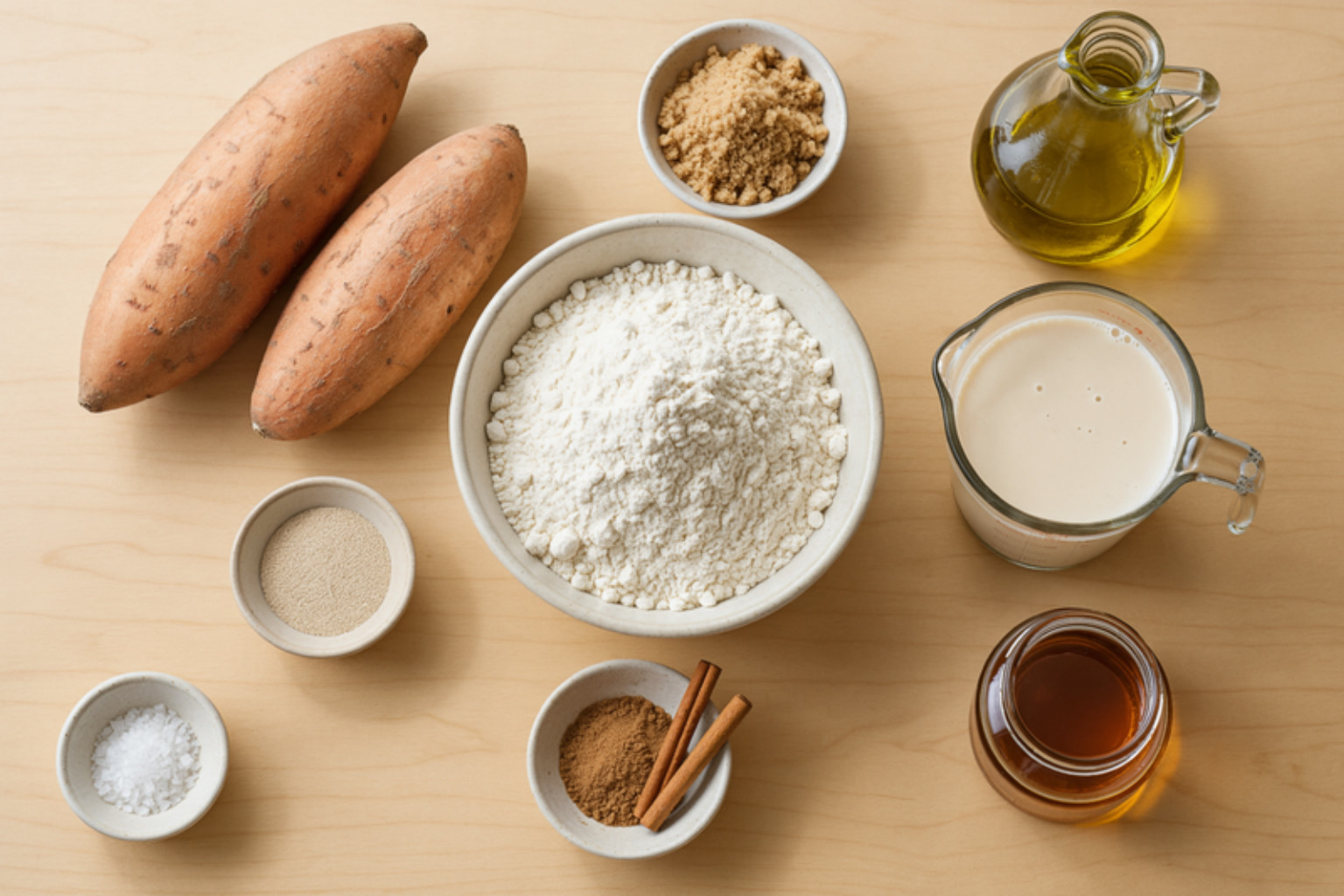
- Mashed sweet potato, 1 cup (240 g): Roasting gives a drier, sweeter mash than boiling. Canned sweet potato (not in syrup) works if you drain it well; you may need 2 to 4 extra tablespoons of flour. Let it cool to lukewarm so it doesn’t harm the yeast.
- Oat milk with no added oil, 1/2 cup (120 ml): Many plant milks contain canola or sunflower oil, so check the label. Water works too; the rolls will be a touch less tender.
- Yeast: Instant or active dry, one 7 g packet. Warm the liquid to 105–110°F; hotter liquid can kill the yeast.
- Light-tasting olive oil, 1/4 cup: Melted lard is a good swap for a richer, more Southern roll. Skip plant butter and shortening.
- Flour: All-purpose gives the softest roll; bread flour makes them a little taller and chewier. This recipe contains wheat and isn’t written for gluten-free flour. For a wheat-free bread basket, try our sweet potato biscuits made with rice and oat flour.
- Brown sugar and spice: Honey or maple syrup can replace the brown sugar. A pinch of nutmeg or cinnamon is optional.
Kitchen Equipment
- 9×13-inch (23×33 cm) metal or glass baking pan
- Large bowl, or a stand mixer with a dough hook
- Instant-read thermometer for the liquid and for doneness
- Pastry brush and a kitchen scale for even rolls
How to Make Sweet Potato Rolls
- Roast and mash. Roast a large sweet potato at 400°F until a knife slides through with no resistance, 45 to 60 minutes. Mash until smooth, measure 1 cup, and cool to lukewarm.
- Wake the yeast. Stir the warm oat milk, brown sugar and yeast together. Active dry yeast should look foamy after 5 to 10 minutes.
- Mix. Add the sweet potato, olive oil, salt and spice, then 3 1/2 cups of flour, and stir into a shaggy dough.
- Knead. Knead 8 to 10 minutes by hand, adding flour a tablespoon at a time, until the dough is smooth, soft and only slightly tacky. A small piece should stretch thin enough to see light through. Too much flour makes dense rolls, so stop when it no longer sticks to clean hands.
- First rise. Cover in an oiled bowl until doubled, 1 to 1 1/2 hours. A floured finger poked into the dough should leave a dent that springs back slowly.
- Shape. Divide into 16 pieces of about 55 g. Cup each under your palm and roll on the counter into a tight, smooth ball, then set in the oiled pan in 4 rows of 4.
- Second rise. Cover until the rolls are puffy and touching, 45 to 60 minutes. Heat the oven to 375°F.
- Bake and glaze. Bake 20 to 24 minutes, until deep golden and 190°F in a center roll. Brush with the maple-olive oil glaze right away and cool 10 minutes.
Sweet Potato Rolls, No Eggs, Dairy-Free
Ingredients
Equipment
Method
- Roast the sweet potato at 400°F (200°C) until very soft, 45 to 60 minutes. Scoop out the flesh, mash until smooth, measure 1 cup and let it cool to lukewarm.
- Stir the warm oat milk, brown sugar and yeast together in a large bowl. If using active dry yeast, wait 5 to 10 minutes until foamy.
- Add the sweet potato, olive oil, salt and spice and mix well. Add 3 1/2 cups (440 g) flour and stir into a shaggy dough.
- Knead 8 to 10 minutes by hand (5 to 6 minutes with a dough hook), adding flour a tablespoon at a time, until the dough is smooth, soft and only slightly tacky and a small piece stretches thin without tearing.
- Place in an oiled bowl, cover and let rise in a warm spot until doubled, 1 to 1 1/2 hours.
- Oil the 9×13 pan. Divide the dough into 16 pieces (about 55 g each), roll each into a smooth ball and set them in the pan in 4 rows of 4.
- Cover and let rise until puffy and touching, 45 to 60 minutes. Heat the oven to 375°F (190°C) while they rise.
- Bake 20 to 24 minutes, until deep golden on top and 190°F (88°C) in the center of a middle roll.
- Stir the olive oil and maple syrup together and brush over the hot rolls. Sprinkle with flaky salt if you like. Cool 10 minutes before pulling apart.
Notes
Troubleshooting and Tips
- Dense rolls: Usually too much flour or a short rise. Sweet potato dough should feel softer than plain bread dough; let the rolls rise until clearly puffy, not just a little bigger.
- Dough won’t rise: The liquid or the sweet potato was too hot, or the yeast was old. Move the bowl to a warmer spot, such as an oven with only the light on.
- Browning too fast: The sugar in sweet potato browns quickly. Tent loosely with foil for the last 5 minutes.
- Gummy centers: Bake to 190°F inside, not by color alone.
Make-Ahead, Storage and Freezing
- Overnight: Shape the rolls, cover and refrigerate up to 18 hours. Let the pan sit out 60 to 90 minutes until puffy, then bake.
- Room temperature: Keep baked rolls in an airtight bag for 2 days.
- Freezer: Freeze baked, cooled rolls up to 3 months. Rewarm wrapped in foil at 325°F for 10 to 15 minutes.
- Sweet potato: Roast and mash it up to 3 days ahead and refrigerate; warm it slightly before mixing.
Want a plainer roll too? Our soft dinner rolls without eggs or dairy use the same make-ahead plan. Serve these with mashed potatoes without milk or butter, and find the rest of the menu on the Thanksgiving recipes page.
Sweet Potato Rolls FAQ
Can you make yeast rolls without eggs?
Yes. Many classic yeast doughs never had eggs. Here, mashed sweet potato and olive oil provide the moisture and tenderness eggs usually add, with no egg replacer needed.
Can I use canned sweet potatoes for rolls?
Yes. Use plain canned sweet potato or yam, not the kind packed in syrup, drain it well and mash it smooth. Canned is wetter than roasted, so add a few extra tablespoons of flour while kneading.
Why are my sweet potato rolls dense?
The usual causes are too much flour or not enough rising time. Keep the dough soft and slightly tacky, and let the shaped rolls rise until they’re puffy and touching before baking.
Can I make sweet potato rolls the night before?
Yes. Shape them in the pan, cover and refrigerate up to 18 hours. In the morning, let them warm up and puff for 60 to 90 minutes, then bake as usual.
A note before you cook: These recipes are ideas and suggestions, not medical or dietary advice. As with any recipe or ingredient, it is each reader’s responsibility to confirm what they can and cannot eat, read every ingredient label, and source quality ingredients that fit their own needs. Ingredient formulations change, so always check the package you’re using.
Leave a Reply