
Soft caramels are one of the most-requested Christmas candies, and one of the hardest to find without dairy: the classic recipe is basically butter, heavy cream, and sugar cooked together, and store-bought caramels list milk near the top of the label. This version cooks a full can of coconut milk with brown sugar and a little syrup until it thickens into a deep amber caramel that sets soft and chewy. A pinch of flaky salt on top and a twist of wax paper turn them into a gift.
The flavor is rich brown sugar and vanilla with a gentle coconut note in the background. They melt slowly, pull like a good chewy caramel, and keep for weeks, so you can make a batch now and pack candy tins later. You’ll need a candy thermometer and about 40 minutes of stirring; the rest is waiting.
Made without: peanuts, tree nuts, milk, eggs, wheat, soy, fish, shellfish, sesame. Contains coconut.
Why You’ll Love These Caramels
- Soft and chewy, with deep brown sugar flavor.
- No butter, cream, or sweetened condensed milk.
- Seven ingredients, one pot.
- A make-ahead candy that keeps for two weeks at room temperature.
- Wrapped caramels look lovely in tins, jars, and cookie boxes.
How Caramels Work Without Butter or Cream
Cream does two jobs in caramel: its milk proteins brown with the sugar and give that toasty caramel flavor, and its fat keeps the candy soft and chewy instead of glassy. Full-fat coconut milk covers both. It has enough fat to keep the texture smooth, and enough protein and sugar to brown as it cooks down. A small amount of coconut oil adds extra richness in place of the butter.
Corn syrup is there for texture, not sweetness. It interferes with sugar crystals, which keeps the caramels smooth instead of grainy. The final temperature decides the chew: at 245 to 248°F, the caramel is cooked to the firm-ball stage, so it holds a square shape but still yields when you bite it.
Ingredients and Swap Ideas
- Full-fat coconut milk: canned, not the drinking kind in a carton, and not “light.” Shake the can well. Check that the ingredients don’t include added oils.
- Brown sugar and granulated sugar: brown sugar adds a molasses depth; using all brown sugar makes darker, softer caramels.
- Light corn syrup: golden syrup works the same way. Pure maple syrup adds flavor but makes the caramels softer and more likely to crystallize.
- Refined coconut oil: neutral and firm at room temperature. You can leave it out for a slightly leaner caramel. Skip butter substitutes, which are usually made with seed oils.
- Flavor ideas: add 1/2 teaspoon cinnamon with the vanilla, or stir in 1/4 teaspoon peppermint extract for a holiday version.
Equipment
- Heavy 3- to 4-quart saucepan (it foams up)
- Candy or instant-read thermometer
- 8×8-inch pan lined with parchment
- Heatproof spatula and a sharp knife
- Wax paper cut into 4-inch squares
Step-by-Step Tips
- Test your thermometer. Clip it into boiling water. If it reads 210°F instead of 212°F, aim 2 degrees lower than the recipe says.
- Dissolve, then boil. Stir until the sugar dissolves before the mixture boils, so grains don’t form on the sides.
- Keep stirring. Coconut milk can scorch on the bottom. Stir often and scrape the corners, especially in the last 10 minutes.
- Watch the color and bubbles. Near the target temperature, the bubbles get smaller and slower and the color turns deep amber.
- Pour, don’t scrape. Any sugar stuck to the pan bottom can be grainy, so leave it behind.
- Cut clean. Rub a little coconut oil on the knife and press straight down.
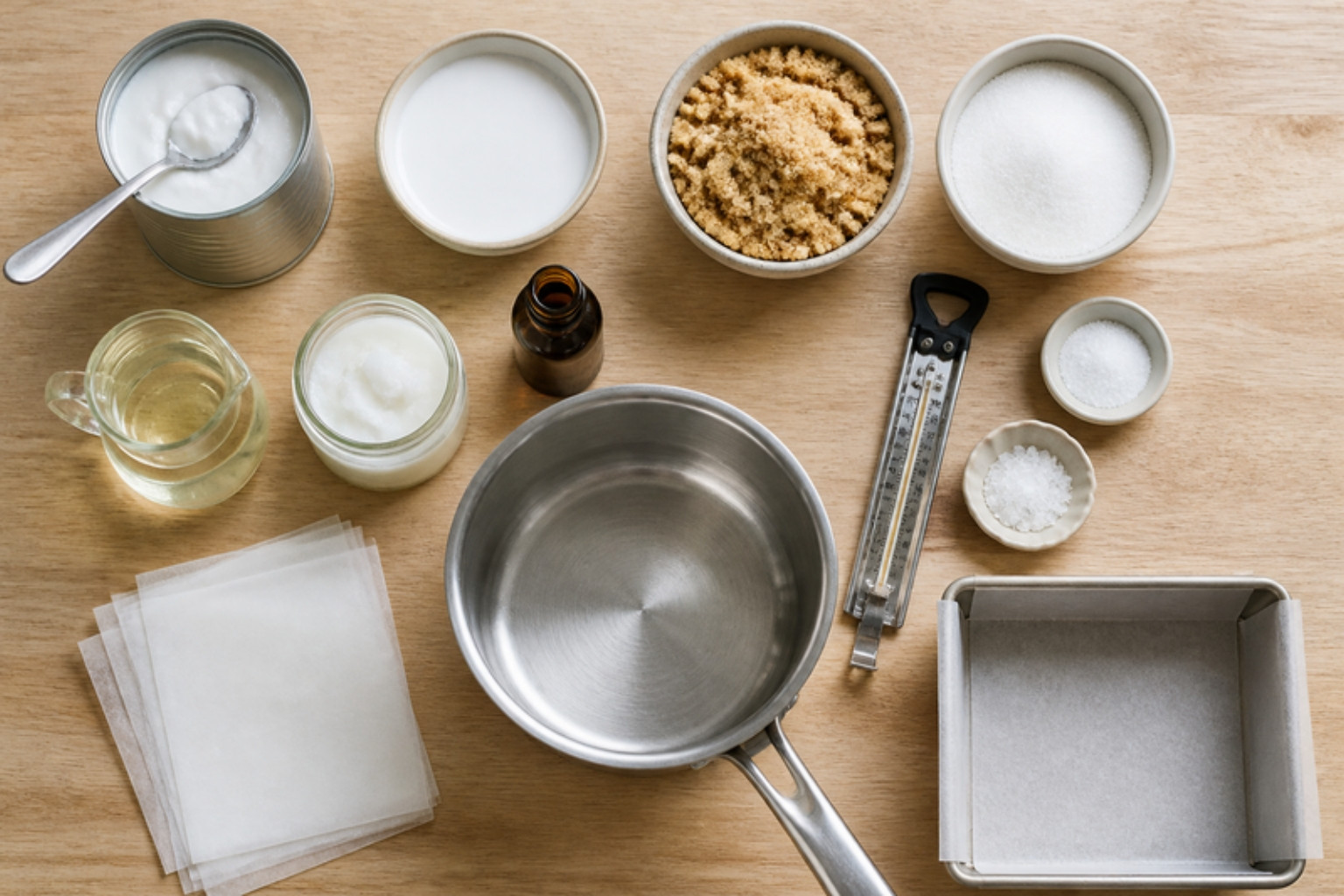
Soft Coconut Milk Caramels
Ingredients
Equipment
Method
- Line an 8×8-inch pan with parchment, leaving an overhang on two sides, and rub the parchment lightly with coconut oil. Check your thermometer in boiling water and note the reading; the target below assumes 212°F (100°C).
- In the heavy saucepan, combine the coconut milk, brown sugar, granulated sugar, corn syrup, coconut oil, and fine salt. Stir over medium heat until the sugar dissolves and the mixture comes to a boil.
- Clip on the thermometer. Boil, stirring often and scraping the bottom and corners, until it reaches 245 to 248°F (118 to 120°C), 30 to 40 minutes. It will foam, then settle into thick, slow bubbles and darken to a deep amber. Lower the heat a little if it scorches on the bottom.
- Remove from the heat and carefully stir in the vanilla; it will sputter. Pour into the prepared pan without scraping the pan bottom.
- Let cool 20 minutes, sprinkle with flaky salt, then leave at room temperature until firm, at least 3 hours or overnight.
- Lift out with the parchment and cut into 1-inch squares with a lightly oiled knife. Wrap each in wax paper, twisting the ends.
Notes
Troubleshooting
- Caramels won’t hold their shape: they didn’t reach temperature. Scrape them back into the pan with 2 tablespoons of water, bring back to a boil, and cook to 248°F.
- Too hard: they went past 250°F. Use them as hard caramels, or remelt with 1/4 cup coconut milk and cook to a lower temperature.
- Grainy texture: sugar crystals formed. Make sure the sugar dissolves before boiling and don’t scrape the pan when pouring.
- Oily surface: the coconut fat separated, usually from cooking too hot. Blot with a paper towel; the caramels are still fine to eat.
Make-Ahead, Freezing, and Gifting
Wrap each caramel in wax paper and twist the ends; unwrapped caramels slump and stick together. Store them in a tin or airtight container at cool room temperature for up to 2 weeks, or in the fridge for up to a month (let them warm up before eating so they’re soft). To freeze, pack wrapped caramels in a sealed container for up to 3 months and thaw them without opening the container so condensation doesn’t make them sticky. For gifts, fill a small jar or tin with 15 to 20 wrapped caramels and tie on a tag that lists the ingredients, including the coconut.
More Christmas Candy
Browse the Desserts and Candy aisle on our Christmas recipes page. If you like coconut milk caramel, try the millionaire shortbread bars or the dairy-free caramel apples. For a mixed candy tin, add old-fashioned fudge and maple sugar candy.
FAQ
Do these caramels taste like coconut?
A little. The brown sugar and vanilla come through first, with a mild coconut flavor in the background.
Can I make caramels without a thermometer?
You can use the cold-water test: a drop of caramel in ice water should form a firm ball that flattens slightly when pressed. A thermometer is much more reliable.
Can I use coconut cream?
Yes, use the same amount. The caramels will be richer and may release a little more fat as they cook.
How do I make caramel sauce instead?
Stop cooking at about 225°F (107°C). It will stay pourable once cooled and keeps in the fridge for 2 weeks.
A note before you cook: These recipes are ideas and suggestions, not medical or dietary advice. As with any recipe or ingredient, it is each reader’s responsibility to confirm what they can and cannot eat, read every ingredient label, and source quality ingredients that fit their own needs. Ingredient formulations change, so always check the package you’re using.