
Red velvet cookies show up on every Christmas cookie tray, and they’re one of the hardest to find in a version without eggs and dairy. The classic recipe leans on butter, eggs, buttermilk, white chocolate chips, and a cream cheese frosting, which is five problems in one cookie. If you’ve searched for red velvet cookies without eggs or milk and come up empty, this recipe rebuilds the whole thing from pantry ingredients.
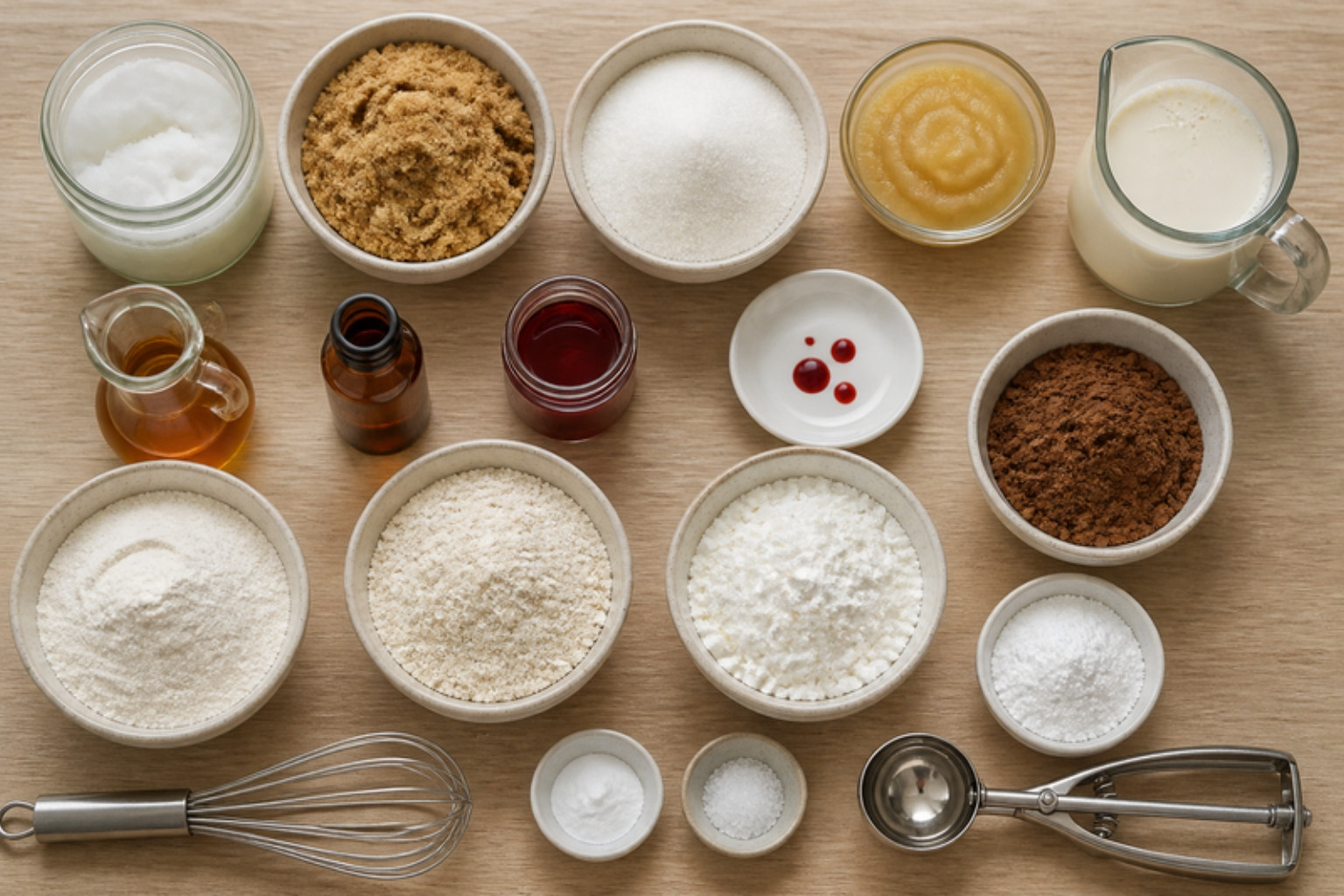
These are soft and chewy with slightly crackled tops, a deep red color, and that mild cocoa-and-vanilla flavor red velvet is known for. Oat milk soured with a little vinegar stands in for buttermilk, applesauce replaces the egg’s moisture, and refined coconut oil gives the chew that butter usually brings. A tangy vanilla icing drizzle, sharpened with a drop of vinegar or lemon, nods to cream cheese frosting without any cheese.
Made without: peanuts, tree nuts, milk, eggs, wheat, soy, fish, shellfish, sesame. Contains coconut.
Why You’ll Love This Recipe
- A bright red cookie that stands out on a Christmas tray or in a cookie exchange box.
- Soft, chewy centers with set edges and a tangy icing drizzle.
- No eggs, butter, wheat, nuts, or commercial egg replacer.
- The dough chills up to 2 days and freezes in scoops, so you can bake on your schedule.
How Red Velvet Works Without Eggs or Buttermilk
Red velvet’s signature tang comes from buttermilk and vinegar reacting with baking soda and natural cocoa. Here, oat milk plus apple cider vinegar provides the acid, and natural (not Dutch-process) cocoa adds a little more. When they meet the baking soda in the oven, the cookies puff and crack on top, giving lift that eggs would normally help with.
Structure comes from a balance of flours. White rice flour gives a tender, slightly crisp edge; oat flour adds chew and a soft center; and a little cornstarch keeps the crumb fine rather than gritty. Beating the coconut oil with both sugars traps air the way creaming butter does, and applesauce supplies the moisture an egg would. Chilling the dough for an hour lets the flours hydrate fully, which is what keeps gluten-free cookies from tasting sandy.
Ingredients & Swap Ideas
- Refined coconut oil: 1/2 cup (100 g), soft but not melted. If you avoid coconut, use 1/2 cup (108 g) light-tasting olive oil. “Light” means refined and mild in flavor, not fewer calories. Whisk it with the sugars and chill the dough 2 hours; the cookies spread a little more. Skip butter substitutes, shortening, and vegetable oil.
- Sugars: light brown sugar for chew and granulated sugar for crisp edges.
- Applesauce: 3 tablespoons (45 g), unsweetened, room temperature.
- Oat milk + vinegar: 2 tablespoons oat milk with no added oil (many brands contain canola or sunflower oil) and 1 teaspoon apple cider vinegar.
- Food coloring: 1 to 2 teaspoons red gel coloring gives the strongest color with the least liquid. Read the full ingredient list on the bottle. Beet powder works for a natural option, but the color bakes up more brick-brown than red.
- Flours: finely ground white rice flour, certified gluten-free oat flour (oats can carry barley cross-contact), and cornstarch.
- Cocoa: 2 tablespoons natural unsweetened cocoa. Just enough for flavor without turning the cookies brown.
- Icing: powdered sugar, oat milk, vanilla, and a few drops of vinegar or lemon juice.
Many red velvet cookies are studded with white chocolate chips, which usually contain milk and soy. If you’d like mix-ins, fold in 1/2 cup dairy-free dark chocolate chips made without soy lecithin or added seed oils, and check the label.
Kitchen Equipment
- 2 rimmed baking sheets and parchment paper
- Stand mixer or hand mixer
- 1 1/2-tablespoon cookie scoop
- Wire rack
- Small bowl and spoon or piping bag for the icing
Step-by-Step Tips
- Beat until fluffy. Two full minutes of beating the coconut oil and sugars makes a lighter cookie.
- Add color before the flour. Mixing the coloring into the wet ingredients means you don’t overwork the dough chasing an even color.
- Chill for real. At least an hour. The dough should scoop in clean balls, not smear.
- Press lightly. A gentle flattening helps the tops crack instead of doming.
- Judge doneness by the edges. Pull them when the edges are set and the centers still look a little soft. Red dough doesn’t show browning, so the clock is less reliable than your eyes.
- Ice when fully cool. Warm cookies melt the icing into a glaze.
Red Velvet Cookies
Ingredients
Equipment
Method
- Beat the coconut oil, brown sugar, and granulated sugar for 2 minutes, until fluffy and lighter in color.
- Beat in the applesauce, oat milk, vinegar, vanilla, and 1 teaspoon food coloring until smooth. Add more coloring if you want a deeper red; the dough bakes up slightly darker than it looks.
- Whisk the rice flour, oat flour, cornstarch, cocoa, baking soda, and salt. Mix into the wet ingredients on low until a soft dough forms with no dry streaks.
- Cover and chill at least 1 hour (up to 2 days), until firm enough to scoop cleanly.
- Heat the oven to 350°F (175°C) and line the baking sheets with parchment. Scoop 1 1/2-tablespoon balls, roll smooth, and set 2 inches apart. Press each ball down lightly with your palm.
- Bake one sheet at a time for 10 to 12 minutes, until the edges are set, the tops have puffed and cracked slightly, and the centers still look a little soft. Don’t wait for browning; the red color hides it.
- Cool on the pan 5 minutes, then move to a rack and cool completely.
- Whisk the icing ingredients, adding oat milk a little at a time until thick but drizzly. Drizzle over the cooled cookies and let set about 30 minutes, until no longer tacky.
Notes
Troubleshooting & Tips
- Cookies spread flat: the dough was too warm or the coconut oil was melted. Chill the scooped balls 15 minutes before baking.
- Color looks brownish: use gel coloring rather than liquid drops, and natural cocoa rather than Dutch-process, which is darker.
- Gritty texture: the rice flour wasn’t finely ground, or the dough wasn’t rested. Look for finely milled rice flour and give the dough its full chill.
- Dry or crumbly: overbaked. Take them out while the centers look underdone; they firm up on the pan.
Make-Ahead, Freezing & Gifting
Refrigerate the dough up to 2 days, or scoop it into balls and freeze on a tray, then bag them for up to 3 months. Bake straight from frozen, adding 1 to 2 minutes. Baked, un-iced cookies freeze up to 3 months in an airtight container; thaw at room temperature, then drizzle with icing.
Once the icing is fully set (about 30 minutes, or until it no longer feels tacky), stack the cookies in a tin with parchment between layers. They keep up to 5 days at room temperature. For cookie exchanges, pair them with paler cookies so the red stands out, and keep iced cookies in a single layer or separated by parchment so the drizzle doesn’t smudge.
More Christmas Cookies
Fill out your tray from our Christmas recipes hub. For another cocoa cookie, try the chocolate crinkle cookies, and for a classic with chips, the Top 9 Free chocolate chip cookies.
FAQ
What flavor are red velvet cookies?
Red velvet tastes like a mild vanilla cookie with a hint of cocoa and a slight tang from buttermilk or vinegar. It’s less chocolatey than a chocolate cookie.
Can I make red velvet cookies without food coloring?
Yes. Beet powder adds a reddish tint, though baking turns it more brick-colored. Without coloring at all, you’ll get a light cocoa cookie with the same flavor.
Why use natural cocoa instead of Dutch-process?
Natural cocoa is acidic, so it reacts with the baking soda to help the cookies rise and keeps the color redder. Dutch-process cocoa is neutralized and darker.
Can I sandwich these with frosting?
Yes. Make a thicker batch of the icing with less oat milk, or use the whipped coconut oil frosting from our vanilla cupcakes, and sandwich two cookies together.
A note before you cook: These recipes are ideas and suggestions, not medical or dietary advice. As with any recipe or ingredient, it is each reader’s responsibility to confirm what they can and cannot eat, read every ingredient label, and source quality ingredients that fit their own needs. Ingredient formulations change, so always check the package you’re using.