
Prime rib recipes have a habit of hiding the big allergens in the details: a compound butter smeared over the roast, Worcestershire (often made with anchovies) in the rub, flour in the jus, and a creamy horseradish sauce built on sour cream and mayonnaise. The roast itself doesn’t need any of them. This prime rib is dry-brined with salt for a day or more, rubbed with a paste of garlic, rosemary, thyme, black pepper, and extra-virgin olive oil, and cooked with the reverse-sear method: low oven first for even, rosy meat edge to edge, then a short blast of high heat for a deeply browned, crackly crust. A quick pan jus made from the drippings, a shallot, and beef broth rounds it out.
It’s a Christmas dinner centerpiece that takes very little hands-on time. Most of the work is waiting, and a thermometer does the deciding.
Made without: peanuts, tree nuts, milk, eggs, wheat, soy, fish, shellfish, sesame.
Why You’ll Love This Recipe
- Even doneness. The low oven cooks the roast gently, so there’s very little gray band under the crust.
- A real crust. A dry surface from the overnight brine plus a 500°F finish gives a browned, savory exterior.
- Flexible timing. The roast can rest up to an hour before the final sear, which frees the oven for sides.
- Simple ingredients. Salt, pepper, garlic, fresh herbs, olive oil, and broth.
- No butter or flour. The jus is made from the drippings, with an optional cornstarch thickener.
How It Works Without Butter, Flour or Worcestershire
A standing rib roast is well marbled and has a thick fat cap, so it bastes itself as it cooks; butter adds little that the roast doesn’t already have. Olive oil carries the garlic and herbs and helps them stick and brown. The dry brine does the heavy lifting for flavor: salt draws moisture out, dissolves into it, and is reabsorbed into the meat over a day or two, seasoning it deeply. Leaving the roast uncovered in the refrigerator dries the surface so it browns quickly during the sear.
Worcestershire usually provides savory depth, but the browned drippings in the pan supply plenty of that for the jus. A spoonful of cider vinegar adds the brightness wine would normally give.
Ingredients and Swap Ideas
- The roast: a 3-bone standing rib roast (7 to 8 pounds) feeds about eight. Ask for the first cut (ribs 10 to 12, the loin end) for a leaner, more uniform roast. Buy it plain, not injected, marinated, or pre-seasoned. Boneless rib roasts work too; start checking the temperature an hour earlier.
- Kosher salt: Diamond Crystal and Morton measure very differently by volume, so use the amount listed for your brand, or weigh it.
- Fat: extra-virgin olive oil, or softened beef tallow for a beefier crust. No butter, seed oils, or cooking spray.
- Beef broth: many broths contain wheat, soy, yeast extract, or added oil. Read the label, or use homemade stock.
- Horseradish: plain prepared horseradish is usually grated root, vinegar, and salt. Creamy horseradish sauces often contain eggs, milk, and soybean oil. Horseradish is in the cabbage (crucifer) family.
Kitchen Equipment
- Roasting pan with a rack
- Probe thermometer (one that stays in the roast and reads outside the oven is ideal) or a reliable instant-read thermometer
- Long carving knife and a board with a juice groove
- Small saucepan for the jus
Step-by-Step Tips
- Brine early. Salt the roast on all sides one to three days ahead and refrigerate it uncovered on a rack. Even 24 hours makes a noticeable difference.
- Temper for an hour. Taking the chill off helps it cook evenly.
- Bones down. The rib bones act as a natural rack and shield the bottom of the meat.
- Go by temperature. At 225°F (110°C) a 7- to 8-pound roast usually takes 3 1/2 to 5 hours to reach 135°F (57°C) in the center, but ovens and roasts vary.
- Rest, then sear. Rest it 30 to 60 minutes while the oven heats to 500°F (260°C). Then sear 8 to 12 minutes until the crust is dark brown and sizzling, and the center reaches at least 145°F (63°C).
- Carve smart. Cut along the bones to remove them in one piece, then slice across the grain. Save the bones for stock.
Food safety: the USDA recommends cooking whole cuts of beef, including roasts, to 145°F (63°C) with a 3-minute rest. Many prime rib recipes stop at lower temperatures for rare meat; those are below the USDA recommendation. See the USDA safe temperature chart for details, and reheat leftovers to 165°F (74°C).
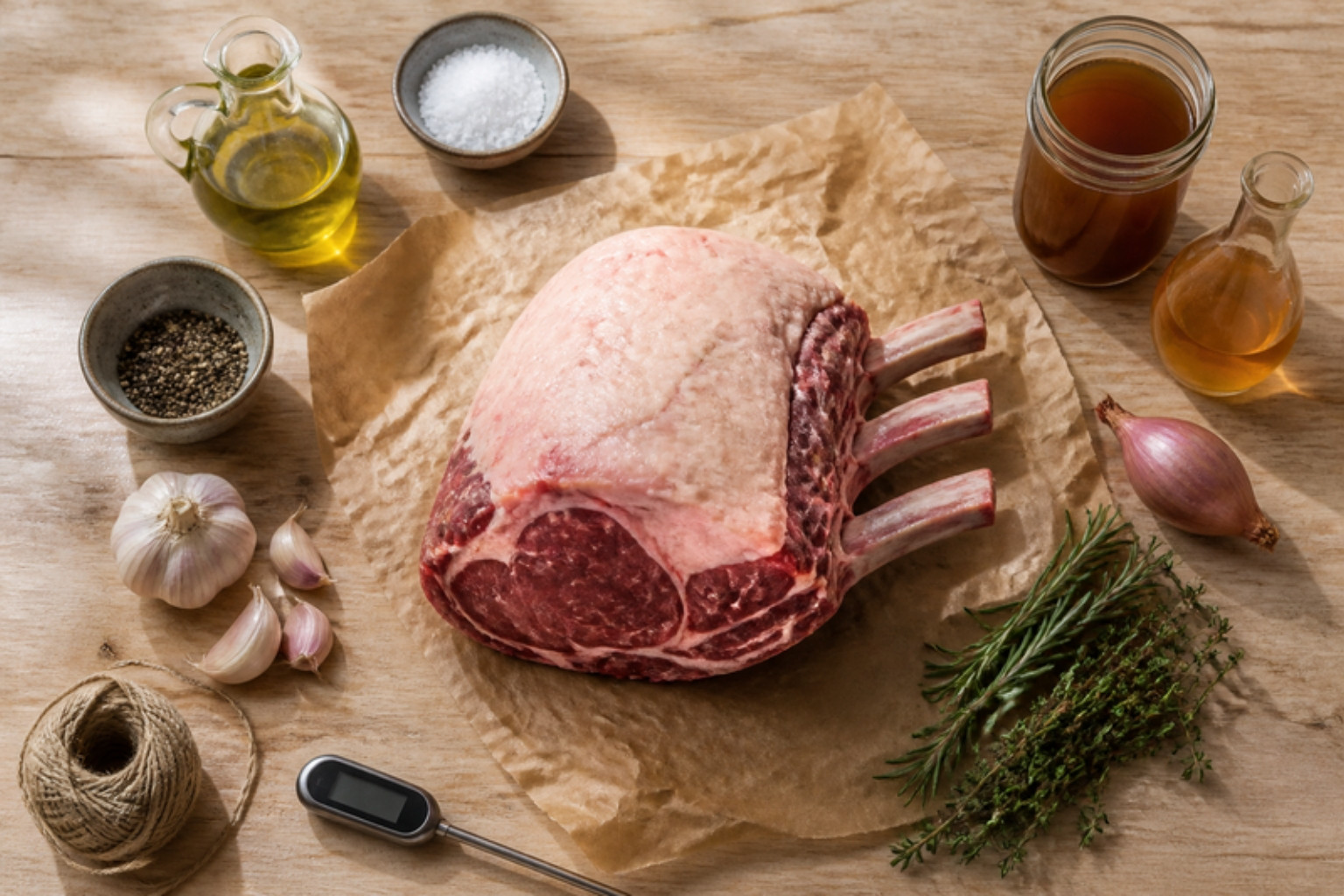
Reverse-Seared Prime Rib Roast with Garlic Herb Crust
Ingredients
Equipment
Method
- Pat the roast dry and sprinkle the salt evenly over every surface, including the ends and bones. Set it on a rack over a tray and refrigerate, uncovered, at least 24 hours and up to 3 days. The surface will look dry and darker; that’s what you want for a good crust.
- Take the roast out of the refrigerator 1 hour before cooking. Heat the oven to 225°F (110°C).
- Mix the pepper, garlic, rosemary, thyme, and olive oil into a paste and rub it over the fat cap and sides.
- Set the roast bone side down (the bones act as a rack) on a rack in the roasting pan. Insert a probe thermometer into the thickest part, not touching bone.
- Roast until the center reads 135°F (57°C), about 3 1/2 to 5 hours depending on the roast and oven. Go by temperature, not time.
- Move the roast to a board, tent loosely with foil, and rest 30-60 minutes. Turn the oven up to 500°F (260°C) and let it fully heat.
- Return the roast to the very hot oven for 8-12 minutes, until the crust is deeply browned and sizzling. The center should reach at least 145°F (63°C), the USDA-recommended minimum for whole beef roasts; rest 3 minutes before carving.
- While it sears, make the jus: pour 2 tbsp fat from the roasting pan into a saucepan over medium heat, add the shallot, and cook 2 minutes until soft. Add the broth, thyme, and any browned bits scraped from the pan. Simmer 8-10 minutes until reduced by about a third. Stir in the vinegar, and the cornstarch slurry if using, and simmer 1 minute. Season with salt and pepper.
- Carve by running the knife along the bones to remove them in one piece, then slice the roast across the grain 1/2 to 3/4 inch (1.5-2 cm) thick. Serve with the jus.
Notes
Troubleshooting
- The roast is cooking faster than expected. Lower the oven to 200°F (95°C). Once it reaches temperature, it can rest tented for up to an hour before searing.
- The roast is running late. Raise the oven to 250°F (120°C); it will still cook evenly.
- The crust isn’t browning. The oven wasn’t fully preheated, or the surface was wet. Pat it dry before searing and give the oven time to reach 500°F.
- Smoke during the sear. Pour off excess fat from the pan before the sear (save it for the jus) and turn on the vent.
Make-Ahead, Storage and Leftovers
The dry brine is the make-ahead step: salt the roast up to three days before Christmas dinner. The jus can be made a day ahead with broth and any drippings from the pan, then reheated with fresh drippings stirred in. Refrigerate leftover slices in a covered container for three to four days, or freeze them up to three months. Reheat gently, covered, with a splash of jus, to 165°F. Leftover prime rib is good thinly sliced for sandwiches on bread that fits your needs, or diced into hash.
For the rest of the menu, browse the Christmas recipes page. Twice-baked potatoes with no cheese and roasted Brussels sprouts with bacon fit right alongside, and if you’re serving a crowd, the brown sugar glazed Christmas ham is an easy second main.
FAQ
How much prime rib do I need per person?
A common rule is about one rib for every two people, or roughly a pound of bone-in roast per person. A 3-bone, 7- to 8-pound roast serves about eight with sides.
What is the reverse sear method?
It flips the usual order: the roast cooks slowly in a low oven first, then gets a short, very hot sear at the end. The result is more evenly cooked meat and a better crust than searing first.
Do I need to tie a prime rib roast?
Tying between the bones with kitchen twine helps the roast keep a neat, even shape, which helps it cook evenly. It’s optional for a bone-in roast; many butchers will tie it for you.
Can I make au jus without wine or flour?
Yes. This jus uses pan drippings, a shallot, beef broth, and a little cider vinegar for brightness. A cornstarch slurry thickens it slightly if you like, with no flour needed.
A note before you cook: These recipes are ideas and suggestions, not medical or dietary advice. As with any recipe or ingredient, it is each reader’s responsibility to confirm what they can and cannot eat, read every ingredient label, and source quality ingredients that fit their own needs. Ingredient formulations change, so always check the package you’re using.