
Not every Thanksgiving table seats twenty. If you’re cooking for two to four people, or you’d rather not wrestle a whole turkey while reading every label in the pantry, Cornish hens are a good answer. Each guest gets a whole little bird with crisp skin and juicy meat, and dinner is on the table in about an hour.
Holiday poultry recipes often lean on butter under the skin, a store-bought gravy, or an injected bird. This one skips all three. The hens get a simple rub of extra-virgin olive oil, garlic, fresh sage and thyme, and smoked paprika, then roast at high heat on a rack so the skin crisps. In the last 15 minutes they’re brushed with a glaze of apple cider and maple syrup reduced until syrupy, which turns the skin a deep, glossy mahogany. The result tastes like fall without any of the top nine allergens.
Made without: peanuts, tree nuts, milk, eggs, wheat, soy, fish, shellfish, sesame.
Why You’ll Love This Recipe
- A whole holiday bird for each person, ready in about 75 minutes.
- Crisp, well-seasoned skin from olive oil and a high oven, no butter needed.
- A sticky maple-cider glaze made from four pantry ingredients.
- Easy to scale: two hens for a quiet Thanksgiving, six for a small Christmas dinner.
- Leftover meat makes a great next-day soup or salad.
How to Get Crisp, Flavorful Skin Without Butter
Crisp skin comes from dryness and heat, not from butter. Patting the hens dry and, if you have time, salting them and letting them sit uncovered in the fridge for a few hours (a dry brine) draws moisture out of the skin and seasons the meat. Roasting on a rack at 425°F lets hot air reach every side, so the fat under the skin renders and the skin browns evenly.
The glaze goes on late on purpose. Maple syrup and cider are mostly sugar, which would scorch if brushed on at the start. Reducing the glaze first concentrates it so it clings instead of running off, and two quick coats in the final 15 to 20 minutes are enough for color and flavor.
Ingredients & Swap Ideas
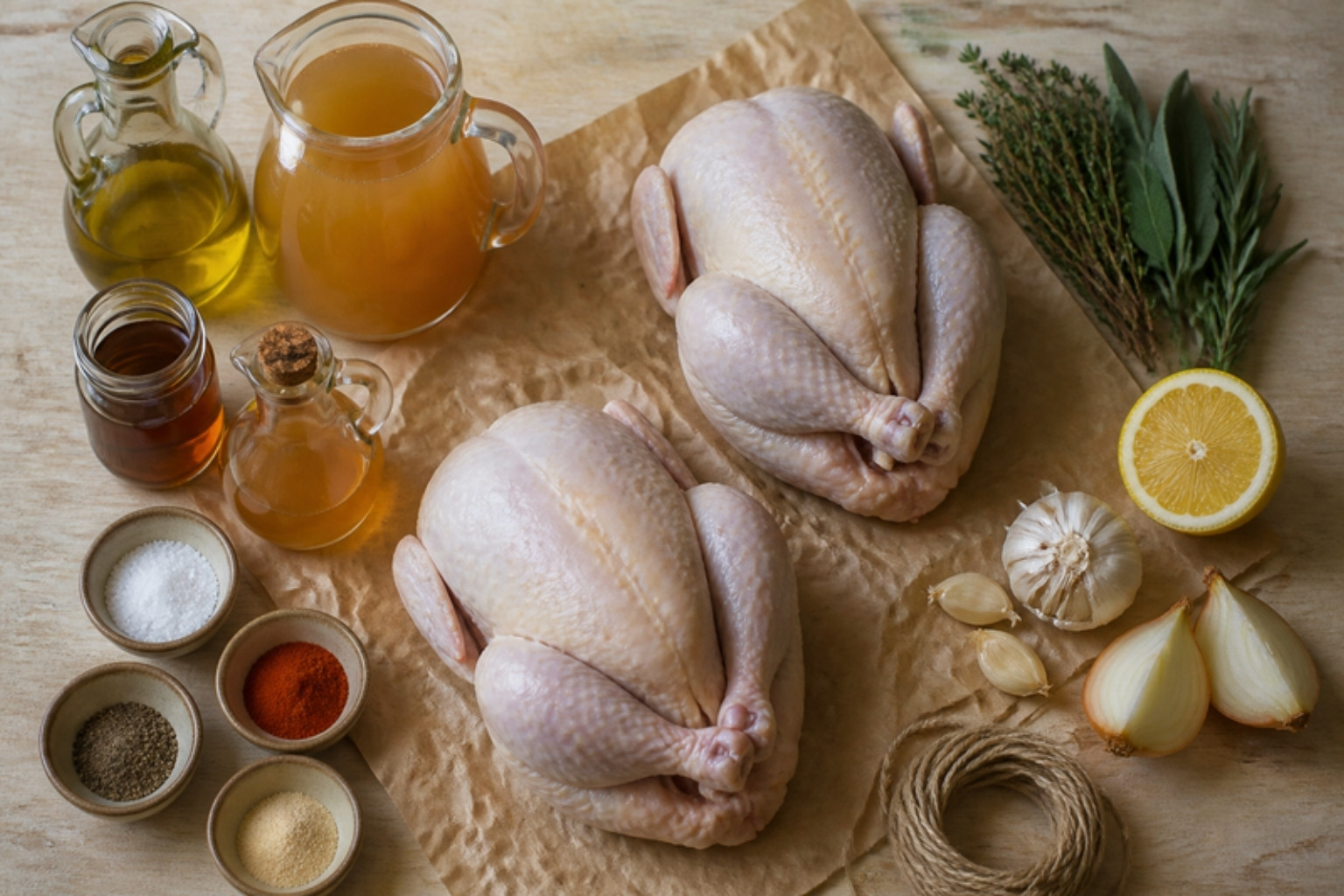
- Cornish game hens, 4 (about 1½ lb / 680 g each): thaw frozen hens in the refrigerator for about 24 hours. Look for plain hens. Some are “enhanced” or injected with a solution that can contain broth, flavorings, or other additives, so read the package.
- Extra-virgin olive oil, 2 tablespoons (30 ml): melted duck fat or lard also work and add savory flavor. Skip butter, butter substitutes, and cooking spray.
- Kosher salt, black pepper, smoked paprika, garlic powder: use single spices rather than seasoning blends, which can contain hidden ingredients or added oils.
- Fresh thyme and sage: dried works too; use 1 teaspoon of each.
- Lemon, onion, garlic: tucked into the cavities for aroma, not stuffing. Don’t stuff the hens with bread stuffing; bake stuffing separately.
- Apple cider, ¼ cup maple syrup, cider vinegar: use sweet apple cider (not hard cider) and pure maple syrup, not pancake syrup. Cider vinegar balances the sweetness; avoid malt vinegar, which is made from barley.
Kitchen Equipment
- Rimmed baking sheet or roasting pan with a wire rack
- Small saucepan for the glaze and a pastry brush
- Kitchen twine
- Instant-read thermometer (the most important tool here)
- Kitchen shears for halving the hens at the table
Step-by-Step Tips
- Dry the hens well. Pat them inside and out. Wet skin steams instead of crisping.
- Season under the skin. Slide your fingers under the breast skin to loosen it, then rub some of the herb oil directly on the meat.
- Truss loosely. Tuck the wing tips behind the back and tie the legs together so the hens cook evenly.
- Water in the pan. A half cup of water under the rack keeps the drippings from smoking at 425°F. Top it up if the pan looks dry.
- Glaze late. After 35 minutes the skin should be golden. Brush with half the glaze, roast 10 minutes, then brush again.
- Go by temperature. The hens are done when the thickest part of the thigh, not touching bone, reads 165°F (74°C) and the juices run clear. Rest them 10 minutes before serving.
Maple-Cider Glazed Cornish Hens
Ingredients
Equipment
Method
- Pat the hens very dry inside and out with paper towels. For crisper skin, salt them (use the 2½ teaspoons of kosher salt here) and refrigerate uncovered on a rack for 1 to 24 hours; otherwise salt them with the rub in the next step.
- Heat the oven to 425°F (220°C). Set a wire rack in a rimmed baking sheet and pour the water into the pan.
- Stir together the olive oil, pepper, smoked paprika, garlic powder, thyme, sage, and the salt (if you didn’t dry-brine). Rub it all over the hens and under the breast skin.
- Tuck a lemon quarter, an onion quarter, and a smashed garlic clove into each cavity. Tuck the wing tips under and tie the legs together with twine. Set the hens breast side up on the rack, 2 inches apart.
- Simmer the cider, maple syrup, vinegar, rosemary, and pinch of salt in a small saucepan over medium heat for 8 to 10 minutes, until reduced to about ⅓ cup and syrupy enough to coat a spoon. Discard the rosemary.
- Roast for 35 minutes, until the skin is golden and starting to crisp. Add a splash of water to the pan if the drippings begin to smoke.
- Brush the hens with half the glaze and roast 10 minutes. Brush with the rest and roast 5 to 10 minutes more, until the skin is deep mahogany, the juices run clear, and the thickest part of the thigh (not touching bone) reads 165°F (74°C).
- Rest the hens, loosely tented with foil, for 10 minutes. Snip the twine and serve whole, or halve each hen lengthwise with kitchen shears.
Notes
Troubleshooting & Tips
- Glaze is getting too dark: tent the hens loosely with foil for the last few minutes. The sugars can go from mahogany to burnt quickly near the end.
- Skin is pale but the meat is done: move the pan to the top third of the oven for 3 to 5 minutes, watching closely.
- Thighs lag behind the breast: point the legs toward the back of the oven, where it’s usually hottest, and check each hen separately; sizes vary.
- Glaze too thin: simmer it a few more minutes. It should coat a spoon and thicken as it cools.
Food Safety, Storage & Leftovers
Cook poultry to 165°F (74°C) and reheat leftovers to 165°F. The USDA safe temperature chart has the details. Refrigerate leftovers within 2 hours and use them within 3 days. For longer storage, pull the meat from the bones and freeze it in a covered container for up to 3 months. The carcasses make a small batch of homemade broth.
What to Serve With Cornish Hens
Pair the hens with our Minnesota wild rice pilaf with mushrooms and cranberries and a bowl of homemade cranberry sauce with orange and maple. Cooking for a few more people? The herb roasted turkey breast is another smaller-scale main. See every main, side, and pie in the Thanksgiving recipes and Christmas recipes collections.
FAQ
How long do you cook Cornish hens at 425°F?
About 45 to 55 minutes for 1½-pound hens, but size varies. Start checking at 45 minutes and go by temperature: 165°F in the thickest part of the thigh.
Is one Cornish hen enough per person?
One hen is a generous serving for an adult. With several sides, many people are happy with half a hen, so four hens can serve six to eight.
Can I make these ahead?
Season the hens up to a day ahead and keep them uncovered in the refrigerator (this doubles as a dry brine). The glaze can also be made a day ahead; warm it before brushing. Roast them fresh for the crispest skin.
Can I make gravy from the drippings?
Yes. Pour the pan juices into a small saucepan, add broth to make about 1 cup, and thicken with 1 tablespoon cornstarch stirred into 2 tablespoons cold water. Check the broth label for wheat, soy, yeast extract, and added oils.
A note before you cook: These recipes are ideas and suggestions, not medical or dietary advice. As with any recipe or ingredient, it is each reader’s responsibility to confirm what they can and cannot eat, read every ingredient label, and source quality ingredients that fit their own needs. Ingredient formulations change, so always check the package you’re using.