
Holiday side dishes are where milk and butter sneak in the most. Mashed potatoes, glazed carrots, and casseroles almost all start with a stick of butter, which leaves allergy families with a thin plate. Harvard beets are an easy fix. This old-fashioned side, found in church cookbooks across the Midwest and New England, is just beets in a sweet-and-sour sauce of sugar, vinegar, and cornstarch. The only dairy in the classic is a pat of butter at the end, and a spoonful of olive oil does the same job.
The result is ruby-red beets in a glossy, tangy-sweet glaze that tastes bright next to rich holiday mains. The sauce clings to every cube, and the vinegar balances the beets’ natural earthiness, which wins over a lot of people who think they don’t like beets. It’s a make-ahead side that reheats beautifully, and it’s made without the top nine allergens.
Made without: peanuts, tree nuts, milk, eggs, wheat, soy, fish, shellfish, sesame.
Why You’ll Love This Recipe
- A jewel-toned side that brightens a Thanksgiving or Christmas table.
- Only a handful of pantry ingredients and one saucepan for the sauce.
- Make it days ahead; it tastes even better the next day.
- Works with fresh beets or a canned-beet shortcut.
How It Works Without Butter
In Harvard beets, cornstarch does the thickening, not butter. Whisked into cold vinegar and beet liquid and boiled for a minute, it turns a cloudy mixture into a clear, glossy sauce. The butter in older recipes is there for richness and shine, and one tablespoon of extra-virgin olive oil stirred in off the boil gives the same silky finish. Using some of the beet cooking liquid deepens the color and adds flavor that plain water doesn’t.
Ingredients and Swap Ideas
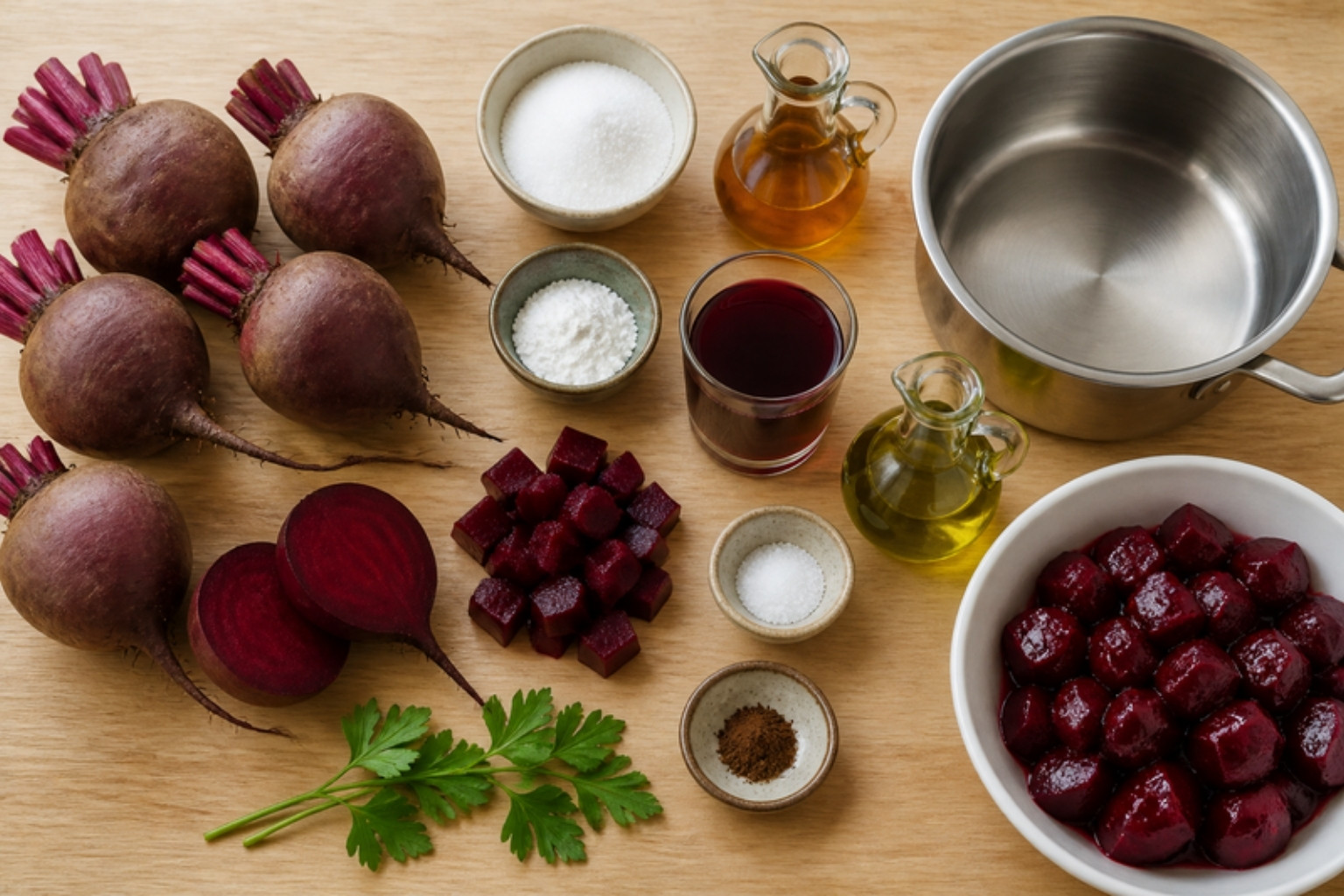
- Fresh beets (2 lb / 900 g): about 6 medium. Leave an inch of stem and the root tail on while boiling so they don’t bleed out their color.
- Canned beets: two 15-ounce cans, drained, with 1/3 cup of the liquid saved for the sauce. Choose beets packed in water and salt only.
- Sugar (1/2 cup / 100 g): granulated sugar is classic. Light brown sugar gives a deeper, caramel note.
- Apple cider vinegar (1/3 cup / 80 ml): white vinegar works too. Avoid malt vinegar, which is made from barley.
- Cornstarch (1 tbsp / 8 g): potato starch or arrowroot can stand in; arrowroot can turn slightly slick if reheated many times.
- Extra-virgin olive oil (1 tbsp / 15 ml): in place of butter. Skip butter substitutes, which are usually made with seed oils.
- Ground cloves (optional): a pinch adds an old-fashioned spiced note. Orange zest is another nice finish.
Kitchen Equipment
- A large pot for boiling the beets.
- A medium saucepan and a whisk for the sauce.
- Paper towels or kitchen gloves for slipping off the skins without stained hands.
Step-by-Step Tips
- Boil until knife-tender. Cover the beets with water by 2 inches and simmer 35 to 50 minutes, until a paring knife slides into the center of the largest one with little resistance.
- Save the liquid. Scoop out half a cup of the deep red cooking water before draining. It adds color and flavor to the sauce.
- Peel while warm. After 10 minutes of cooling, the skins rub right off with a paper towel. Cut the beets into 1/2-inch cubes or slices.
- Whisk cold, then boil. Combine sugar, cornstarch, salt, and cloves first, then whisk in the vinegar and beet liquid so no lumps form. Bring to a boil while whisking and boil 1 minute, until the sauce turns clear and glossy.
- Finish and glaze. Stir in the olive oil, add the beets, and warm gently 3 to 5 minutes until every piece is coated.
Harvard Beets (Old-Fashioned Sweet and Sour Beets)
Ingredients
Equipment
Method
- Put the beets in a large pot and cover with water by 2 inches. Bring to a boil, then simmer 35 to 50 minutes, depending on size, until a paring knife slides into the center of the largest beet with little resistance.
- Scoop out and reserve 1/2 cup of the cooking liquid, then drain. Cool the beets 10 minutes, then rub off the skins with a paper towel (gloves keep your hands from staining). Trim the ends and cut into 1/2-inch cubes or slices.
- In a medium saucepan, whisk the sugar, cornstarch, salt, and cloves (if using). Whisk in the vinegar and 1/3 cup of the beet liquid until no lumps remain.
- Bring to a boil over medium heat, whisking constantly. Boil 1 minute, until the sauce turns clear, glossy, and thick enough to coat a spoon.
- Stir in the olive oil, then add the beets. Cook 3 to 5 minutes over low heat, stirring gently, until the beets are hot and evenly glazed. Add a splash more beet liquid if the sauce gets too thick. Season with pepper and finish with parsley or chives.
Notes
Troubleshooting and Tips
- Sauce is cloudy or tastes starchy: it needs a full boil. Keep whisking over medium heat until it bubbles, then give it one more minute.
- Sauce is too thick: loosen it with a spoonful of beet liquid or water. It also thickens as it cools.
- Too tart or too sweet: adjust at the end with a pinch of sugar or a teaspoon of vinegar.
- Beets bleeding everywhere: cut them on a plate or a board you don’t mind staining, and add them to the sauce last.
Storage, Freezing and Reheating
Refrigerate Harvard beets in a covered container up to 5 days. For holiday meals, make them 1 to 2 days ahead and reheat gently in a saucepan over low heat with a spoonful of water, stirring until hot. They’re also good cold, almost like a pickled beet salad. Freezing isn’t recommended because the cornstarch sauce can weep and turn watery when thawed.
More Holiday Sides
Harvard beets pair well with another sweet-and-sour classic, our braised red cabbage with apples, and with creamy dairy-free mashed potatoes. Find more sides, mains, and pies in our Thanksgiving recipes collection.
FAQ
Why are they called Harvard beets?
Nobody knows for sure. The most common story is that the deep crimson color matches Harvard’s school color. The dish has been in American cookbooks since at least the early 1900s.
What’s the difference between Harvard beets and pickled beets?
Pickled beets sit in a thin vinegar brine and are usually served cold. Harvard beets are served warm in a thickened sweet-and-sour sauce, more like a glaze.
Can I roast the beets instead of boiling them?
Yes. Wrap whole beets in foil and roast at 400°F for 45 to 60 minutes, until knife-tender. Roasting gives a sweeter, deeper flavor. Use water in the sauce since you won’t have cooking liquid.
Can I use butter?
If milk isn’t a concern at your table, a tablespoon of butter is the traditional finish. Adding it means the dish is no longer made without milk.
A note before you cook: These recipes are ideas and suggestions, not medical or dietary advice. As with any recipe or ingredient, it is each reader’s responsibility to confirm what they can and cannot eat, read every ingredient label, and source quality ingredients that fit their own needs. Ingredient formulations change, so always check the package you’re using.