
Vegetable sides get tricky when you’re cooking without milk. So many of them lean on butter, a cheese crust, a cream sauce, or a sprinkle of Parmesan. Roasted cauliflower doesn’t need any of that. Give the florets a hot oven, enough extra-virgin olive oil to coat them, and room on the pan, and they turn deep golden at the edges, sweet and nutty in the middle, and crisp enough that people pick them off the sheet pan before dinner.
This garlic roasted cauliflower adds the garlic partway through so it turns golden instead of burnt, then finishes with fresh lemon zest, a squeeze of juice, and chopped parsley. It’s a weeknight side that also fits on a Thanksgiving or Christmas table next to the roast. It’s made without peanuts, tree nuts, milk, eggs, wheat, soy, fish, shellfish, and sesame.
Made without: peanuts, tree nuts, milk, eggs, wheat, soy, fish, shellfish, sesame.
Why You’ll Love This Roasted Cauliflower
- Crispy, browned edges from high heat and a flat side down on the pan.
- Garlic that tastes sweet, not bitter, because it goes in for the last few minutes.
- Bright finish from lemon zest and juice instead of cheese.
- One sheet pan and about 40 minutes start to finish.
- Holiday-friendly: it roasts while the main dish rests.
How It Gets So Much Flavor Without Butter or Cheese
The flavor in roasted cauliflower comes from browning. At 425°F, the natural sugars on the cut surfaces caramelize, and the florets lose enough moisture to crisp instead of steam. Three things make that happen: a hot oven, a light but thorough coat of olive oil (fat conducts heat into every nook), and space between pieces so steam can escape. Cutting the florets with at least one flat side gives more surface touching the hot pan, which means more golden color.
Cheese usually adds salt and a savory edge. Here, a pinch of salt at the end and a hit of lemon zest and juice do the same job of waking up the flavor. Garlic oil drizzled on after the flip adds a toasty, savory note.
Ingredients & Swap Ideas
- Cauliflower (1 large head, about 2 lb / 900 g): look for a tight, creamy-white head without brown spots. Pre-cut florets work; cut large ones in half so they’re all about 1 1/2 inches.
- Extra-virgin olive oil (3 Tbsp / 40 g): 2 Tbsp for roasting and 1 Tbsp for the garlic. Rendered bacon fat is a smoky option for the first 2 Tbsp. Skip cooking spray and vegetable oil.
- Garlic (4 cloves): minced fresh garlic is best. If you only have garlic powder, toss 1/2 tsp with the florets at the start; check the label to be sure it’s pure garlic.
- Lemon: zest first, then juice. Start with 1 Tbsp juice and add more to taste.
- Parsley (2 Tbsp): flat-leaf parsley, chives, or dill all work.
- Red pepper flakes (optional): a little warmth. Smoked paprika is another option.
Many restaurant versions finish roasted cauliflower with Parmesan, tahini, or toasted pine nuts. Each of those adds a top allergen (milk, sesame, or tree nuts), so this version leaves them off.
Kitchen Equipment
- A large rimmed baking sheet (18 x 13 inch half sheet). For two heads, use two pans.
- A large bowl for tossing.
- A thin metal spatula for flipping.
- A Microplane or fine zester for the lemon.
Step-by-Step Tips
- Dry the florets. If you rinsed the cauliflower, spin or pat it dry. Water on the surface turns to steam and slows browning.
- Toss in a bowl, not on the pan. It’s the easiest way to get every floret coated without using extra oil.
- Flat side down, room to breathe. Crowded florets steam and stay pale.
- Look for color, not time. You want deep golden edges and a few dark spots, and a knife should slide into the thickest stem easily.
- Garlic goes in late. Minced garlic burns quickly at 425°F, so it joins the pan after the flip. Pull the pan when the garlic is pale gold.
- Season hot. Lemon zest and salt cling better to hot cauliflower.
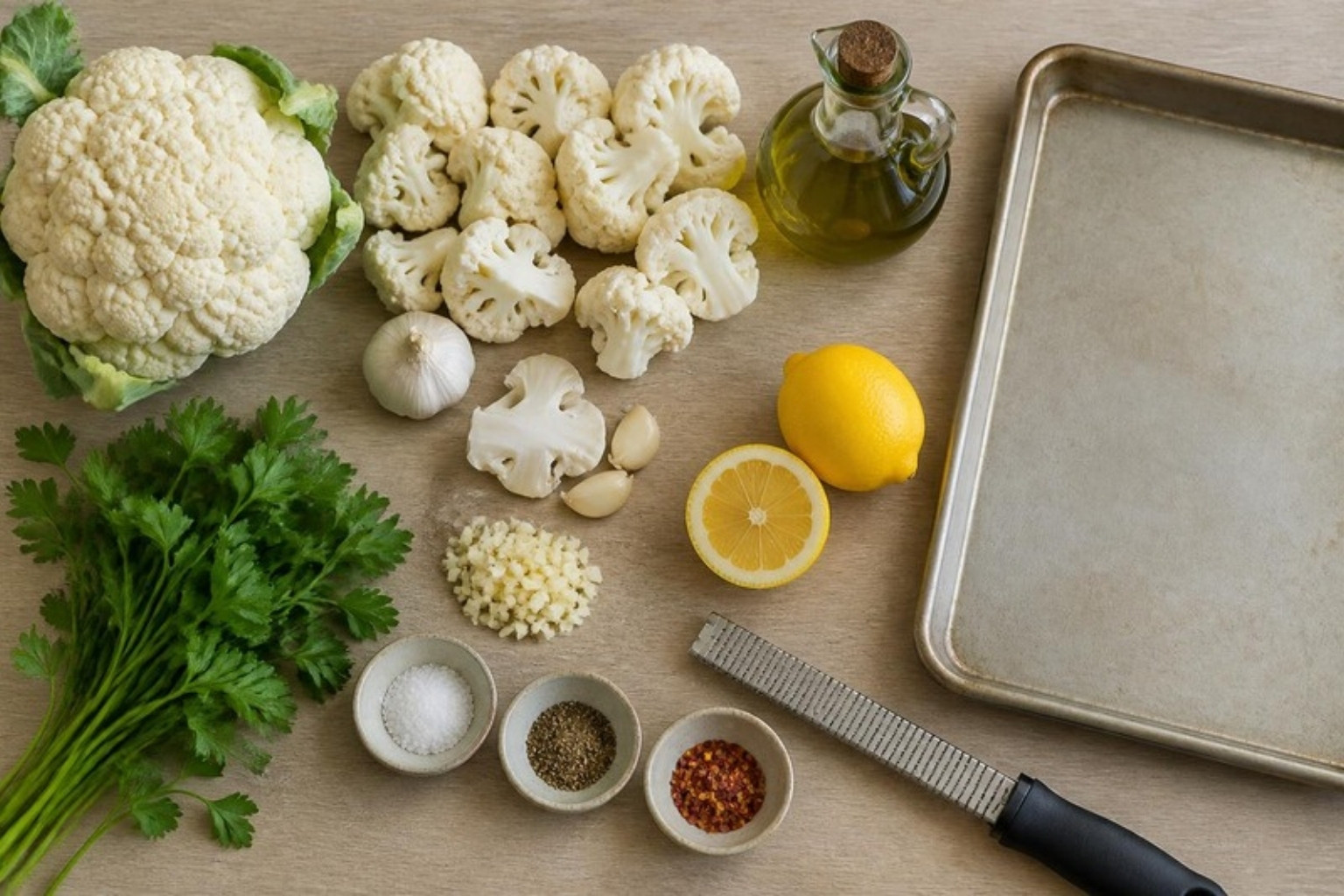
Garlic Roasted Cauliflower
Ingredients
Equipment
Method
- Heat the oven to 425°F (220°C) with a rack in the upper-middle position.
- Toss the florets with 2 Tbsp olive oil, the salt, and the pepper in a large bowl until every piece is glossy. Spread on a rimmed baking sheet with a flat side down and a little space between pieces.
- Roast 20 minutes, until the undersides are golden brown. Meanwhile, stir the garlic and red pepper flakes into the remaining 1 Tbsp olive oil.
- Flip the florets with a thin spatula. Drizzle the garlic oil over them and toss gently on the pan.
- Roast 8 to 12 minutes more, until the edges are deep golden with a few dark spots, the garlic is pale gold (not brown), and a knife slides into the thickest stem with little resistance.
- Grate the lemon zest over the hot cauliflower, squeeze on 1 Tbsp lemon juice, and sprinkle with parsley and a pinch of salt. Toss, taste, and add more lemon if you like. Serve warm.
Notes
Troubleshooting
- Soft and pale: the pan was crowded, the florets were wet, or the oven ran cool. Spread them out and give them a few more minutes.
- Burnt garlic: it went in too early or the pieces were very fine. Add it later next time, or use thinly sliced garlic.
- Edges burnt, stems hard: the florets were uneven. Cut big pieces in half so everything cooks at the same rate.
- Tastes flat: add another pinch of salt and more lemon juice.
Storage & Reheating
Refrigerate leftovers in a covered container up to 4 days. Reheat on a sheet pan at 425°F for 6 to 8 minutes to bring back the crisp edges; the microwave works but leaves them soft. Leftovers are good cold in a lunch bowl with rice or tossed into a salad. Freezing isn’t recommended, since roasted cauliflower turns soft and watery when thawed. For holiday cooking, you can cut the florets up to 2 days ahead and keep them in a bag lined with a paper towel in the fridge.
More Roasted Vegetable Sides
Round out the table with sheet pan Brussels sprouts with bacon or maple roasted butternut squash with crispy sage. Planning a holiday menu? Find more sides on the Thanksgiving recipes page.
Roasted Cauliflower FAQ
What temperature is best for roasting cauliflower?
425°F (220°C) gives the best balance of browned edges and tender centers in about 30 minutes. Lower temperatures cook it through but don’t brown it as well.
Should you flip cauliflower when roasting?
Yes, once. Flipping after 20 minutes lets a second side brown and is a good moment to add the garlic.
Can I roast frozen cauliflower?
You can. Don’t thaw it first. Toss the frozen florets with oil and salt, roast on a preheated pan, and expect it to need 5 to 10 minutes longer. It browns less than fresh cauliflower.
Can I make roasted cauliflower ahead for a holiday dinner?
Roast it up to a few hours ahead and leave it on the pan at room temperature, then reheat at 425°F for 6 to 8 minutes just before serving. Add the lemon and parsley after reheating.
A note before you cook: These recipes are ideas and suggestions, not medical or dietary advice. As with any recipe or ingredient, it is each reader’s responsibility to confirm what they can and cannot eat, read every ingredient label, and source quality ingredients that fit their own needs. Ingredient formulations change, so always check the package you’re using.