
If you’ve looked for a dairy free fudge recipe, you’ve probably found two kinds: classic fudge made with milk and butter, and quick “fudge” made with sweetened condensed milk and chocolate chips that often contain milk or soy. Neither helps when you want the creamy, melt-in-your-mouth squares from Grandma’s holiday tin.
Dairy-free fudge is classic cooked chocolate fudge made without milk, butter or sweetened condensed milk. Sugar, cocoa and full-fat coconut milk boil to the soft-ball stage (236°F), cool undisturbed to 110°F, then get beaten until the shine fades. That beating forms tiny sugar crystals, which set the fudge firm and creamy. Refined coconut oil stands in for the butter.
This old-fashioned fudge goes back to the original method. Sugar, cocoa, and full-fat coconut milk boil together to the soft-ball stage, then cool undisturbed before you beat them into a thick, creamy fudge that sets with a satiny finish. Coconut oil and vanilla replace the butter. It takes a candy thermometer and a little patience, and it’s made without the top nine allergens. It does contain coconut.
Made without: peanuts, tree nuts, milk, eggs, wheat, soy, fish, shellfish, sesame. Contains coconut.
Why You’ll Love This Recipe
- The real thing: cooked fudge with a creamy, fine-grained texture, not a microwave shortcut.
- No butter, no condensed milk, and no plant butter.
- Pantry ingredients: sugar, cocoa, a can of coconut milk, and vanilla.
- A classic edible gift that keeps for weeks in the fridge.
How Fudge Works Without Milk or Butter
Old-fashioned fudge is a crystallized candy. You dissolve sugar in a liquid, boil it until enough water evaporates to reach 234 to 238°F, then cool it and beat it. Beating makes the sugar form millions of tiny crystals, which is what gives fudge its smooth, firm-but-creamy texture. Large crystals make grainy fudge; tiny ones make creamy fudge.
Milk normally adds fat and milk solids that keep the crystals small and give a rich flavor. Full-fat coconut milk brings a similar amount of fat, and cocoa adds its own solids. Coconut oil, added after cooking, does what butter would: it coats the crystals and gives a silky mouthfeel. A spoonful of corn syrup is optional insurance against graininess.
Ingredients & Swap Ideas
- Granulated sugar (2 cups / 400 g).
- Unsweetened cocoa powder (1/2 cup / 40 g): Natural or Dutch-process both work. Cocoa is sometimes made on shared lines with milk chocolate, so check the label.
- Full-fat coconut milk (1 cup / 240 ml): Canned, stirred well so the cream and liquid are combined. “Lite” coconut milk is too thin. Oat milk and other plant milks don’t have enough fat for this method.
- Refined coconut oil (2 tbsp / 28 g): Adds richness without a coconut flavor. Light-tasting olive oil works in a pinch, but the fudge will be slightly softer.
- Dairy-free chocolate chips (optional, 1/3 cup / 55 g): For a deeper chocolate flavor. Check for milk, soy lecithin, tree-nut cross-contact, and added seed oils.
- Light corn syrup (optional, 1 tbsp): Helps keep the texture smooth.
Kitchen Equipment
- Heavy-bottomed 3-quart saucepan (the mixture foams up as it boils)
- Clip-on candy thermometer or a reliable instant-read thermometer
- 8×8-inch pan lined with parchment
- Wooden spoon, pastry brush, and a cup of water
Hot Sugar Safety
Boiling sugar syrup is far hotter than boiling water and sticks to skin. Keep children and pets out of the kitchen while it cooks, wear long sleeves, turn the pot handle inward, and never taste the syrup from the pot. Let the fudge cool to 110°F before you beat it.
Step-by-Step Tips
- Test your thermometer. In boiling water it should read 212°F at sea level. If it reads 210°F, aim for 234°F instead of 236°F. At higher elevations water boils at a lower temperature, so adjust the target by the same difference.
- Dissolve, then stop stirring. Stir only until the sugar dissolves and the mixture boils. After that, stirring encourages large crystals. Brush any crystals on the pan sides down with a wet pastry brush.
- Cook to 236°F. The bubbles turn small, thick, and glossy. A drop in cold water should form a soft ball that flattens between your fingers.
- Cool without touching. Drop the coconut oil and vanilla on top, leave the thermometer in, and wait until it reads 110°F, about 45 to 60 minutes.
- Beat until the shine fades. After 5 to 10 minutes of steady beating, the fudge thickens and turns from glossy to satin-matte. Spread it right away; it sets quickly.
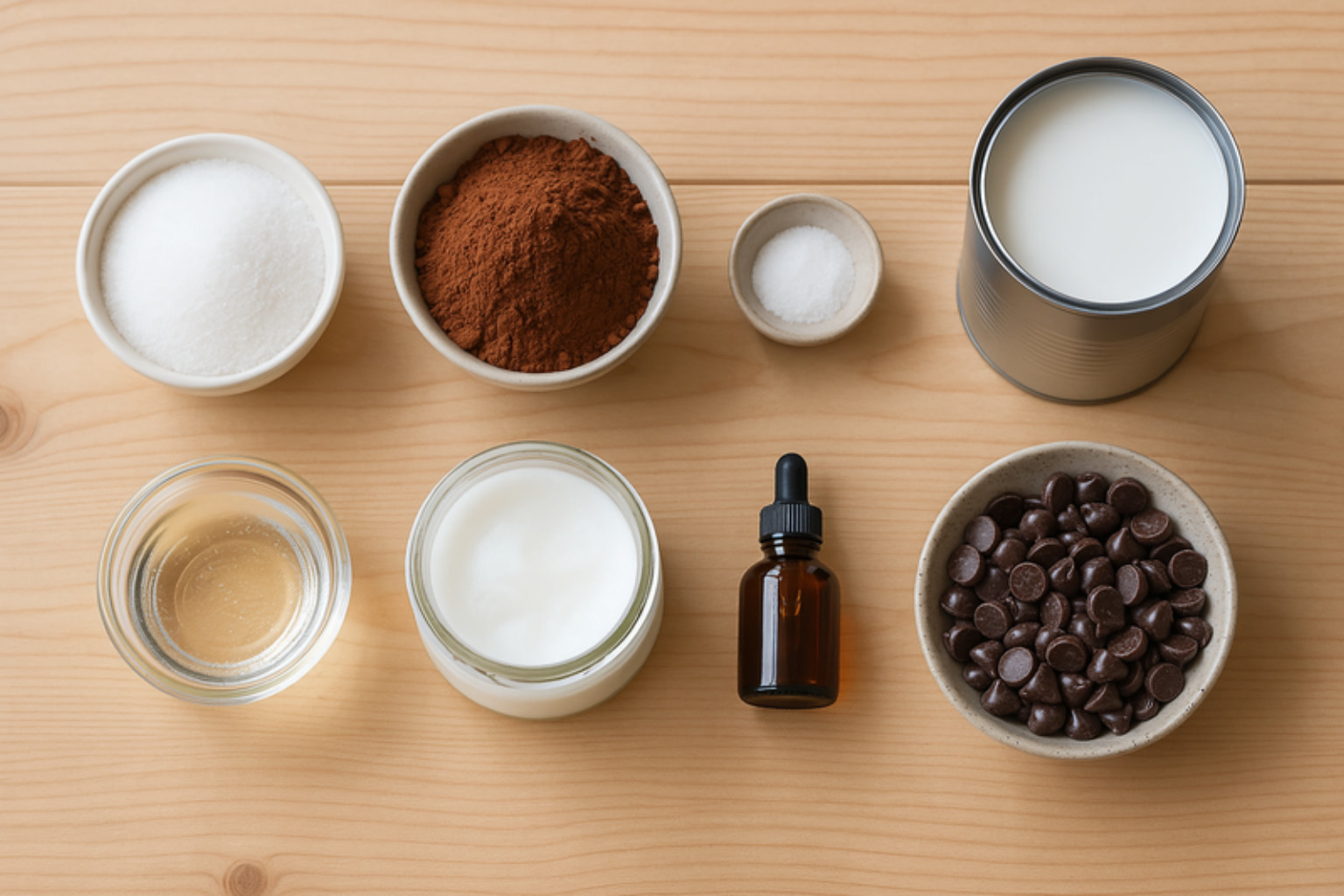
Old-Fashioned Fudge, Dairy-Free (Top 9 Free)
Ingredients
Equipment
Method
- Line an 8×8-inch pan with parchment, leaving overhang on two sides, and rub the parchment lightly with coconut oil. Check your thermometer in boiling water: it should read 212°F (100°C) at sea level. Adjust the target below by the difference.
- Read the safety note: boiling sugar syrup is far hotter than boiling water and sticks to skin. Keep children and pets away, wear long sleeves, turn the pot handle inward, and never taste the syrup from the pot.
- Whisk the sugar, cocoa, and salt in the saucepan to break up cocoa lumps. Whisk in the coconut milk and corn syrup until smooth.
- Cook over medium heat, stirring gently, until the sugar dissolves and the mixture comes to a full boil. Brush down any sugar crystals on the pan sides with a wet pastry brush.
- Clip on the thermometer and stop stirring. Boil without stirring until the syrup reaches 236°F (113°C), the soft-ball stage, usually 12–18 minutes. The bubbles will turn small, thick, and glossy. A drop in a glass of cold water should form a soft ball that flattens between your fingers.
- Remove from the heat. Drop the coconut oil, vanilla, and chocolate chips (if using) on top without stirring. Leave the thermometer in and let the fudge cool undisturbed to 110°F (43°C), about 45–60 minutes.
- Beat with a wooden spoon, steadily, for 5–10 minutes. Watch for the change: the fudge thickens, the shine turns to a satin-matte finish, and it starts to hold the trails of the spoon.
- Immediately scrape it into the pan and smooth the top before it sets. Let it firm at room temperature for about 1 hour, then lift out and cut into 36 squares.
Notes
Troubleshooting & Tips
- Fudge won’t set: It didn’t reach the soft-ball stage, or it wasn’t beaten long enough. Scrape it back into the pot with 1/4 cup water, bring it back to 236°F, and repeat the cooling and beating.
- Grainy fudge: It was stirred while boiling, or beaten while too hot. Use the optional corn syrup next time and wait for 110°F.
- Set in the pot before you could spread it: Knead the warm fudge with your hands into a smooth slab and press it into the pan.
- Soft at room temperature: Coconut oil melts around 76°F. In a warm kitchen, store the fudge in the fridge.
Storage, Freezing & Gifting
Make ahead: Layer the pieces between wax paper or parchment in an airtight tin. Fudge keeps for 1 week at cool room temperature or up to 3 weeks in the fridge.
Freezing: Wrap the uncut slab or the pieces tightly in plastic wrap, then foil or a freezer bag, for up to 3 months. Thaw in the fridge, then let it come to room temperature before unwrapping so condensation doesn’t make the surface sticky.
Gifting: Set each square in a small paper candy cup and pack them in a tin or a box lined with parchment. Keep gift tins away from heat, and let the recipient know it’s best stored cool and that it contains coconut.
More Holiday Candy
Pair the fudge with strips of candied orange peel for a gift tin, or make a batch of dairy-free caramel corn. If you like candy-making with coconut milk, try the caramel in our dairy-free caramel apples. For a cocoa gift basket, add a jar of hot cocoa mix without powdered milk and a bag of peppermint bark with dairy-free dark chocolate, or fill out a cookie tray with dairy-free magic bars without nuts. You’ll find every holiday candy and dessert in the Top Nine Free Christmas recipes collection.
Dairy-Free Fudge FAQ
Can I make dairy free fudge without a candy thermometer?
Yes, with the cold-water test. Drop a little syrup into a glass of very cold water. When it forms a soft ball that flattens when you lift it out, it’s ready. A thermometer is more reliable, especially the first time.
Does this fudge taste like coconut?
Mostly it tastes of chocolate. With refined coconut oil and cocoa, any coconut flavor is faint.
Can I add mix-ins?
Yes. Stir in a pinch of flaky salt, 1/2 teaspoon peppermint extract, or chopped candied orange peel right at the end of beating. Nuts would change what the fudge is made without.
Why did my fudge turn out crumbly?
It was likely cooked a few degrees too high or beaten too long. Pull it at 236°F and spread it as soon as the shine fades.
Can you make fudge without sweetened condensed milk?
Yes. Old-fashioned fudge never used it: sugar and a liquid are cooked to 234 to 238°F, cooled, and beaten until they crystallize. This recipe uses full-fat coconut milk as the liquid, so the fudge sets from the cooked sugar, not from condensed milk and chocolate chips.
Can you make fudge without butter?
Yes. Refined coconut oil goes in after cooking and does the butter’s job, coating the sugar crystals for a silky texture. Light-tasting olive oil also works, but the fudge sets slightly softer.
What is this dairy-free fudge made without?
It’s made without milk, eggs, wheat, soy, peanuts, tree nuts, fish, shellfish and sesame, and it contains coconut. If you add the optional chocolate chips, check the label for milk, soy lecithin and added seed oils.
How long does dairy-free fudge last?
About 1 week at cool room temperature, up to 3 weeks in the fridge, or up to 3 months in the freezer. Because coconut oil softens around 76°F, the fridge is the better choice in a warm house.
A note before you cook: These recipes are ideas and suggestions, not medical or dietary advice. As with any recipe or ingredient, it is each reader’s responsibility to confirm what they can and cannot eat, read every ingredient label, and source quality ingredients that fit their own needs. Ingredient formulations change, so always check the package you’re using.